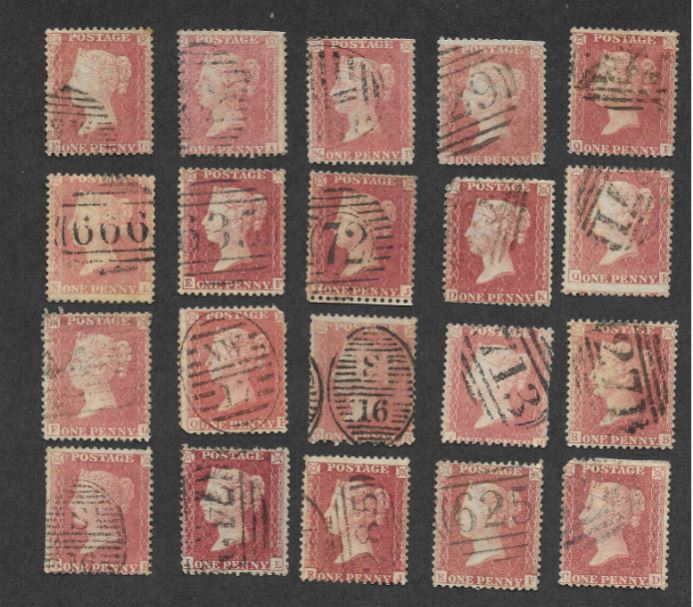
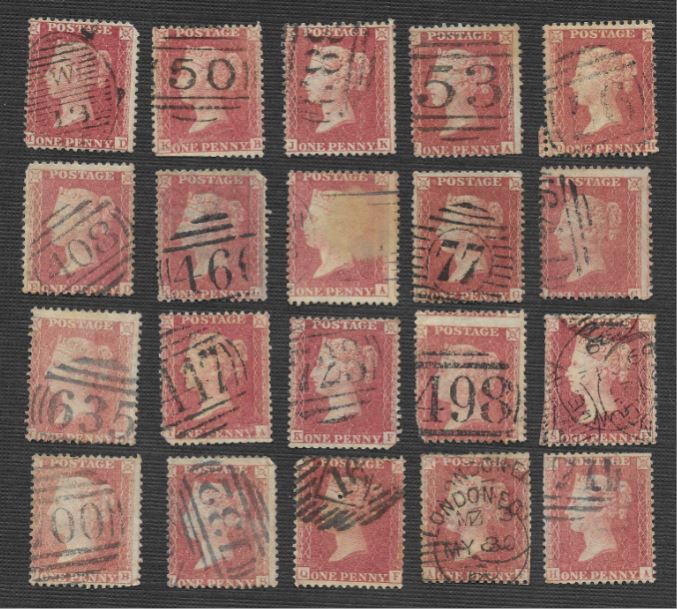
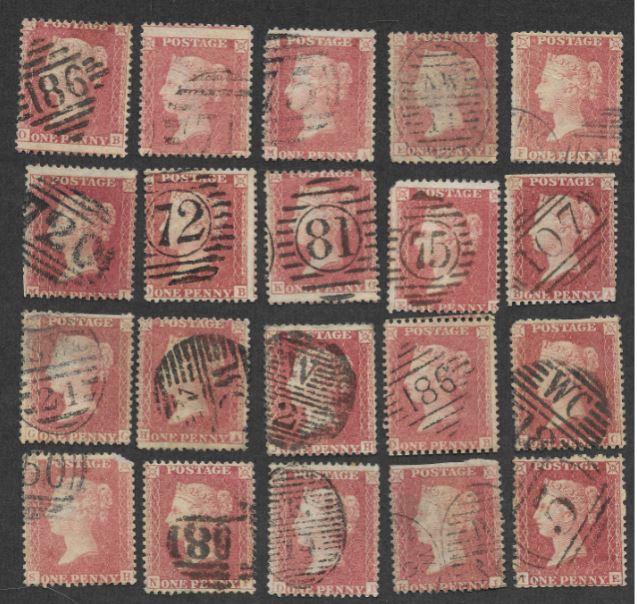
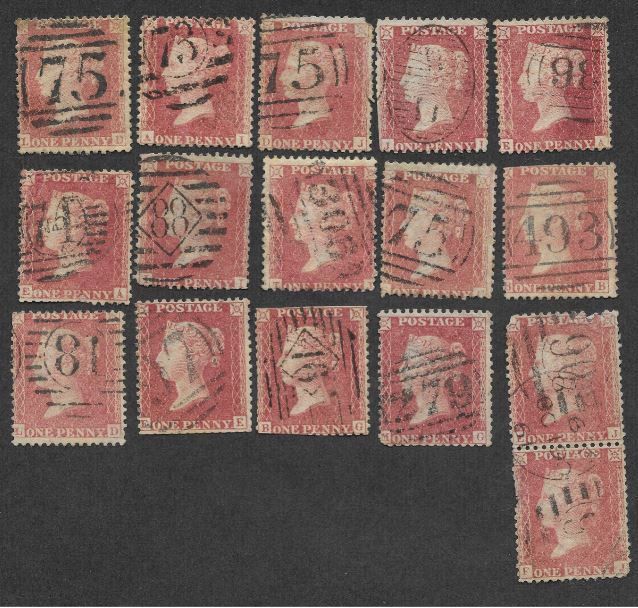
Hi all! I just found these GB 20's in an envelope. I would like to know what is a good site or book to use as reference material to assist me with the numbers? I thank you in advance.
"Collect British Postmarks", published by Stanley Gibbons, lists these.
There are five types of numerical obliterator:
Number in diamond frame within an oval of horizontal lines - London, Inland Section. The number here represents an individual canceller rather than a particular office.
Number in circle within an oval of horizontal lines - London District Post and suburban offices.
Number in oval of horizontal lines, two vertical curved lines either side of number - English and Welsh offices. Here each number represents an individual office. Sometimes numbers were reallocated.
Number in rectangle of horizontal lines - Scottish offices. Here each number represents an individual office. Sometimes numbers were reallocated.
Number in diamond of horizontal lines - Irish offices. Here each number represents an individual office. Sometimes numbers were reallocated.
The numerical obliterators could be used on their own, or in conjunction with a circular datestamp to form a "duplex" cancellation. The English office ovals could be horizontal or vertical.
First image: 666 Ryde; 635 Reading; 713 Sittingbourne; 285 Exeter (this type is called a sideways duplex); 625 Portsmouth.
Second image: 50 Barnstaple; 53 Bath; 56 Forest Row; 408 Ivybridge; 466 Liverpool; 77 in circle East Dulwich; 447 Leeds; 498 Manchester; 132 Brighton (also looks like a sideways duplex).
Disclaimer: While a tremendous amount of effort goes into ensuring the accuracy of the information contained in this site, Stamp Community assumes no liability for errors. Copyright 2005 - 2026 Stamp Community Family - All rights reserved worldwide. Use of any images or content on this website without prior written permission of Stamp Community or the original lender is strictly prohibited. Privacy Policy / Terms of UseAdvertise Here





 Posted 08/18/2020 02:13 am