|
This page may contain links that result in small commissions to keep this free site up and running.

Welcome Guest! Registering and/or logging in will remove the anchor (bottom) ads. It's Free!
To participate in the forum you must log in or register.
| Author |
 Replies: 14 / Views: 1,258 Replies: 14 / Views: 1,258 |
|
|
Valued Member
Canada
26 Posts |
|
|
Hi all, In my last posting I was mentioning that the search for all varieties for the 1902 second set of postage due (completed design) was looking like quite a challenge. In my beginning collection I can already find the following combinations of perforations: 12x11,5 (horizontal x vertical), 12x11, 11x12 and 11x11. Is there other combinations existing ? Like 11,5x12, 11,5,x11,5, 12x12, 11,5x11, 11x11,5 ??? Catalogues will list some stamps like being 11.5,12X11 but for me 11,5 and 12 are two very different measures that should give two different stamps. All this being without looking at the inverted watermarks ! Lot of fun for the years to come ! Thanks for any help with my questioning. Louis 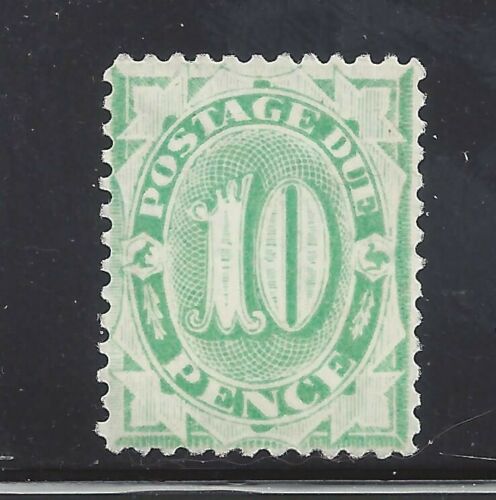 |
|
Send note to Staff
|
|
|
|
|
Pillar Of The Community
Australia
980 Posts |
|
|
Louis,
I think I mentioned in your other thread that three perforating machines were used in the production of monochrome postage dues (as opposed to the bi-colours).
In holes per 2cm, they gauged 11, 11.5 and 11.8. There is some difficulty in telling 11.5 from 11.8 on a single stamp. THe positioning of the pins was not even, the 11.8 could look like 11.5 for a short distance. The ACSC reports that a Sydney dealer inspected the three machines when they were in operation in 1900. In 1905 they were inspected again and only two were in operation.
Stanley Gibbons have, for years, recognised the difficulty and group 11.5 and 11.8 together as 11.5, 12. The Australian Commonwealth Specialists' Catalogue book on postage dues from 1999 listed all three perforations. In the 2nd (2014) and 3rd (2020) editions, the Stanley Gibbons method was adopted.
There had been many incorrect listings. As an example, the 1906 Crown over single-lined A watermark stamp were listed with both 11.5 and 11.8 perforations. The only problem was the 11.5 machine was discontinued after October 1902 and was used in an altered state to make the OS/NSW perfins. The 11.5 machine cannot have been used in the 1906 series. |
Send note to Staff 
|
|
|
Valued Member
Canada
26 Posts |
|
|
Thank you John, it's very helpful again. You are perfectly correct about this having been explained in my other thread and I am sorry having you to repeat. Maybe I am slow at learning. The problem is also probably due to the fact that all the few stamps I have seen for the first series seem to have the same neat 12x11,5 combination of perforations as illustrated on the picture attached. And I can find the same combination on some of my stamps from the second series. I understand now that some loss of accuracy for the perforating machines (possibly more for the 11,8 than for the early removed 11,5) may have create confounding situations and my questioning about other combinations than the ones listed is not really useful. Thank you again, Louis 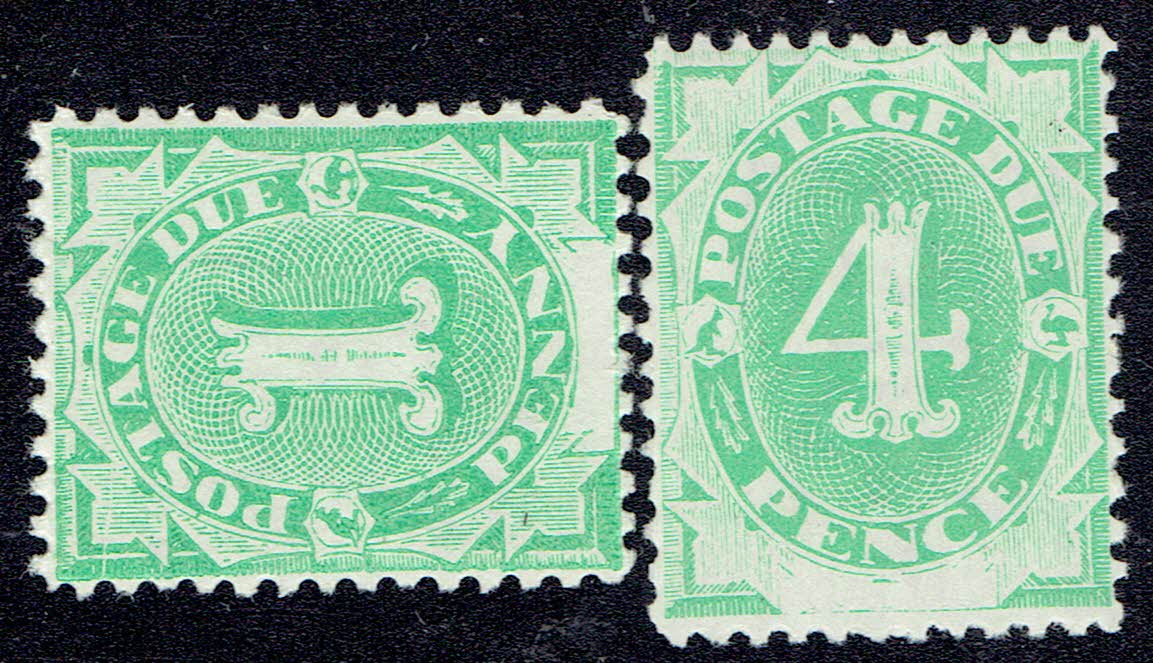 |
|
Send note to Staff
|
| Edited by Suzlou53 - 08/28/2020 11:40 am |
|
|
Pillar Of The Community
Australia
980 Posts |
|
|
Louis,
The first and second series weren't that separate. The key is in the perforations.
You will note that the first series are all available with perforation 11.8 x 11.5 (as your image shows). ACSC notes, "The first values issued (in the second series) were the 5d, 10d, 1s and 2s. They were distributed at the same time as the initial supplies of the blank base series and were on issue in July, 1902. Information concerning the dates of appearance of the other values is limited. References in the contemporary journals are probably incomplete but the following list gives some indication of the latest dates by which the various values were on issue: 5d, 10d, 1s, 2s - July 1902. 1d - October 1902, 2d, 3d, - March 1903, 4d, 5s - May 1903, 10s, 20s - October 1903, ½d, 6d, 8d - March 1904.
It makes you wonder why they bothered with the first series at all. The first series and second series 5d, 10d, 1s and 2s were issued together.
Usage dates vary, Tasmania ordered 25 years' worth of stock at the very beginning and blank base issues are found used there into the late teens. The 5s appeared in Townsville in 1925 (both types).
The variety of perforations seen are
First series - blank at base
11.5 - 12: ½d, 1 d, 2d, 3d, 4d, 6d, 8d, 5s
11.5 - 12, compound with 11: 1d, 2d
11: 1d
Second series - design complete - crown over NSW watermark
11.5 - 12: 1d, 2d, 3d, 5d, 10d, 1s, 2s (the first three are 11.8 x 11.8, the last four 11.8 x 11.5. I have never seen a 2d 11.8 x 11.8 and doubt the existence of that stamp).
11 x 11.5 - 12: ½d, 1d, 2d, 4d
11: ½d, 1d, 2d, 3d, 4d, 5d, 6d, 1s, 5s, 10s, 20s
11.5 - 12 x 11: ½d, 1d, 2d, 3d, 4d, 5d, 6d, 8d, 10d, 1s, 2s, 5s
Third series - design complete - crown over single-lined A watermark
11 x 11.5 - 12: 2d
11: 1d, 2d, 4d (all scarce)
11.5 - 12 x 11: ½d, 1d, 2d, 3d, 4d, 6d.
If you want to dig deeper into these issues, getting a copies of both the 1999 and 2004 editions of the ACSC will help you. |
|
Send note to Staff
|
|
|
Valued Member
Canada
26 Posts |
|
|
John, Thank you very very much for your last answer. It can't be more precise and it's exactly what I needed to get a good comprehension of the stamps that was adding to my collection. Effectively my perforated 12x11,5 stamps from the second series are the 5d, 10d, 1/ and the 2/. I understand that the other combinations came a bit later and probably after the removal of the 11,5 perforating machine. Thank you again sincerely and hoping that these precious details could also be useful for other collectors. Best regards, Louis  |
|
Send note to Staff
|
|
|
Valued Member
Canada
26 Posts |
|
|
Hi all. Many months ago I had placed a post about the 1902 second series of the postage dues stamps (completed design)and the perforation varieties. My collection has evolved since then and I have been able to find stamps with the following combinations of perforation: 12x11.5 (5d,10d,1/,2/) 12x11,11, 11x11.5 (1/2d,1d) and 11x12 (2d). I have the stamps but still have no idea of the relative rarity of the different combinations. The 12x11,5 and 12x11 varieties seem to be more common (I have many in my overstock) but for the other varieties I have no idea. Is someone can help me ? |
|
Send note to Staff
|
|
|
Pillar Of The Community
Australia
980 Posts |
|
|
Quote:
Hi all. Many months ago I had placed a post about the 1902 second series of the postage dues stamps (completed design)and the perforation varieties. My collection has evolved since then and I have been able to find stamps with the following combinations of perforation: 12x11.5 (5d,10d,1/,2/) 12x11,11, 11x11.5 (1/2d,1d) and 11x12 (2d). I have the stamps but still have no idea of the relative rarity of the different combinations. The 12x11,5 and 12x11 varieties seem to be more common (I have many in my overstock) but for the other varieties I have no idea. Is someone can help me ? Suzilou, I have been acquiring these stamps for a long time and from a large variety of sources. An analysis of my holdings should be fair indication of relative percentages of one group over another. You are correct that the perf 11.8 x 11.5 and 11.8 x 11 are the most common. There are four perforation variations for each of the 1d and 2d values. They are 11 x 11.5, 11.8 x 11, 11 and 11.8 x 11.8. The percentages of the total I have for each of the perf variations are: 1d 11 x 11.5 21.1%, 11.8 x 11 69.9%, 11 x 11 8.7%, 11.8 x 11.8 0.3% 2d 11 x 11.5 8.6%, 11.8 x 11 80.9%, 11 x 11 11%, 11.8 x 11.8 0% (I understand only three copies of this stamp have been confirmed to exist). Let me know if you need more clarification. |
|
Send note to Staff
|
| Edited by 64idgaf - 02/25/2022 07:38 am |
|
|
Valued Member
Canada
26 Posts |
|
|
Thank you very much John, it is exactly what I was looking for !
Best !
Louis |
|
Send note to Staff
|
|
|
Valued Member
Canada
26 Posts |
|
|
Hello again 64idgaf,
In your kind answer I realize that there is no mention of the 2d perf. 11x11,8. I have seen it mentioned before, I don't remember where, and I have one in my collection; it's oubviously different from the 11x11,5 perforation variety.
Any opinion about this variety ?
Thanks again,
Louis |
|
Send note to Staff
|
|
|
Pillar Of The Community
Australia
980 Posts |
|
|
Quote:
Hello again 64idgaf,
In your kind answer I realize that there is no mention of the 2d perf. 11x11,8. I have seen it mentioned before, I don't remember where, and I have one in my collection; it's obviously different from the 11x11,5 perforation variety.
Any opinion about this variety ?
Thanks again,
Louis Therein lies the problem, the difference is not obvious. There were two perforators in operation until October, 1902, one measuring 11.5, the second 11.8 (173 and 178 holes per 30cm respectively). These were physically inspected at the time and careful measurements were taken. The spacing of the pins in each machine was not perfect. On a single stamp 11.5 could measure 11.8 and vice versa. After October, 1902, the 11.5 gauge was removed from use and altered to create OS / NSW perforations. As a result, it was determined (and this has been adopted for years by Stanley Gibbons) to group 11.5 and 11.8 together as 11½, 12. It is simply too uncertain to determine the difference between the two on a single stamp. The difference between 11.5 and 11.8 is not recognised in any modern handbook or catalogue. |
|
Send note to Staff
|
|
|
Valued Member
Canada
26 Posts |
|
|
Thank you 64idgaf for your answer, it's very kind of you. However I remain not completely convinced that my 2d stamp could have the same perforations than my perf. 11X11.5 stamps. I attach a scan of the 2d between two perf. 11X11.5. Could it be possible that some 2d stamps have been issued before the removal of the 11.5 machine ? Thank you again, Louis 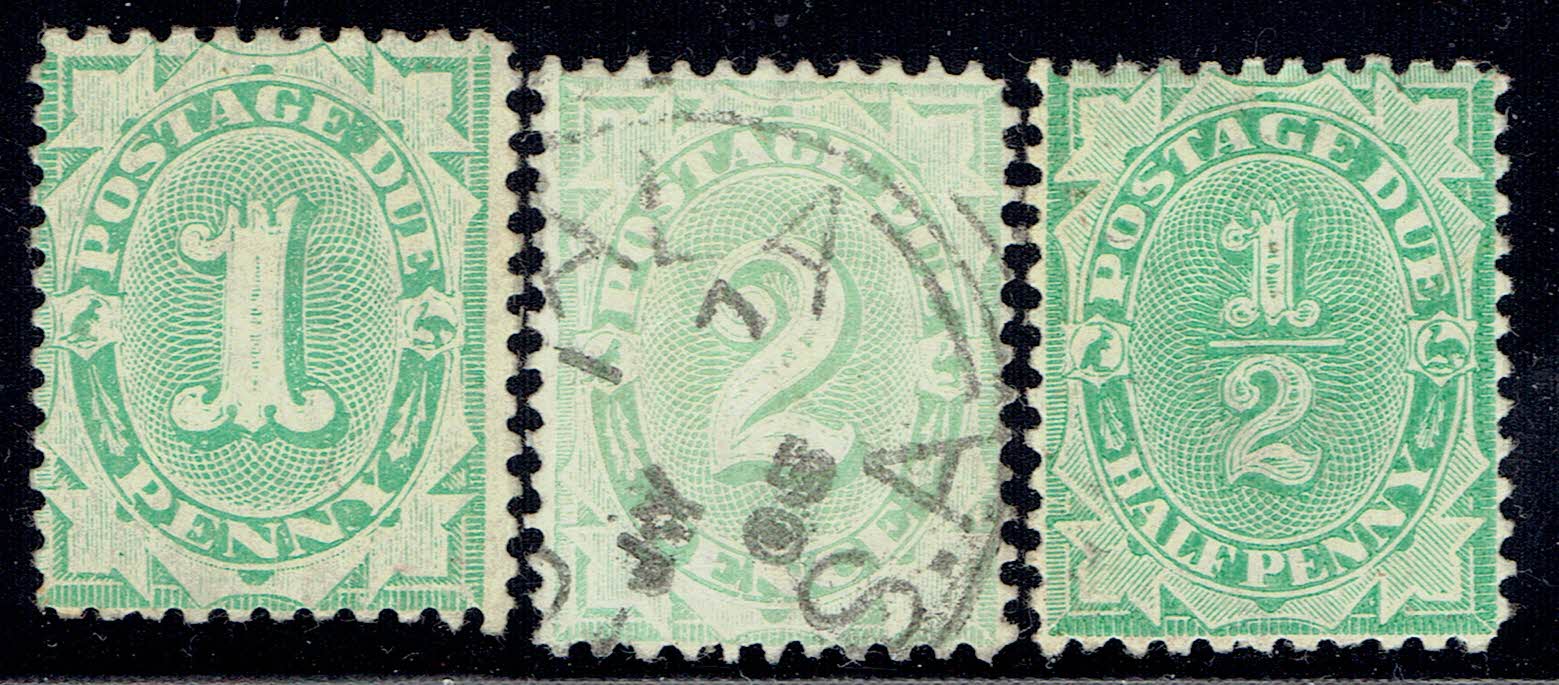 |
|
Send note to Staff
|
|
|
Valued Member
Canada
26 Posts |
|
|
Hi again,
I just realized that my last posting had a mistake, the removal of the 11.5 machine having no relation with the possible existence of a stamp being perforated 11.8.
L. |
|
Send note to Staff
|
|
|
Pillar Of The Community
Australia
980 Posts |
|
|
Quote:
Thank you 64idgaf for your answer, it's very kind of you. However I remain not completely convinced that my 2d stamp could have the same perforations than my perf. 11X11.5 stamps. I attach a scan of the 2d between two perf. 11X11.5. Could it be possible that some 2d stamps have been issued before the removal of the 11.5 machine ? Louis, It was always reported that the 5d, 10d, 1s and 2s second series stamps had a perforation combination that included 11.8 x 11.5. The scarce 1d, 2d, 3d (and less scarce 2s) were perforated 11.8 x 11.8. Whether your 2d is perf 11.8 x 11.5 or 11.8 x 11.8 is of no consequence. The important bit is that the 2d perf 11.8 x 11.8 is a scarce stamp and I like the look of yours. Would you post a scan of the back, please? John |
|
Send note to Staff
|
|
|
Valued Member
Canada
26 Posts |
|
|
Hi John, Here are the scans for the front and the back of the stamp. Don't forget that the stamp is perforated 11 horizontally; my last posting may have create some confusion about this. Best ! Louis 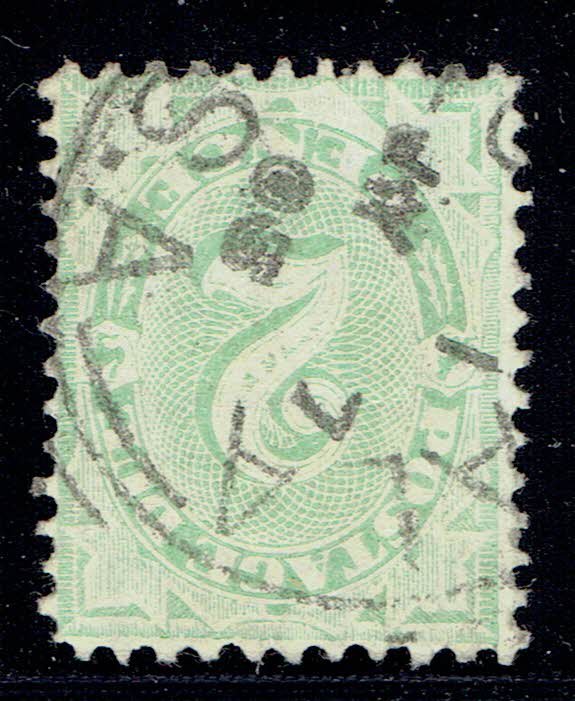 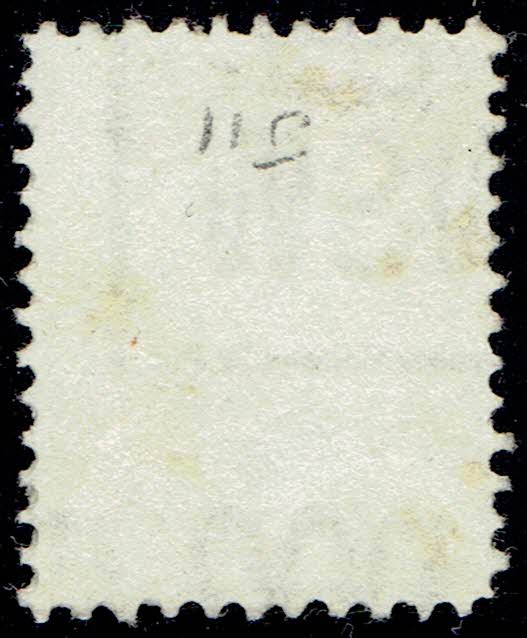 |
|
Send note to Staff
|
|
|
Pillar Of The Community
Australia
980 Posts |
|
| |
Replies: 14 / Views: 1,258 |
|
|
To participate in the forum you must log in or register. | |
 Scott #498 (1917-1919) Avatar Change Request 2023 Freedem Stamp. Is This Stamp Fake? Transvaal Postal History Help Earliest Stamp With In-Design Date? My First Stamps Help Newbie.help With Stamp Identification (J29) Inherited These Stamps, Are They Genuine? APS Membership Discount Metropex Stamp Show: Roseville, Minnesota October 23-24 Weird Covers, 1885,1886, And 1982 For Users Of Two-Post Blue International Albums What Is Your Experience With Binders. New Member Posting Image Of Avatar, Front And Back Of U2 Cut Square, Market Value Or References? Working On An Offline Collection George Washington 3 Cent 1861 With Print On The Back Hello From The Netherlands - New Member Then And Now, From Old Postcards New Member Wanting To Add An Avatar Sparks Auction Fees? 163 VF Nyfm Vertically Ribbed 163 XF Quartered Cork, Labeled Jumbo 136 VF Quadruple Split H Grill Nashville Philatelic Society-Your Invitation To Our Auction Night Meeting Monday, October 26, 2026 Nashville Philatelic Society-Your Invitation To Our Meeting Monday, October 19, 2026 Christmas Around The World 2026 Scott #498 (1917-1919) Avatar Change Request 2023 Freedem Stamp. Is This Stamp Fake? Transvaal Postal History Help Earliest Stamp With In-Design Date? My First Stamps Help Newbie.help With Stamp Identification (J29) Inherited These Stamps, Are They Genuine? APS Membership Discount Metropex Stamp Show: Roseville, Minnesota October 23-24 Weird Covers, 1885,1886, And 1982 For Users Of Two-Post Blue International Albums What Is Your Experience With Binders. New Member Posting Image Of Avatar, Front And Back Of U2 Cut Square, Market Value Or References? Working On An Offline Collection George Washington 3 Cent 1861 With Print On The Back Hello From The Netherlands - New Member Then And Now, From Old Postcards New Member Wanting To Add An Avatar Sparks Auction Fees? 163 VF Nyfm Vertically Ribbed 163 XF Quartered Cork, Labeled Jumbo 136 VF Quadruple Split H Grill Nashville Philatelic Society-Your Invitation To Our Auction Night Meeting Monday, October 26, 2026 Nashville Philatelic Society-Your Invitation To Our Meeting Monday, October 19, 2026 Christmas Around The World 2026
APS Membership Discount Scott #498 (1917-1919) Women In Our Society: Women's Rights, Empowerment, And Social Progress Help With China Stamps The End Of The Chicago Philatelic Powerhouse . Transvaal Postal History Help 2023 Freedem Stamp. Is This Stamp Fake? Pushing 330,000 All Different Worldwide Stamps In One Collection . Avatar Change Request Inherited These Stamps, Are They Genuine? George Washington 3 Cent 1861 With Print On The Back Scientists Share With US Your Table Tennis Stamps Coat Of Arms Working On An Offline Collection Frogs And Toads On Stamps, Covers And Postmarks. Springback Album..what Is That? Barcelona & Catalonia Cinderellas Stamp Comic - Laugh Of The Day Metropex Stamp Show: Roseville, Minnesota October 23-24 Show Your 1851-61 Era Cancellations And Postal Markings Let's See Your Territorial Covers! Earliest Stamp With In-Design Date? Venues For Art And Culture: Museums, Theatres, Galleries, Concert Halls, Etc. It's Now Cheaper To Use Fedex Ground Than USPS Ground For Some Zip Codes
Disclaimer: While a tremendous amount of effort goes into ensuring the accuracy of the information contained in this site, Stamp Community assumes no liability for errors. Copyright 2005 - 2026 Stamp Community Family - All rights reserved worldwide. Use of any images or content on this website without prior written permission of Stamp Community or the original lender is strictly prohibited.
Privacy Policy / Terms of Use Advertise Here |
| Stamp Community Forum |
© 2007 - 2026 Stamp Community Forums |
| It took 0.25 seconds to lick this stamp. |
 |
|
|
|


 Posted 08/26/2020 11:19 am


