| Author |
 Replies: 12 / Views: 1,080 Replies: 12 / Views: 1,080 |
|
|
Valued Member
6 Posts |
|
|
|
|
Pillar Of The Community

United States
5468 Posts |
|
|
Valued Member
6 Posts |
|
|
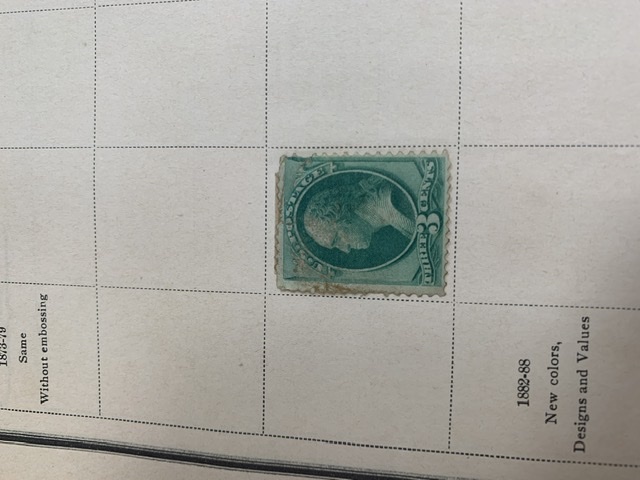
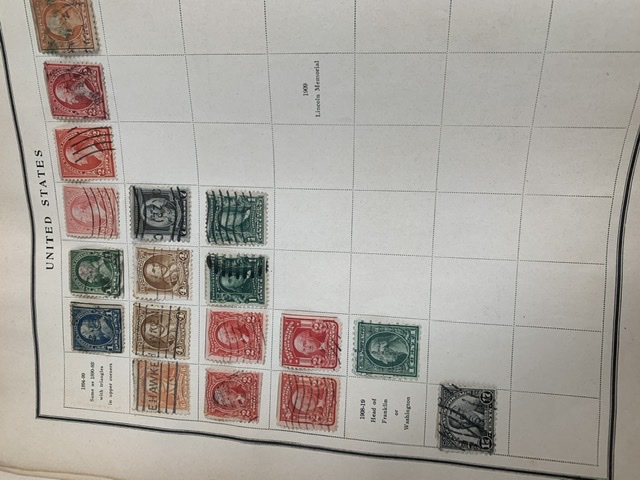
Hey thank you for the reply. Right now I'm trying to learn as much as I can about them. There's thousands of stamps in here from all the different countries. Some I couldn't find online when I was searching them. I was trying to find out if there were any rare ones in here because there's some random ones from different countries that don't much the sets. Is there anything in particular I should be looking for? |
Send note to Staff 
|
|
|
Moderator

United States
12330 Posts |
|
|
Stamps are like rocks, they may be old but that does not make them rare and in fact many pre-1900 stamps were printed in the millions or even billions. So just like you would not expect to pick up a rock in your back yard and have it be a diamond, it is very unlikely that you will find a rare stamp.
But as others have posted, you have a good introduction to a new hobby. Identifying the various stamps is part of the enjoyment for many and it typically leads to learning about history, geography, and other cultures. You could invest decades into learning about stamps and still learn something new every day. You can safely assume that the stamps you have are not an early retirement but rather a good start on a new pastime.
Worldwide stamp catalogs typically span 10,000 pages or more (usually come in sets of multiple volumes) and are very, very expensive. As such, most folks recommend buying a set of older, used catalogs to start with.
Don |
|
Send note to Staff
|
|
|
Pillar Of The Community
Netherlands
6635 Posts |
|
|
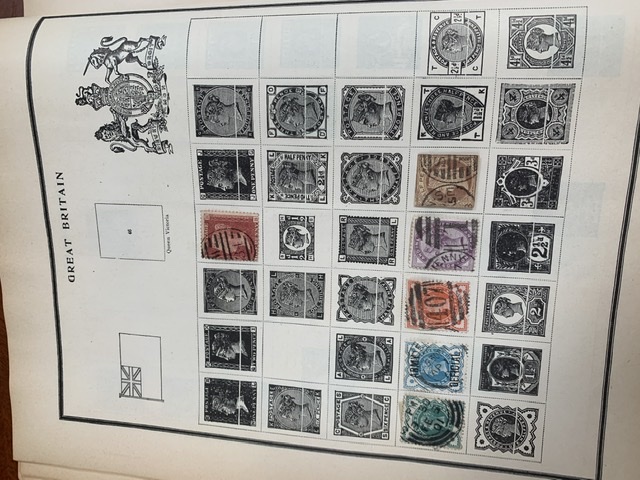
The British stamps in the second picture are perforated Penny Red (I cannot see whether with letters in all four corners or with stars in the upper corners).
At the bottom, the fourth stamp is a 1881 Penny Lilac (count whether there are 14 or 16 - my guess the latter - dots in the corner of the frame to see if it is die 1 or 2, resp.).
The third stamp is the 1887 vermilion halfpenny stamp from the so-called "Jubilee" series of Queen Victoria. The first stamp is from 1900, when its colour was changed to blue-green to comply with UPU regulations on international mail. The second is the same as the first, but a colour changeling; it was exposed to a chemical substance or sunlight.
Those I mention are extremely common. The 14-dot variety of the 1d Lilac has some value. The Penny Red can have value if it is from the right plate. If it is not, it is extremely common.
I cannot clearly see the fifth stamp. At first glance, I wonder whether it is a British stamp at all.
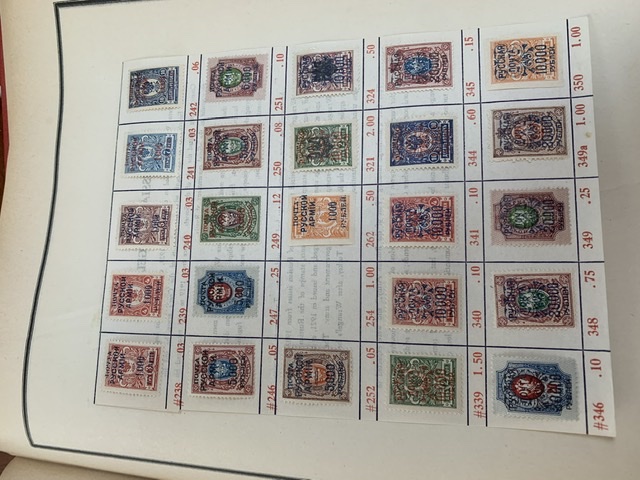
I like those Russian stamps.
|
|
Send note to Staff
|
| Edited by NSK - 12/22/2020 06:27 am |
|
|
Pillar Of The Community
United Kingdom
8623 Posts |
|
|
Welcome. This looks like a child's album from the inter-war period, so you should expect fun if you use it as a basis for collecting, but minimal financial value. |
|
Send note to Staff
|
|
|
Valued Member
6 Posts |
|
|
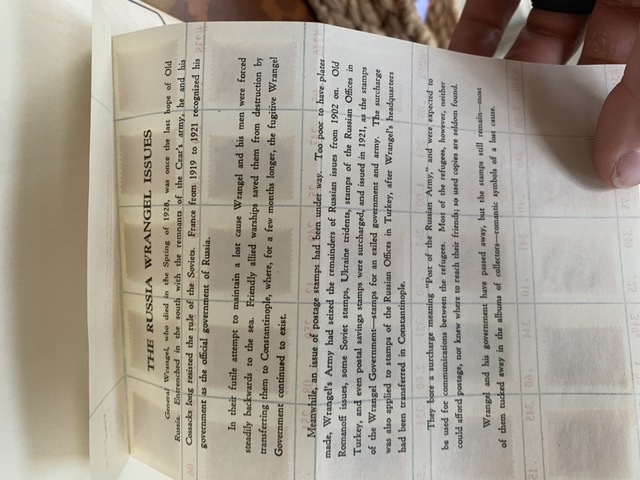
Thank you everyone for the feedback. I'm having a great time going threw all the pages and looking them up to learn about the history. Is really is interesting how old these are and their backgrounds. I thought the Russian stamp set was really nice too. I've been trying to research it online but there isn't much information on it. Do you know anything about them? |
|
Send note to Staff
|
|
|
Valued Member
6 Posts |
|
|
As far as the penny red goes. There's 2 stars in the top corners. A letter B in the bottom right corner. And what looks like either a star or a K in the bottom left corner. It's hard to tell because it's cut off. |
|
Send note to Staff
|
|
|
Valued Member
United States
158 Posts |
|
|
Hi,those Russian stamps are listed under Russian offices in the Turkish Empire and look to be the correct Scott catalog numbers. Plenty of info on the Wrangel issues is available online. |
|
Send note to Staff
|
|
|
Valued Member
6 Posts |
|
|
Awesome thank you. I'm going to look into them now. Any value for them? |
|
Send note to Staff
|
|
|
Pillar Of The Community
Netherlands
6635 Posts |
|
|
These type of stamps (Penny Red, Penny Black, Two Pence Blue) always have two letters in the lower corners. AA ... TL: 20 x 12 = 240. 12 pence (one row) in a shilling, 20 shillings or 240 pence in a pound. From 1864, they were perforated and with the letters at the bottom mirrored in the top corners. Before that, there were stars in the top corners. Without making things too complicated: the size of the crown watermark and the perforation gauge more or less make different issues. These were officially perforated from 1854. Trial perforations took place between 1850 and 1854.
I have no knowledge of the Russian stamps. |
|
Send note to Staff
|
|
|
Valued Member
United States
158 Posts |
|
|
Value for the Wrangel issues in my outdated catalogues are less than a dollar, with a couple up to $3 to $5 . Check on ebay for sold listings to find current values. |
|
Send note to Staff
|
|
|
Valued Member
6 Posts |
|
| |
Replies: 12 / Views: 1,080 |
|



 Posted 12/21/2020 11:35 am