Although there are a number of threads on Irish stamps, the 1980s Architecture stamps rarely pop up.
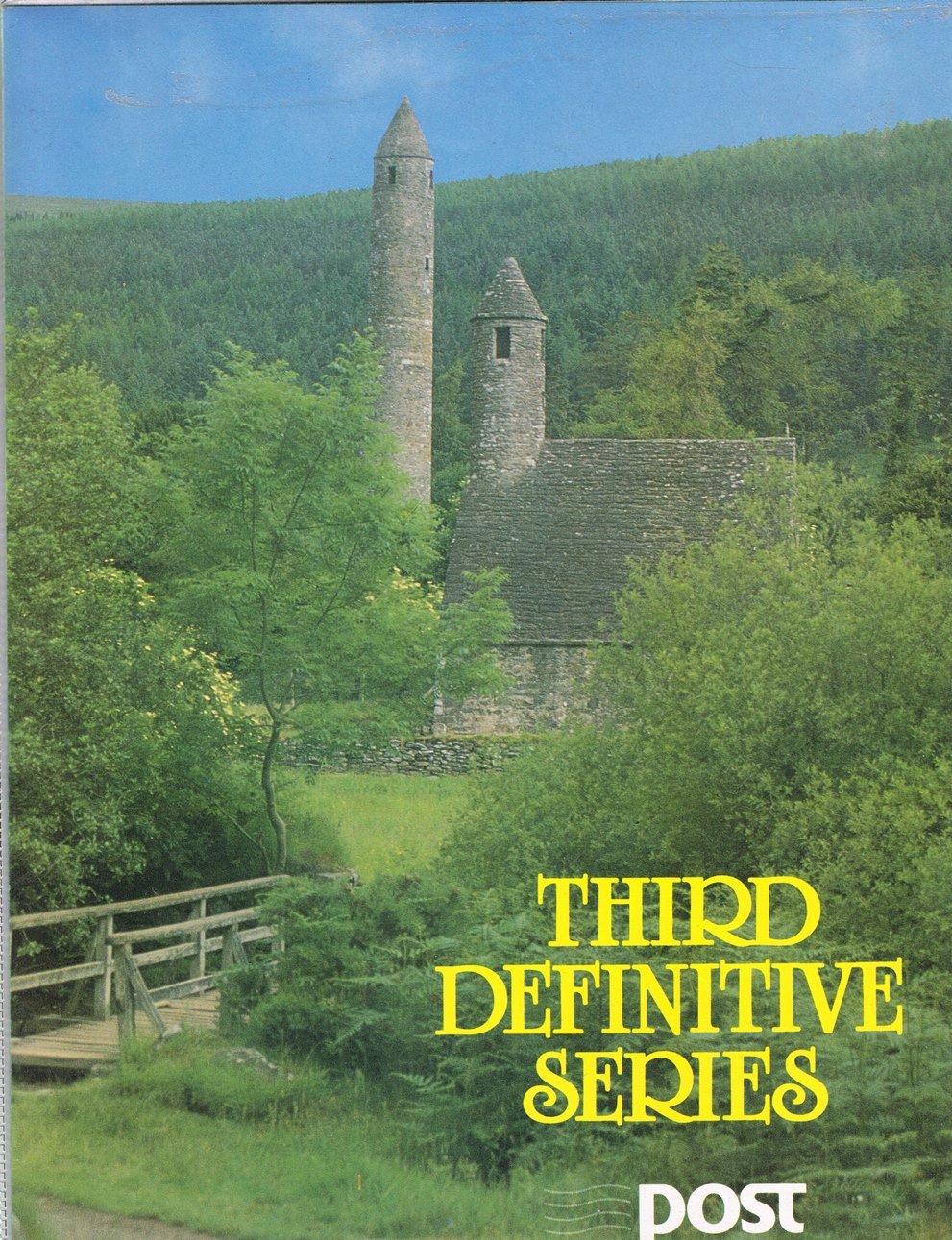
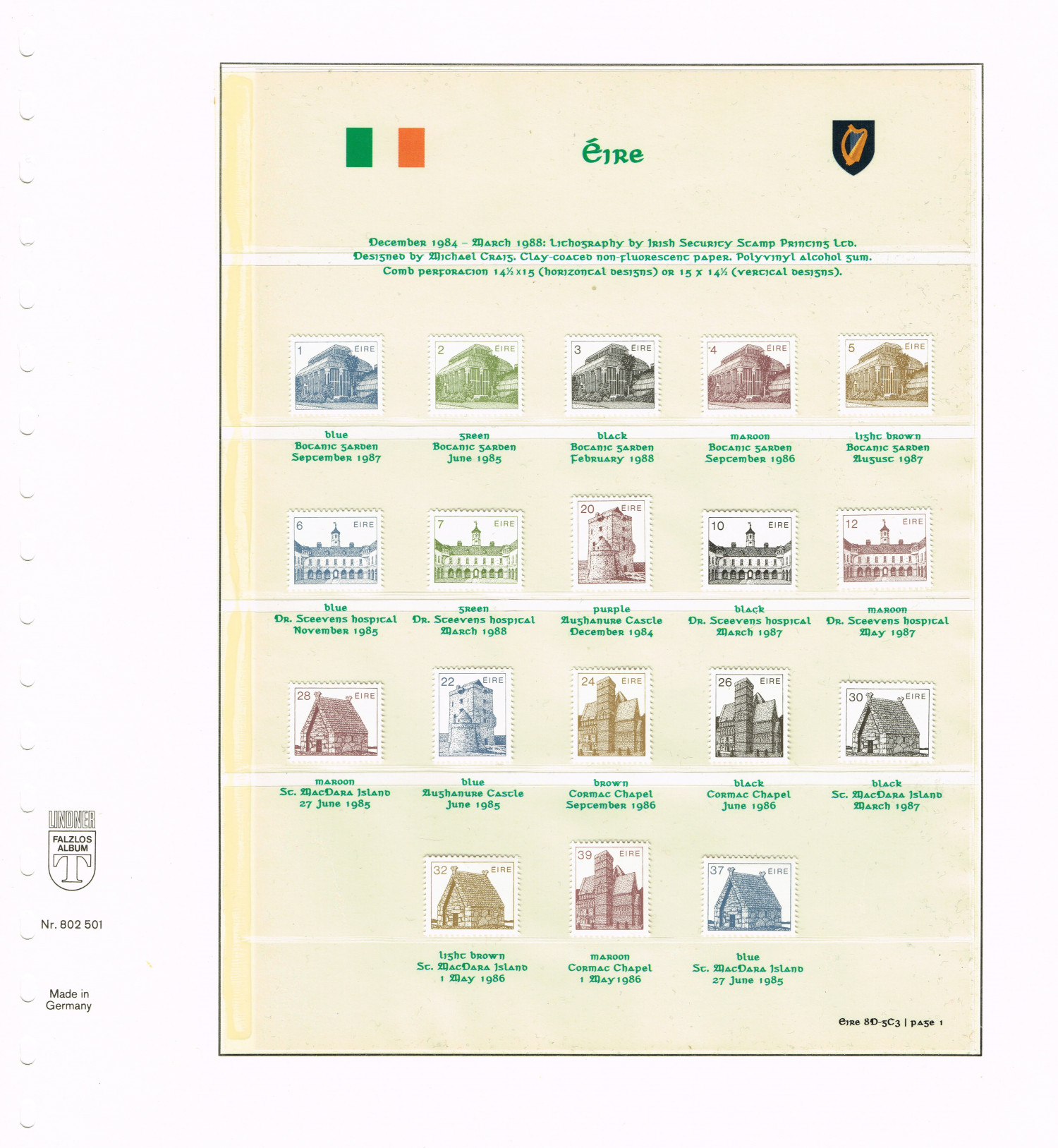
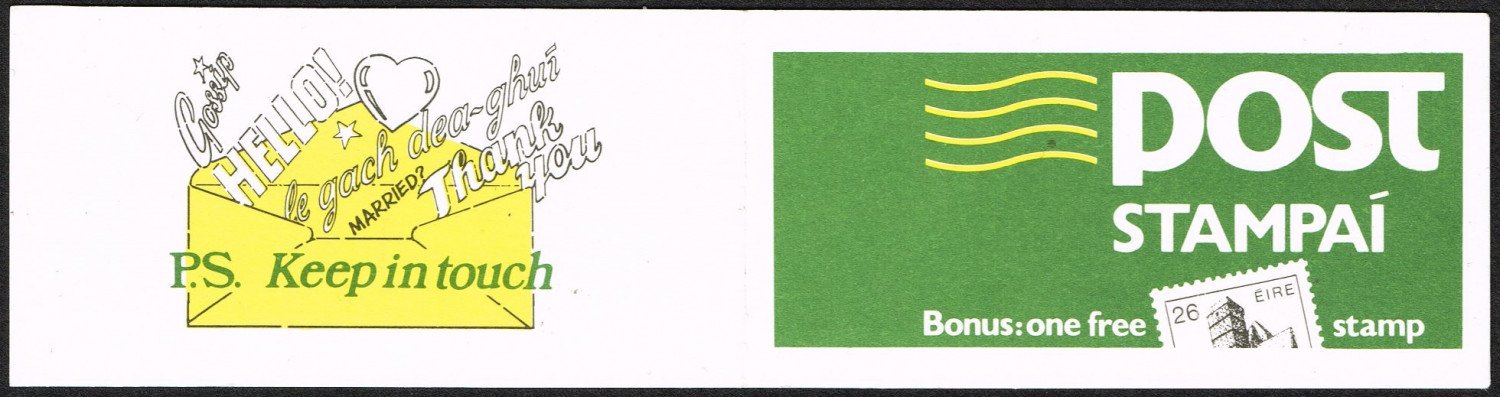
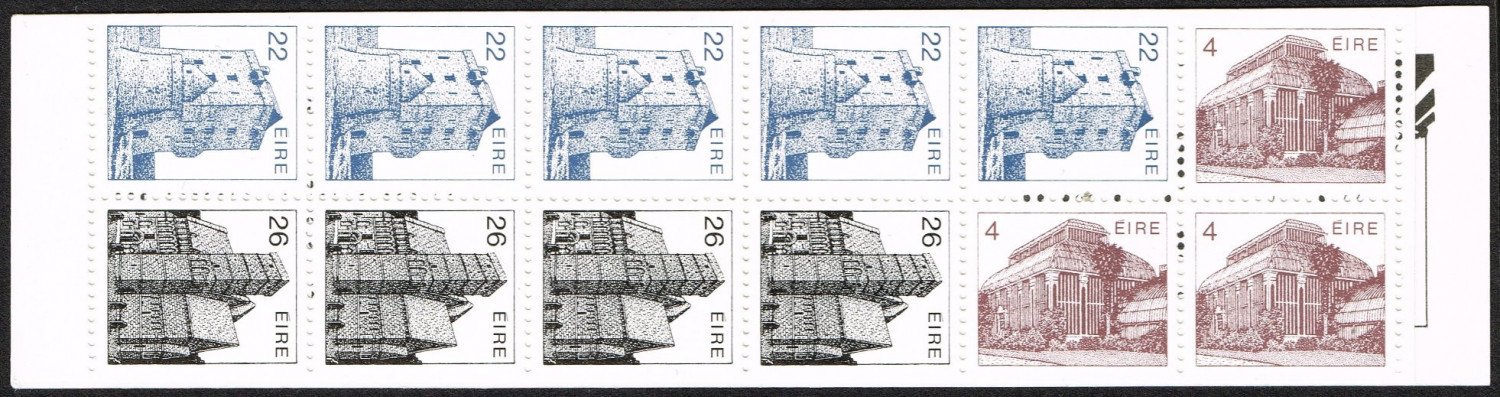
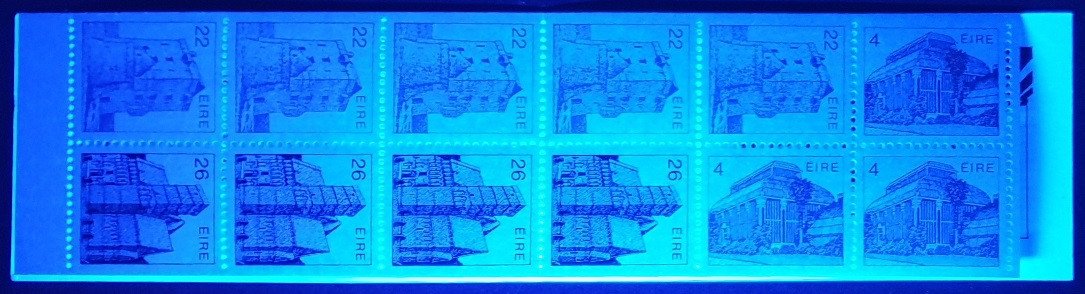
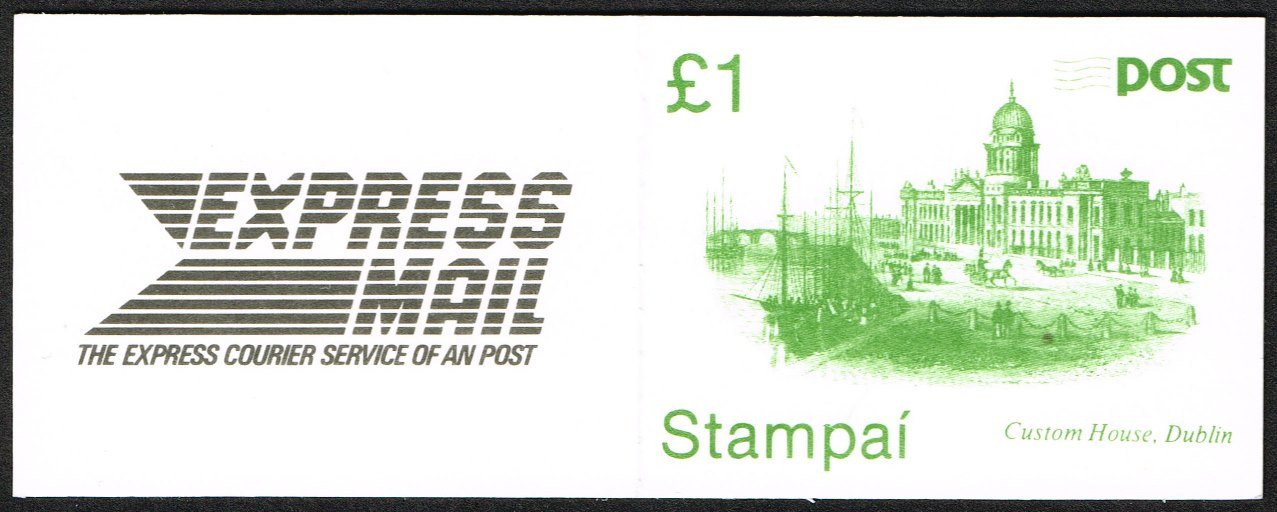
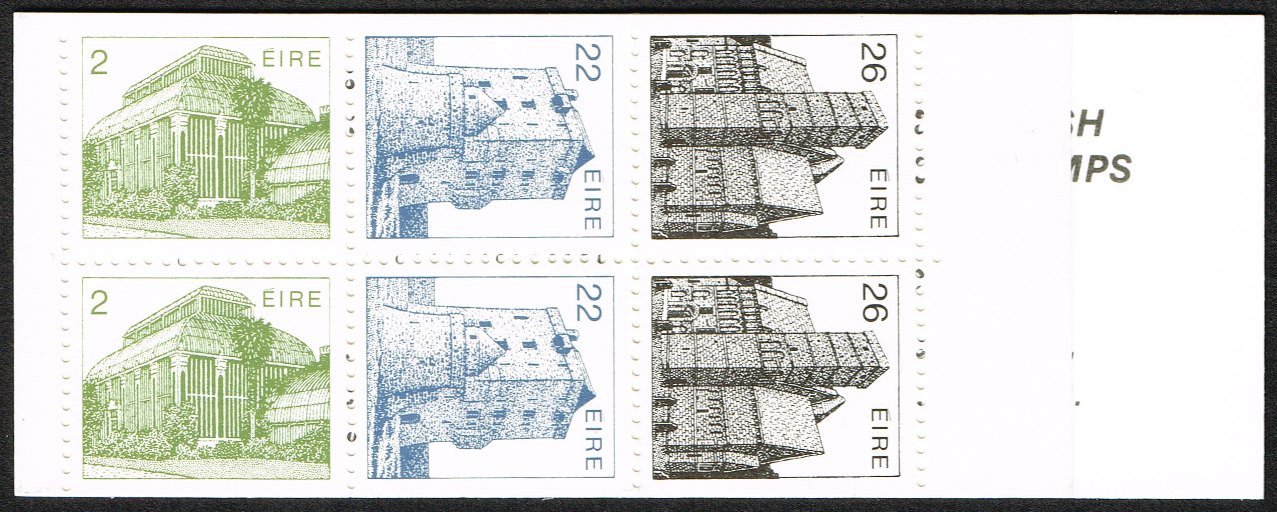
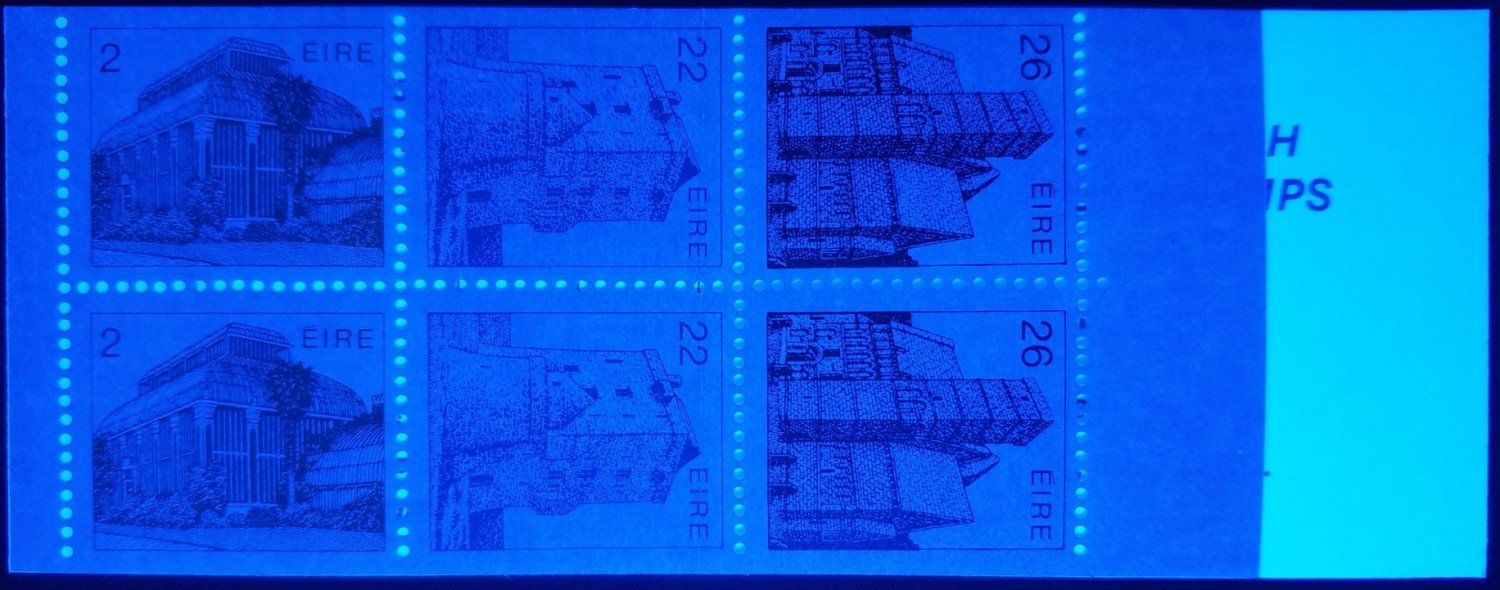
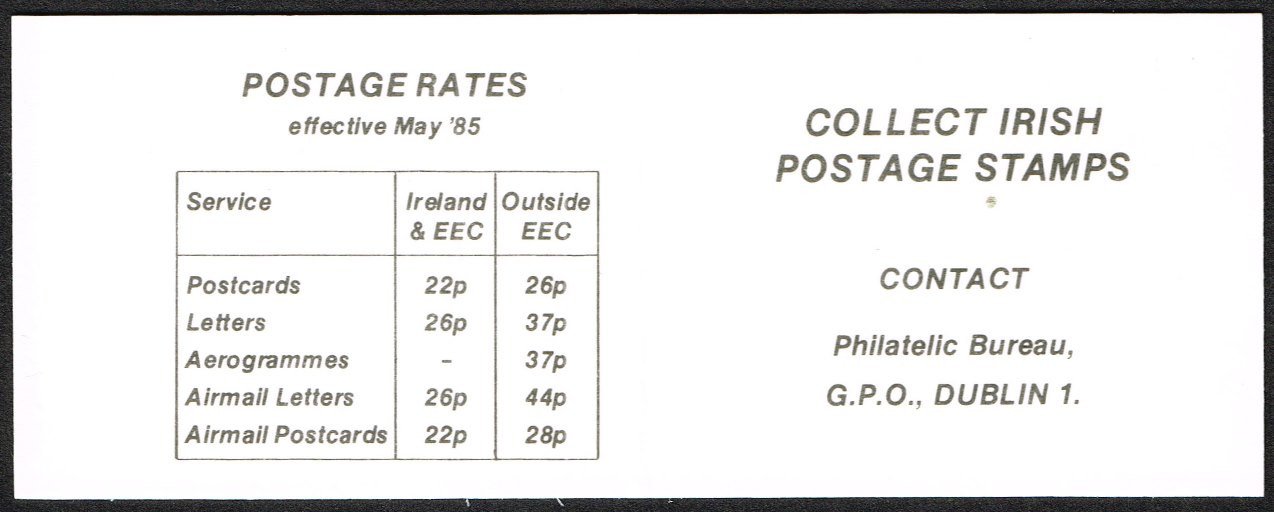
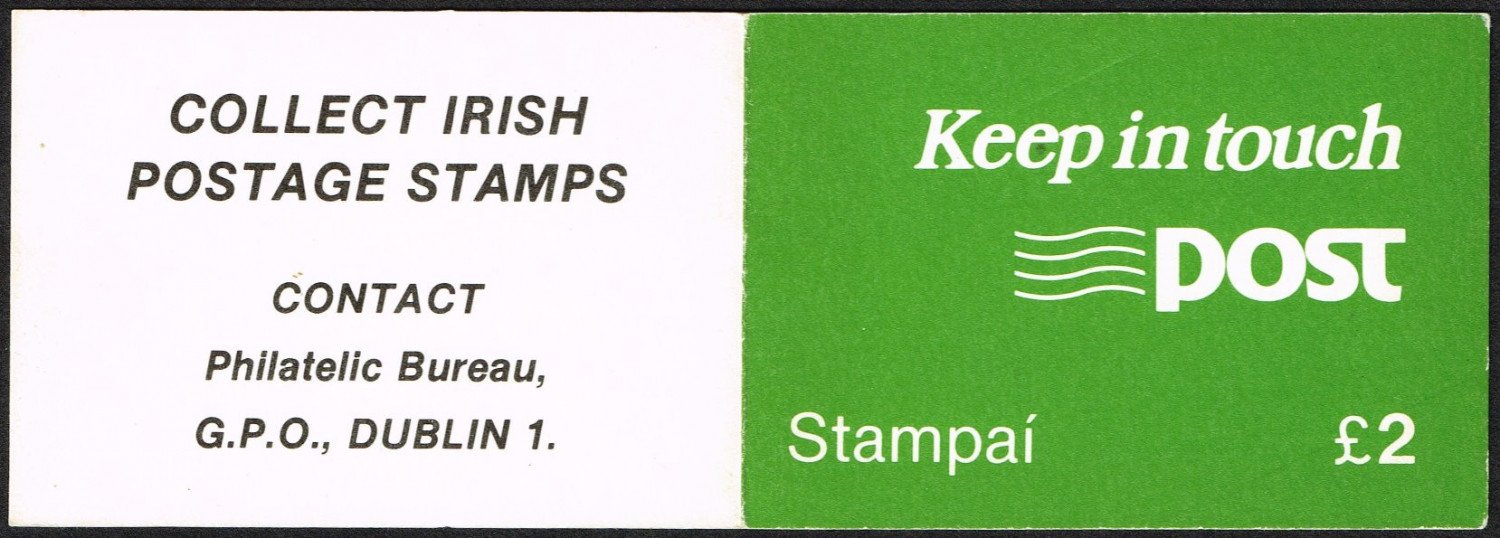
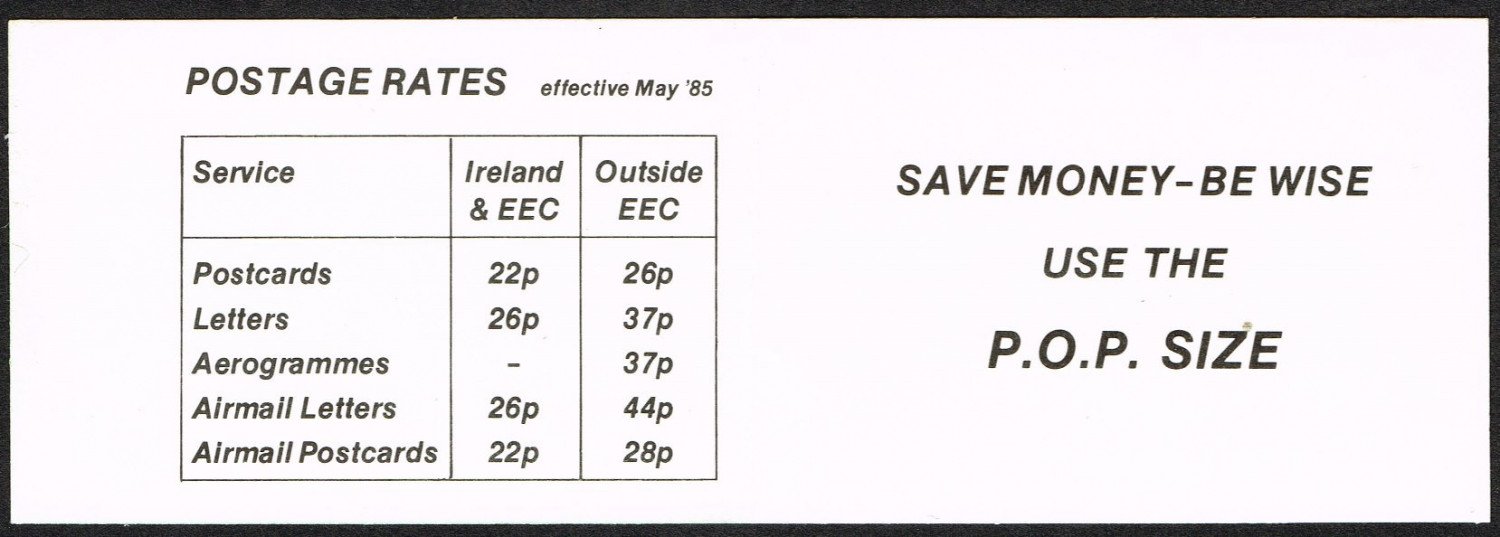
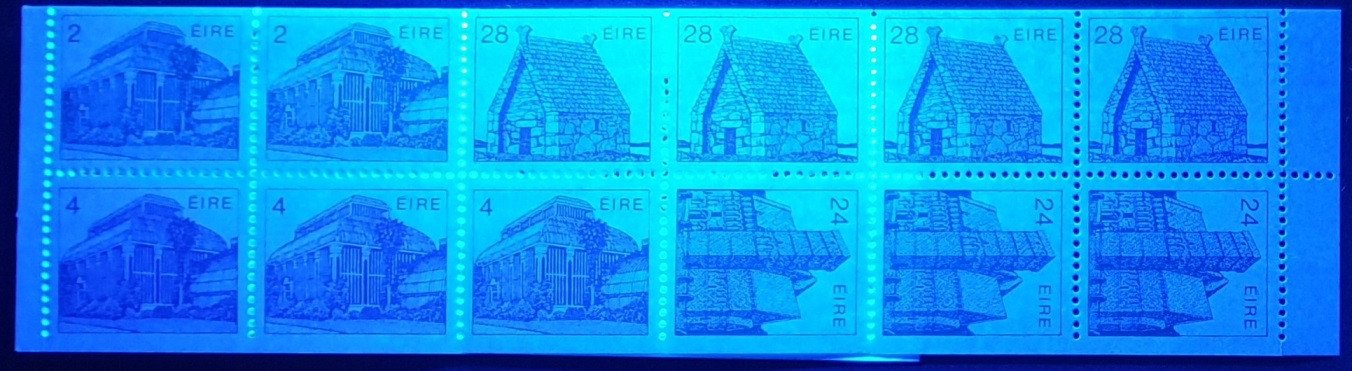
From 1982 until 1990, Éire issued its third series of definitive stamps. The stamps featured Irish architecture. There were nine designs. Stamps with face values up to 39p had a small format. Stamps with face values from 44p up to £5 had a larger format. The Hibernian Handbook published by Roy Hamilton-Bowen distinguishes three papers. Stamps issued from stamp books, often, are easily identified.
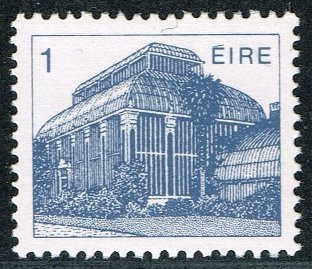
The lowest values (1p – 5p) feature the Curvilinear Range of glasshouses of the National Botanic Gardens (
Garraithe Náisiúnta na Lus) in the Glasnevin (
Glas Naedhe) neighbourhood of Dublin (
Baile Átha Cliath). The National Botanic Gardens were founded in 1795 by the Dublin Society. The greenhouses designed by Richard Turner were completed in 1848. They were extended in the late 1860s.

The next range of values (6p – 12p) features Dr Steevens' Hospital (
Ospidéal an Dr Steevens) located in the Kilmainham (
Cill Mhaighneann) suburb of Dublin. Dr Richard Steevens (1653-1710) bequeathed an income to his sister, Grizell Steevens, with which a hospital should be founded after her death. Grizell Steevens, however, founded the hospital in 1720, during her life. She did so on the condition she could life there until her death (1746). The design shows the hospital as it was in the 18th. century.

The values from 15p up to 22p feature Aughnanure Castle (
Caisleán Achadh na nlubhar) in Oughterard (
Uachtar Ard), County Galway. The tower house was built by the Ó Flaithbheartaigh family of the province of Chonnachta (Connaught), in the 16th. century. The family controlled the castle until 1572.

The stamps with a face value from 23p up to 26p, and 39p feature Cormac's Chapel at the Rock of Cashel (
Carraig Phádraig) site. The chapel was built by Cormac Mac Cárthaigh, King of Munster (
Mumhan) between 1127 and 1134.

Saint Sinach Macdara, patron saint of seafarers, is believed to have built a wooden church on the island (
Cruach na Cara) that bears his name, in the sixth century. The wooden church was replaced by the present stone oratorium in the tenth century. The stamps with face values from 28p up to 37p feature the oratorium.

The 44p stamp features the Roman Catholic St. Mary's Cathedral (
Ardeaglais Naomh Muire) in Killarney (
Cill Airne). Construction of the neo-Gothic cathedral began in 1842. It was consecrated in 1855. The spire and nave were finished in 1907. From 1984, the design was used for the £1 stamp.

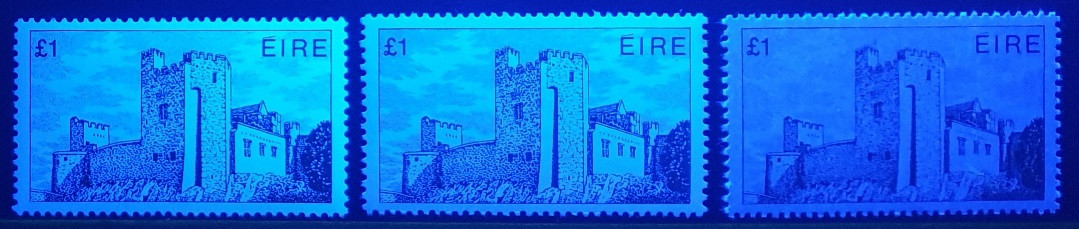
The stamps with a face value of 46p and £1 featured Cahir Castle (
Caisleán na Cathrach). The design of the latter stamp was changed in 1984. The castle was built by Conchobhar Ó Briain, King of Thormond (
Tuamhain) from 1142. The castle stands in the town of Cahir (
Chathair) in County Tipperary. The present castle dates from the 13th. century and was remodelled several times. It was restored in the 1840s.

The Casino at Marino is a pleasure house in Italian neo-Classical style built from the late 1750s until 1775. The house was designed by William Chambers for James Caulfeild, the 1st Earl of Charlemont. The small house, casino in Italian, stands in what were the gardens of Marino House in Dublin. The design was used for the 50p and £2 stamps.

The final design, used for the £5 stamp, features the Busáras in Dublin. The name derives from `bus and áras (house). It is the Dublin central bus station from which Bus Éireann operates intercity and regional bus services. The building was constructed between 1945 and 1950.





 Posted 05/01/2021 3:19 pm