floortrader, you'll have to explain better what you mean by "there isn't anybody around who can identify this forgery ". It sounds like you mean that Wada forgeries can't be told from the genuine, which is not true.
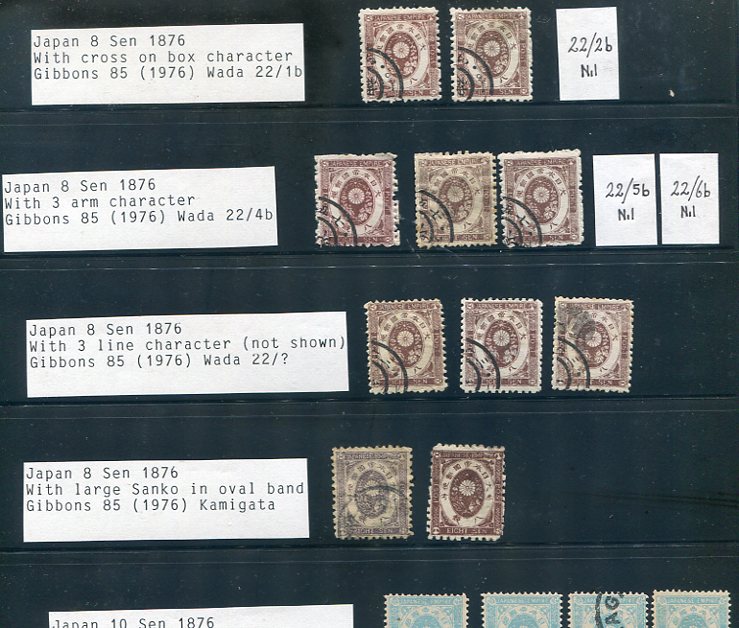
The OP's stamp is not from the first series of Wada forgeries, which are identifiable by being engraved instead of typographed, having the 2 characters making up "sanko" on the sides of the oval, and their cancels are typically ( but not always) fall into several types printed often in a graphite color (pencil lead color) that are often found incomplete at the edges.
If floortrader means the (second series) Wada
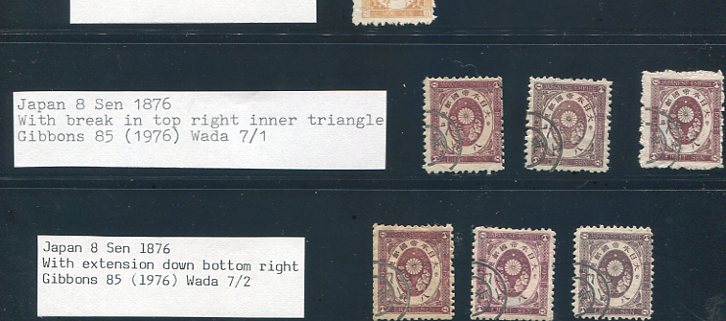
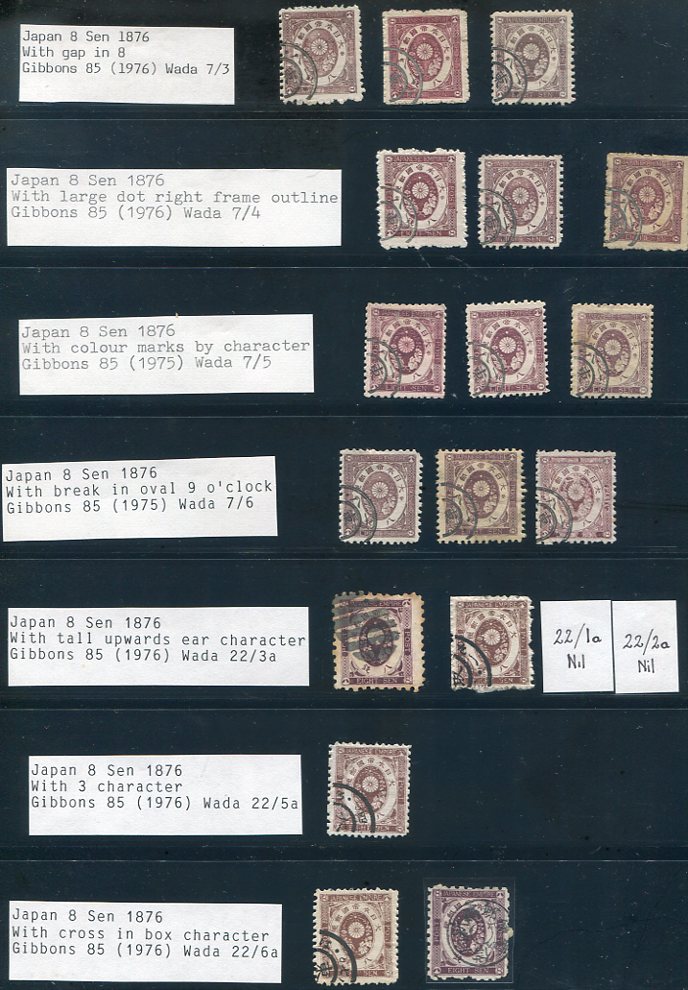
litho forgeries, without "sanko", those typically have those cancel types mentioned above. These are litho productions of that period also – the genuine have sharp edges and details and these forgeries are muddier/rougher-looking. The litho forgeries are (probably) scarce, certainly much scarcer than the engraved ones. floortrader has a major collection of the litho forgeries.
eagle79, it's not lost knowledge. The engraved forgeries and some of the lithos are covered in
The Koban Forgeries of Japan by Kr. Wilhelmsen and Varro Tyler, a 1979 paperback monograph first published in 1979 by the ISJP. This is monograph 8, still available from ISJP. It's cheap enough but really is more for students of forgeries.
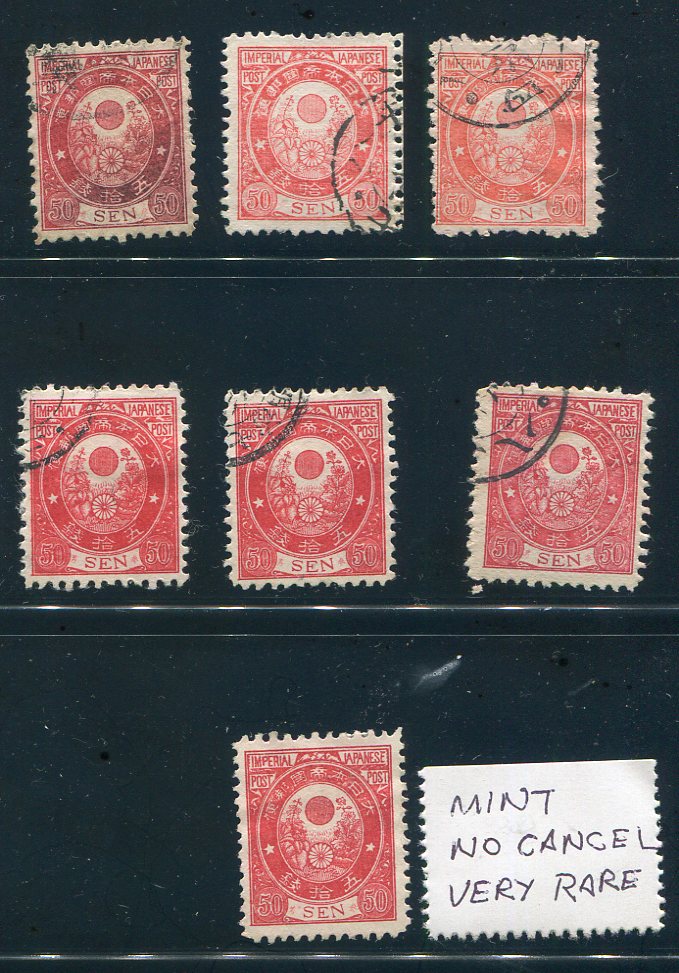
floortrader's collection is showing both Wada forgery types and the Maeda/Kamigata forgeries also.
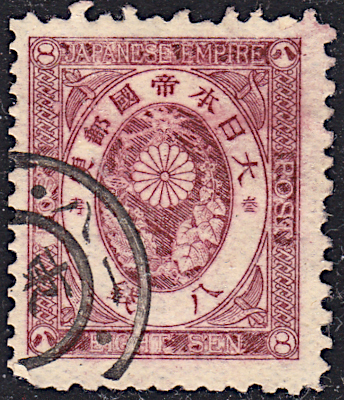
Here's the 8 sen (Scott 61) Wada engraved forgery:
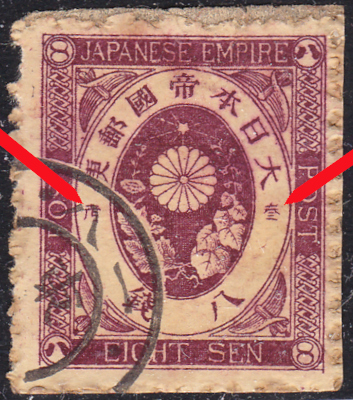
hard to tell from the scan if it's engraved, but the key is also the characters shown by the red arrows reading "sanko" (meaning "reference"). That the thing is glued on piece is a very good tipoff that it is a forgery. Note here how the cancel is off-register enough so that it exposes a blank space of the design. Not all Wada forgeries are like this.
The obvious problem comes with the more scarcer and expensive stamps of the series. Here are what the value tablets/circles of what the genuine look like:
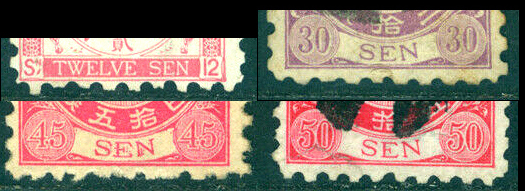
These are very sharp and clearly done. The numerals of the Kiri branch issues are evenly and finely outlined in white. The 45 and 50 sen values have additional partial outlines of the white shading in color.
The 16 sen is shown to show how well done the lettering is, not so true of the forgeries.
The 30 sen is the red violet shade.
Found a 45 sen forgery online, the upper example of the two shown below. It is the (obvious?) engraved type probably with "sanko" carefully covered by a fake cancel:
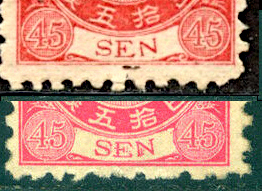
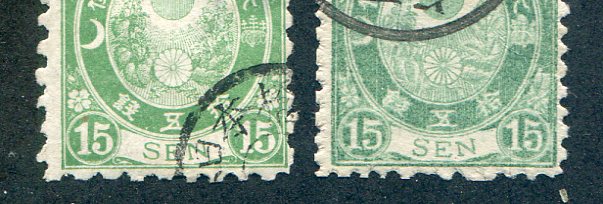
Compare the right value circles. Ignore the size difference; no effort was made to make sizes match up.
I'll throw in that if you know the colors the genuine come in, the difference is often clear. The Wada forgeries come in shades, though.
Mint copies are known of the Wada engraved forgeries, so we might expect litho ones, too. However, a lot of the ones for the better values were reported to have been used by other forgers that added forged cancels.





 Posted 10/29/2021 10:20 pm


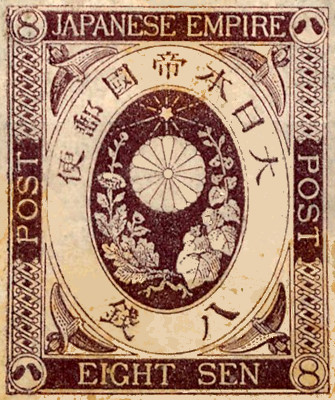




 , Calstamp!
