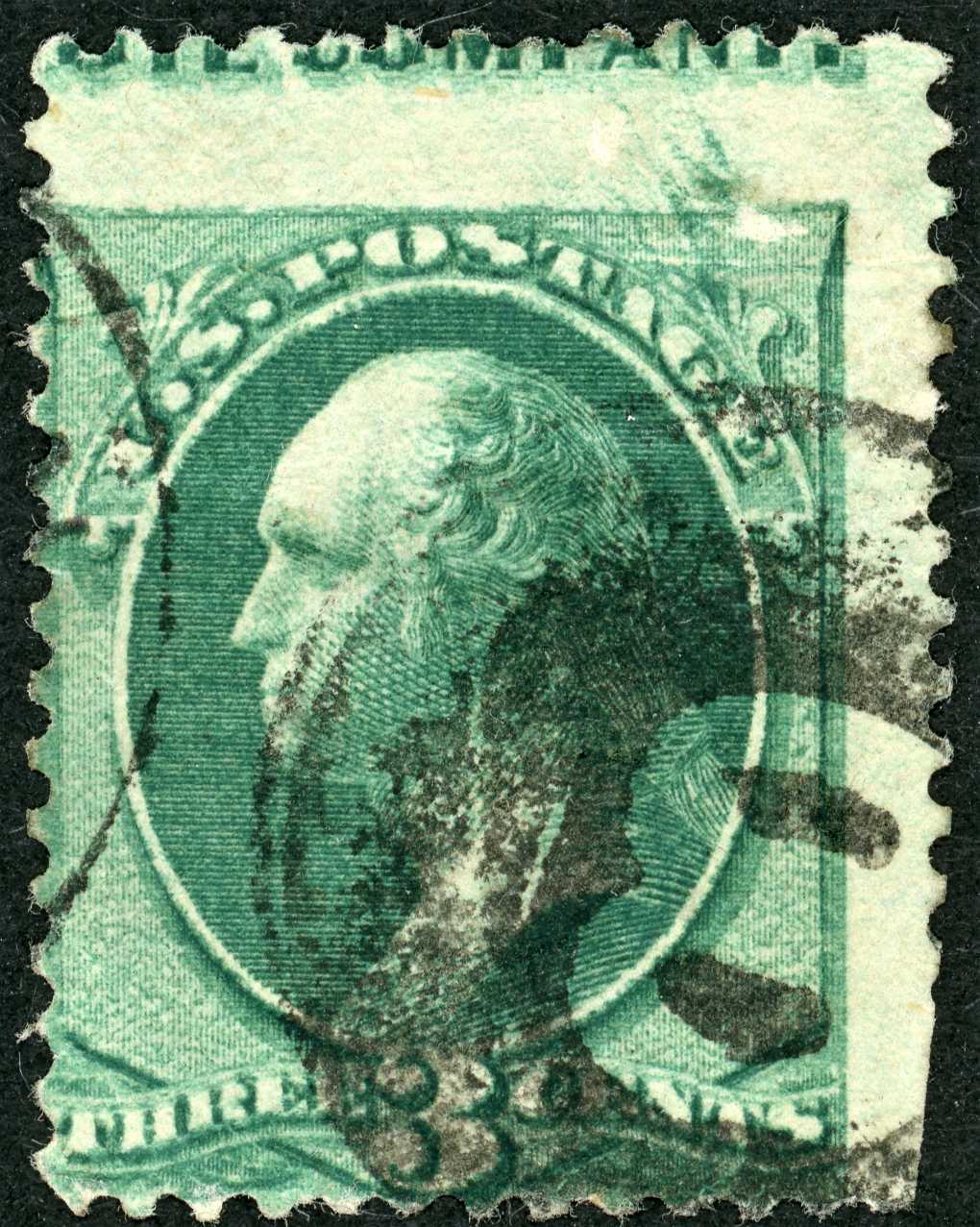
First, no matter the cause, this is a nice interesting item.
Quote:
A DT this obvious would already be well known.
Second,

, with eyeonwall because if this was a double transfer, there would be many printed copies to find and it would have been long listed in Scott. A DT is in the metal of the printing plate and thus every impression of the plate would create one copy of this, a copy which would be identical.
Here I think this is a example of the paper touching the printing plate on additional time besides the normal impression under printing pressure.
The most likely locations on the printing paper for this to occur is at the edges, top or bottom with the sides, left and right a bit less likely. The other likely area would be the center of the sheet which can bow out. Here the straight edge at the bottom demonstrates the stamp location is the upper center row with the "center" being the location of the paper cut producing the straight edge at the bottom of the top middle row and top of the lower middle row.
lastly, because the printing sheet bows to create this, the location the paper touches the printing plate will be slightly different than with a flat sheet due to the change in surface geometry or surface measurements.
Again, quite the find.





 Posted 12/18/2021 9:30 pm