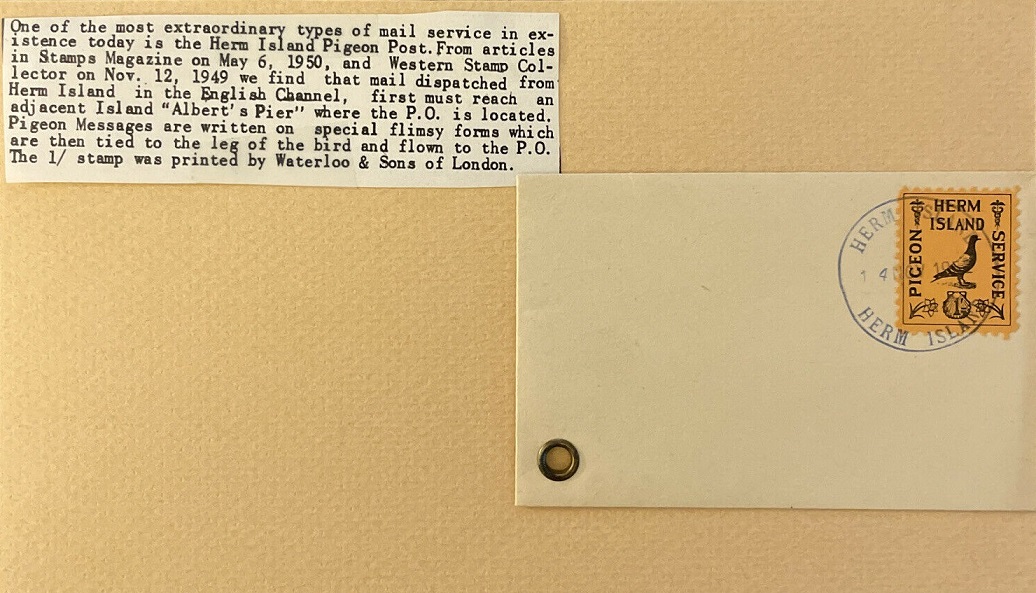
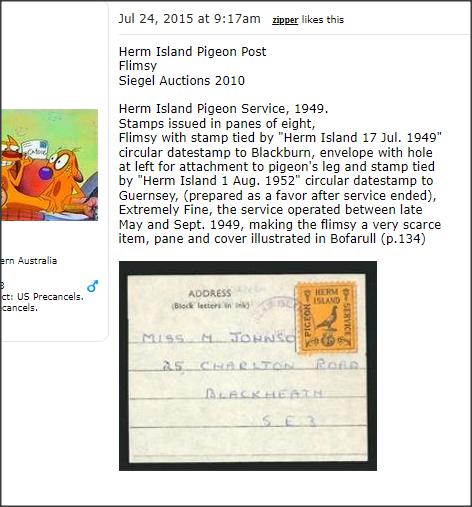
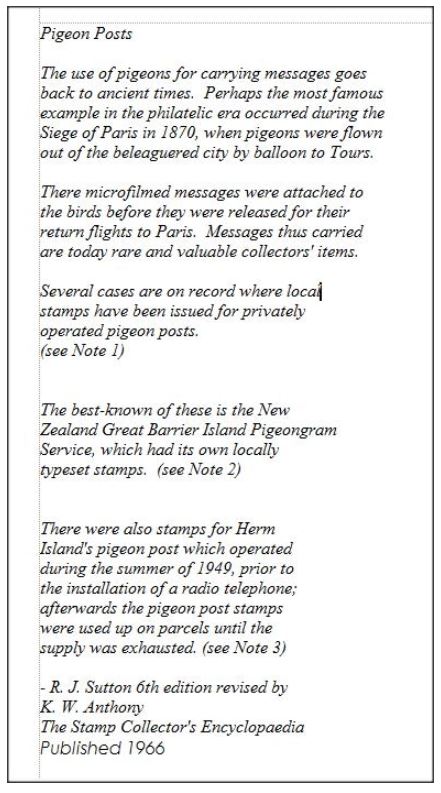
I would view the stamps be they used as airmail or parcels as local post stamps. Issued to show payment for a postal service, but not recognized beyond the local area as being unrecognized by the UPU. Had the UPU recognized the Herm Island issues, then GB had no choice but to find the valid.
So it has been established in this thread in spite of some snark, that the stamps were issued and used for the purpose issued.
Here is more on the tension between Herm Island and GB:
https://www.stampcommunity.org/topi...OPIC_ID=4549Edit: The above referenced thread is locked, so I will continue here. Philately has a bit of inconsistency about the terminology of stamps issued to pay for mailing services. While I can understand why local post stamps which are not recognized by the UPU for travel beyond the issuing authority's span of control are called Cinderellas by some. Yet the same folks don't call other stamps not recognized by the UPU as valid beyond the issuing entity's span of control.In fact entire countries not part of the UPU (at some time in their postal history) still have their stamps listed in postage stamp catalogs. Nepal for example. Yet even other stamps issued by private companies in colonial periods are recognized as stamps. There are many British Empire areas for which stamps were issued by a company with mail service handled by the company. GB was not the only country with such business ties. These area usually has geographic names with "Company" at the end.
Additionally UPU member countries at time issued stamps not recognized outside of the issuing country's span of control. These are not even given a name other than postage stamp. For example the USA Alphabet undenominated issues and the Christmas stamps of the same period not showing a value. Until, for the USA, "forever stamps" were recognized by the UPU none of the undenominated stamp were valid for international mail. No one calls these Cinderellas.
Likewise if a UPU country does not provide to the UPU designs of issued stamps, those too are not recognized beyond the span of control of the issuing authority. Revolution or serious civil unrest can lead to such failure to provide the information to the UPU. Yet those are still called stamps and listed in stamp catalogs.
It seems that what is more important than the fact the issued stamps paid for postal carriage is the human perception of the humans outside of the issuing authority.
All that said, here below is the only recorded example of duel franking involving parcel post stamp on a post card where the Mexican stamp issued during the revolution was not valid for postal purposes outside of Mexico. Thus a US stamp was added to cover the postage within the USA (and beyond if necessary).




I am not a fan of Bull Fighting, but I had no choice about the image in the unique postal example.
{For later searches: US Parcel Post, Q1, Q-1, one cent, Mexican Revolution stamp, unrecognized, dual franking, Mexico}





 Posted 06/09/2022 11:41 am