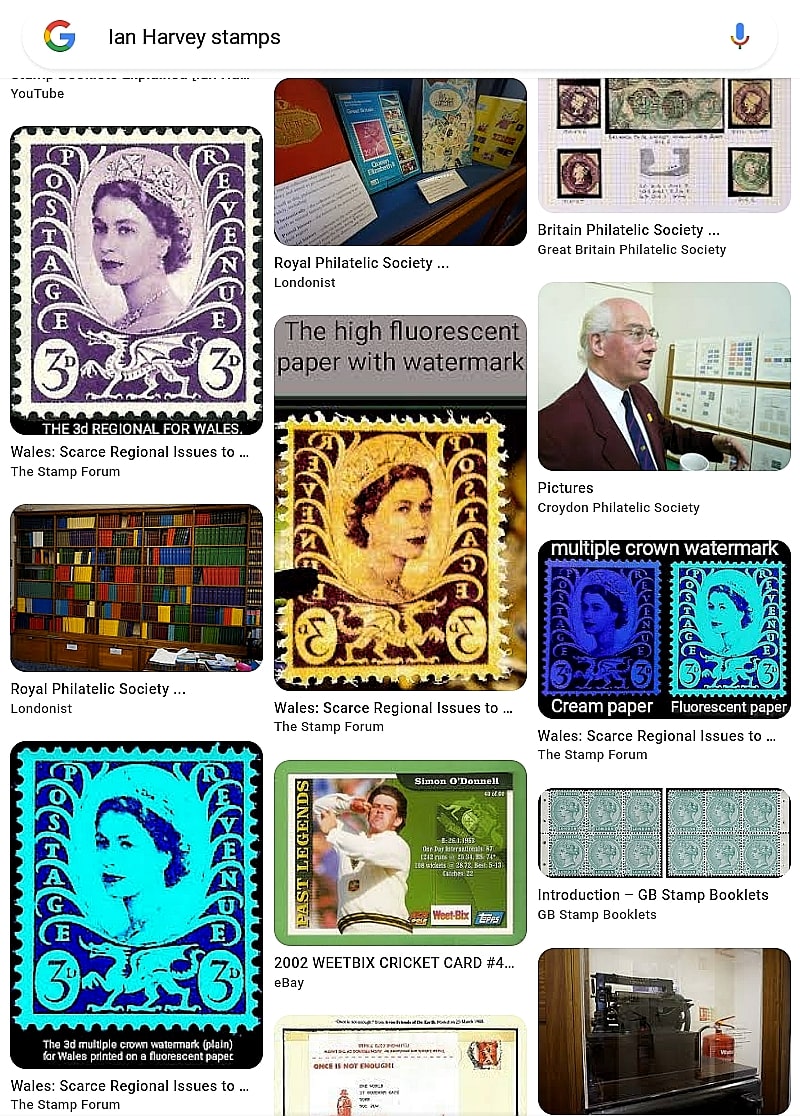
Over the past 4 years or so I have been looking at various papers that was used to print British stamps with the multiple crown watermark.
Sorting through the many varied issues whilst trying to discriminate between cream and whiter papers using a longwave ultraviolet lamp, I came across this 3d stamp (plain) specifically designed for Wales, known as a regional or country stamp, in total there were three main regions Northern Ireland, Scotland and Wales.
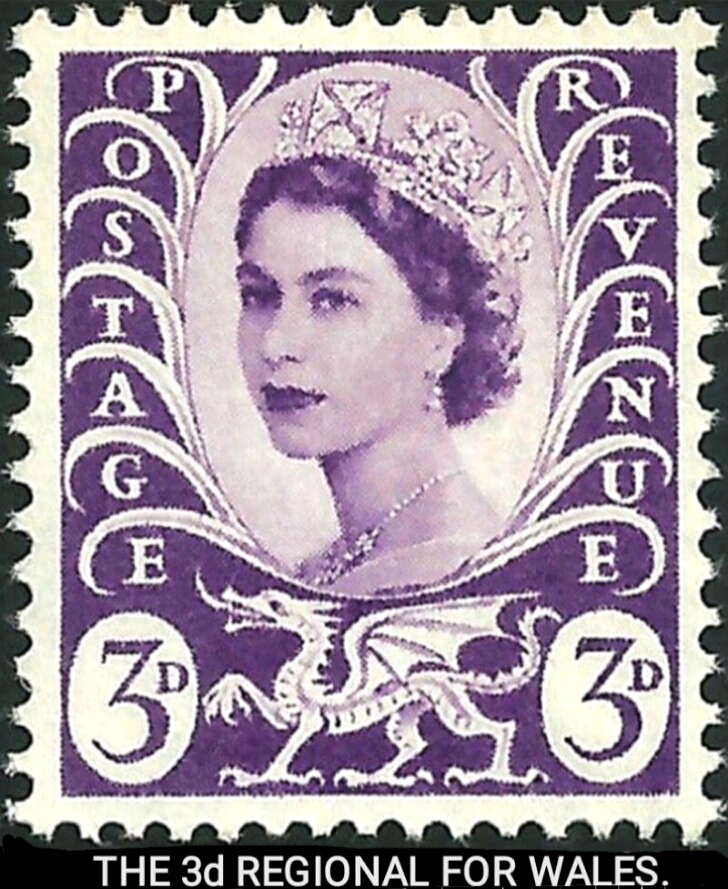
The regional stamp was valid for postage throughout the United Kingdom but was normally only sold from post offices in the country of origin but was available from philatelic bureaus throughout the UK.
A good benchmark in the identification of the two different listed papers was having a cylinder block to compare with other single stamps or blocks, due to the fact that the cream paper stamp version was only printed using cylinder 1 with cylinder 3 only being used to print the whiter paper version, in total there was three cylinder numbers used 1,2+3, cream and whiter paper versions can be found printed using cylinder 2.
I was quite surprised therefore when when I came across a single stamp with a paper that was neither cream nor whiter, as the reaction under the ultraviolet resulted in the stamp glowing brightly and was completely different from the listed versions normally found.
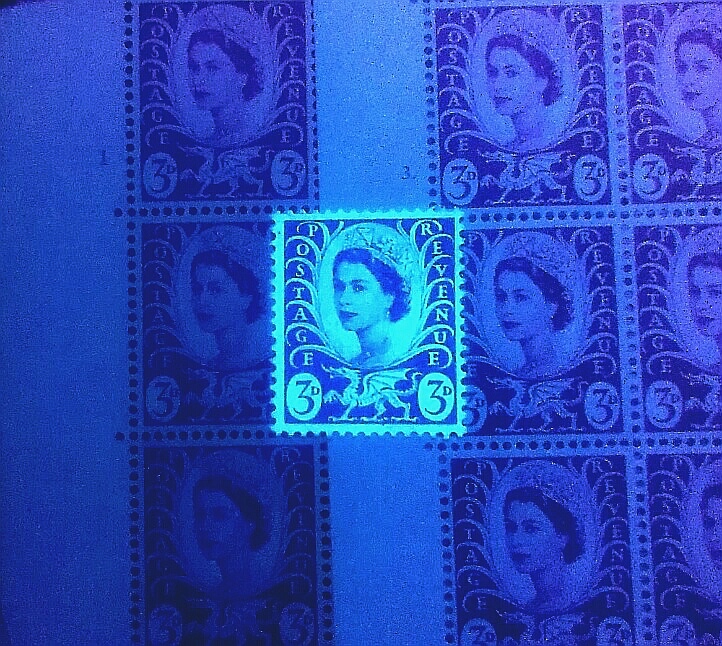
In 1967 a no watermarked version printed on a chalk paper with one centre phosphor band reacting violet was produced for use, and this stamp normally reacted in a similar way, glowing brightly when introduced to longwave UV, thinking that I had mixed a no watermark stamp with the watermarked ones, I checked it and found a watermark to be present and no phosphor band had been applied.
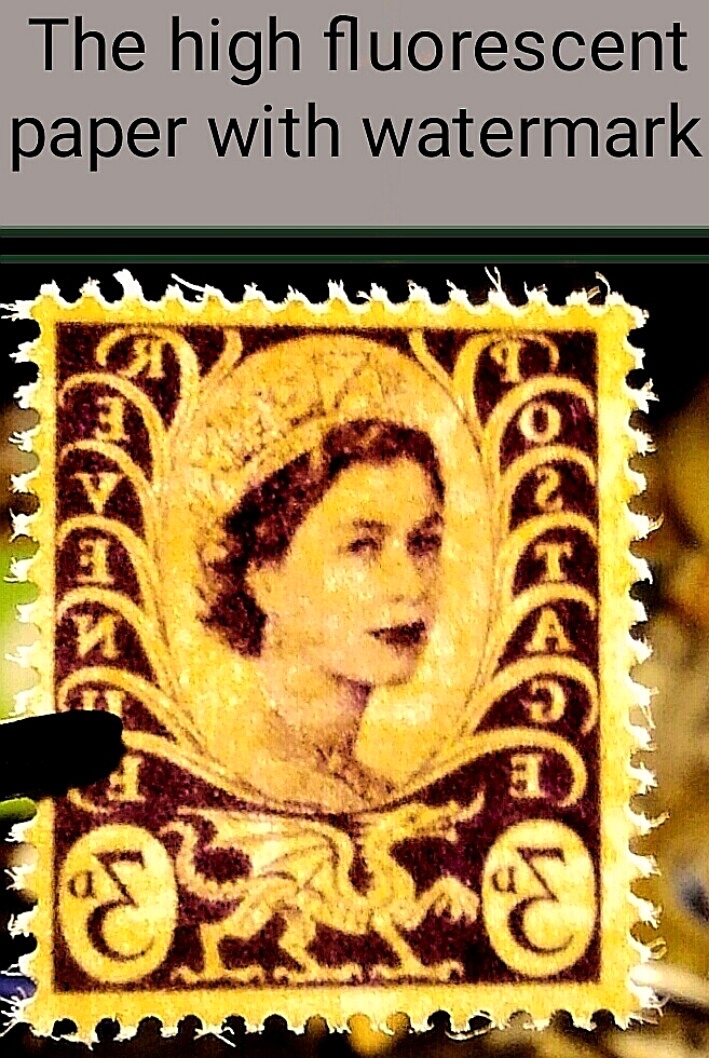
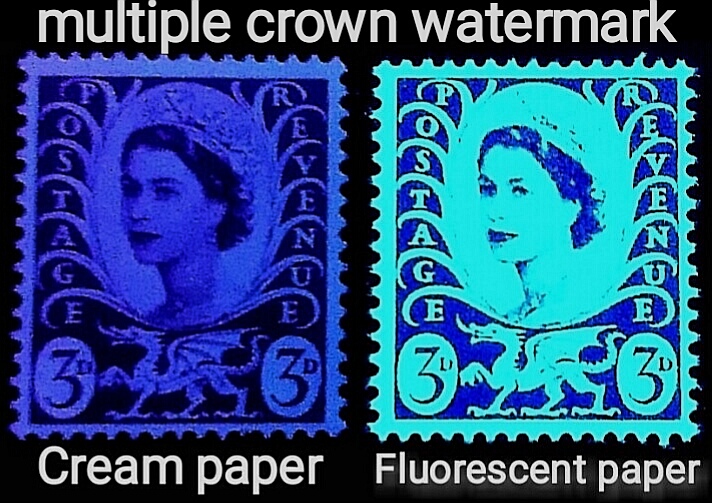
Since then I have found various other GB stamps with similar characteristics in that a multiple crown fluorescent paper has been used, none of which are listed in specialised catalogues. WM.





 Posted 06/13/2022 03:46 am