| Author |
 Replies: 36 / Views: 20,364 Replies: 36 / Views: 20,364 |
|
|
|
Valued Member
Canada
151 Posts |
|
|
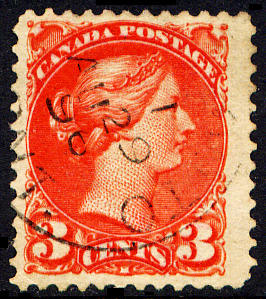
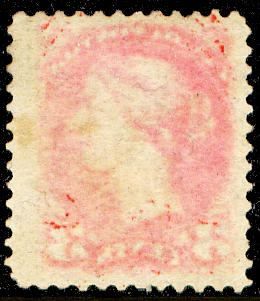
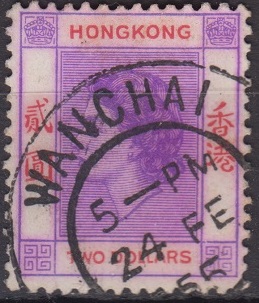
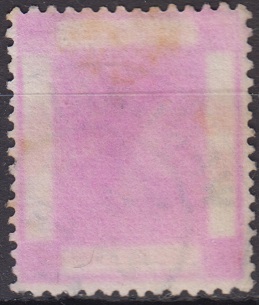
These were apparently caused by ink bleeding through during soaking (I did manage to find an excerpt from an old book indicating that aniline ink was thought to have been used for this stamp)so I thought it may be of use to members who may have not seen/know the difference. Paul   |
Send note to Staff 
|
|
|
Bedrock Of The Community
Australia
38679 Posts |
|
|
Looks a little like cancelling ink oil vehicle bleeding through, John, that being said, I do not recall many Aussie stamps suffering this fate,
possible to look at the face?
|
|
Send note to Staff
|
| Edited by rod222 - 05/22/2010 9:26 pm |
|
|
Pillar Of The Community
Australia
4034 Posts |
|
|
 Rod the front of the KGV stamp posted with bleeding on back of! All my KGVs are under decimal stamps at the minuet. I know shades do not show up very well on line but I have an example of the deepest Aniline shade I have ever seen! I will post it one day. I put it away years ago because it stands out so much! |
|
Send note to Staff
|
|
|
Bedrock Of The Community
Australia
38679 Posts |
|
|
Yes, well I have to agree with you John,  As you say, the cancellation ink has drawn the aniline through. Interestingly in 1856 an Englishman, experimenting with coal tar, found the first aniline dye. His name was Perkins, I wonder if this was the partner of Perkins Bacon the stamp printers. |
|
Send note to Staff
|
|
|
Pillar Of The Community
Australia
4034 Posts |
|
|
I just love the coal tar information. I had no idea how this ink was made. Thanks to all. John |
|
Send note to Staff
|
|
|
Rest in Peace
Canada
5701 Posts |
|
|
Bedrock Of The Community
Australia
38679 Posts |
|
|
I have read occaisions such as yours BeeSee, go towards
identifying a certain type of stamp paper, when the image can be seen
from the back, but I am not certain that it applies here or not. |
|
Send note to Staff
|
|
|
Bedrock Of The Community
Australia
38679 Posts |
|
|
Illustrating the blessings of the world wide web, Mr. J E Toy of Fiji would have had to wait probably 3 months for a reply to his query in June 1936 zzzzzzzzz  |
|
Send note to Staff
|
|
|
Pillar Of The Community
Australia
2156 Posts |
|
|
I hope it's OK to revive this 2010 thread! I'm also wondering how to identify aniline ink stamps. Is a UV reaction a way to do this? I have about a hundred 10pf Bavarian red stamps (from the late 19th century) and under UV only one of the stamps had a strong reaction. It glowed bright orange. I think I read somewhere that aniline stamps were the first to have UV reactions. Does this mean that it's aniline?
I should mention that the Michel specialised catalogue does list an aniline variety for this stamp, but it's described in terms of its shade, not UV reaction. |
|
Send note to Staff
|
|
|
Bedrock Of The Community
Australia
38679 Posts |
|
|
I have read that aniline flouresces, but not seen it myself. In general it is named and recognised by its general colour and properties that include it breaking down easily when wetted. It was used to prevent forgeries and removal of postmarks. sometimes "bleeds" through to the back of the stamp deep purple in colour. KG6 Malay States are a prime example. Quote:
I hope it's OK to revive this 2010 thread That's what one is SUPPOSED to do  it builds as a reference source for those that come after. 10 points to you for doing this. |
|
Send note to Staff
|
| Edited by rod222 - 11/05/2012 7:48 pm |
|
|
Pillar Of The Community
Australia
2156 Posts |
|
|
Thanks for the comment, rod222!
BTW, I have established that my stamp in an eosin (not aniline) shade. It's Michel# 49b. |
|
Send note to Staff
|
|
|
Rest in Peace
United States
7097 Posts |
|
|
This thread has fascinated me recently on the subject of inks. Also reminded me of a few beautiful New Zealand stamps (pictured earlier) that I recently got in a recent acquisition and noticed rather quickly that besides the different perforation counts there seem to be different dies used as well. Some differences are rather subtle and others are very noticeable (see globe) as some seem "muddy looking" and others very sharp appearing. Any info on this would be greatly appreciated. Are all these Aniline as well or do you need a back scan?  This one is absolutely gorgeous to me.  |
|
Send note to Staff
|
| Edited by I_Love_Stamps - 11/07/2012 08:28 am |
|
|
Pillar Of The Community
Canada
737 Posts |
|
|
Quote:
Also reminded me of a few beautiful New Zealand stamps (pictured earlier) that I recently got in a recent acquisition and noticed rather quickly that besides the different perforation counts there seem to be different dies used as well. Some differences are rather subtle and others are very noticeable (see globe) as some seem "muddy looking" and others very sharp appearing. Any info on this would be greatly appreciated. Try this link for info on the New Zealand Penny Universal and Penny Dominion stamps. http://www.stamps4u.co.nz/Ryan |
|
Send note to Staff
|
|
|
Rest in Peace
United States
7097 Posts |
|
|
Pillar Of The Community
1515 Posts |
|
|
Replies: 36 / Views: 20,364 |
|




 Posted 05/22/2010 09:50 am