Stamp Community Family of Web Sites
Thousands of stamps, consistently graded, competitively priced and hundreds of in-depth blog posts to read


Stamp Community Forum
 
Username:
Password:
Save Password
Forgot your Password?

This page may contain links that result in small commissions to keep this free site up and running.

Welcome Guest! Registering and/or logging in will remove the anchor (bottom) ads. It's Free!

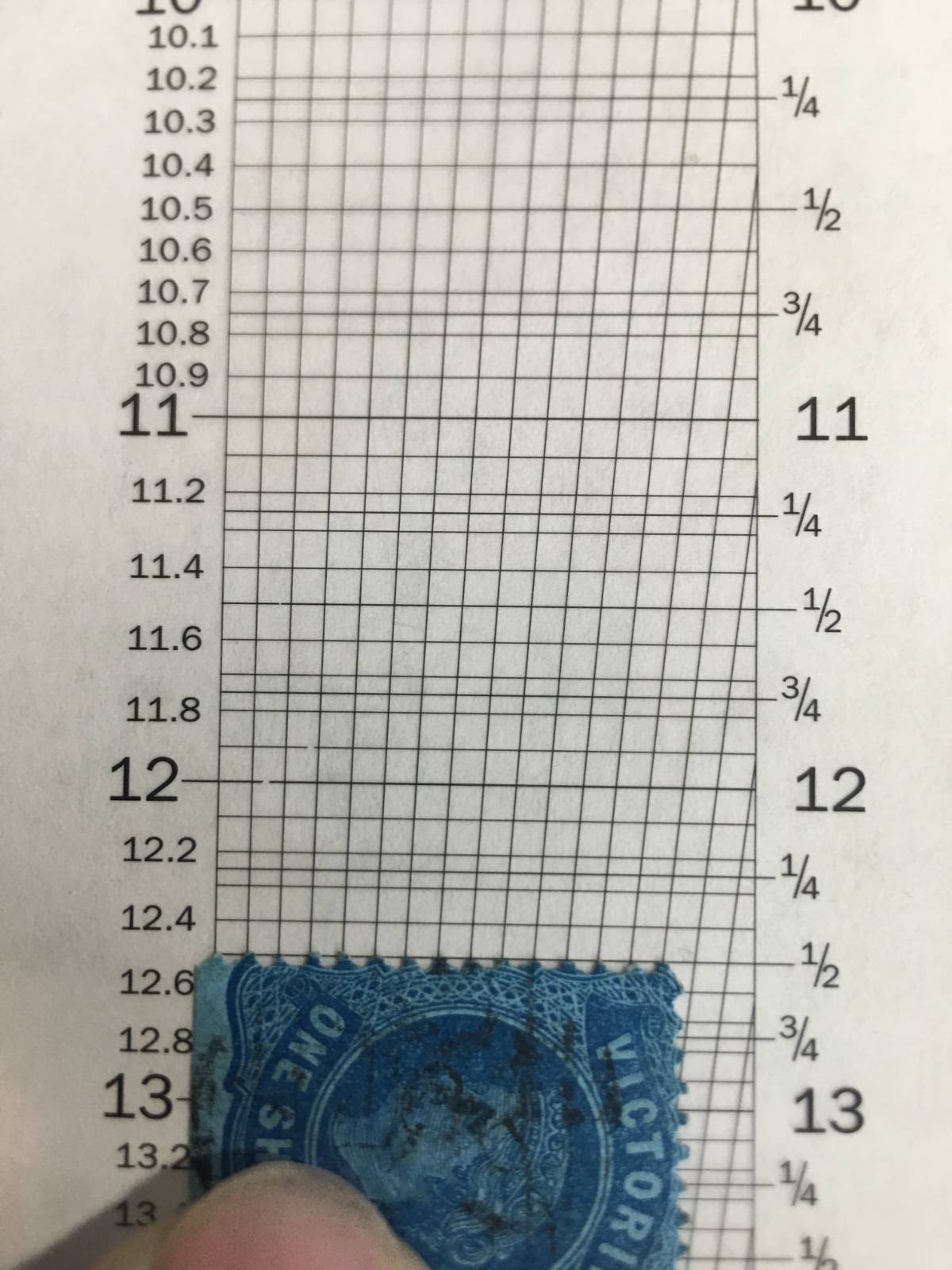
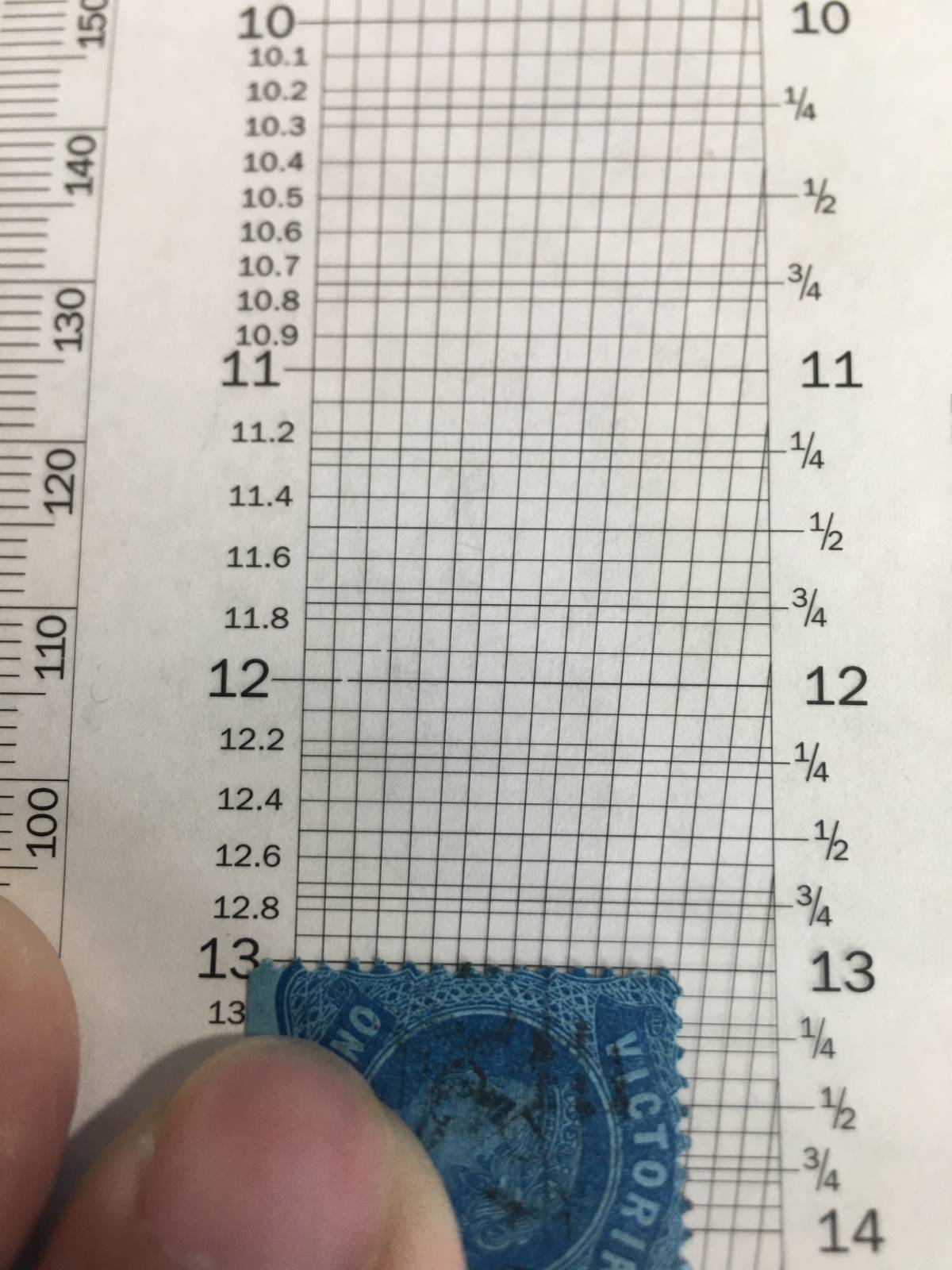
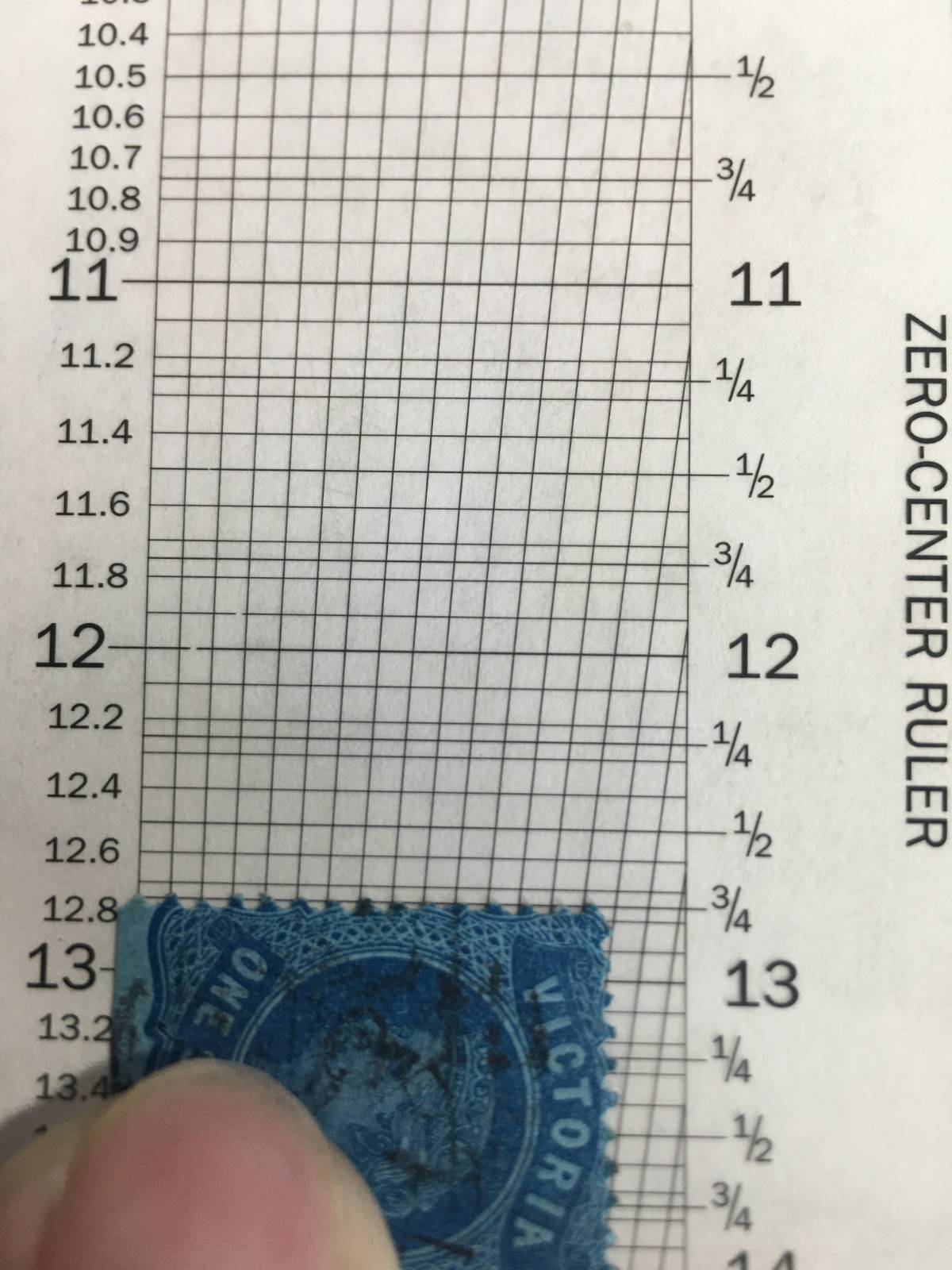
Victoria One Shilling Blue Perforated 12.5

 
To participate in the forum you must log in or register.
Author Previous TopicReplies: 8 / Views: 1,131Next Topic  
Pillar Of The Community

United States
729 Posts
Posted 10/30/2022   3:11 pm  Show Profile Bookmark this topic Add danko to your friends list Get a Link to this Message
Could be a question worth asking.

Both Scott and SG have this stamp as perforated 12 or 13. Scott doesn't differentiate but SG gives different numbers. But this stamp is perforated 12.5, not 12.25 not 12.75, it is dead set on 12.5. Any ideas? Am I missing something?


Send note to Staff

Bedrock Of The Community
Australia
38679 Posts
Posted 10/30/2022   3:49 pm  Show Profile Bookmark this reply Add rod222 to your friends list  Get a Link to this Reply
Tip:
First for commentary, always identify your stamp first.

Perforation is an inexact science, it is not meant to be, nor was it intended to be, a scientific response.

Unless there is some fine discrepency, between identical issues on different perforators, perf definitions are always approximate, and taken to the closest millimetre.
A stamp measuring 11.3 for example, is generally referred to as perf 11 stamp, simply because the finer measurement is not relevant, and probably wrong anyway.

Your stamp is perf 12 - 13 and compound.
Send note to Staff  Go to Top of Page
Edited by rod222 - 10/30/2022 3:56 pm
Bedrock Of The Community
Australia
38679 Posts
Posted 10/30/2022   4:00 pm  Show Profile Bookmark this reply Add rod222 to your friends list  Get a Link to this Reply
Australian collectors, FYI
this being an 1873 stamp, it is not listed in Brusden White's early Federal period
catalogue.
Send note to Staff  Go to Top of Page
Bedrock Of The Community
Australia
38679 Posts
Posted 10/30/2022   4:23 pm  Show Profile Bookmark this reply Add rod222 to your friends list  Get a Link to this Reply
Appears to be a NSW postmark COPELAND
Send note to Staff  Go to Top of Page
Pillar Of The Community
Australia
3282 Posts
Posted 10/30/2022   4:51 pm  Show Profile Bookmark this reply Add Bobby De La Rue to your friends list  Get a Link to this Reply
Gibbons list stamps perf. 12.5-13 as perf. 13.

I have examples of a stamp listed as perf. 13 that varies between 12.5, 12.75 and 13.

See my post of 8 June here:

https://goscf.com/t/76809&whichpage=5

Send note to Staff  Go to Top of Page
Moderator
Learn More...
United States
12330 Posts
Posted 10/30/2022   5:09 pm  Show Profile Bookmark this reply Add 51studebaker to your friends list  Get a Link to this Reply
Another 'victim' of overly detailed perforation gauges. My opinion is that there ought to be a perf standard in our hobby which both catalog publishers and perforation gauge manufactures are in sync.
I think what basically has happened over time is that perf gauge manufacturers, in an attempt to be 'better' than the existing gauges, pushed the tolerances out too far and well beyond what catalog publishers have listed for decades. Hobbyists have adopted these gauges and now we have to constantly clarify the issue. If nothing else, why do not the gauge manufacturers put a notice on the gauges which explains the issue?
Don
Send note to Staff  Go to Top of Page
Pillar Of The Community
United States
729 Posts
Posted 10/30/2022   6:23 pm  Show Profile Bookmark this reply Add danko to your friends list  Get a Link to this Reply
It would be much more helpful if catalog producers will publish exact perforation measurements or at least a range instead of rounding to a nearest 0.5 unit.

If the consensus is that 12.5 perforation is SG # 180 (one of the shade letters) I'm ok with that.

What bugs me, there 12.5 perforated stamps from this issue, just not the 1S blue.

Don.

You kind of need this type of gage when trying to identify some stamps perforated 12.25, 11.25, 11.8, and etc. from 12.5, 11.0, 11.5 and etc.
Send note to Staff  Go to Top of Page
Pillar Of The Community
Australia
975 Posts
Posted 10/30/2022   10:55 pm  Show Profile Check 64idgaf's eBay Listings Bookmark this reply Add 64idgaf to your friends list  Get a Link to this Reply
Firstly some comment on perforations.

The perforation machines were designed to allow easy separation of stamps. They are not precision devices where much care was taken to ensure the pins were evenly or precisely spaced.

Nextly:

With regard to information in catalogues, Stanley Gibbons and are generalist listings, the relevant handbooks are the specialists. In this case, Geoff Kellow's 'The Stamps of Victoria' is the gold standard.

Pages 197-199 make mention of the 1s 'Bell' design (William Bell was the designer).. 1.1m stamps were issued in 9 printings from August 1876 until July, 1884. Two perforators were used, described as '12' and '13'. The stamp is postmarked with the year '7?' so must come from printings prior to the 5th printing of March, 1880. The perf '12' was not used until after 1880, this stamp must be the perf '13'.

Kellow's book contains excellent information on perforations in the introduction. pages 24-27. Three different perforators were in use from late 1873 until 1913, simplified as '13'. Those described and 'perf 12' never exceeded 12.

My opinion of perf gauges: The Stanley Gibbons 'Instanta' is the only one you will ever need. Every other choice is a compromise.


Send note to Staff  Go to Top of Page
Edited by 64idgaf - 10/30/2022 10:57 pm
Moderator
Learn More...
United States
12330 Posts
Posted 10/31/2022   05:15 am  Show Profile Bookmark this reply Add 51studebaker to your friends list  Get a Link to this Reply

Quote:
...The perforation machines were designed to allow easy separation of stamps. They are not precision devices where much care was taken to ensure the pins were evenly or precisely spaced...


Agreed 100%. At the time, I doubt they were checking daily to see if the perforating pins were 12.3 or 12.4 and then changing the pins if something was slightly different. Pins wore over time, single pins got bent, sometimes many of the pins might move in the direction of travel.

And how far do we take this? thousandths? ten thousandths? What if someone does a remarkable lifetime study and writes a book/catalog identifying perfs out to 3 decimals points? Does this then become the new standard with hobbyists filling new spaces in albums using precision gauges or software? Even when contemporaneously no one was bothering with that kind of precision or tolerances?
Don

Edit: After re-reading my post above I wanted to clarify. I see nothing wrong with studying/collecting at a high level of detail. But at what point does the high level of detail begin to become new catalog numbers and album spaces?

Here in the US, many collectors plate the early 1 Cent and 3 cent stamps. Some of these have eventually become their own major catalog numbers.

At the time, the US Bank Note companies were printing stamps in quantity and "high quality" was not required for stamps as it was needed for the printing of currency. The took greater care (and pride) with bank notes than they did with stamps.
Send note to Staff  Go to Top of Page
  Previous TopicReplies: 8 / Views: 1,131Next Topic  
 
To participate in the forum you must log in or register.

Go to Top of Page

Disclaimer: While a tremendous amount of effort goes into ensuring the accuracy of the information contained in this site, Stamp Community assumes no liability for errors. Copyright 2005 - 2026 Stamp Community Family - All rights reserved worldwide. Use of any images or content on this website without prior written permission of Stamp Community or the original lender is strictly prohibited.
Privacy Policy / Terms of Use    Advertise Here
Stamp Community Forum © 2007 - 2026 Stamp Community Forums
It took 0.16 seconds to lick this stamp. Powered By: Snitz Forums 2000 Version 3.4.05