| Author |
 Replies: 25 / Views: 7,508 Replies: 25 / Views: 7,508 |
|
Valued Member
Canada
347 Posts |
|
|
|
I have a large accumulation of definitive booklets, gathered over the past decade and a half, just waiting to be mounted or otherwise displayed in my collections.
I am generally reluctant to cut down anything, but realize that it may be the best way to show these booklets. I would like to hear from other booklet collectors about:
- best practices for displaying booklets and/or booklet panes
- how & where to cut panes from whole booklets
- when trying to be "complete" does one also show the booklet exterior and interior as distinct parts of the booklet?
You may see where I'm headed...do I need three or more of each booklet in order to get this all achieved in the most complete manner? Not a problem with some, but given the cost of others, perhaps prohibitive.
Though I have no immediate plans to exhibit this material, if I were to do so, would colour photocopies of booklet exteriors (probably reduced in size and identified as such) be suitable? Maybe a discussion for another thread.
All I know for sure is that it's time to tackle the ever-growing numbers of booklets. I am keen to see just how complete my Centennial-era booklet accumulation truly might be! So many varieties to check and catalogue!
Peter
(on a dull, rainy Saturday in the nation's capital...with two napping children and some rare time to be considering these matters)
|
|
Send note to Staff
|
|
|
|
|
Pillar Of The Community
Australia
3547 Posts |
|
|
Peter, as my favourite 'country', Barwani, issued all but a handful of its stamps exclusively in booklets, this question has always occupied me, too.
My general rule with questions like this is not to do anything irreparable. Once I take a booklet apart, it's taken apart, and it can never be in its original state again. I know some collectors take the view that, having spent the money, the block/booklet/cover is theirs to do what they like with. I'd counter with the argument that, if our predecessors had taken that line with old blocks/booklets/covers, there wouldn't be much left for us today. Or the collectors who will follow us.
Inconvenient to house and display, but there it is. |
Send note to Staff 
|
|
|
Bedrock Of The Community
Australia
38679 Posts |
|
|
 absolutely agree. I have seen frames at exhibition with printed example copies of exploded booklets. They were local and I have no idea on world rules. It begs the question, given the options above, why one would want to cut open a booklet. To snare a Gold Prize is my only reason to date. |
|
Send note to Staff
|
|
|
Valued Member
Canada
347 Posts |
|
|
I appreciate that you have both responded with principled reasoning. That's what I'm after for sure.
The fact that I am talking about (currently) inexpensive booklets should not factor in the answers. That said, I *am* talking about booklets that currently retail for between $1.00 and $25.00.
Peter
|
|
Send note to Staff
|
|
|
Bedrock Of The Community
Australia
38679 Posts |
|
|
OK Pete, consider the risk value of the feeling of "regret" I would think the value to be higher (very much so) when the option was taken to disassemble, against the option taken, was to leave untouched. That sway you?  |
|
Send note to Staff
|
| Edited by rod222 - 06/12/2010 11:25 pm |
|
|
Rest in Peace
Canada
5701 Posts |
|
|
PeterMac, you are bringing up such a tough subject! I never know what to do on this, but I do buy extra booklets to show the pane, cover, back cover, inside cover etc... can be expensive especially on those issues with many different front covers... Many cases when I show covers of booklets, there are no panes inside - long ago used as postage! |
|
Send note to Staff
|
|
|
|
Pillar Of The Community
Australia
3547 Posts |
|
|
PeterMac, I take your point, but the principle stays the same. In 1947, these were the only ½ Anna stamps of this type  you could buy from the Barwani Post Office. As you can see, it cost 1 Rupee - maybe $2 in equivalent buying power today. Gibbons list it at £700 (and £176 as 32 singles). Why? The booklets were the current standard issue: easy to get, and hardly anyone was bothering to keep them intact. How many of today's collectors are going to hand down their booklets unexploded to future generations? Some, of course - but enough? |
|
Send note to Staff
|
|
|
Pillar Of The Community
United States
1947 Posts |
|
|
I totally agree about handing down stamps to future generations. To take an almost trivial example. Hinging a previously unhinged stamp. Every time you do this is is one less for the future. There must come a time where the unhinged stamp becomes noticeably scarce.
Same principle with other philatelic material----once the original issue has been altered, it is gone forever. |
|
Send note to Staff
|
|
|
Valued Member
Canada
347 Posts |
|
|
I appreciate all the input on this subject. I am leaning heavily towards keeping the items intact.
So...how does one show the contents, inside printing and outside of the booklets at the same time? Am I "forced" (knowing full well that's a personal decision) to purachase several copies of the same booklet in order to achieve that goal?
How do the "keep it intact" crew do it?
Peter
|
|
Send note to Staff
|
|
|
Pillar Of The Community
Australia
3547 Posts |
|
|
Peter, I'm lucky. The booklets of Barwani were quite plain - no ads, nothing on the inside or back covers etc - so the question doesn't arise.
However, it seems to me you have three possibilities:
- Do nothing. Take out the booklet and show the contents physically, if necessary.
- Scan the relevant contents, and add the illustrations.
- Buy another booklet and explode it.
Of course, what you do will depend on what you plan to do with your collection. I don't display my collection. It's in stockbooks and purely for research, so the first option is easy for me. If you want to display competitively, I suggest you check the FIP rules to see what is required.
Tony |
|
Send note to Staff
|
|
|
Pillar Of The Community
USA
1749 Posts |
|
|
IMHO, if it is for display ,and you love the stamps, and want to display them for YOUR enjoyment--why not. I wouldn't want to do that to any high value stamps--to me high value would mean the $25 ones--but that's just me. After all, aren't the stamps for OUR enjoyment--who will enjoy them if when we're gone and they're sold at an estate auction, etc. Now if you pass those items along in the family and the individual really loves the sentimental value and theme of the art work display--isn't that what matters?? Just playing the other side here  Gussyboy1 |
|
Send note to Staff
|
Nobody gets in to see the Wizard. Not nobody. Not No How!" |
|
|
Valued Member
Canada
347 Posts |
|
|
Thanks Tony and Gussyboy.
I am still in the camp of "undecided" at this point, though I am leaning towards the "do no harm" philosophy. I do plan to exhibit eventually, so I will check the FIP rules to see how a Cardboard medal might be made better by an exploded booklet and move up to being a Tin medal.
Still welcoming other thoughts from the community...
Peter
|
|
Send note to Staff
|
|
|
Valued Member
Canada
11 Posts |
|
|
... I'm new to these postings! I read the comments about intact or broken booklets. My dime & ½¢ worth is "keep the booklets whole!" and buy the lesser expensive dups you need to make up your 'display' ... and photo copy others as you suggest as your copies will likely be very good quality printed on heavy card stock! You will never be able to reassemble the booklet once broken ... BUT, what the heck, it is after all your collection so do as you please ... sorry more than a dime!
Wig |
|
Send note to Staff
|
|
|
Pillar Of The Community
2664 Posts |
|
|
from a curator perspective if you dont get rid of the pins it will destroy the booklet eventually might take a few decades though. |
|
Send note to Staff
|
|
|
Rest in Peace
United States
7097 Posts |
|
|
OK Kevin, since you absolutely insist on correcting everything I post,I have decided to take an hour (or so) and dig up some old information from good ole' Russ. IF there is ANYONE that knows anything about booklets then it's clearly him (amongst a few others) so here you go~. I deleted my incorrect post and replaced it with a more relevant and explanatory one. So, I hope this makes you happy unless, of course you know more than Russ and I on the subject of which I would love to hear... then please feel free to add your intellect as it would both entertain us and educate us at the same time. Also cool your jets a little bit. -Jeff OK my bad, lets try this one instead. It was composed by Mr. Russ I believe, and with all due respect given to him and his hard work.
JUST SO IT'S PLAINLY KNOWN THIS INFORMATION WAS PUT TOGETHER BY A FELLOW S.C.F. MEMBER "RUSS". He is very well
known on many different stamp discussion boards and his information is very useful. the whole thread can be
found by simply searching their site using the search string Booklet versus other stamps. Thank you.

Russ said:
"The difference between sheet and booklet stamps is basically how the panes are cut and perforated."
"Below is a typical layout for a 400 subject flat plate printing. The sheet consists of 4 panes of 100
separated by horizontal and vertical center-lines. The sheet is cut along the center lines to produce 4 panes."
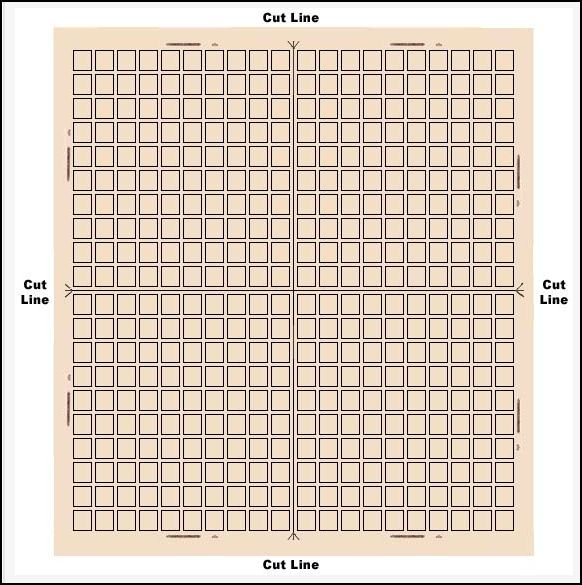
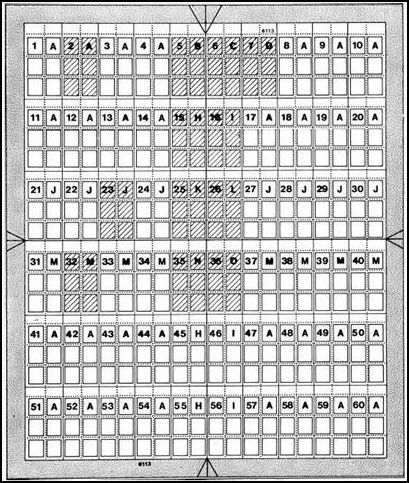
"Below is a typical layout for a 360 subject flat plate printing. The sheet consists of 60 booklet panes of 6.
The sheet is cut along all 4 sides of the panes of 6."
Below is a booklet and booklet pane (Scott 374)


"As a booklet pane or a horizontal pair it is very distinguishable but the individual stamps would not be
distinguishable from sheet stamps."
"There are a variety of printing method and sheet layouts that were used for both sheet and booklet stamps.
The degree to which the individual stamps can be distinguished varies."

~~~~~~~~~~~~~~~~~~~~~~~~~~~~~~~~~~~~~~~~~~~~~~~~~~~~~~~~~~~~~~~~~~~~~~~~~~~~~~~~~~~~~~~~~~~~~~~~~~~~~~~~~~~~~
RUSS:
First, there are many different plate layouts for both the sheet panes and the booklet pane. These
combinations result in considerable variance in the extent to which the booklet and sheet stamps can be
differentiated.
Using the flat plate layouts shown above the perforations of each would be 11x11. Obviously all booklet pane
singles would have at least one straight edge while the sheet pane (of 100) would only have 19 stamps with
straight edges. The remaining 81 stamps from the sheet would be perforated on all 4 sides.
The positions shown in red would have one straight edge and those shown in blue would have two straight edges.
The positions that may be distinguishable as either sheet or booklet are shown in a darker shade.

On the booklet panes the two positions above the horizontal arrow and the two positions left and right of the
bottom vertical arrow can be cut in such a way where part of the angular arrowhead may be visible in the
margin with a straight edge (positions 21-5, 30-6, 55-6 and 56-5). This is a combination that is only possible
on the booklet panes.

On the sheet stamps the top row of the lower right and lower left panes will have a straight edge on the top
which is not possible in the booklet stamps (positions 1-10LL and 1-10LR). This is a combination that is only
possible on the sheet panes.
The bottom row of the upper right and upper left panes have nine positions per pane with a bottom straight
edge and perforations on both vertical edges (positions 91-99UL and 92-100UR). This is a combination that is
only possible on the sheet panes.
Additionally the two positions left and right of the bottom vertical arrow can be cut in such a way where part
of the angular arrowhead may be visible in the margin with a perforated edge (positions 100LL and 91 LR). This
is a combination that is only possible on the sheet panes.
~~~~~~~~~~~~~~~~~~~~~~~~~~~~~~~~~~~~~~~~~~~~~~~~~~~~~~~~~~~~~~~~~~~~~~~~~~~~~~~~~~~~~~~~~~~~~~~~~~~~~~~~~~~
Russ:
Another type of identifiable booklet pane single would be from the 180 subject sheets. These sheets contained
30 panes of 6. The panes from the center row had a guideline between the first and second row of stamps. This
produced singles with a straight edge on one side and a guideline in the perforations at the top or bottom.
This was n0t posible with sheet stamps
180 subject plate layout
Scott 300a Booklet pane with guideline.
This plate layout was used for booklet panes for Scott 300, 301, 319, 331, 332.
The rarest and most valuable U.S. booklet pane single is from a Scott 583a position J pane from plate 17451.
The on cover example shown below is valued at $4000-$5000.
|
|
Send note to Staff
|
| Edited by I_Love_Stamps - 12/08/2014 04:12 am |
|
|
Rest in Peace
United States
7097 Posts |
|
|
Replies: 25 / Views: 7,508 |
|




 Posted 06/12/2010 4:05 pm


