Stamp Community Family of Web Sites
Thousands of stamps, consistently graded, competitively priced and hundreds of in-depth blog posts to read


Stamp Community Forum
 
Username:
Password:
Save Password
Forgot your Password?

This page may contain links that result in small commissions to keep this free site up and running.

Welcome Guest! Registering and/or logging in will remove the anchor (bottom) ads. It's Free!

The Road To Spis Castle – And Back - Slovakia

Previous Page
 
To participate in the forum you must log in or register.
Author Previous TopicReplies: 19 / Views: 1,931Next Topic
Page: of 2
Pillar Of The Community
Netherlands
6530 Posts
Posted 06/19/2023   01:51 am  Show Profile Bookmark this reply Add NSK to your friends list  Get a Link to this Reply
Stage 4: Spissky Hrad

On Sunday, I caught a bus to Spisske Podhradie. The ride took some 25 minutes. After about half that time I got my first view of Spis Castle sitting atop a hill. After a short stop at a little shrine where the bus driver filled his water bottle with pure mineral water from a spring, the bus set off on its final three kilometres to Spisske Podhradie. Not far from the spring was a bottling plant where the water from the spring was bottled. A local COOP supermarket sold the mineral water from the bottling plant.


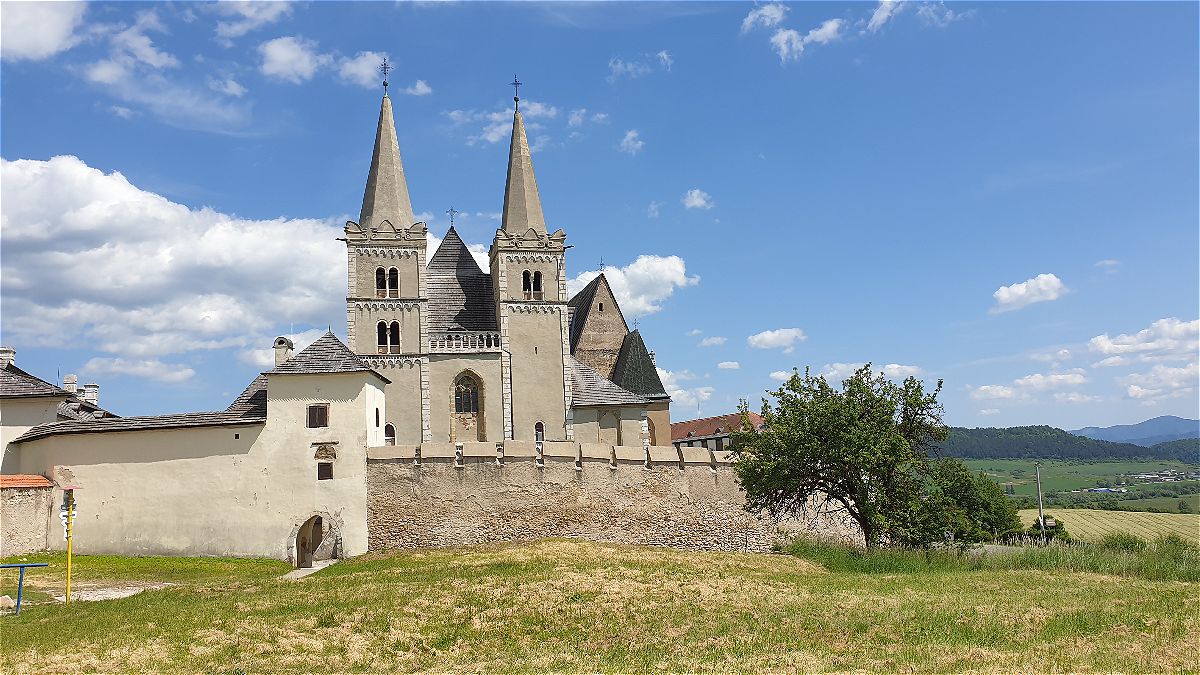
Spisska Kapitula

Just outside Spisske Podhradie – podhradie means 'below the castle' – is the citadel of Spisska Kapitula (Spis Chapter House). This is a walled enclosure with a mediaeval church, an episcopal palace, and cannons' houses. In the church, built in Romanesque and Gothic styles between the thirteenth and fifteenth centuries, is a chapel of the Zapolya Family (see Kezmarok). It preserves two tombstones of family graves from the fifteenth century.

There is one street between the upper and lower gates along which stand historic cannons' houses. I had booked a room at a guesthouse in one of those houses. The menu of the guesthouse mentioned Queen Maria Theresa (1717 – 1780) had once enjoyed one of the best coffees she had drunk when visiting the house. It did not elaborate on whether, in 1776, she ran out to the church in ecstasy and made Spisska Kapitula a diocese or she was visiting the diocese when she had the coffee. She, however, created the diocese of Spis.


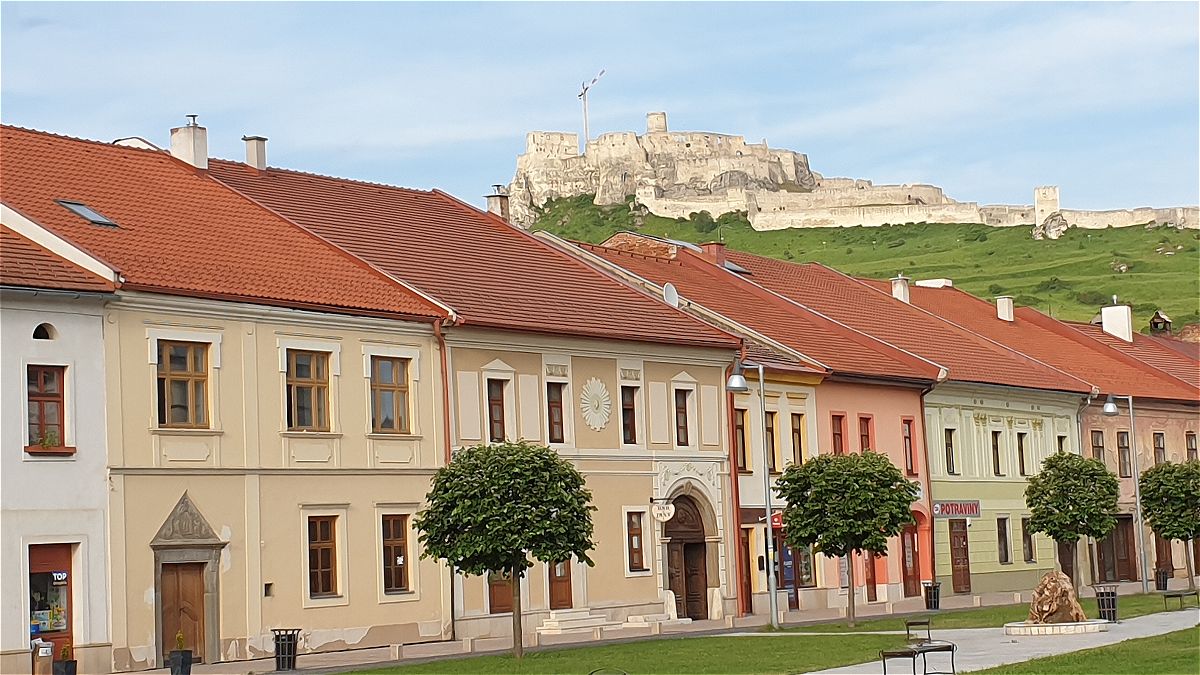
Spissky Hrad

There are few sights of particular interest in Spisske Podhradie. But it, probably, is one of the most picturesque towns in the Spis Region. Going down the main road, there is a turning to the left that leads to a path going uphill. A steep climb, mostly following a narrow trail leads to a gate of the castle's lower ward. This gate was closed. A second trail continues to a parking space on the other side of the castle. From here you can climb up a narrow trail or follow a road up to the castle's main entrance. A third, steep trail following the castle wall leads directly to the main gate. Although steep and exhausting, it is not the walk up the hill, but the walk back down that you will feel when waking up the next day.

Spis Castle dates to the twelfth century and arose on the site of an older castle. It was extended in the following centuries. In the Middle Ages, it controlled the Spis Region and was the political and administrative centre of it. It remained in the possession of the Hungarian Kings until 1464, when Matthias Corvinus was King of Hungary. It, consequently, became the possession of the Zapolya Family, and, from 1531 until 1635, the Thurzo Family. From 1638 until acquired by the state in 1945, it was the possession of the Csaky Family that abandoned it in the early eighteenth century. At present, it is being restored.


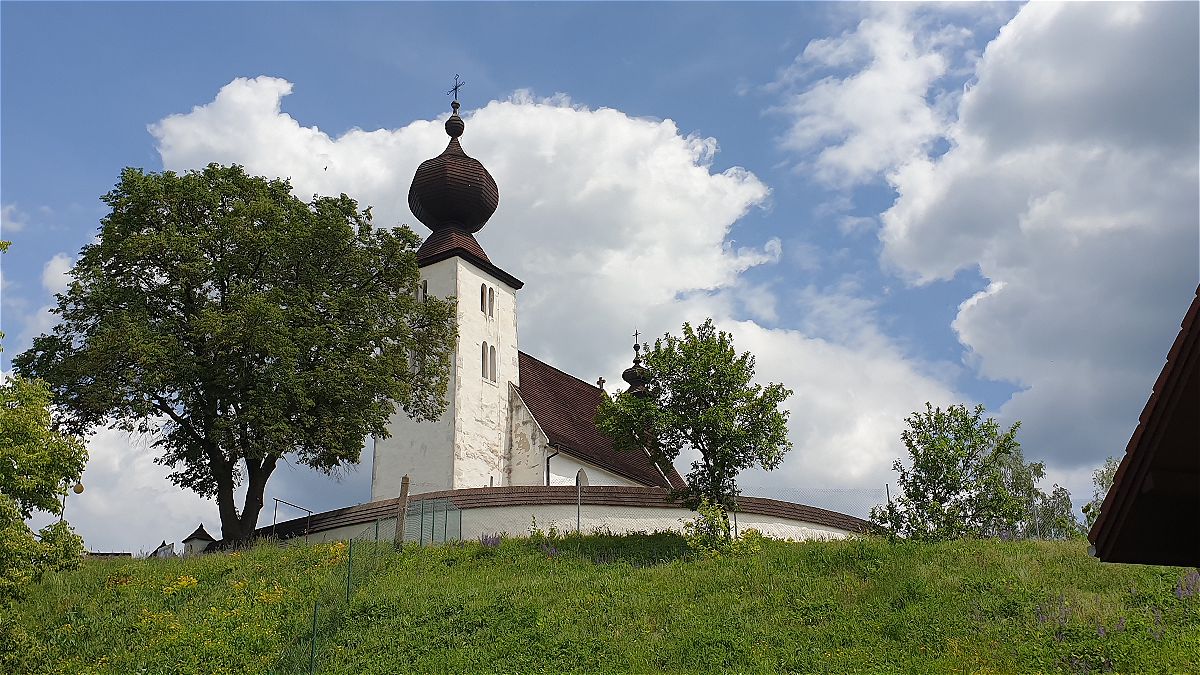
Church of the Holy Spirit, Zehra

On Monday, I climbed up to the parking space below the castle and walked in the opposite direction from the castle up Mount Drevenik. At the foot of this hill is the village of Zehra where the Church of the Holy Spirit stands. The small walled church perched on a mound above Zehra was finished in 1276. The church's mediaeval wall paintings survived a fire that destroyed the roof in the fifteenth century. Despite a notice that suggested the church would be open, I could only look inside from the entrance gate.


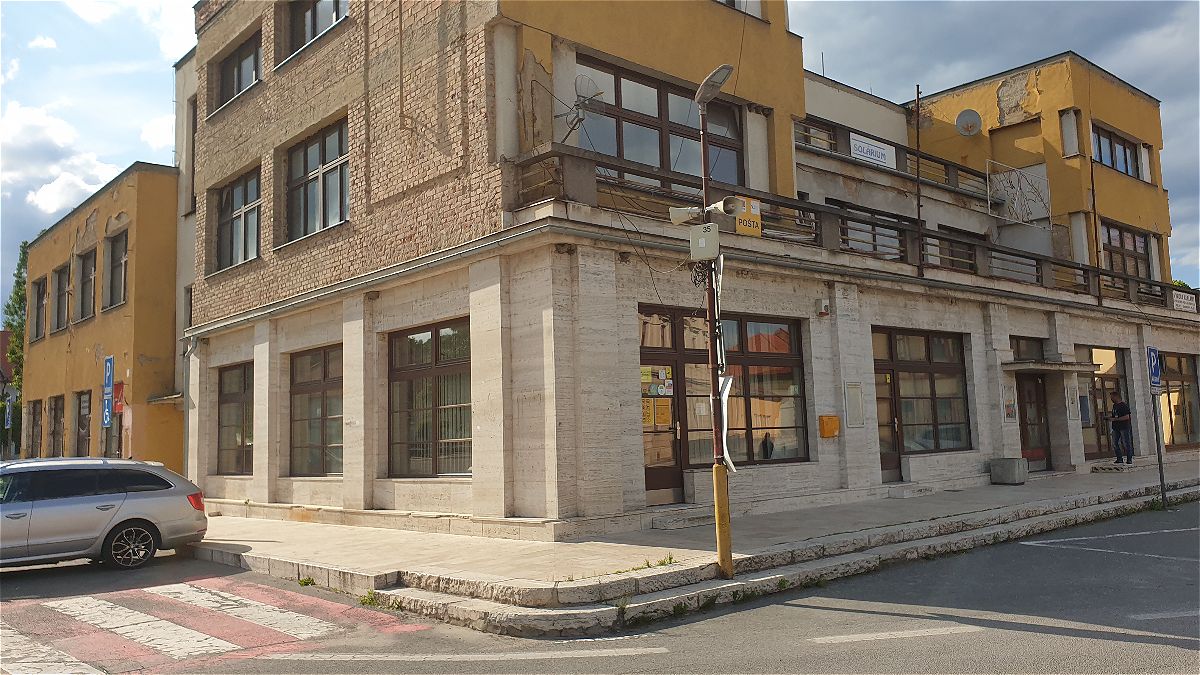
Spisske Podhradie post office

As I arrived in Spisske Podhradie on a Sunday, I could not visit the tourist office and post office before Monday morning. I bought the usual thirteen postcards and visited the post office to buy the required stamps. This time, I was given three stamps to make up the 'Europe' postage rate.


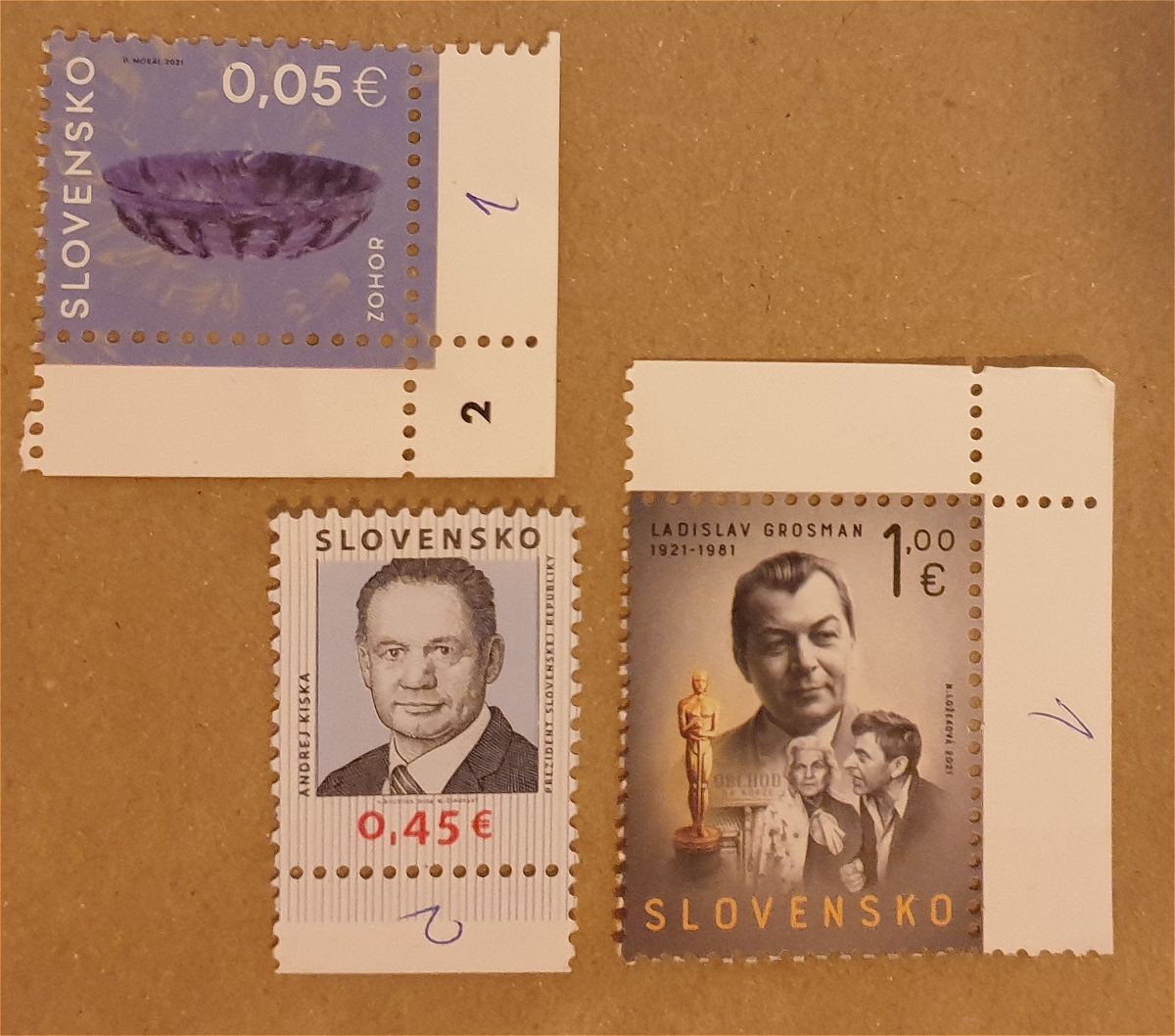
Stamps making up the 'Europe' postage rate at Spisske Podhradie

Apart from the € 0,05 'Glasswork' definitive (see Kezmarok), these stamps were:
13 June 2014: € 0.45, Andrej Kiska, President of the Slovak Republic (15 June 2014 – 15 June 2019), and
29 January 2021: € 1.00, Birth centenary of the author Ladislav Grosman (1921 – 1981).
Interestingly, the post office clerk had numbered the columns in the sheet to keep track of her inventory.
Send note to Staff  Go to Top of Page
Pillar Of The Community
Netherlands
6530 Posts
Posted 06/20/2023   11:45 am  Show Profile Bookmark this reply Add NSK to your friends list  Get a Link to this Reply
Stage 5: Zilina

Having visited Spis Castle and seen a little more of the Spis Region, it was time to embark on my homeward journey. On Tuesday morning, I caught the bus to Spisska Nova Ves. After ten days of excellent weather, it had started to rain. I had a reservation on an Intercity service between Kosice and Bratislava, calling at Zilina. On the way to Zilina, the train called at Poprad-Tatry. I had a last view of the High Tatras that were mostly obscured by low clouds.


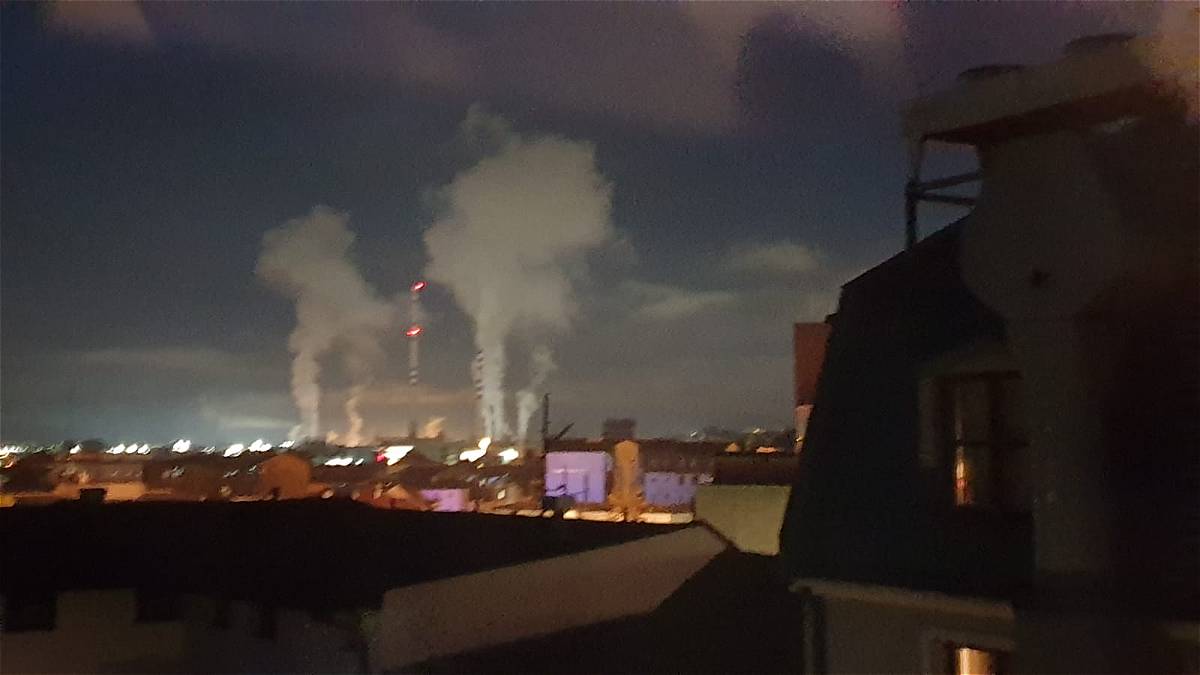
Zilina (the beautiful view from my hotel room).

Zilina is Slovakia's third-largest city. It has 86,000 inhabitants. The oldest reference to the town dates from 1208. At the end of the thirteenth century, it was destroyed and repopulated by German immigrants. It, primarily, is an industrial city. The historic centre was reconstructed in the 1990s and preserves the mediaeval market square surrounded by porticoed houses.

Between the old town and the train station is the Andrej Hlinka square. The cathedral of the Holy Trinity overlooks the square. Originally, the church was constructed in Gothic style, around the year 1400. It was reconstructed in Renaissance style and dedicated to the Holy Trinity in the sixteenth century. In 1530, a Renaissance defensive tower was built next to the church.


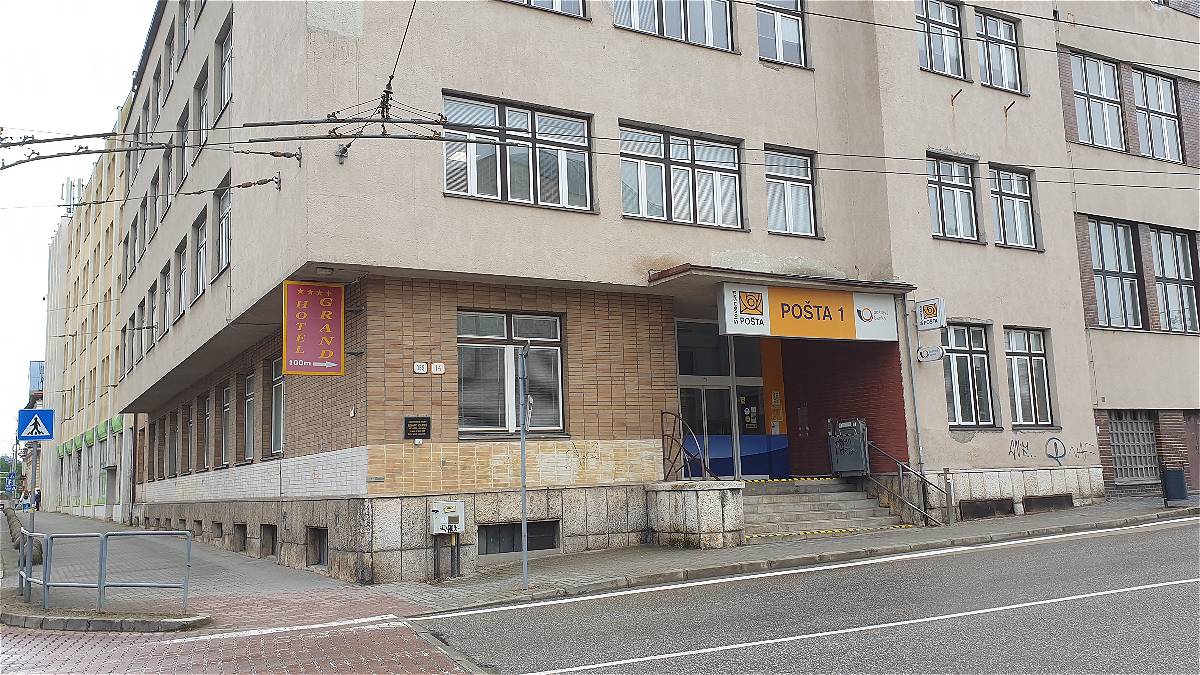
Zilina post office nr. 1

Just outside the old town stands the urban palace commissioned by the Jewish financier Ignác Rosenfeld. Built in 1907, it marks the transition from the historicising style to Art Nouveau. Across the road from the palace is Zilina's post office nr. 1.

The tourist information centre did not sell postcards. I, however, found a bookstore on the central market square that sold some postcards. After buying thirteen postcards, I went to the post office to buy stamps. The post office clerk, apparently, was not a cat-lover. The first thing she did when detaching the six 2020 € 0.80 cents commemorating Vladimir Machaj (see Poprad) from the sheet was to tear off the labels with the kittens and throw them in the dustbin. I am quite sure one of my correspondents would have jumped over the counter to save the kittens and throw the clerk into the dustbin. As there were no € 1.50 stamps, I had to use pairs of the 2022 Youth Olympic Festival stamps (see Kezmarok). There, however, were only 18 of this stamp left. Since the clerk did not have other stamps of that denomination, she had to think of how to make up the € 1.50 tariff. The solution was to use two of the 2021 € 0.65 stamps commemorating the centenary of the 'JAMES' Mountaineering Association with four € 0.05 'Glasswork' definitives (see Kezmarok).

The clerk diligently broke the blocks up in pairs of stamps and explained me how to use them. I must not have paid attention, as I found another way of mixing stamps to come up with the appropriate tariffs.


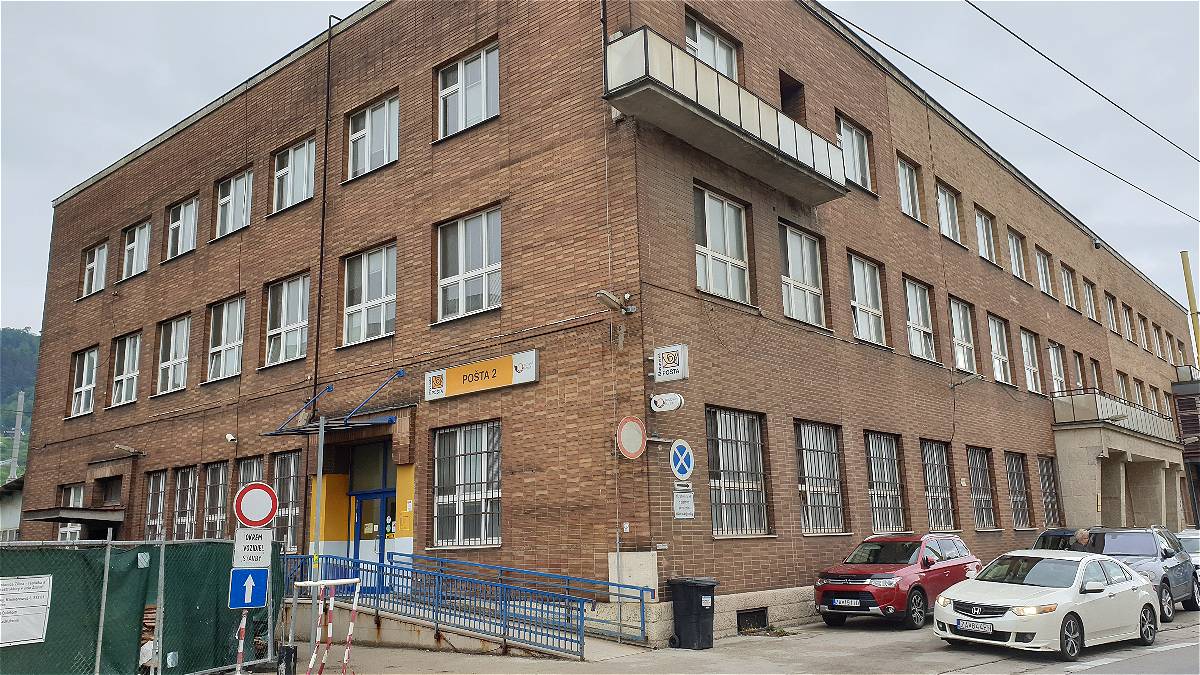
Zilina post office nr. 2

It was in Zilina that, finally, the nagging question about the post office number was answered. Whilst erring around town, I found the number 2 post office next to the train station.


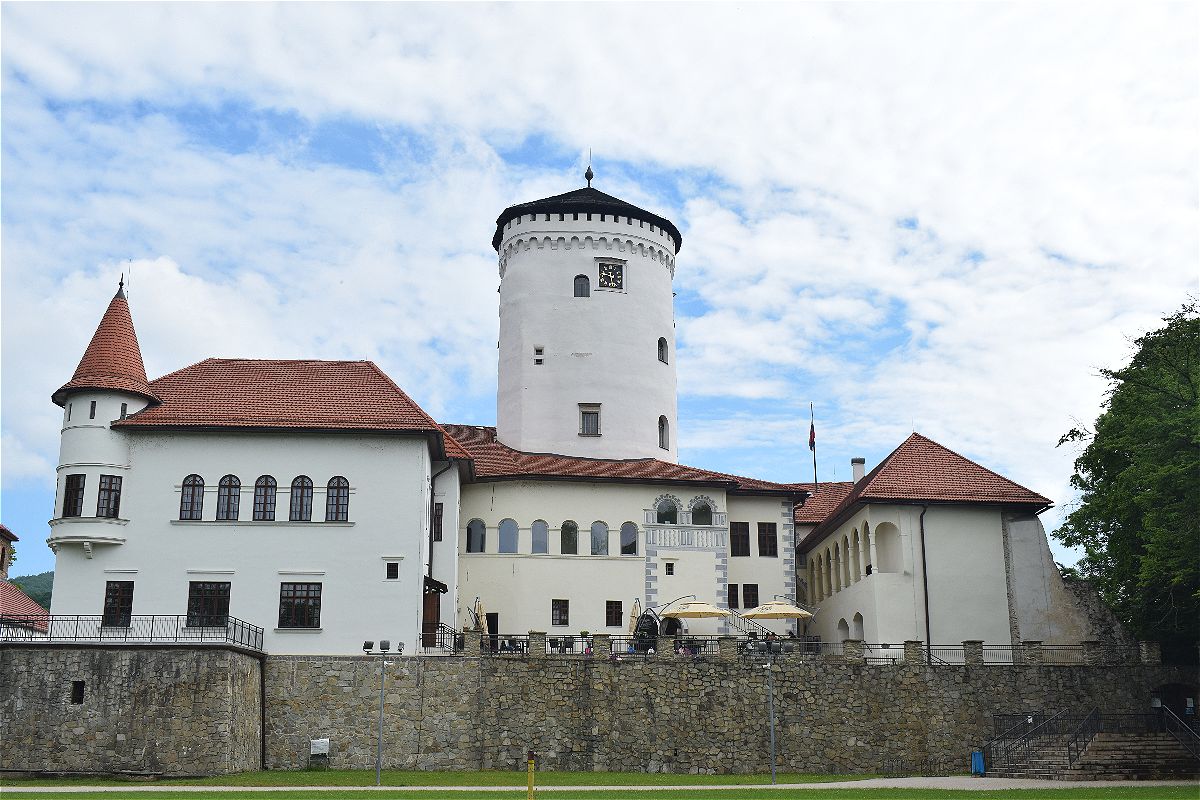
Budatin Castle, Zilina.

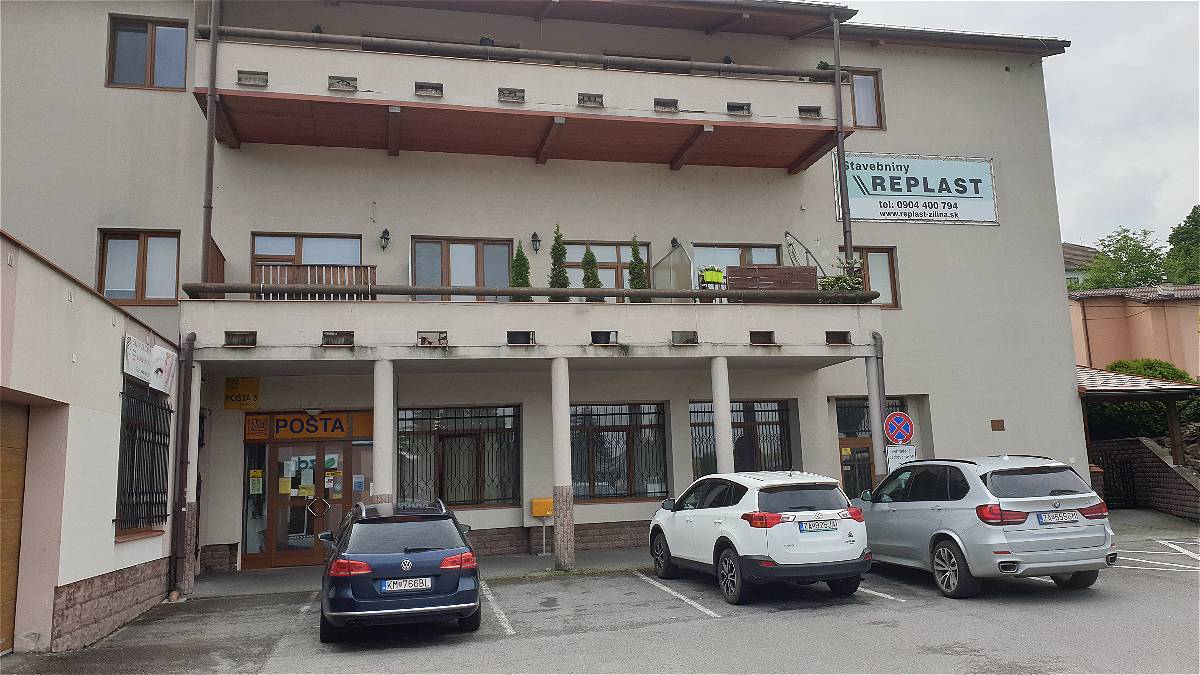
My guidebook mentioned the mediaeval Budatin Castle on the opposite bank of the Váh River, where the Kysuca River flows into it. The castle is the setting for one of those romantic stories (boy and girl fall in love, the horrible father of the girl has promised her to another man she does not love, things end badly). It took me two attempts to find a route across the river without having to outrun cars speeding along a motorway. Reaching the far end of the bridge across the Váh River, I saw a big yellow 'Posta' sign. After visiting the castle grounds, I returned to the building with the 'Posta' sign. Walking around the building, I found the entrance to the post office.


Zilina post office nr. 3 (Budatin)


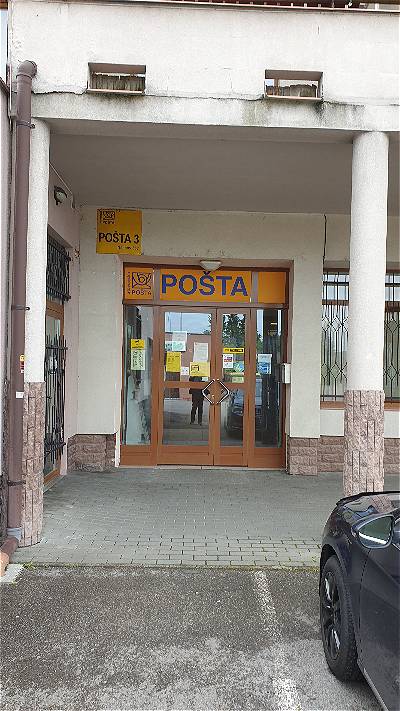
Posta 3 sign over the entrance of the Budatin post office.

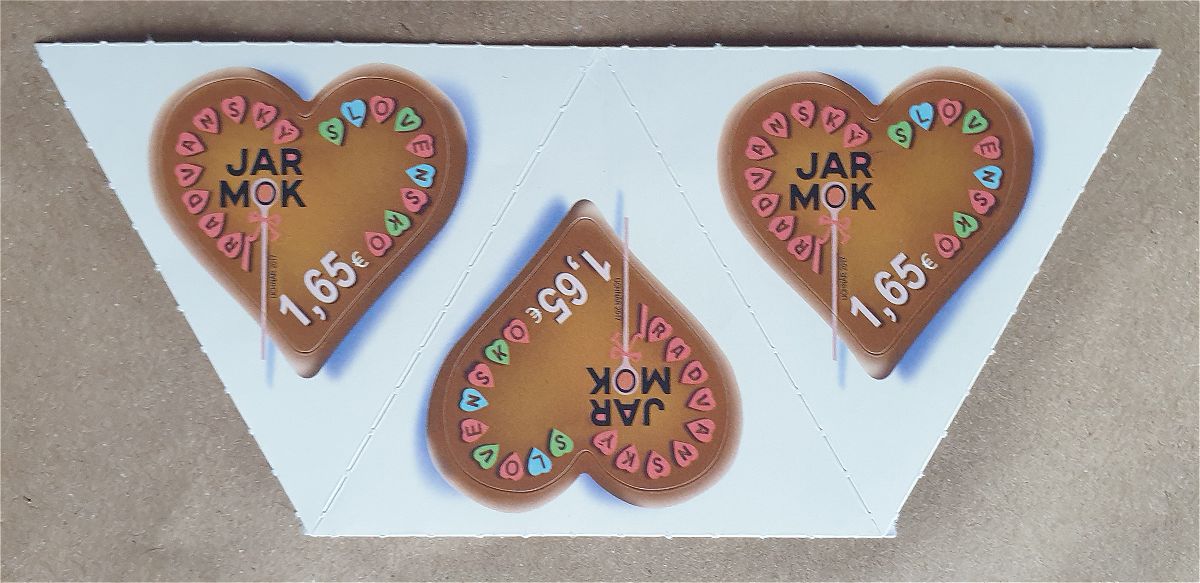
A sign above the entrance identified it as post office number 3. I entered the post office to buy some 'Rest of World' stamps to use on postcards I was planning to send from my next destination. The clerk did not have any € 1.60 stamps. She, however, had € 1.65 self-adhesive stamps commemorating the 360th anniversary of the Radvan Fair. This fair is held at the beginning of September, in Banska Bystrica. It is considered the 'Fair of Slovak Fairs.' The stamp shows a gingerbread heart. Traditionally, a man would buy the heart and decorate it as a present for his sweetheart. These hearts are sold at fairs throughout historic Hungarian regions.


8 September 2017: 360th anniversary of the Radvan Fair in Banska Bystrica

Of course, I used one to frank a postcard to my girlfriend.
Send note to Staff  Go to Top of Page
Pillar Of The Community
Netherlands
6530 Posts
Posted 06/21/2023   02:29 am  Show Profile Bookmark this reply Add NSK to your friends list  Get a Link to this Reply
Stage 6: Nitra

On Friday, I caught a train from Zilina to Nitra, having to change at Leopoldov.
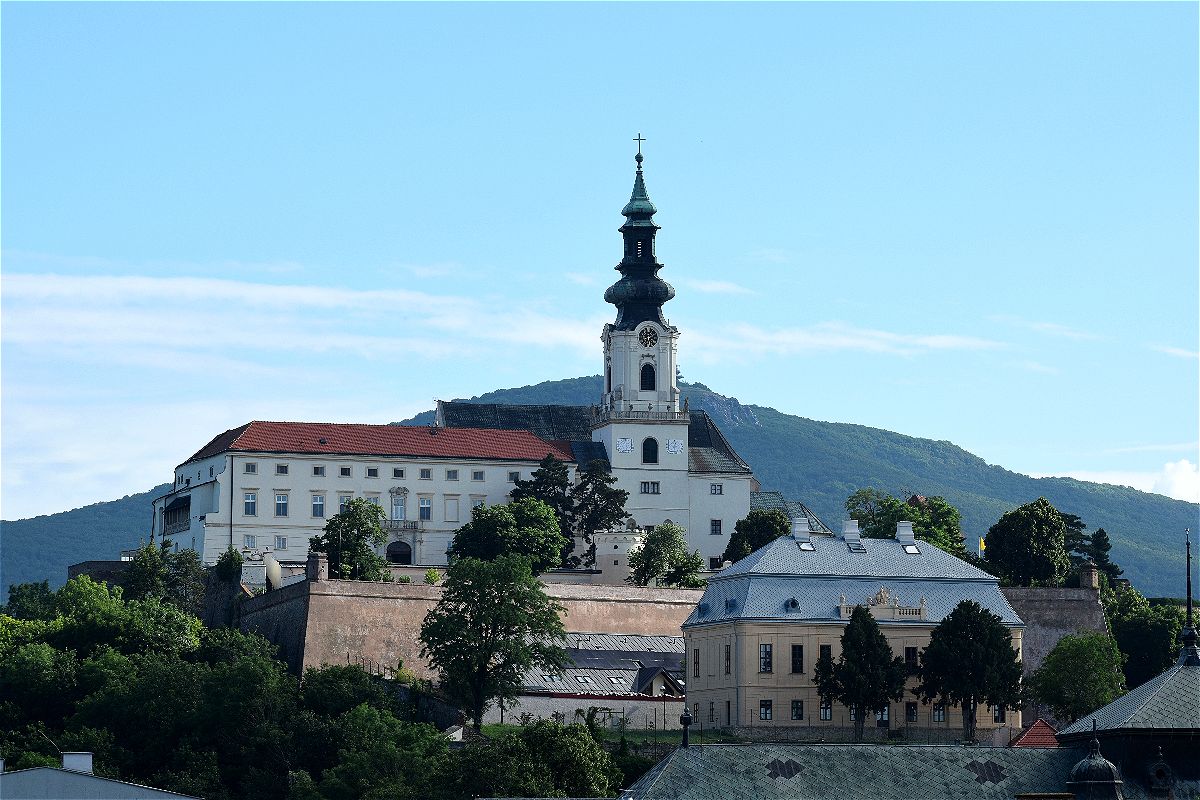

Nitra Castle

Nitra is one of the oldest towns in present-day Slovakia. Sources mention a principality of Nitra centred around the town that was ruled by a Prince Pribina. In 833, he was ousted by Prince Mojmir I who united the principalities into the Great Moravian Empire. Although the exact title of Pribina is subject to debate, most scholars agree the first Christian church in Slovakia was consecrated for Pribina in Nitra. In the ninth century, Nitra became one of the largest Central-European agglomerations.

At the end of the ninth century, Nitra became the first bishopric in Slovakia. Nitra's castle stands atop a hill the Nitra River flowed around. The top of the hill was protected by a wooden palisade in the first half of the ninth century. The present castle was built in the eleventh century. At the core is the cathedral dedicated to Saint Emmeram. Next to it stands the bishop's residence. Although the cathedral is open to visitors, I kept arriving when there were official functions. In the early morning there was a celebration for priests. In the early afternoon there was a wedding service that lasted much longer than planned.

Below the castle, in the upper town stand historic cannons' houses and the small and large seminaries. The lower town is a mostly modern university city. The city has two universities, including the Slovak Agricultural University. During my visit, I encountered many young people who spoke English, Spanish, German, or French. I think these were exchange students.
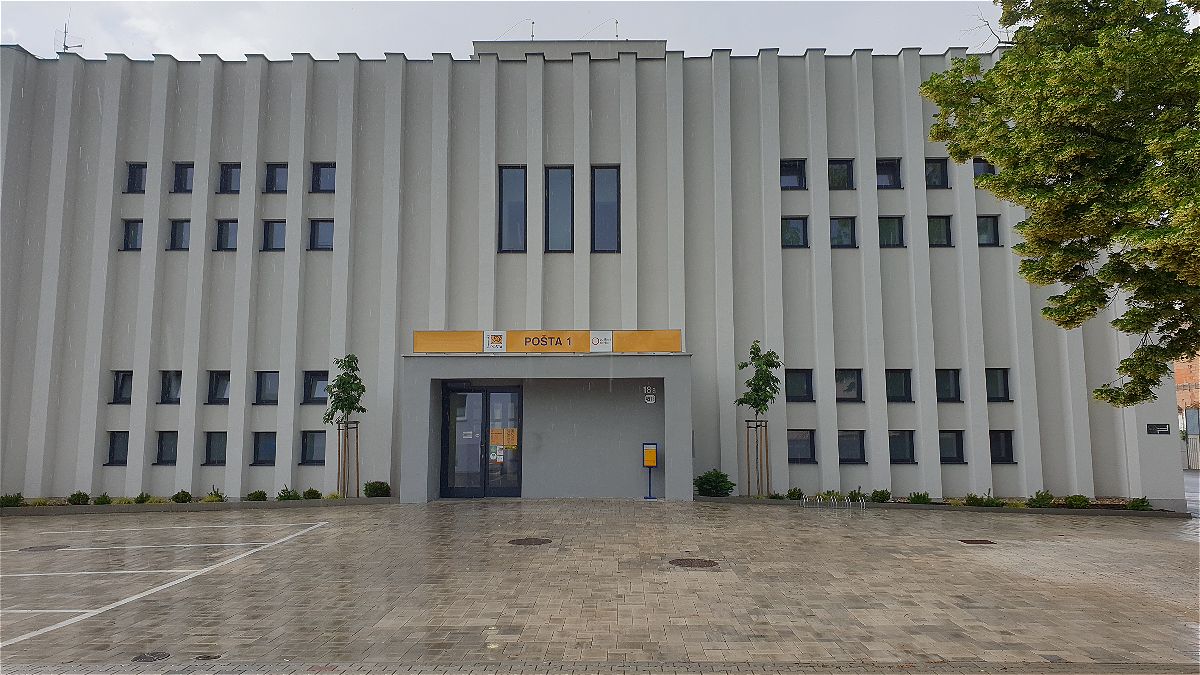

Nitra post office nr. 1.


I arrived before the tourist office closed for the weekend. I bought five postcards. I am quite sure I asked for six, but there was some miscommunication. I also asked for directions to the post office. The woman from the tourist office showed me where to find it on a large map on the wall of the tourist office. I noticed an envelope symbol in a shopping centre I had passed on my way from the station to the tourist office and hotel. No such symbol appeared in the location she pointed me at. I asked her if there was a post office in the shopping centre. She confirmed there was. I first looked for the post office nearest to the tourist office. I soon found it.
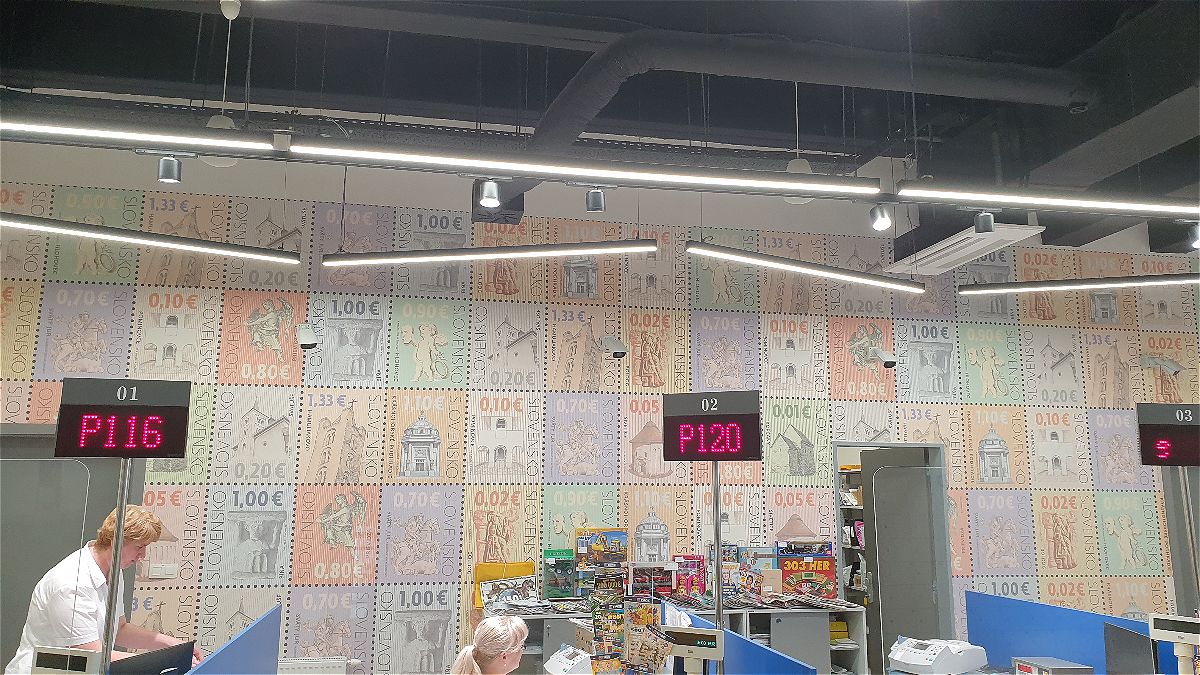

Wall behind the counters of Nitra's post office nr. 1.

The yellow sign identified it as post office number 1. I went inside to buy stamps for the postcards. This was a modern post office. The wall behind the counters was decorated with a collage of stamps from the 'Slovak Cultural Heritage' definitive series (2009 - 2017).

Since I already bought 'Rest of World' stamps at the Budatin post office, I only needed stamps covering the 'Europe' rate.
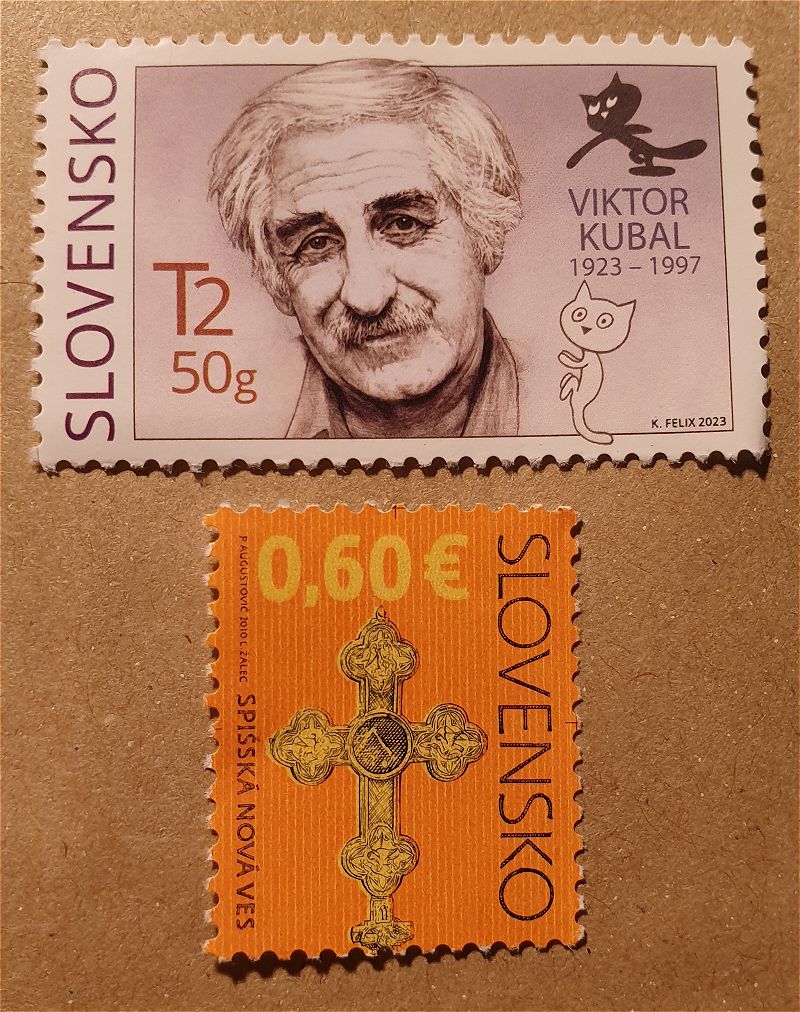

Stamps making up the 'Europe' postage rate at Nitra post office nr. 1.

Here, I got two stamps I had not used before. One was dedicated to the Church of the Assumption of the Virgin Mary in Spisska Nova Ves; i.e., the church with the country's highest bell tower. The two stamps making up the € 1.50 rate were
4 January 2014: € 0.60 'Slovak Cultural Heritage' definitives, Church of the Assumption of the Virgin Mary in Spisska Nova Ves, and
20 March 2023: T2 (inland letters up to 50 grammes, € 0.90), Birth centenary of Victor Kubal (cartoonist).
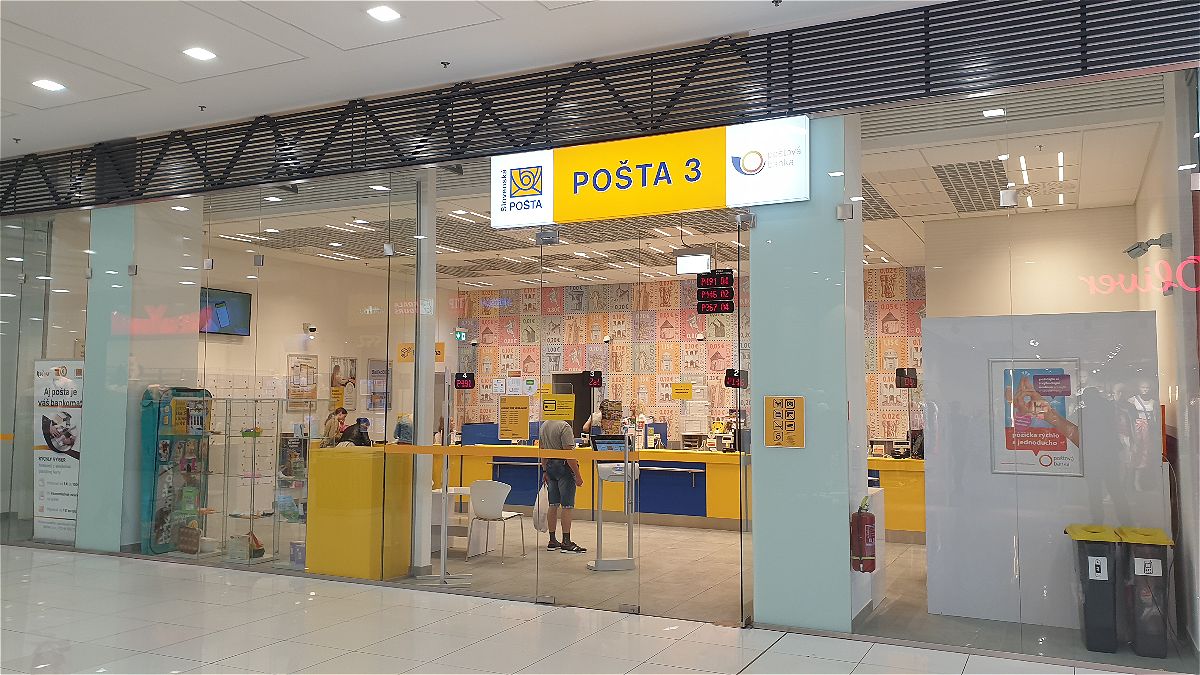

Nitra post office nr. 3.

Later in the day, when buying groceries at the shopping centre, I looked for the post office. This turned out to be post office number 3. I did not encounter post office number 2. I decided to also send my German friend a postcard. – I forgot about that one. I think it makes a total of 80 postcards and not 79 as I wrote earlier. - As the tourist office closed on Saturday, I walked to the shopping centre, where I had seen a bookstore. I hoped the store would sell postcards, as it did. I checked whether the post office in the shopping centre opened. It did.
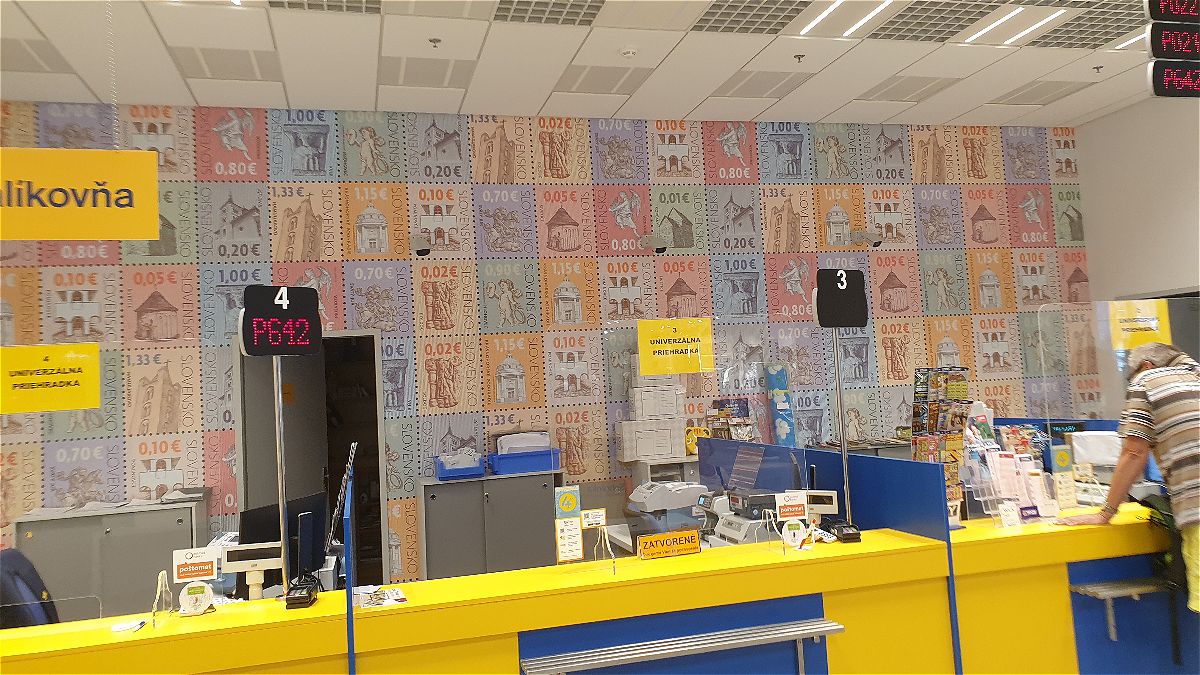

Inside the Nitra post office nr. 3.

The wall behind the counters here too was decorated with a collage of stamps from the 'Slovak Cultural Heritage' definitive series. I asked for a stamp to use on a postcard to a European address. Since the clerk did not have a € 1.50 stamp, she decided to raise the postage rate for 'Europe' on the spot and sold me a € 1.55 stamp.
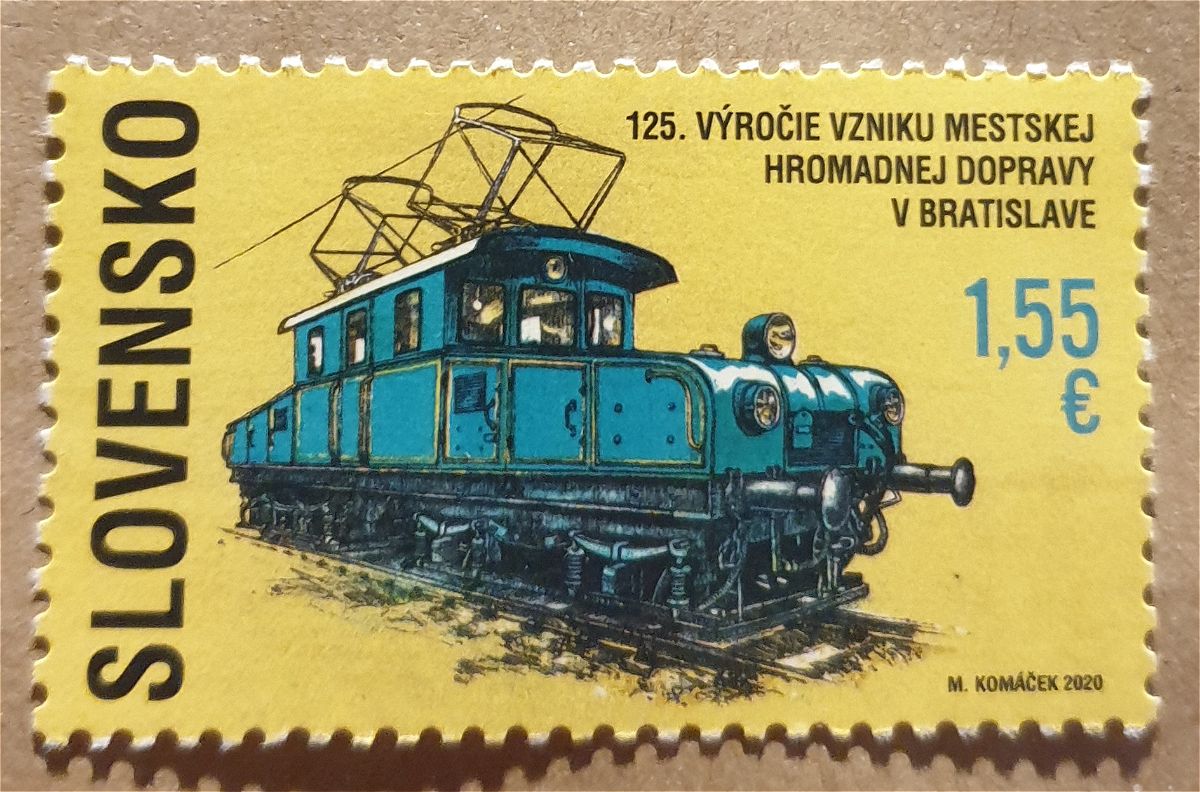

31 July 2020: €1.55, 125th anniversary of public transport in Bratislava.

Whilst waiting for my turn, I looked around the display cases of products sold at the office. For some reason, the only stamps displayed were stamps issued by Laos.
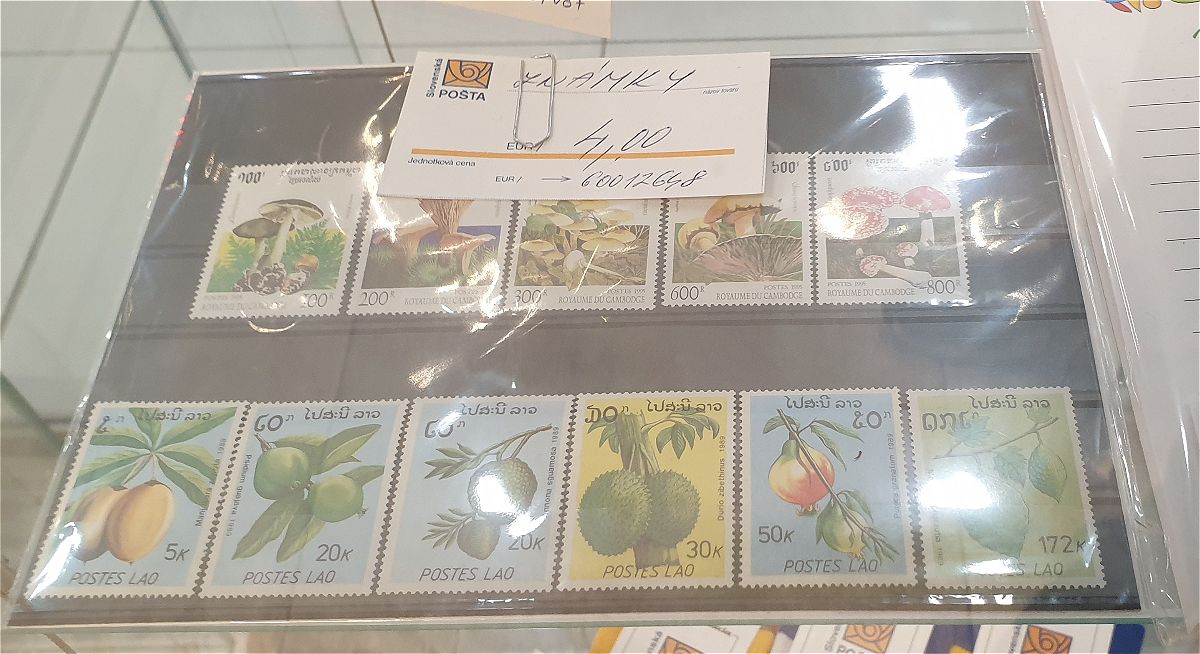

Loas stamps on offer at Nitra's post office nr. 3.

Early on Sunday morning, it was time to catch a train to Bratislava, transferring at Trnava. From Bratislava, I took a bus to Vienna's Schwechat Airport, where I caught my flight home.
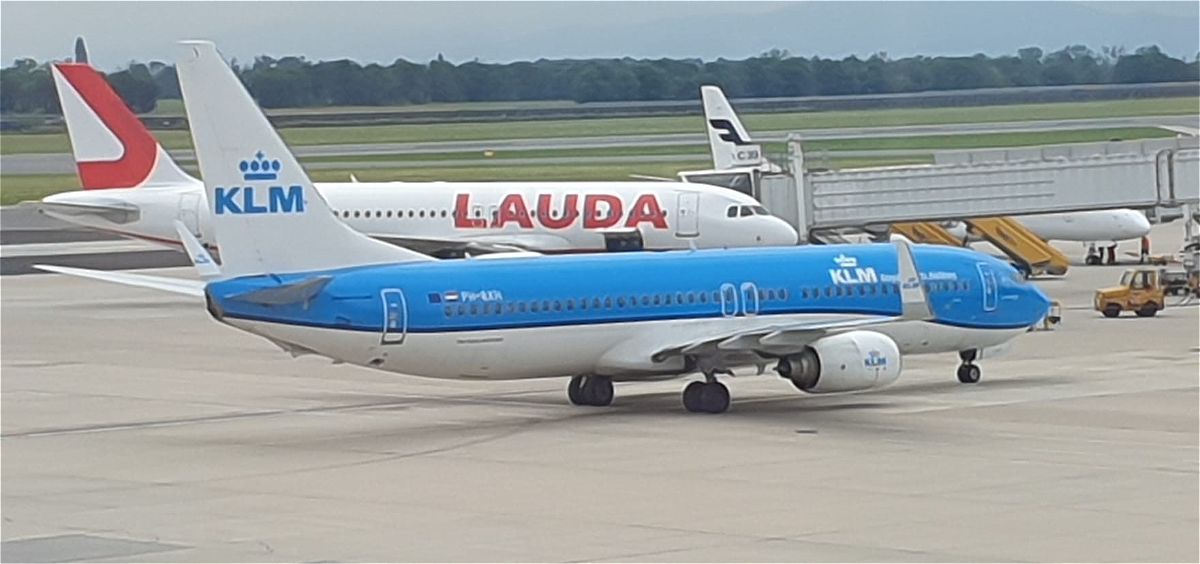

And going home.
Send note to Staff  Go to Top of Page
Pillar Of The Community
Netherlands
6530 Posts
Posted 07/26/2023   02:32 am  Show Profile Bookmark this reply Add NSK to your friends list  Get a Link to this Reply
Yesterday (25 July 2023), I received a message from one of my Russian friends. She received all five postcards I sent her from Slovakia, and one I sent her from Spain, in a single batch. She attached a picture of the postcards.

The postcard with the 'Solidarity with Ukraine' stamp (see Levoca) was among them. It had passed through the Russian mail without problem. Considering the way things work in Russia, I am not that surprised.
Send note to Staff  Go to Top of Page
Page: of 2 Previous TopicReplies: 19 / Views: 1,931Next Topic  
Previous Page
 
To participate in the forum you must log in or register.

Go to Top of Page

Disclaimer: While a tremendous amount of effort goes into ensuring the accuracy of the information contained in this site, Stamp Community assumes no liability for errors. Copyright 2005 - 2026 Stamp Community Family - All rights reserved worldwide. Use of any images or content on this website without prior written permission of Stamp Community or the original lender is strictly prohibited.
Privacy Policy / Terms of Use    Advertise Here
Stamp Community Forum © 2007 - 2026 Stamp Community Forums
It took 0.17 seconds to lick this stamp. Powered By: Snitz Forums 2000 Version 3.4.05