| Author |
 Replies: 56 / Views: 8,420 Replies: 56 / Views: 8,420 |
|
|
|
Pillar Of The Community

United States
1498 Posts |
|
|
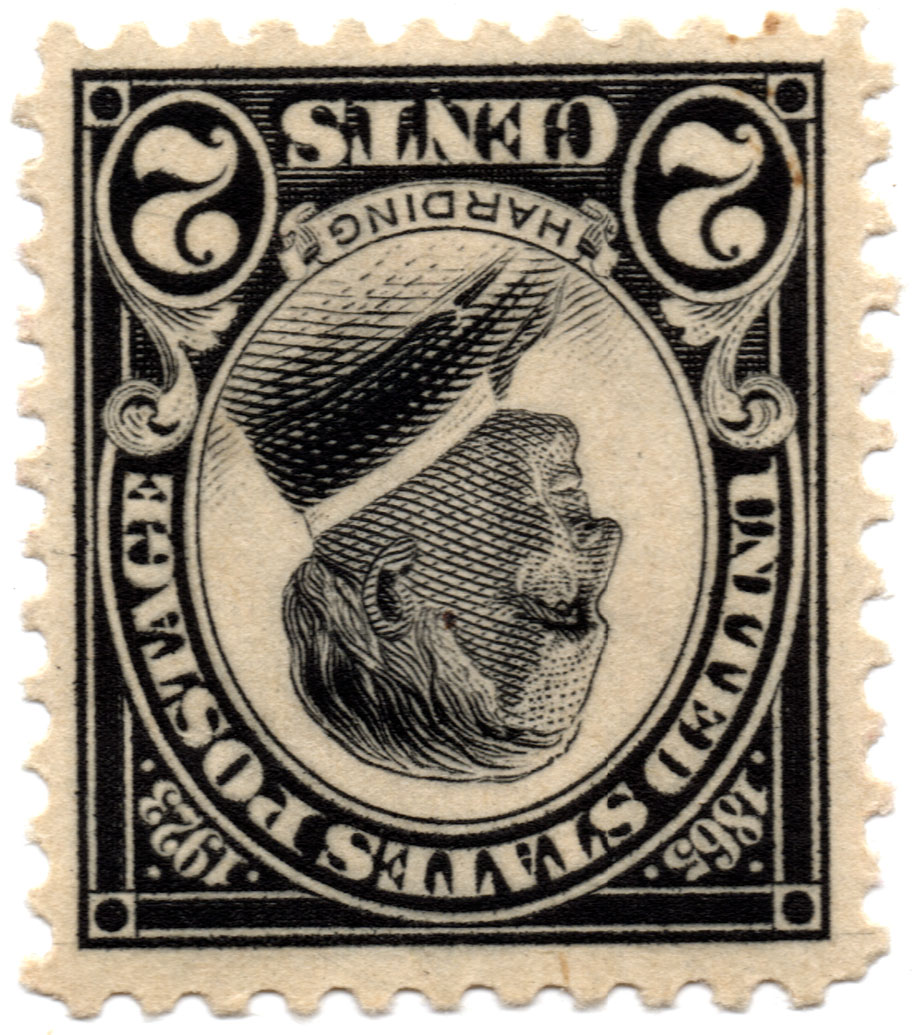
The poor plate wiping result is a shared characteristic of every rotary 2-cent Harding that I've ever seen. That includes both Scott 612 (perf 10) & Scott 613 (perf 11). As rogdcam pointed out, it is a far more reliable identifier of these stamps than any attempted measurement. |
Send note to Staff 
|
|
|
Pillar Of The Community
United States
2830 Posts |
|
|
In general usage, the word patina does not necessarily mean a green surface derived from effects over time. Patina can also simply mean a surface that has become partially reflective from phyical or environment effects.
In this context, it is frequently used to describe mint or near mint coins that have lost some of their reflectivity, but are nonetheless very attractive due to subtle hues imparted to the coin from whatever physical or chemical effect played a role. |
|
Send note to Staff
|
| Edited by shermae - 10/16/2023 7:17 pm |
|
|
Valued Member
Germany
284 Posts |
|
|
Bedrock Of The Community
12705 Posts |
|
|
Dittrich - There were huge numbers of these stamps printed and they were worth two cents. We are not talking about fine art here. You will see wetter and drier printings and tiny ink blobs and runs and everything in between. They were UTILITARIAN pieces of paper. Some of them have taken on outsize value because of differences that some people are willing to pay large sums of money for. Pretty much any stamp you magnify will show you imperfections and the more you magnify them the more you see. Differences in the actual engraving and perforating are a different matter as are things such as double/triple transfers, plate cracks etc. There are already long-established ways of identifying flat plate and rotary printings. |
|
Send note to Staff
|
|
|
Valued Member
Germany
284 Posts |
|
|
yes, of course a lot of stamps were printed and of course you put it next to a lot of stamps and compare and see, okay, it looks a little different. Everything can't be done, if you put nice stamps here to make money, that's your problem. Your answers are coherent and great, but they don't explain anything. |
|
Send note to Staff
|
|
|
Bedrock Of The Community
12705 Posts |
|
|
Quote:
Your answers are coherent and great, but they don't explain anything. What do you want explained? |
|
Send note to Staff
|
|
|
Moderator

United States
12330 Posts |
|
|
There are numerous potential things that could contribute to 'patina' including but not limited to; paper moisture content at time of printing, viscosity of the ink at time of printing, RH of the printing atmosphere, various procedural deltas (like wiping or plate cleaning variables), buildup of ink on other places like rollers and paper paths, differences in production environment supplies (i.e. cleaning fluids, rags, etc.) and even slight surface rust on the plate. For example, ever wash your car or otherwise get the rotors wet, park it for a 24-48 hours, and then feel the brake pads 'stick' to the rotors due to the surface rust that built up on them? If the pressman cleaned the plate before leaving work on Friday afternoon, it could be that by Monday morning a bit of surface rust accumulated and could be seen on the first few sheets printed.
I think rogdcam is right, these are just stamps. Inexpensive things which were intended to be used once. Quality Control was/is not strict like in a bank note printing environment where the currency value was high and the bills intended to be in circulation for quite some time.
Don
|
|
Send note to Staff
|
|
|
Valued Member
Germany
284 Posts |
|
|
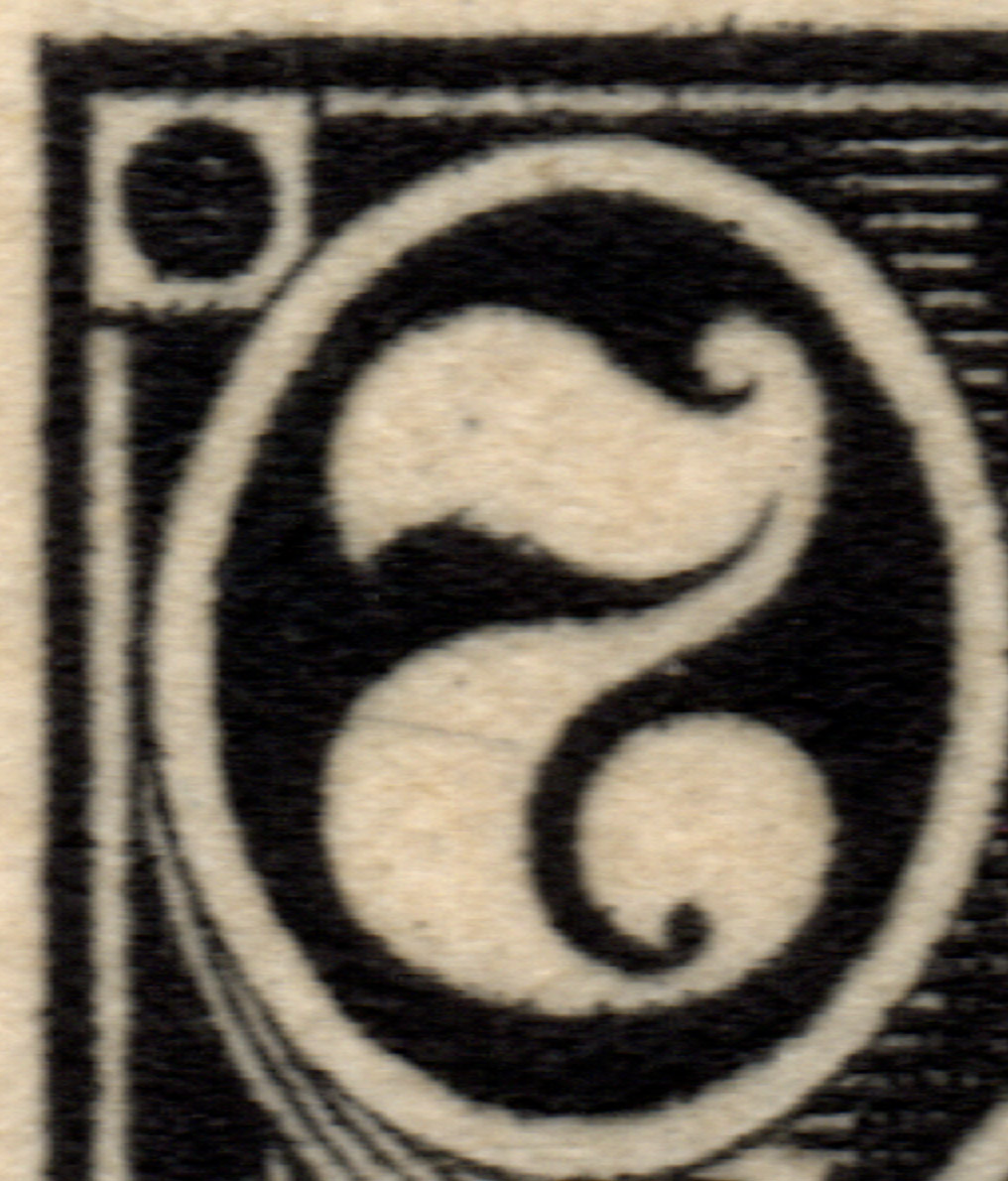
In short, I looked at every #610, the contours are relatively sharp, the writing is relatively clean whether it is an unused or unused stamp. My stamp is blurry, washed out, has a different tone and compared to the drawing pattern it looks more like a #613. So the printing plate must be defective, a different paper or... the stamp is a fake. I currently have no other justification and am looking for an explanation in print, i.e. the visible difference between flat and rotary.
I can also see that the typical blurring like the #613 is simply not there, so no "patina".
So if I understand everything correctly, without "patina" everything is flat print during this time. |
|
Send note to Staff
|
|
|
Valued Member
Switzerland
496 Posts |
|
|
Again I'm not happy with "patina". Leaving aside the green copper thing, patina is something that develops over time - which simply doesn't happen with printed staps (leaving aside the sulphurisation thing that plagues early stamps). Here is an example what does happen over time: 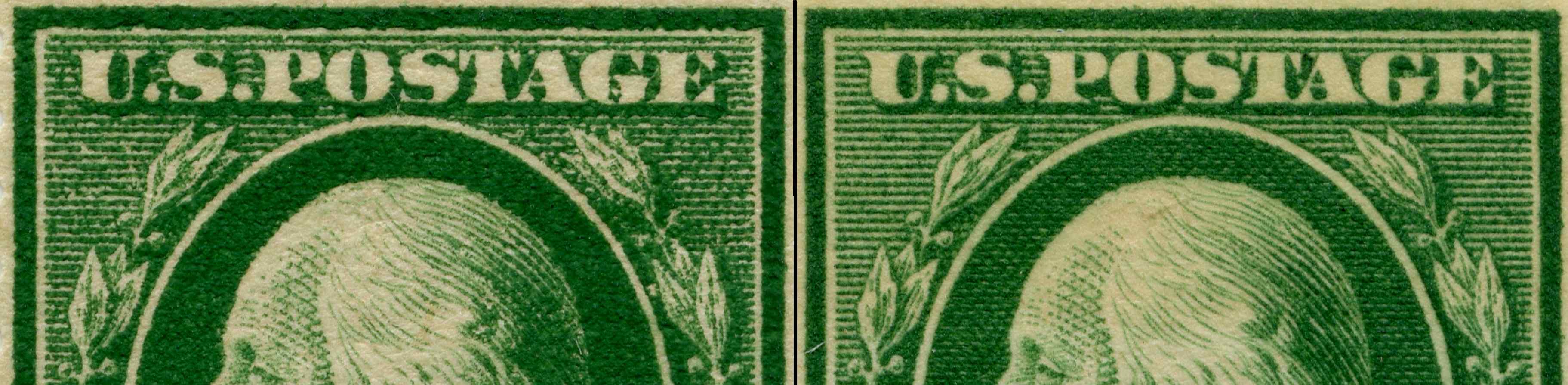 At left a stamp printed late in the press run, at right a stamp printed early in the press run (both are from a booklet Sc. 498e). You can see the degradation of the plate as plate wiping and ink wears down the plate. Add varying ink amounts, plate pressure, paper wetness, mood of the day and you get random events ink splotches, streaks, not enough ink, too much ink, whatnot in every print run of stamps. It was particularly bad in late 1917 when German ink was no longer available and the BEP had to develop its own inks over time, and the early inks proved to be very abrasive to the plates initially. |
|
Send note to Staff
|
|
|
Valued Member
Germany
284 Posts |
|
|
It's not such a blatant page mistake, maybe it's the paper. May the stamp rest in peace until we know better about him |
|
Send note to Staff
|
|
|
Valued Member
South Africa
70 Posts |
|
|
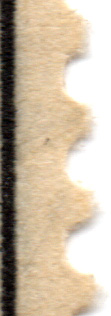
hello to ALL of you. i must appologuise to you all I never had a chance to get the stamp scanned , but what I did do , is cut another harding rotaro p10...and this is the outcome. verdict is out 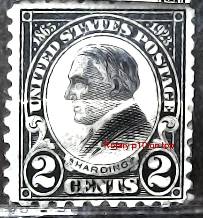 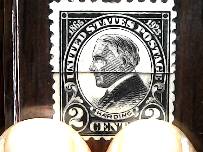 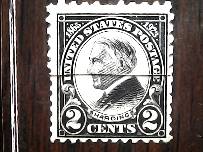 |
|
Send note to Staff
|
|
|
Bedrock Of The Community
12705 Posts |
|
|
Is there a reason why you are measuring the width and not the height? The width is never the issue. Anyway, this horse is being beat to death. Measuring these is a fool's errand. The "patina" did not do it for you? |
|
Send note to Staff
|
|
|
Pillar Of The Community
6358 Posts |
|
|
The word PATINA has absolutely zero place in a proper discussion of black Hardings. Please stop. Use a correct term instead.
|
|
Send note to Staff
|
|
|
Bedrock Of The Community
12705 Posts |
|
|
Quote:
Please stop No and here is the reason why. I did not coin the phrase patina in relation to the two cent Harding. Lawrence (Larry) Cohen did. Do you know Larry? He is the foremost authority on the two cent Harding's. He dedicated his life to the study of them. The strip of three was discovered by Larry. Larry had 200 volumes of just two cent Harding's and searched through 150,000 copies to find the strip of three. If patina is good enough for Larry it is good enough to use here. Capice? Roger Edit to add: Quote:
A high percentage of the rotary-printed stamps exhibit a gray patina and the color seems less crisp. Here again, comparing with known examples of Scott 612 will give you a benchmark for evaluating the color.
The reason for the patina is that the manual process of wiping excess ink from the flat-plate surface was replaced by an automated system for the rotary-press printing. It could work as well as a hand wiping but often did not, leaving a residue on the rotary plate that transferred to the imprinted areas of the stamp during printing. |
|
Send note to Staff
|
| Edited by rogdcam - 10/20/2023 4:35 pm |
|
|
Valued Member
Switzerland
496 Posts |
|
|
rogdam: Even the biggest stamp collectors/experts/whatnot in the world make mistakes.
Calling insufficient plate wiping "Patina" is incorrect terminology, plain and simple.
|
|
Send note to Staff
|
|
|
Replies: 56 / Views: 8,420 |
|




 Posted 10/15/2023 1:45 pm