| Author |
 Replies: 15 / Views: 1,080 Replies: 15 / Views: 1,080 |
|
|
Valued Member
United States
6 Posts |
|
|
Hi, new to stamp collecting here. Recently came across the following stamp, which lacks any perforation. I know imperforate 720s do not exist, so I suppose this stamp must have been cut or trimmed somehow before being affixed? If so, given that the left margin is so curiously thin, I guess the original must have been vertically perforated? Is it usual for perforate stamps to be so processed before they are applied? -- I ask only because, to my very limited knowledge at least, it usually happens after their removal. Thanks in advance for any instruction on this issue. 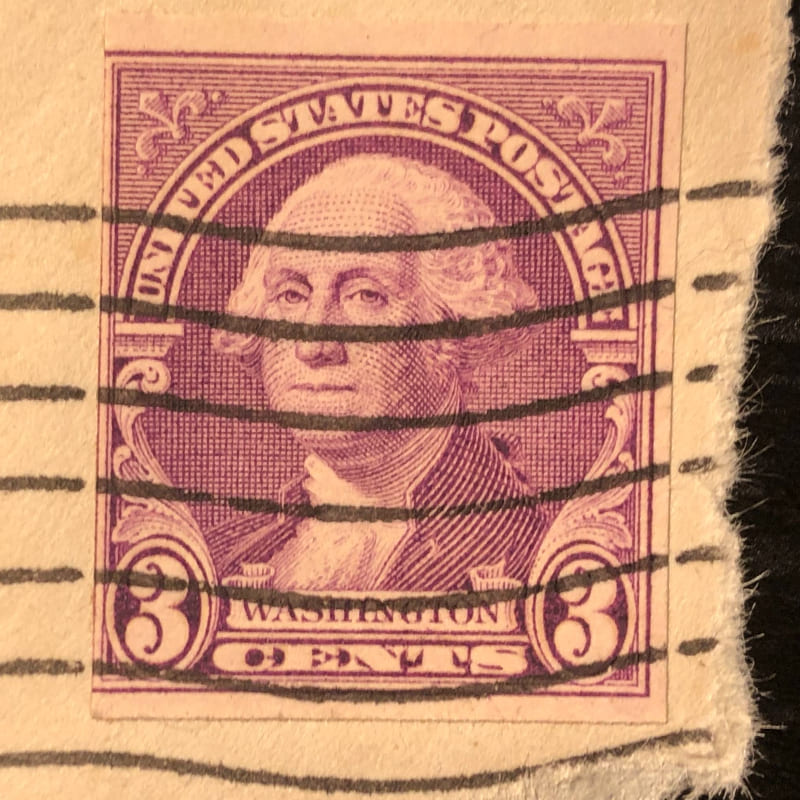 |
|
Send note to Staff
|
| Edited by s0018 - 03/03/2024 5:40 pm |
|
|
|
|
Pillar Of The Community
6358 Posts |
|
|
Someone was having fun. While it is great eye-candy, it would not be certifiable as an imperforate error. Consider the two pseudo-imperf singles which could be cut from the bottom two stamps of this booklet pane. Each would have wider margins than your example. 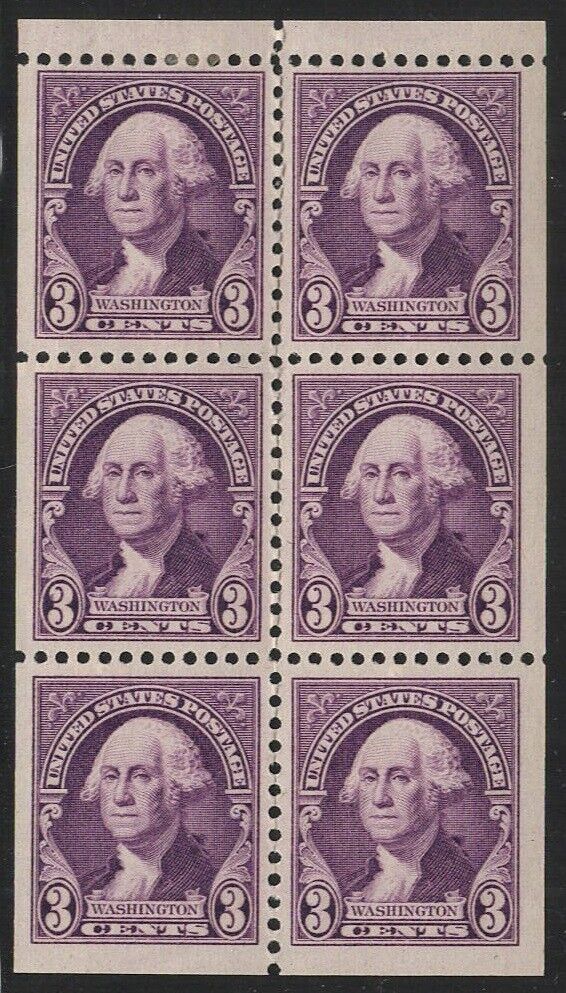 |
Send note to Staff 
|
| Edited by John Becker - 03/03/2024 5:45 pm |
|
|
Valued Member
United States
6 Posts |
|
|
Pillar Of The Community
United States
670 Posts |
|
|
It's hard to see in the photo, but it looks like there might be perfs top left?
I see John answered while I was taking a second look, and I agree. Probably bottom right.
|
|
Send note to Staff
|
|
|
Pillar Of The Community
6358 Posts |
|
|
The other theory to examine ... The left and right sides appear to both be arcs, bulging very slightly in the center of the cut to the left, which would suggest a coil affixer, which advanced a bit short and knifed-off the perforation on both sides. Two features would be helpful to know:
1. Does the height match a 721 coil?
2. And of lesser importance, is this sent by a business?
Regardless of the outcome (of either booklet, coil or sheet origin), it is an interesting consumer-made cutting and not a postal production error. |
|
Send note to Staff
|
| Edited by John Becker - 03/04/2024 10:30 am |
|
|
Valued Member
United States
6 Posts |
|
|
Again, thanks to John and Ray for the extra information.
I will measure the height and get back to you. As for the origin, it was sold as is alongside other random stamps by a postal museum, so I don't quite know whether it was for business or personal use. The coil affixer theory sounds promising -- although I don't know how these things work, I will definitely look into it. |
|
Send note to Staff
|
|
|
Pillar Of The Community
6358 Posts |
|
|
This thread has a decent intro: https://goscf.com/t/69080The point is that you may have natural coil edges at top and bottom and affixing cuts at left/right, which many consider to be damage and some consider to be evidence of the office machinery of the era. When the affixers advance more or less than a full stamp one can get more or less than one exact set of side perforations. |
|
Send note to Staff
|
|
|
Pillar Of The Community
United States
1165 Posts |
|
|
Pillar Of The Community
6358 Posts |
|
|
Quote:
Didn't those machine affixers cut in a slight curve? A curve or diagonal. The important feature is the affixer did the same thing with both cuts, which would be difficult with replicate with scissors or other manual tool. The stamp discussed here shows a very slightly thicker outer frame line midway down the left edege than at the top or bottom, which suggests a slight arc to the cut and the desire to compare the overall height against a known coil. |
|
Send note to Staff
|
|
|
Pillar Of The Community
United States
1165 Posts |
|
|
So the left side seems to be very straight when I put a straight edge up to it. even though the stamp looks like the cut is curved. but on the right side it definitely has a curve where the outer edges are longer. |
|
Send note to Staff
|
Michael Darabaris |
|
|
Valued Member
United States
6 Posts |
|
|
Sorry about the delay -- Was rather busy these past few days.
The height (of the frame) is 7/8 in (or ~2.35cm), and the width 3/4 in (or ~1.95cm). |
|
Send note to Staff
|
|
|
Pillar Of The Community
6358 Posts |
|
|
I may have been unclear with: Quote:
1. Does the height match a 721 coil? I meant "Does the total height of your stamp match the height of a known coil stamp?" Best done by directly comparing two stamps together and not taking any actual numerical measurement. |
|
Send note to Staff
|
|
|
Valued Member
United States
6 Posts |
|
|
You were perfectly clear John. I don't know why I didn't think of this more straightforward method immediately -- And yes, as far as I can tell the sample has the same height as a 721. 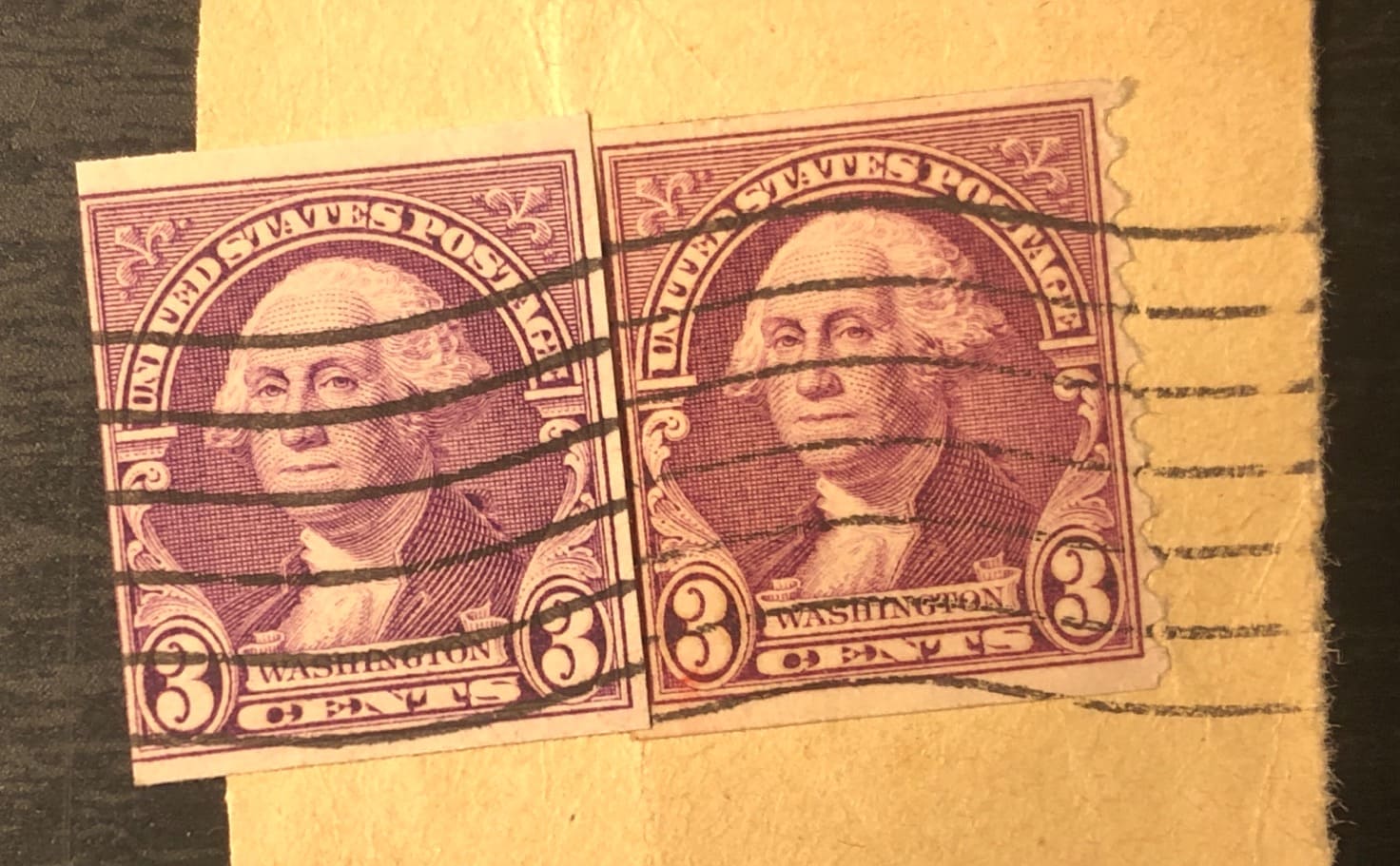 |
|
Send note to Staff
|
|
|
Pillar Of The Community
United States
8956 Posts |
|
|
s0018, you did not understand what Mr Becker was saying. The TOTAL height of the stamp is from top to bottom, NOT just the printed part. The two stamps you pictured are NOT identical - one has been scissored by someone!
Peter |
|
Send note to Staff
|
|
|
Pillar Of The Community
6358 Posts |
|
|
Well, I tried. As Peter noted the confusion .... it is now clear that the left stamp (the whole stamp ignoring the printed area) is taller than the coil stamp at right. Thus I would have to conclude the original stamp on the left cannot be from a coil, but rather is highly likely to be trimmed from a booklet stamp, or less likely, trimmed from a large-margined sheet stamp.
However by soaking from the original envelope piece it has lost any "eye candy" that it had by being tied "on piece". It is now just a damaged stamp without any story. |
|
Send note to Staff
|
|
|
Valued Member
United States
6 Posts |
|
|
Thanks to both John and Peter for clearing up the confusion!
And well, I guess things like this naturally occur when one is new to any hobby -- It still makes a pretty interesting story on my part, and I did learn more about the coil affixer after all. I do appreciate all the information, and might bother this Forum more in the foreseeable future with newbie inquiries. For this I apologize in advance. |
|
Send note to Staff
|
|
| |
Replies: 15 / Views: 1,080 |
|




 Posted 03/03/2024 5:34 pm


