| Author |
 Replies: 25 / Views: 1,817 Replies: 25 / Views: 1,817 |
|
Pillar Of The Community
570 Posts |
|
|
I would like to show you this example that I rescued from the "box of everything for 10 cents", with which I am very happy because I have classified it as a SG#168a. It is not a stamp with a design that I like very much, I prefer the ones with animals like koalas, kangaroos or emu… I bought it because I found several of the same series in the box and I thought it would be complete, a disappointment because it was not, 2 or 3 values are missing... I classified them with the Scott catalogue and I got SC#170, a stamp that was not bad in value…but as I didn't like it very much and the series was incomplete, I left them in a second-rate album waiting to complete it…Yesterday a Gibbons Commonwealth catalogue fell into my hands, and surprise, there appears a more detailed study of the stamp, proposing the SC#168a variety, a preliminary printing model with special details such as the white wattles or the union of the T and A of POSTAGE on the right, and which was distributed mainly to the press as part of the news of its issue. If it weren't for the Gibbons catalogue, I would have forgotten about it, and I would have even changed it for another one that I liked more aesthetically or to finish a series even if the value was lower…Now, however, it seems special to me philately and I will keep it for my main collection…I hope you like it. 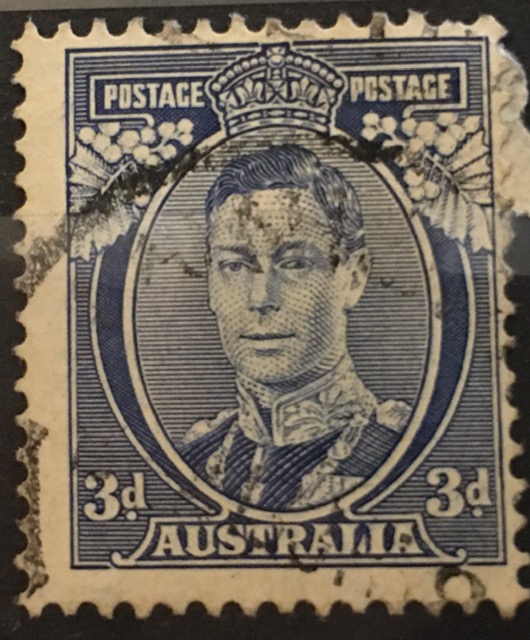 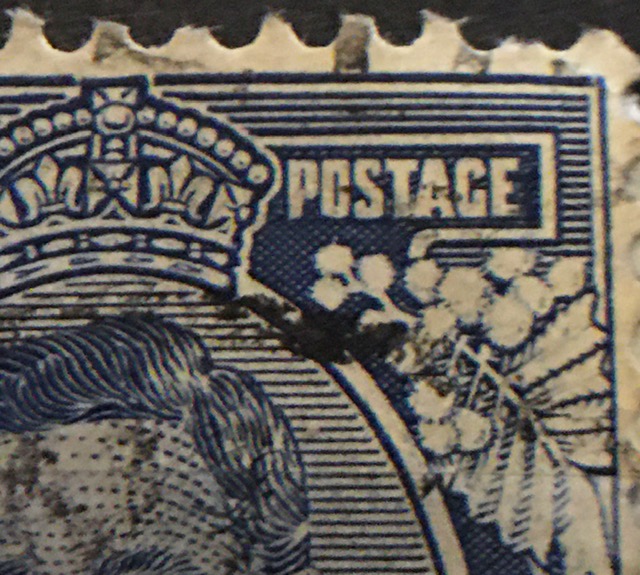 |
|
Send note to Staff
|
| Edited by Murasama - 08/04/2024 12:44 pm |
|
|
|
|
Pillar Of The Community
Netherlands
6650 Posts |
|
|
It am not sure it is the SG168a. There is some blue shading of the wattles. My SG does not show how little shading there should be to make them 'white' wattles. Also, the face looks to have well-defined engraving. SG also mentions the ink issue with SG168a affects the face. |
Send note to Staff 
|
| Edited by NSK - 08/04/2024 1:19 pm |
|
|
Pillar Of The Community
570 Posts |
|
|
Pillar Of The Community
Netherlands
6650 Posts |
|
|
Look at the leaves on the lefthand side. They show no shading in the second stamp (168a). The shading is clearly visible in your stamp. Also, the area around the nose in the second stamp has a very white appearance. Your stamp looks quite normal.
The white on the side of the face (between the ear and the eyebrow) occurs in the first three stamps.
Your stamp having been used is already a good reason to doubt it is 168a. |
|
Send note to Staff
|
| Edited by NSK - 08/04/2024 1:55 pm |
|
|
Pillar Of The Community
United States
776 Posts |
|
|
Pillar Of The Community
Australia
1692 Posts |
|
|
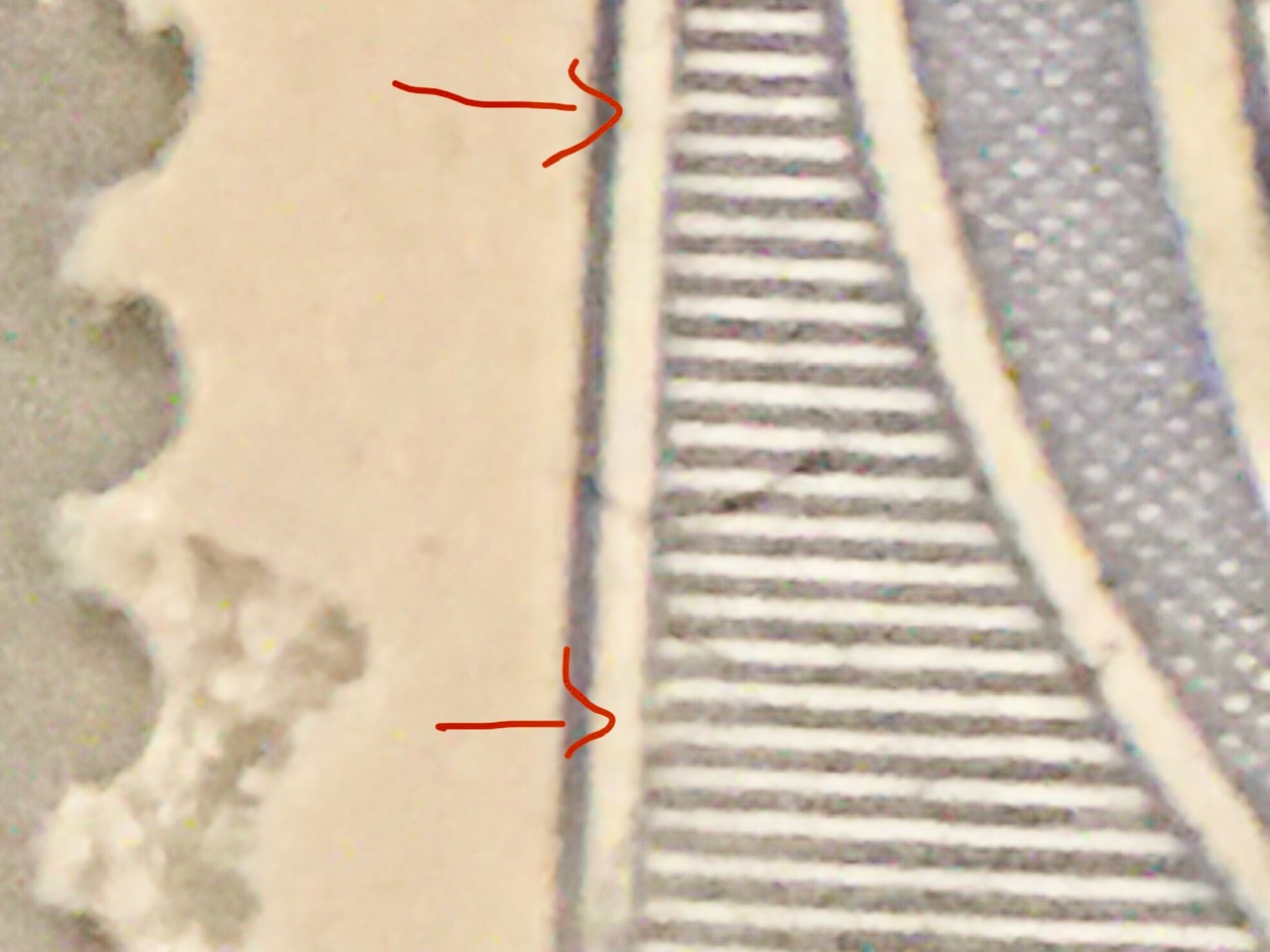
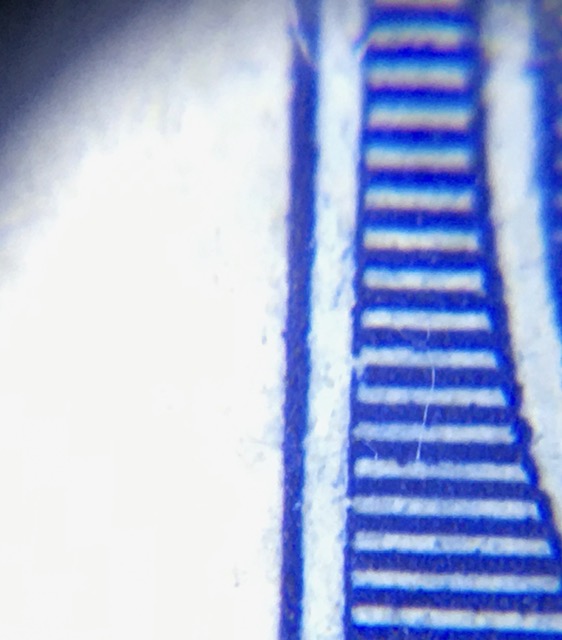
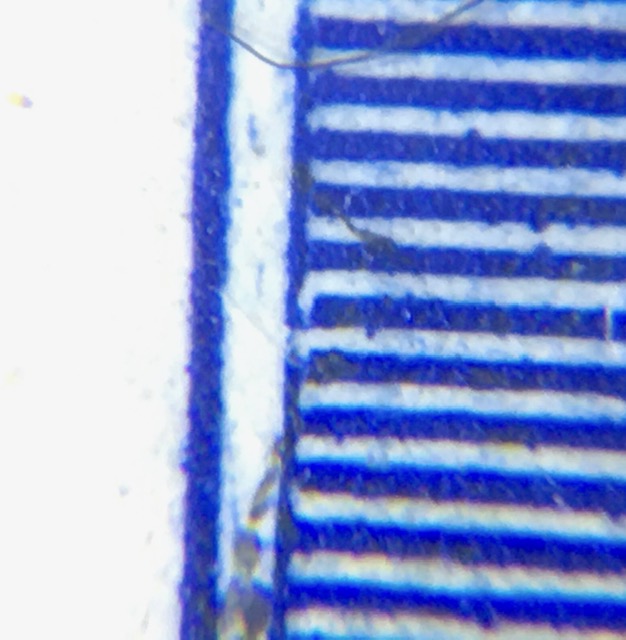
The identifying flaws that make-up the "white wattles" which is actually an ink stripped stamp is shown here in detail. The easiest way to identify the "white wattles" are the two breaks in the inner left frame, last image on right. 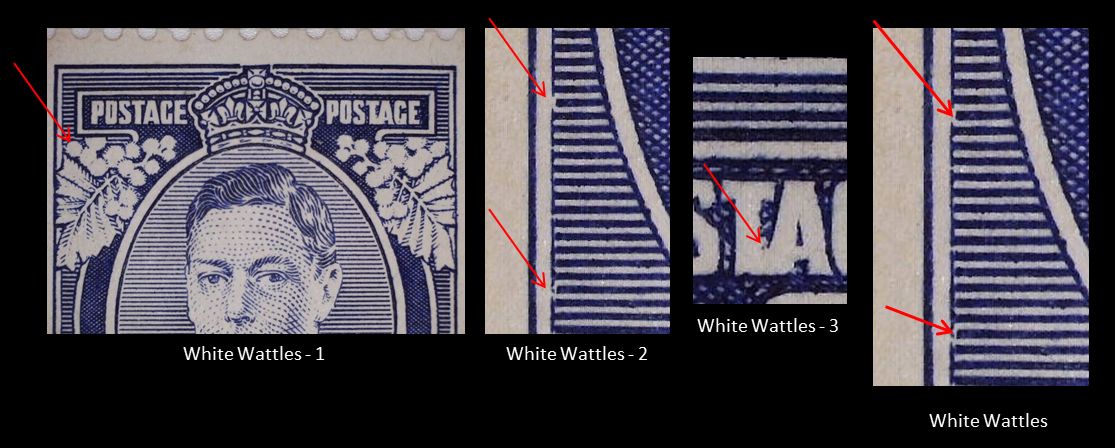 |
|
Send note to Staff
|
| Edited by Rob041256 - 08/04/2024 2:52 pm |
|
|
Pillar Of The Community
570 Posts |
|
|
Really grateful for this detail!!! I could see the two breaks in my stamp!!! I had changed the label to 168, but I will redo it again as 168a!! Soon I will upload some photos where you can see it. |
|
Send note to Staff
|
|
|
Pillar Of The Community
570 Posts |
|
|
Moderator

United States
5109 Posts |
|
|
Quote:
The easiest way to identify the "white wattles" are the two breaks in the inner left frame ... This is a really tough stamp to identify correctly. I've had a similar question, but believe that my example is not the "White Wattles" more because of the TA join. Here is my example: 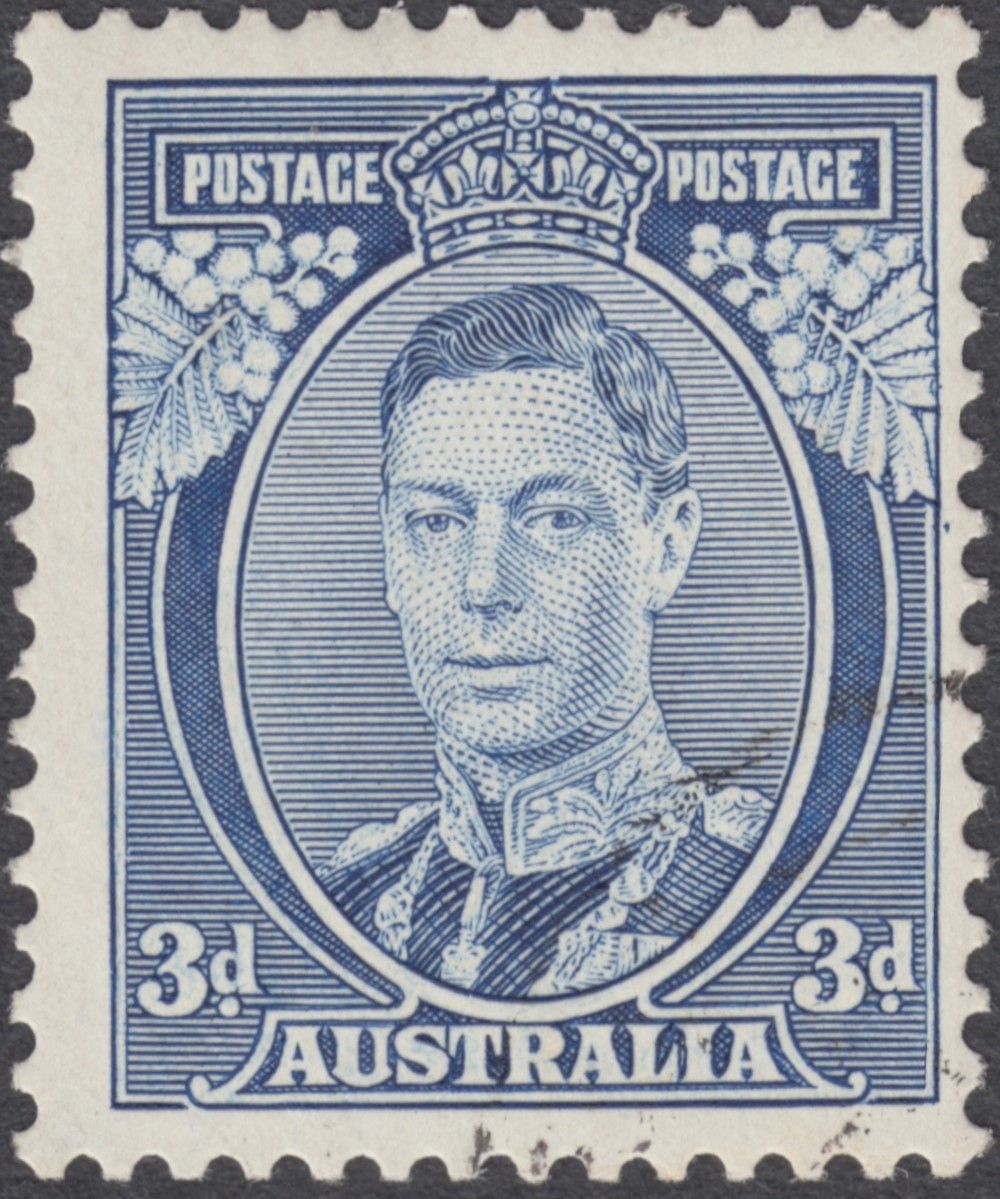 When I zoom into the two breaks in the inner left frame, I can see some small bit of breaks: 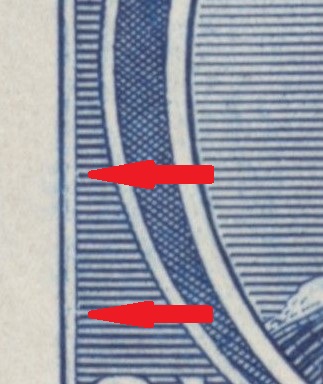 The upper right, though, shows a TA join that is much less than the one you would see in the "White Wattles": 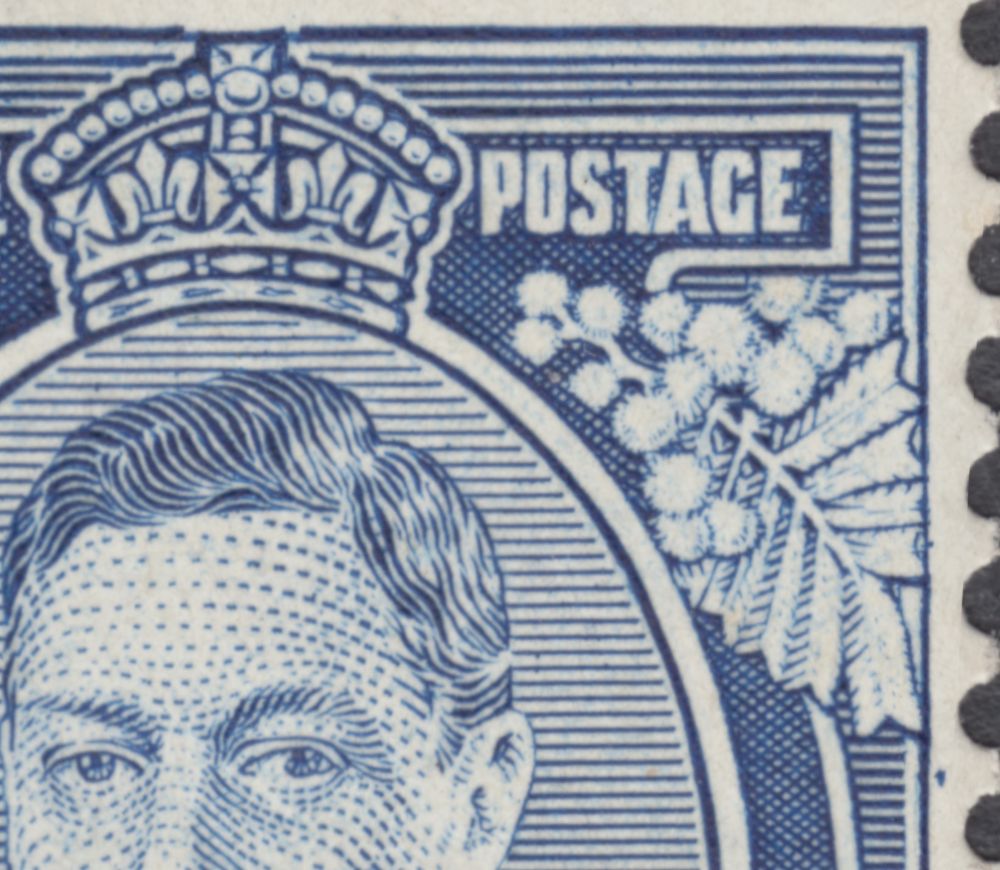 So, still confusing, but I don't believe the OP's stamp, nor my stamp, is a good enough copy of the "White Wattle" variety. |
|
Send note to Staff
|
|
|
Pillar Of The Community
Netherlands
6650 Posts |
|
|
Pillar Of The Community
570 Posts |
|
|
I respect your opinion NSK, but my stamp meets all the requirements for an SG#168a: TA joints, pale face, broken chin, white wattles and the two breaks in the frame...Until I can put a certified SG#168a next to it and I could clearly see a noticeable difference, I must have it classified as 168a, I cannot put it as 168 because the indicatives are not in favor of it. |
|
Send note to Staff
|
|
|
Pillar Of The Community
Netherlands
6650 Posts |
|
|
You might want to post clear pictures of the wattles top left and the right ear.
The breaks are very minor if at all and maybe an early state of the clear breaks that are visible in 168a. |
|
Send note to Staff
|
| Edited by NSK - 08/05/2024 05:01 am |
|
|
Pillar Of The Community
570 Posts |
|
|
I will try to take better photos (photography is not my strong point...). However, I think I have read that the breaks can be found in SG#168a, to a greater or lesser degree, not all copies have exaggerated breaks... The ear on my stamp unfortunately has abundant remains of the cancellation, it is difficult to see and is not a completely reliable indicator... |
|
Send note to Staff
|
|
|
Pillar Of The Community
570 Posts |
|
|
detail of the ear, it is not so bad after all although it has marks from the cancellation, but it can be compared with the photos in the links, I continue to reaffirm myself in 168a. 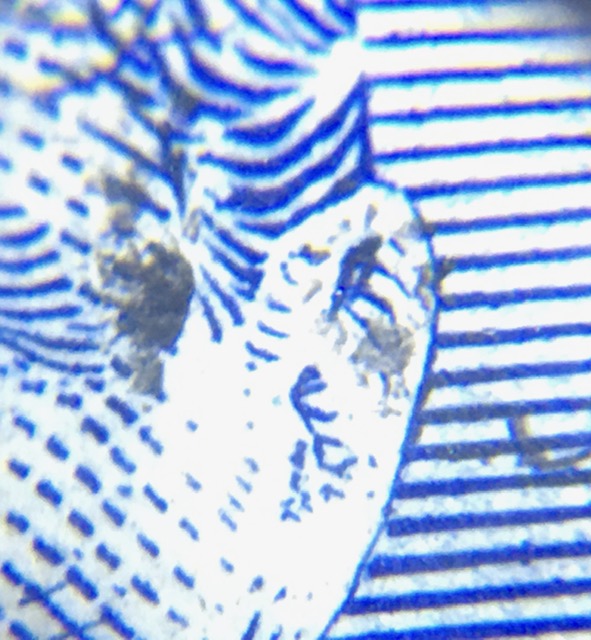 |
|
Send note to Staff
|
|
|
Pillar Of The Community
570 Posts |
|
|
In any case, if the problem was the experimental ink, since it produced the breaks, it is obvious that the stamps that have these breaks to a greater or lesser degree of ink detachment, should be 168a. Gibbson, in this regard, indicates that 168a is the result of the use of this experimental ink, I understand from his annotation that 168a was the only one used with this preliminary ink, since the new inks did not produce these peculiar breaks due to detachment. |
|
Send note to Staff
|
|
|
Pillar Of The Community
United States
2830 Posts |
|
|
There are many instances where flaws exist in transitional states, on their way to becoming the full flaw that Gibbons has given catalog recognition. Those stamps showing transitional states do not count as stamps that meet the requirements for a given catalog number. Usually, when transitional states are known Gibbons is looking for the "worst possible" state that is most clearly seen by the observer. Flypeckers of course will collect whichever transitional stamps capture their fancy. |
|
Send note to Staff
|
| Edited by shermae - 08/05/2024 5:31 pm |
|
|
Replies: 25 / Views: 1,817 |
|




 Posted 08/04/2024 12:43 pm