| Author |
 Replies: 39 / Views: 3,237 Replies: 39 / Views: 3,237 |
|
|
|
Valued Member
United States
60 Posts |
|
|
Yes, and that's one of the reasons that put me in doubt between those two Scott numbers. 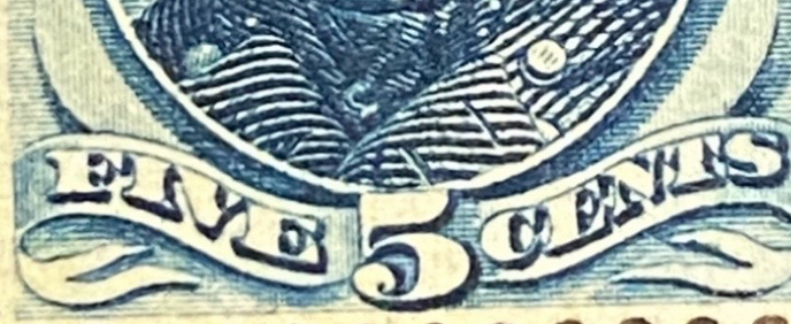 |
Send note to Staff 
|
|
|
Pillar Of The Community
500 Posts |
|
|
Where did you come across this stamp? I just wonder how a $450,000 stamp would randomly pop up out of nowhere. If this was part in an estate that had other obvious high end stamps then maybe.
|
|
Send note to Staff
|
|
|
Moderator

United States
5109 Posts |
|
|
And I have to add, why didn't you bring up that thought in the first place rather than just posting partial pictures and asking vague questions? |
|
Send note to Staff
|
|
|
Valued Member
United States
60 Posts |
|
|
I came into possession of the collection a long time ago, but I haven't had much time to dedicate to it. I've sold some stamps online, and maybe they were worth more. Now, I'm slowly going through everything and learning from you here. You have to understand that it's not possible to learn quickly; there are a huge number of stamps and variations. Thank you for the advice and the guidance on which details to pay attention to.
|
|
Send note to Staff
|
|
|
Pillar Of The Community
United States
1273 Posts |
|
|
Uncommon stamps, such as a 181, could possibly show up. A couple of examples. The 389 Orangeburg Coil that sold on ebay recently. Another example, 345V was removed from the Scott Catalogue some year back because apparently no one had one to substantiate the existence. A friend of mine, who passed away not long ago, was able to find this elusive stamp. It has now been relisted in Scott. Granted, these are not in the same "ball park" as the "Classics", but it is possible that the uncommon may be out there. |
|
Send note to Staff
|
| Edited by Al E. Gator - 09/02/2024 10:49 am |
|
|
Pillar Of The Community
United States
1820 Posts |
|
|
Valued Member
United States
60 Posts |
|
|
Yes, I absolutely agree with you; I am not claiming that I have a 181—certification will reveal that. In this collection that I acquired, there are stamps marked as "very important," including, among others, a cancelled Scott #363. |
|
Send note to Staff
|
|
|
Bedrock Of The Community
United States
10870 Posts |
|
|
Alas, the lack of shading lines proves nothing; these stamps had high print quantities and plates got very worn. |
|
Send note to Staff
|
|
|
Pillar Of The Community

United States
1161 Posts |
|
|
I think a lot of folks on this board would love to see a copy of the certificate for that cancelled Scott #363. That stamp is not known to exist used. |
|
Send note to Staff
|
|
|
Valued Member
United States
60 Posts |
|
|
Yes, I would also like to see that certificate; I will send it for certification. I'm currently examining it and comparing the paper. It definitely appears to be DLW, and the paper looks quite different. It also has a cancellation, and it might be dirty. |
|
Send note to Staff
|
|
|
Valued Member
United States
60 Posts |
|
|
Bedrock Of The Community
United States
10870 Posts |
|
|
It is pretty much impossible for a 363 to have been used. They were never issued, and the few in collectors hands came about because the National Collection was missing a few rarities, and it was not legal to purchase them. But they could be traded for, and that is what happened. Examples of 360 (also never issued) and 363 were traded for the rarities needed. No one who owned one at the time is known to have used one. |
|
Send note to Staff
|
|
|
Valued Member
United States
60 Posts |
|
|
I really don't know; if there's no difference in the paper, which it looks like there is, then it's probably dirty. 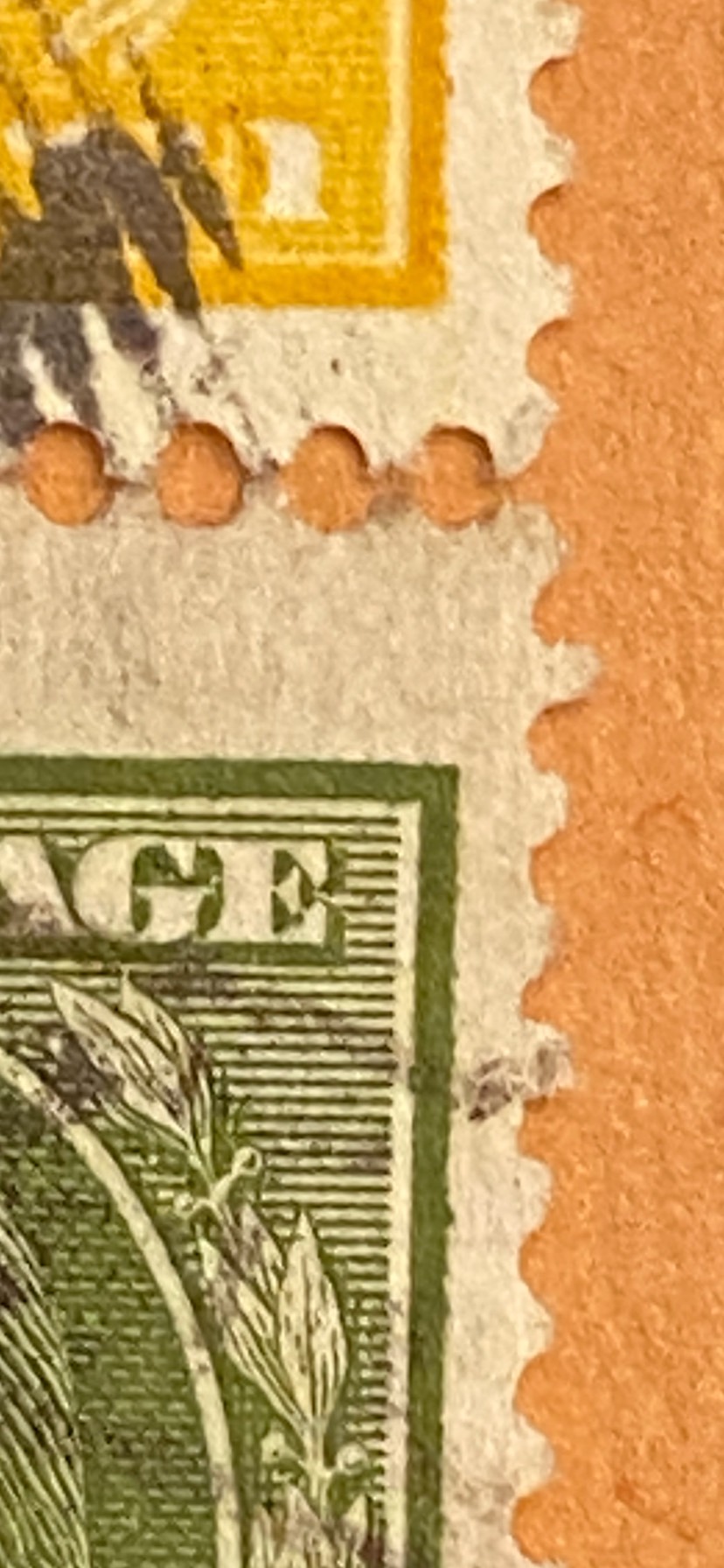 |
|
Send note to Staff
|
|
|
Pillar Of The Community
6366 Posts |
|
|
Dusko,
It is best to approach stamps ID'd by a previous collector with great caution and doubt, especially if they are ID'd as something far more valuable than a similar-looking common stamp. Ronald Reagan said "Trust, but verify", but one should not even trust labels from collectors of unknown knowledge or experience. Don't get me wrong, I admire your enthusiasm, but you have started a number of threads which lean toward "I have the valuable type, or shade, or an error of some sort", rather than building on the idea that the odds are faaaar greater that you have the most common stamp and to eliminate that possibility first. The idea that having a special printing among a group of a dozen or two large banknotes is beyond lottery-odds. If you think you have a far more valuable type, look twice, then a third time. Honestly, you should ignore the special printings completely when trying to ID your stamps. 99.99% of all stamps are extremely common and of little monetary value.
For the "363" (and any other stamp for that matter, reference your "carmine type IV" thread), please show a scan of the entire stamp front and back, then any close-ups necessary to emphasize a specific area. Otherwise its just playing games and hides features which may be very relevant to a correct ID.
Lastly, you are not far enough along with any of the stamps in your posts to be sending off for certificates. You will only be wasting your money. |
|
Send note to Staff
|
|
|
Valued Member
United States
60 Posts |
|
|
Thank you John for the advice and the effort to explain. I am trying to get a concrete answer, but everyone's responses seem somewhat vague. For example, regarding Scott #181, I received answers like "maybe, but it doesn't necessarily mean so." Another response was, "It's far from 181," but there was no explanation of what exactly makes it far or what the stamp should possess to be close. I have the impression that no one wants to point out the specific detail or details to focus on. The 363 stamp was brought into this discussion by chance—what's the problem with an experienced philatelist noticing whether it's a dirty stamp or potentially a difference in the paper? In any case, thank you for joining the discussion. Best regards. |
|
Send note to Staff
|
|
|
Replies: 39 / Views: 3,237 |
|




 Posted 09/01/2024 8:57 pm