| Author |
 Replies: 39 / Views: 3,238 Replies: 39 / Views: 3,238 |
|
|
|
Bedrock Of The Community
United States
10870 Posts |
|
|
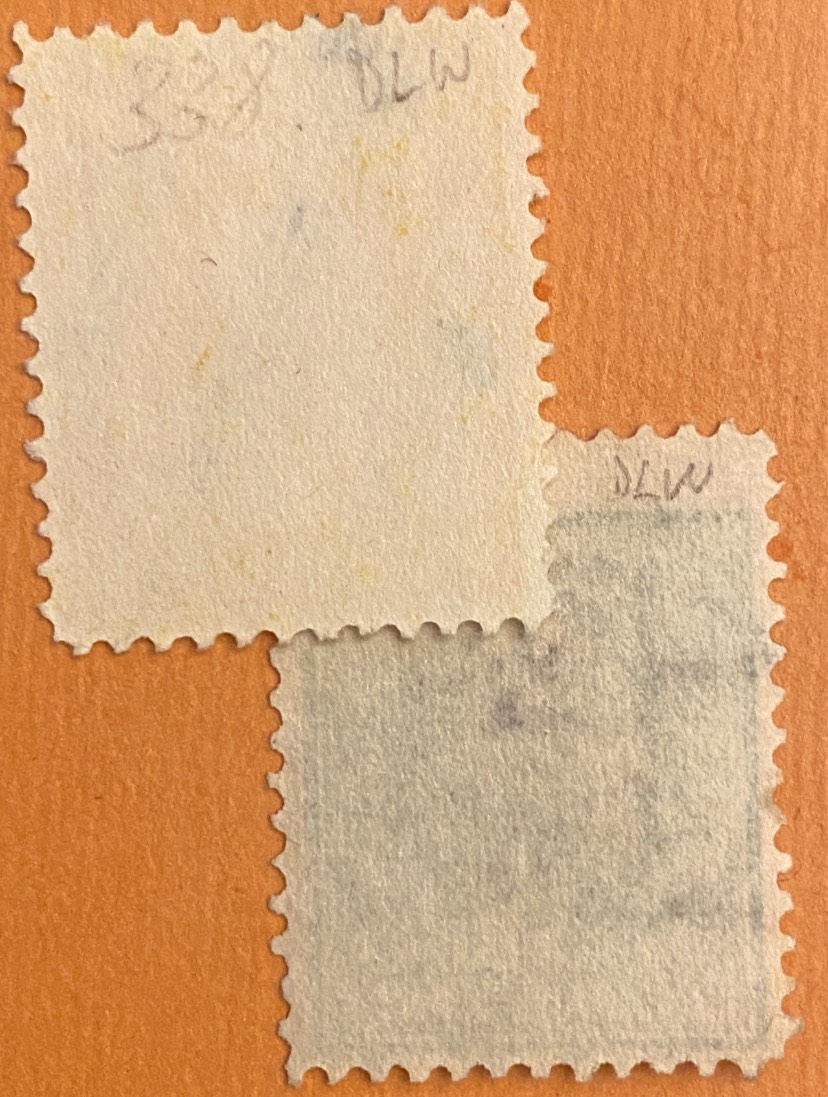
These images are insufficient for that purpose, but 6 decades of philately tell me it cannot be a bluish paper, as I wrote earlier. Same for the 181; these images are insufficient. But the probabilities are extremely small. |
Send note to Staff 
|
|
|
Valued Member
United States
60 Posts |
|
|
Thank you for the response, so the paper is the same on both stamps, it's not bluish but rather dirty paper. 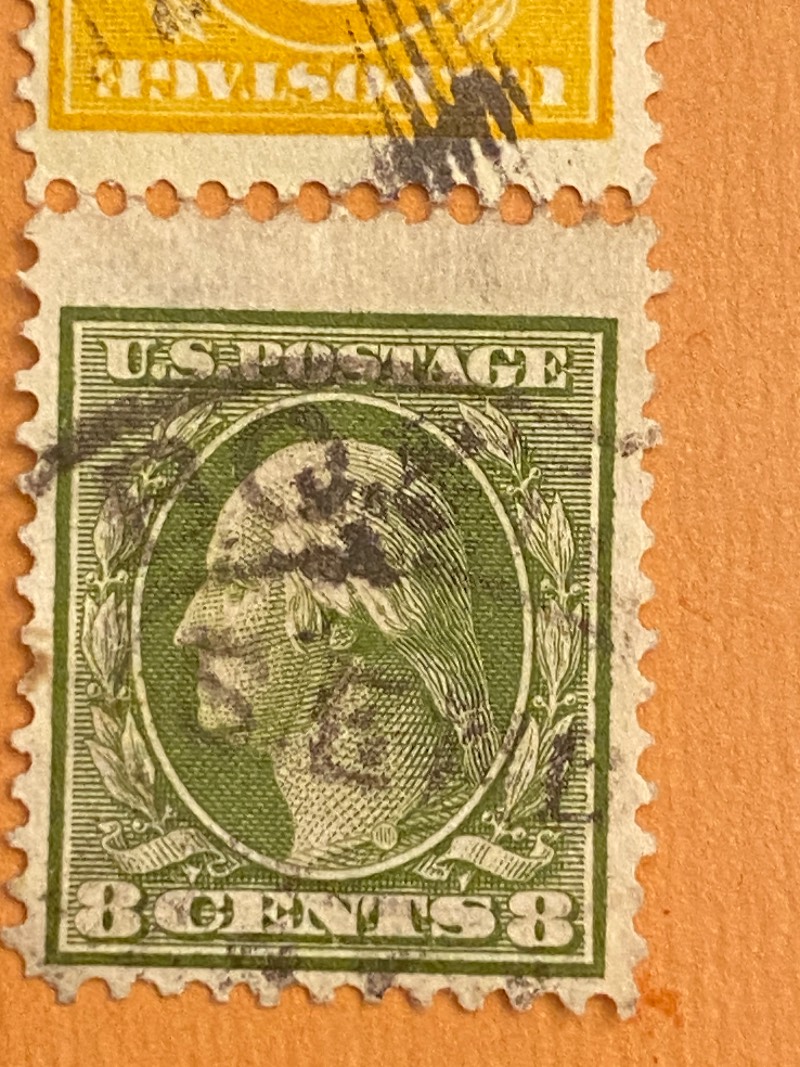 |
|
Send note to Staff
|
|
|
Valued Member
United States
60 Posts |
|
|
Pillar Of The Community

United States
1162 Posts |
|
|
Some tips:
- Compare stamps of the same type and denomination. The 8 cent stamp will inherently have more of a darker look when compared against a bright yellow 10 cent stamp. Find a handful of used 8 cent 337's to compare with.
- Get a certified used copy of the one cent #357, a "relatively" cheap version of the same bluish paper series. Line up all the 337's and 357 face down (ideally on an orange background like you have done) and see how similar or different the paper colors look.
- Even if your candidate 363 looks different doesn't guarantee it is bluish paper. The paper may just be toned with age or got stained when soaked off the envelope, or a myriad of other environmental factors over the last century.
- In the past there were other paper types identified and certified for the 1908 series such as the "China Clay Paper" that Scott no longer lists, or "dirty water" paper. The Scott Specialized catalog says "The stamps previously known as China Clay Paper stamps were, in fact, normal stamps printed on paper that was defective to varying degrees. These interesting varieties, which have nothing to do with China clay, can appear to be thin, thick, translucent, opaque, somewhat dark, or very dark, but they are not the kind of items that the Scott catalog or other catalogs normally list." The catalog goes on to say these varieties are of interest to some specialists, yet they are distinctly different from the experimental "bluish paper" containing 35% rag stock.
- Take it slow, enjoy the ride. There is a lot to learn and a quality education takes time. |
|
Send note to Staff
|
|
|
Bedrock Of The Community
United States
10870 Posts |
|
|
That is not bluish paper. I don't know how many different posts are required to tell you. As I have already explained, it cannot be one. |
|
Send note to Staff
|
|
|
Valued Member
United States
60 Posts |
|
|
Revcollector, I understand that you wrote it's not, and I confirmed that as well. I don't see the problem with posting two more photos so others can see and learn that a difference in color doesn't necessarily mean a difference in paper. |
|
Send note to Staff
|
|
|
Valued Member
United States
60 Posts |
|
|
ZebraMan, Thank you for the excellent explanation and for understanding that there are people who are just learning. |
|
Send note to Staff
|
|
|
Pillar Of The Community
500 Posts |
|
|
The differences between special printings and common versions is paper (whiter) and color brightness neither of which can be distinguished by a 300K resolution. Also, most special printings were cut apart by scissors which yours does not appear to be.
Send it in to PF or PSE if you really need a definite answer. On this forum, you are simply getting friendly, free opinions. |
|
Send note to Staff
|
|
|
Valued Member
United States
60 Posts |
|
|
The darkness of your "363" can also be the result of over inking in the printing process, which is seen frequently. |
|
Send note to Staff
|
|
|
Replies: 39 / Views: 3,238 |
|




 Posted 09/02/2024 3:38 pm