| Author |
 Replies: 15 / Views: 1,452 Replies: 15 / Views: 1,452 |
|
|
Valued Member
United States
149 Posts |
|
|
Could you please help me to identify the number of this US stamp. Is it Sc#1295 or #1295a? Also what do the black 2 stripes in the margins mean. Are they rare in the stamp margins? I see the plate number is more common than the black stripes. Thanks a Lot.  |
|
Send note to Staff
|
|
|
|
|
Moderator

United States
5109 Posts |
|
|
According to my Scott's Catalog, 1295 is the normal stamp, while 1295a is tagged. You'll have to determine which one you have. |
Send note to Staff 
|
|
|
Pillar Of The Community
6366 Posts |
|
|
I agree you need a short-wave UV light to check for tagging. We cannot to it from an image. The black rectangles are some of the electric eye markings intentionally put down the center of the plates of 400 to assist in perforating and cutting the long web of printed stamps into retail panes of 100. Here you can see a lower right pane. There are also lines to assist along the outer edge of the plate, where the plate number is. As you can see, any retail pane will have 1 plate number and 10 singles with the electric eye bars (or where they would be if the cutting was centered exactly.) 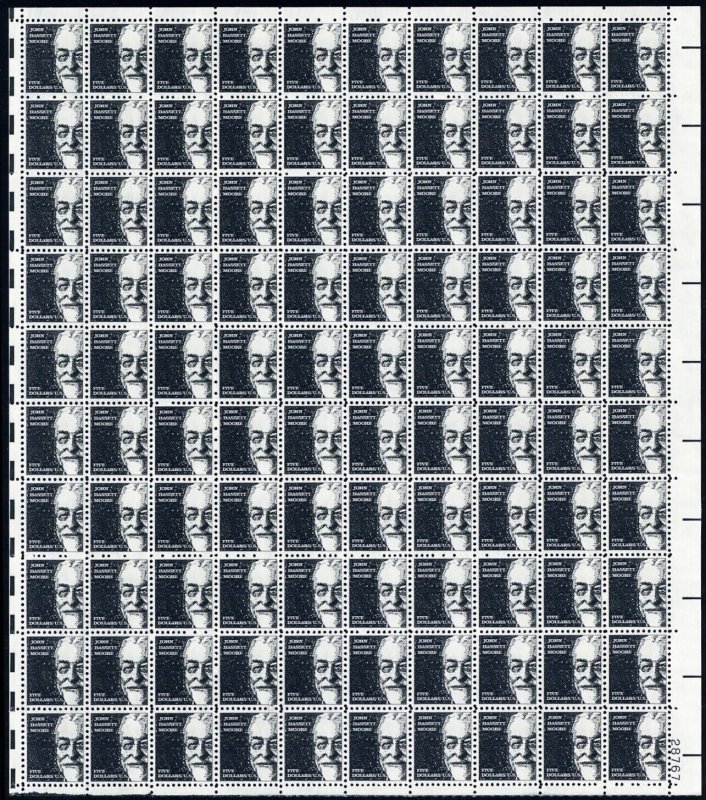 |
|
Send note to Staff
|
|
|
Valued Member
United States
149 Posts |
|
|
Valued Member
United States
149 Posts |
|
|
Dear John Becker
Thanks for plenty information
I will try to used UV light
Regards
|
|
Send note to Staff
|
|
|
Moderator
United States
5109 Posts |
|
|
Quote:
Stamp Size 19mm x 22mm The stamp size wasn't asked, and doesn't matter for this example. We need to know the results from a UV light to look for tagging. |
|
Send note to Staff
|
|
|
Valued Member
United States
149 Posts |
|
|
3 images under different frequencies . frequencies : 254 nm, 265nm and both together Thanks for cooperation 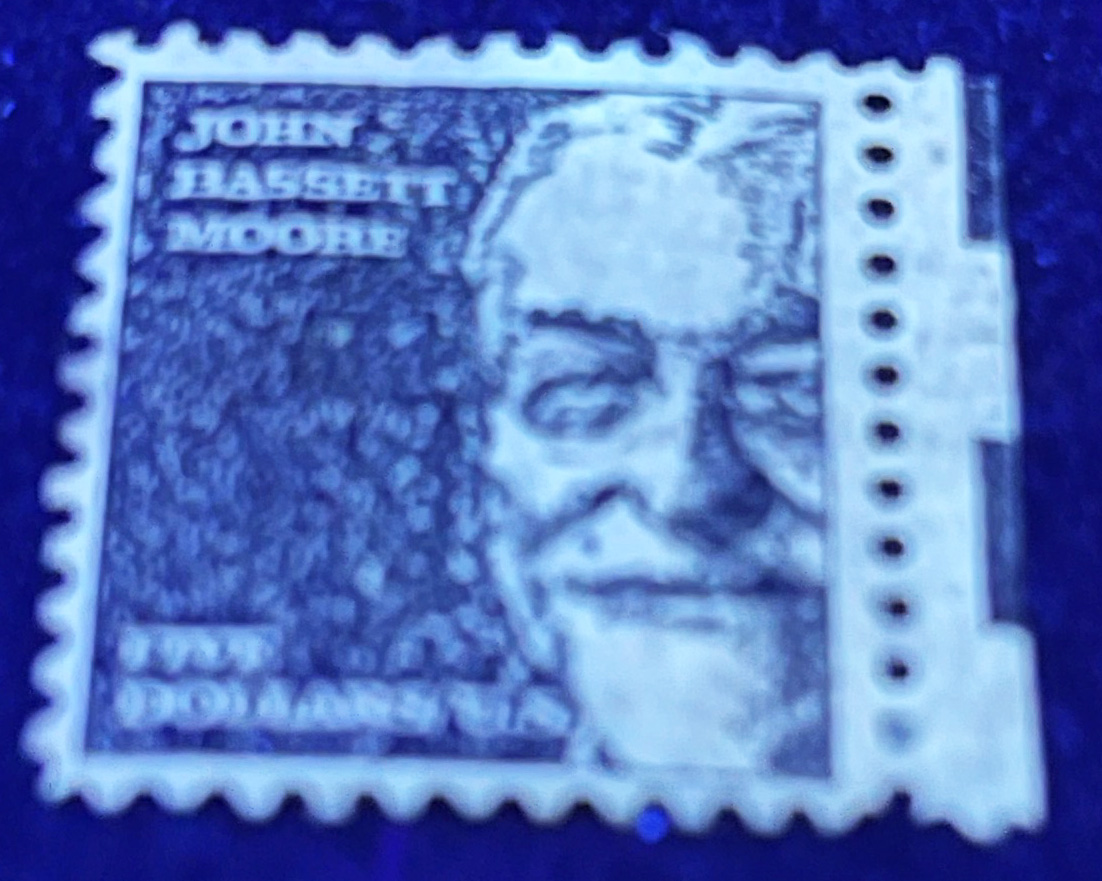  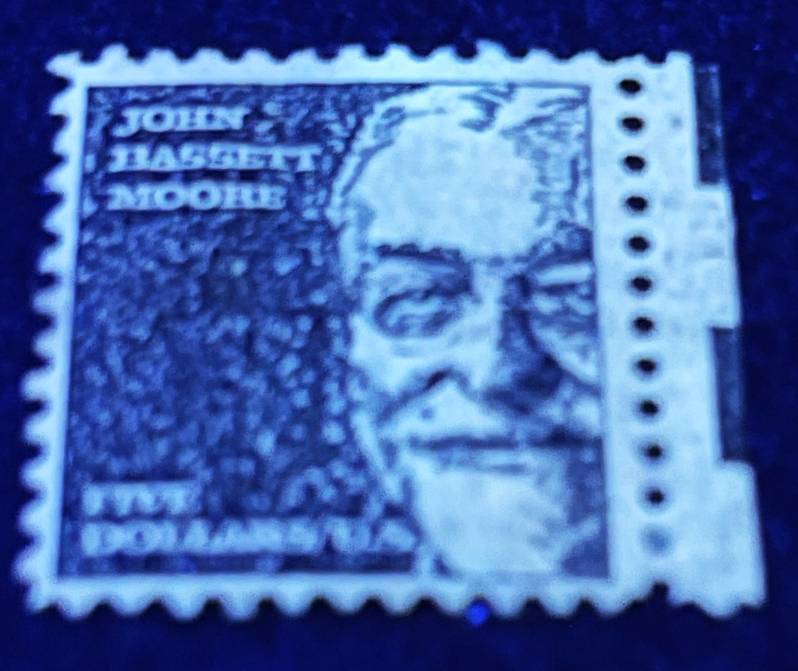 |
|
Send note to Staff
|
|
|
Pillar Of The Community
6366 Posts |
|
|
Valued Member
United States
149 Posts |
|
|
Valued Member
Switzerland
499 Posts |
|
|
No tagging.
That strange image is just your mind playing tricks with you. |
|
Send note to Staff
|
|
|
Valued Member
United States
257 Posts |
|
|
If you want to see what the tagging looks like check out the stampsmarter tagging database. Just search for "stampsmarter tagging database". Go to the database tab and you will find multiple ways to search. One is by catalog number. |
|
Send note to Staff
|
|
|
Pillar Of The Community
6366 Posts |
|
|
LOL, that's why I asked. Here are 2 singles and a plate number pair photo'd under visible light: 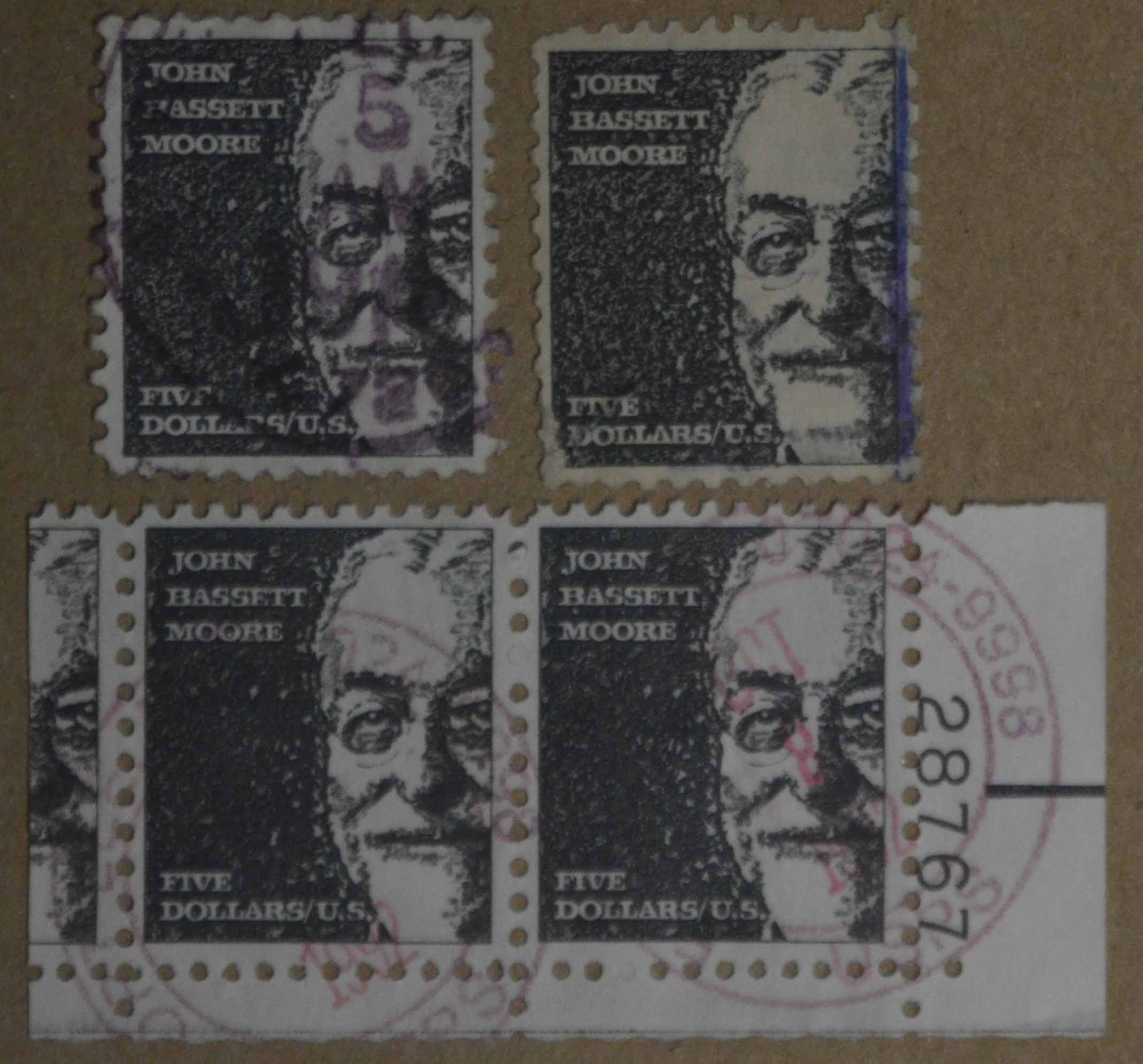 Here are the same stamps under short-wave UV light (exposure greatly adjusted with Photoshop). The upper singles are not tagged, while the pair at the bottom is tagged and glows a yellow-green: 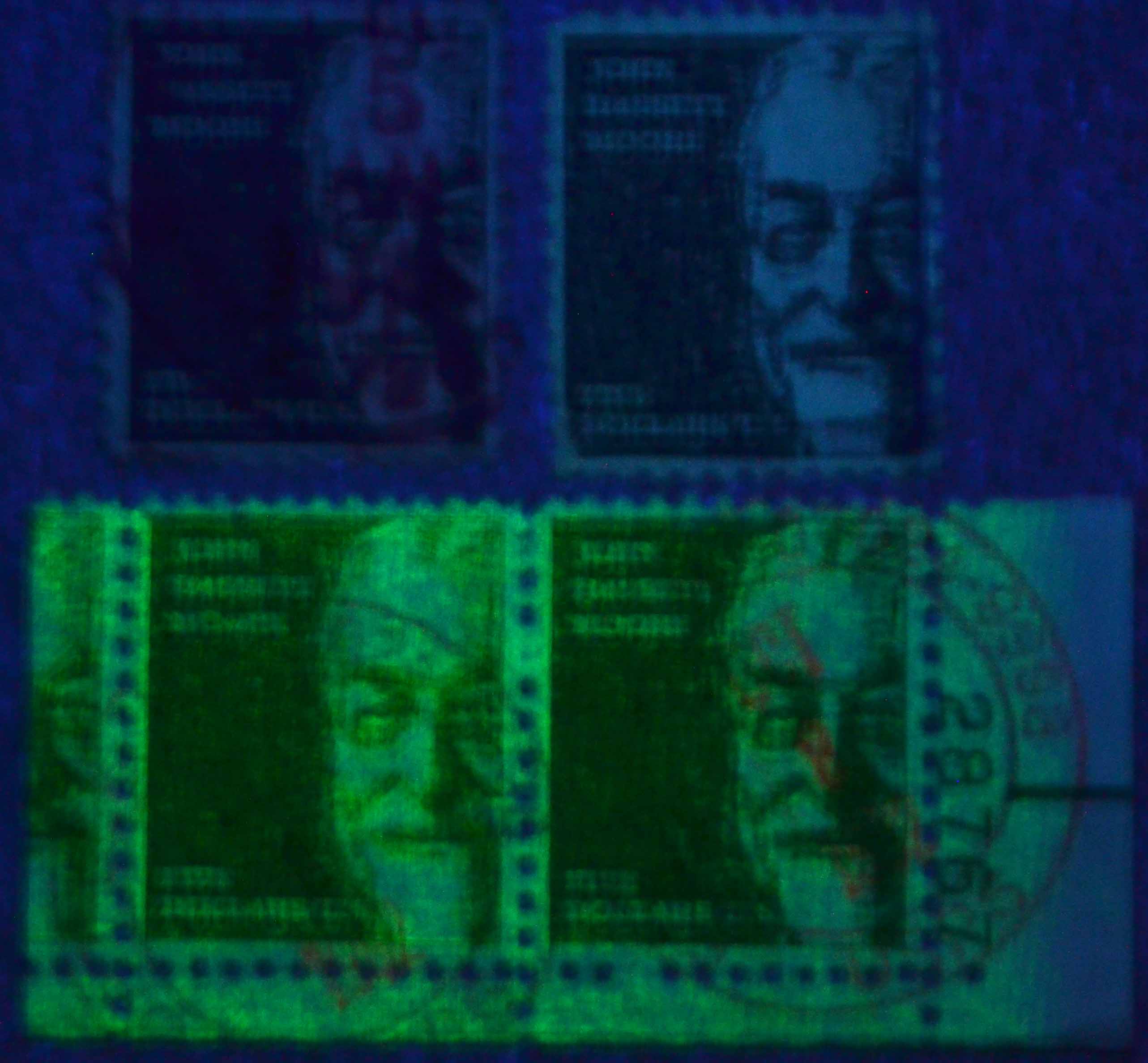 Recommendation ... that you look at some other more-recent stamps under UV and you will figure out what tagging looks like in-person. On a tangent, some of the mid-1960s U.S. airmails will glow red-orange, which is a different tagging chemical. |
|
Send note to Staff
|
|
|
Valued Member
United States
149 Posts |
|
|
Dear John Becker
Thank you very much for your explanation.
I got it.
Sincerely |
|
Send note to Staff
|
|
|
Moderator
United States
5109 Posts |
|
|
Excellent replies to the OP's question. One thing to add is that some issues are known only to be issued in a tagged format. Those issues glow nicely when mint, but once used and soaked off an envelope, the tagging sometimes partially disappears. Be aware that this could happen.
Also, and what can really annoy some collectors, is that soaking tagged and untagged stamps together can sometimes give a false tag to some stamps. Be aware that this could happen. |
|
Send note to Staff
|
|
|
Valued Member
United States
149 Posts |
|
|
Valued Member
Switzerland
499 Posts |
|
|
In addition to Partime mentioning soaking stamps, care should also be taken when handling mint, tagged stamps.
If you grab a tagged mint stamp with your fingers, they might and usually will pick up some of the taggant. That can easily be seen under uv lighting, your fingers might have specks of glow like the stamp. If you then grab an untagged stamp, traces of the taggant might be transferred to the untagged stamp, and you have a problem...
The moral of the story: Handling tagged stamps requires some thoughts before taking action... |
|
Send note to Staff
|
|
| |
Replies: 15 / Views: 1,452 |
|




 Posted 11/13/2024 12:40 pm


