| Author |
 Replies: 15 / Views: 1,313 Replies: 15 / Views: 1,313 |
|
|
Valued Member
Poland
40 Posts |
|
|
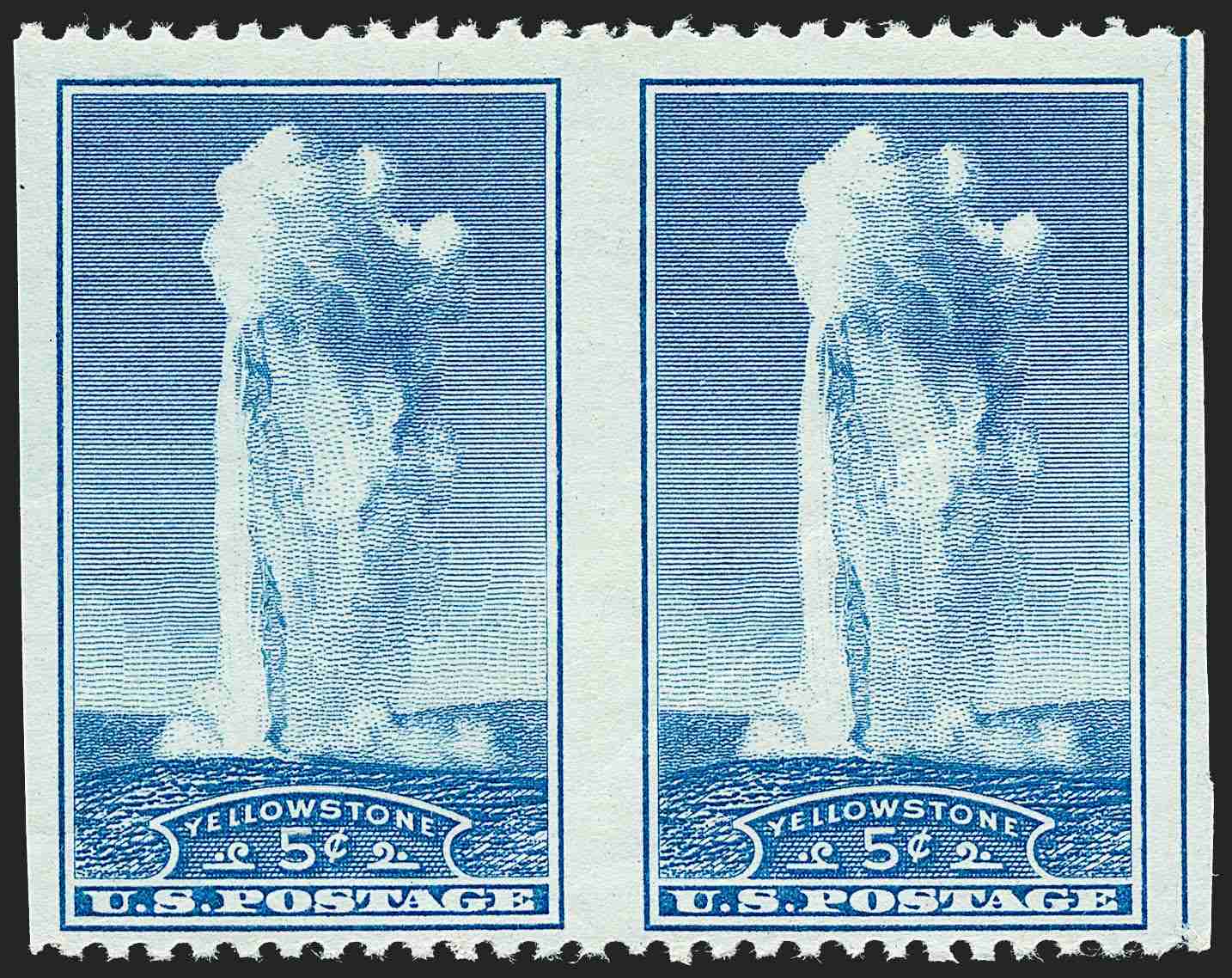
Hi to you all. About a year ago I bought a lot of US stamps on auction (from some bankrupt dealer). All sets were neatly stored in separate envelopes. Only recently I started to unpack them and I came across this pair: 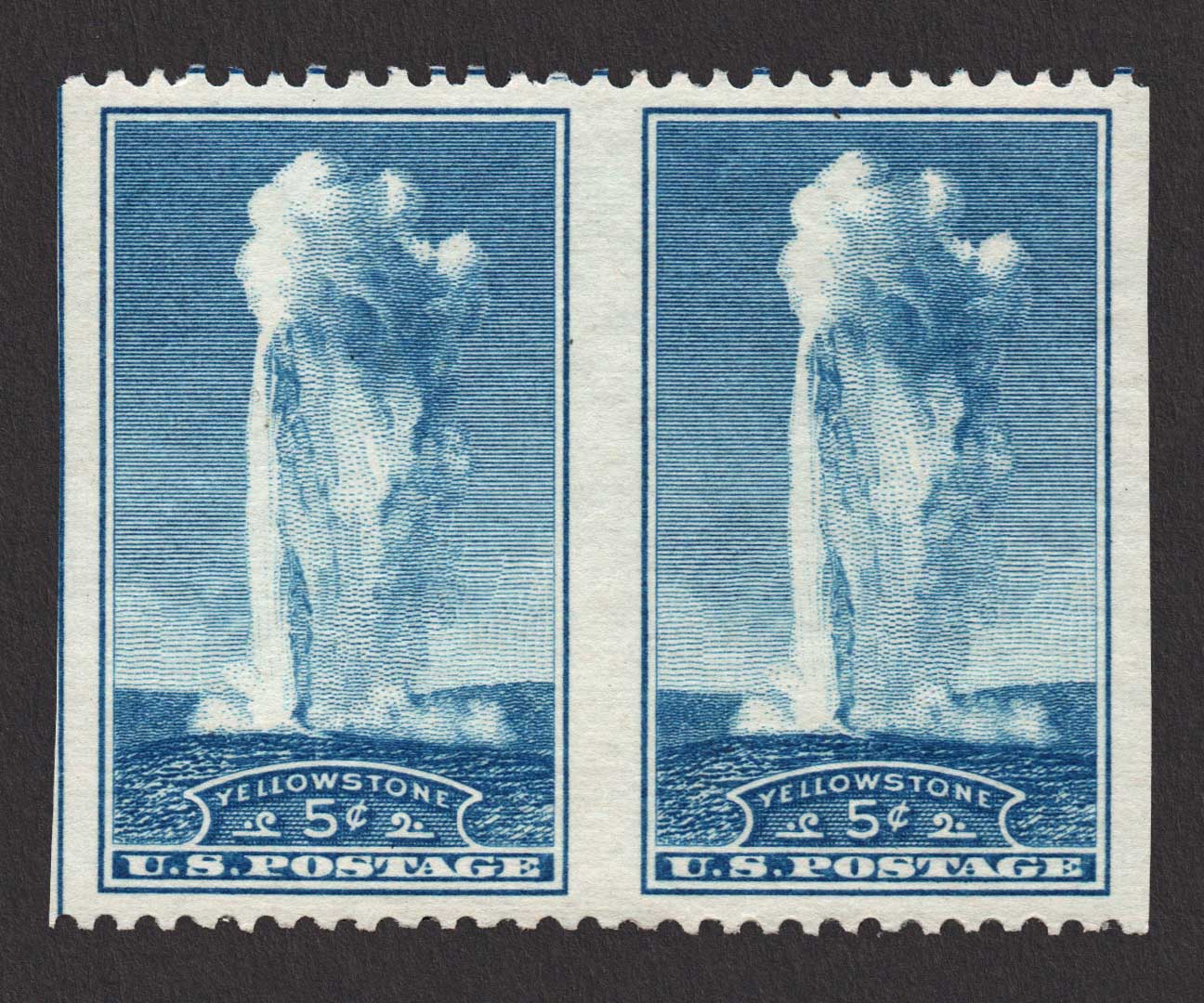 On various auctions I read the following information: "During the production of the US #744 stamps, a small number made it through the press without some of their perforations. Only about 50 imperforate pairs are known to exist.". Scott Catalogue number is 744a. Wow  It looks like I am really a lucky boy! Please look at the picture and let me know wheather it is a real deal or some forgery. Maybe the information about "only 50 imperforate pairs" is a fake news. Greetings to you all from cold Poland. Adam |
|
Send note to Staff
|
| Edited by citizenA - 12/14/2024 3:06 pm |
|
|
|
|
Pillar Of The Community
6364 Posts |
|
|
In the normal production of the perforated stamp, Scott 744, the guideline at the top would have not have been perforated. Some collectors who bought the later imperforate Farley printings, cut out the prime position pieces and then gummed and/or perforated the scrap to make them more usable. Herman Herst mentioned this in the August 1991 issue of The Specialist. Nearly every printshop had the ability to perforate (or roulette), which also explains why some Farleys are in unusual gauges. The fact that the top guide line is perforated would alone indicate this particular pair is privately perforated and not a genuine USPOD production error. Add: Here is a 757 Farley imperf with privately added 14-gauge perfs. 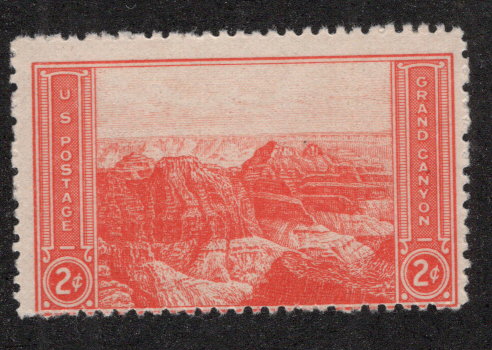 |
Send note to Staff 
|
| Edited by John Becker - 12/14/2024 4:22 pm |
|
|
Bedrock Of The Community
12774 Posts |
|
|
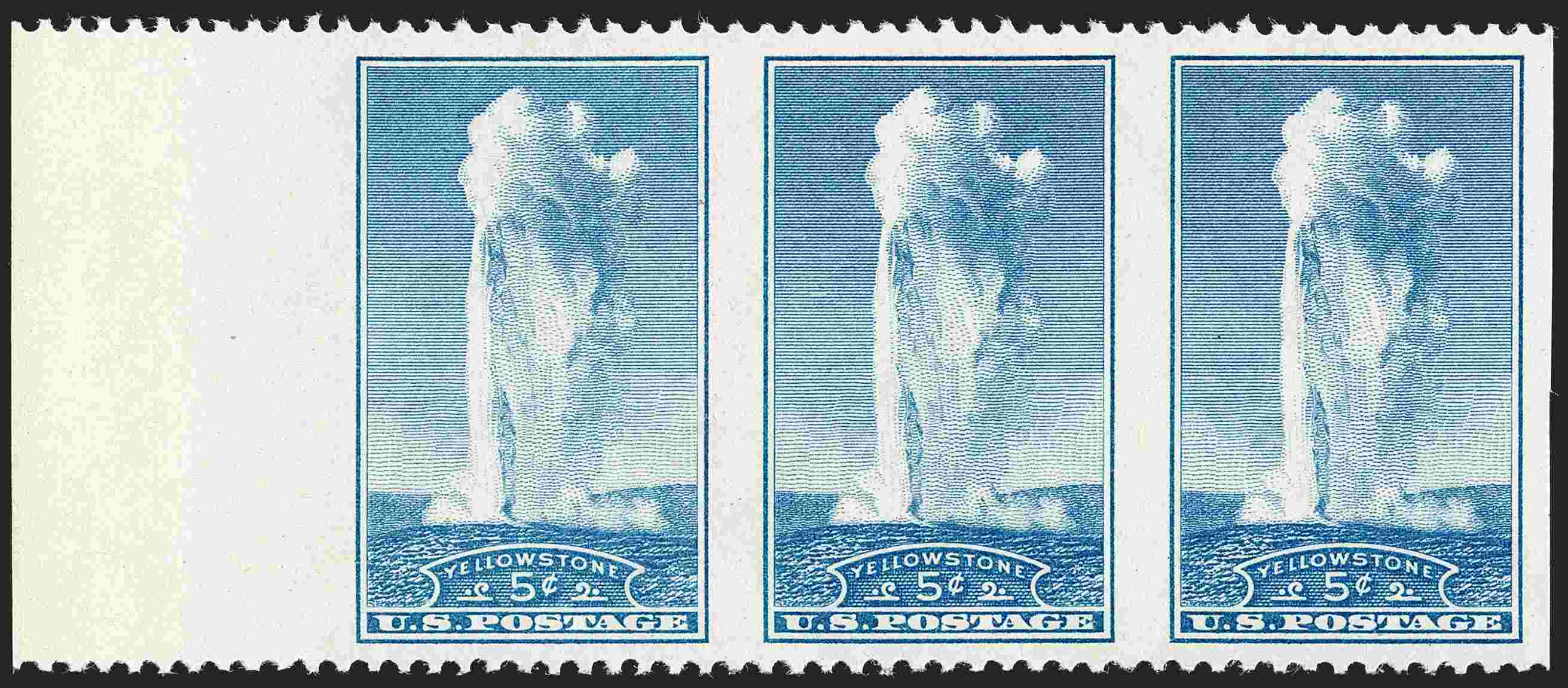
It is my understanding that all of these came from the left two sheet panes which would put the left guideline on your stamp on the wrong side. Others may have more information. Siegel has sold a few over the years and all the margin strips and margin copies have been from the left side of the sheet. You can see genuine and fake examples here: http://pfsearch.org/pfsearch/pf_grd...lledfrom=lkp |
|
Send note to Staff
|
|
|
Bedrock Of The Community
United States
10866 Posts |
|
|
Pillar Of The Community

United States
1159 Posts |
|
|
Let me guess, this pair has no gum?
Also if it were a genuine 744 (or 744a), the guideline at left would be cut straight, by the machinery during manufacture, not wobbly by someone manually using scissors to cut it up from a 760 sheet. |
|
Send note to Staff
|
|
|
Bedrock Of The Community
12774 Posts |
|
|
Quote:
Also if it were a genuine 744 (or 744a), the guideline at left would be cut straight, by the machinery during manufacture, not wobbly by someone manually using scissors to cut it up from a 760 sheet. Below is a genuine position pair from the PF database showing the guideline arrow. Not that the guideline margin is not perfectly straight. I surmise that the sheet was cut by hand to separate out the error pairs. 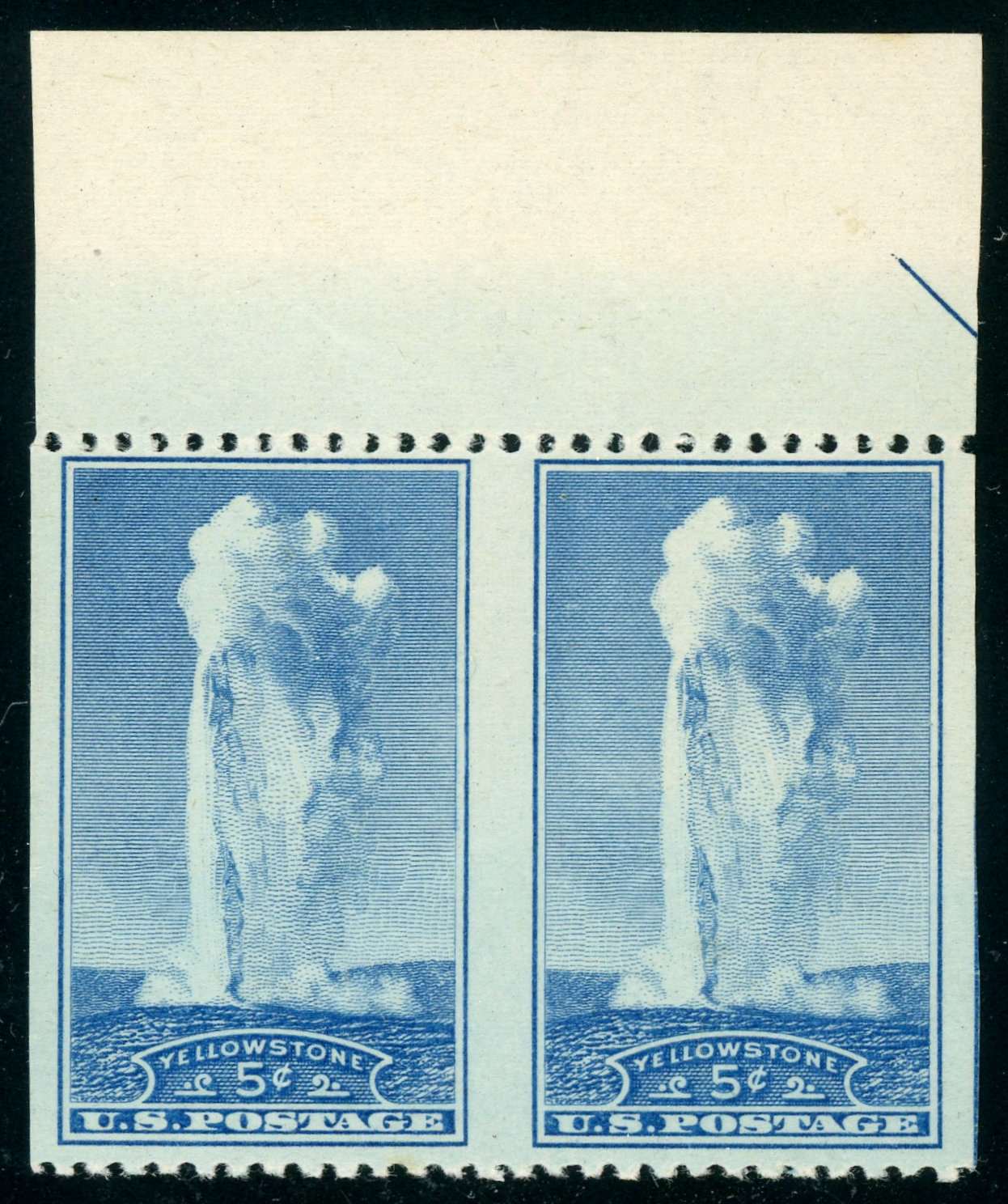 |
|
Send note to Staff
|
|
|
Pillar Of The Community
United States
1159 Posts |
|
|
Are you suggesting that the sheet of 200 of the perforated #744 was cut by hand to separate the error pairs, or that the pane of 50 was cut by hand to separate the error pairs? If the latter, why would anyone need to trim off the guideline edge, it is already at the edge of the pane? Unlike #573, #620, and other earlier issues that had guidelines within the panes that you could purchase at the post office, the guidelines and arrows on the perforated National Parks series are at the edges of the panes of 50 (separating the 4 panes of the uncut sheets of 200). Image of normal 744 pane from ebay: 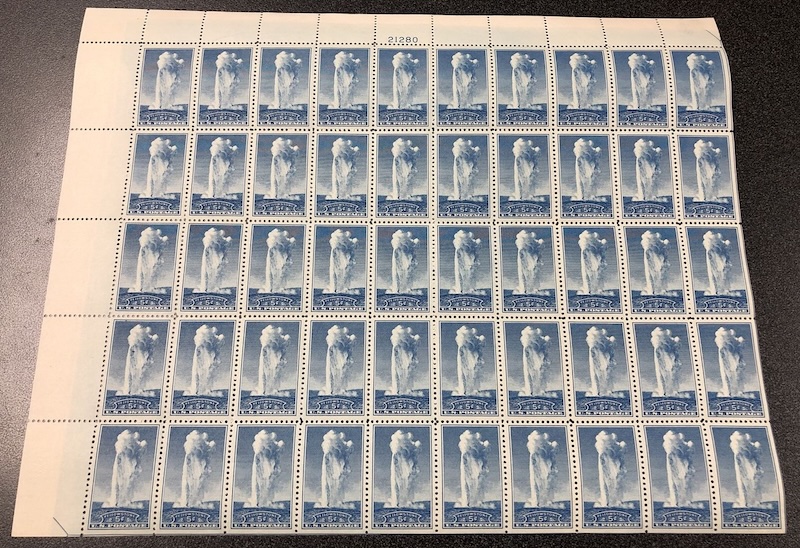 Thanks for posting that image from the PF. It seems unusual to me that someone would trim the outer edge, though not impossible to imagine. John's point about the perforation tips showing the guideline is the smoking gun that the OP pair is not genuine. The wavy cut guideline at the left is just added conjecture. |
|
Send note to Staff
|
|
|
Bedrock Of The Community
12774 Posts |
|
|
Quote:
Are you suggesting that the sheet of 200 of the perforated #744 was cut by hand to separate the error pairs, or that the pane of 50 was cut by hand to separate the error pairs? If the latter, why would anyone need to trim off the guideline edge, it is already at the edge of the pane?
No, as I said in one of posts above only two panes of a sheet are known to exist (thus 50 pairs) and all known examples are from the left two panes. Also, all of the pairs show waviness on the error sides (missing perforations) with the exception of natural left margin copies. |
|
Send note to Staff
|
|
|
Bedrock Of The Community
12774 Posts |
|
|
Pillar Of The Community
United States
1159 Posts |
|
|
Fascinating. This opens my mind for how these part-imperf varieties might have been created. I thought I knew this issue quite well, obviously not the errors. I collect guidelines and other position pieces so I have seen a lot of them, and rarely have I ever seen one with a straight edge cut by hand like that. Normally if it happens it is from someone cutting the stamp off an envelope and the scissors getting too close to the stamp. Since they are listed in Scott as official errors, I had always assumed that these part imperf varieties were found in the wild -- panes of 50 that were purchased by the public from the post office and were discovered to have been perforated in only one direction. Now I am not so sure. Have a look at this certified 746a (PF 507578 "Horizontal pair with vertical guide line, imperforate vertically. It is genuine, never hinged.") 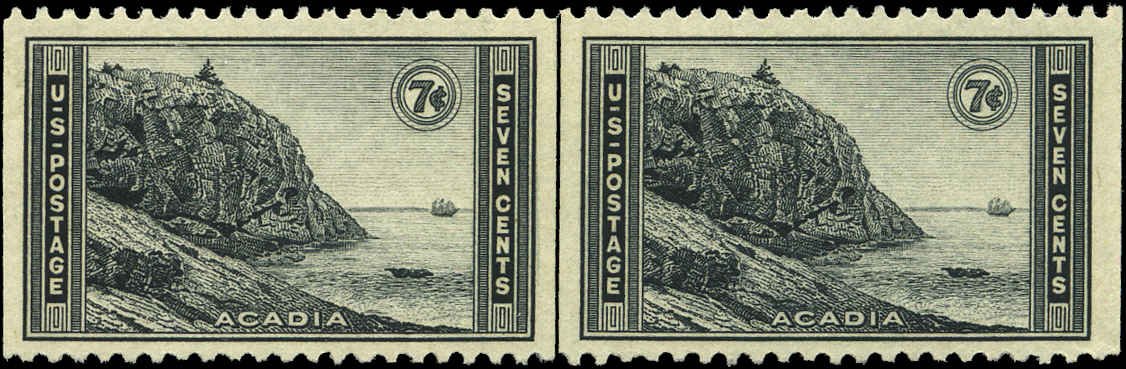 How can this exist? For both 744a and 746a Datz estimates the quantity as 50 pairs each, or 2 full panes. Datz highlights other imperf varieties that are a result of a foldover, but does not say anything about a foldover for this issue, so therefore, how can a guideline pair exist outside of the BEP? Are these printer's waste? Was a full sheet of 200 (or half sheet of 100 stamps) with part perfs pulled out of the waste bin and cut up into pairs? That's the easiest explanation for how this guideline pair could exist, and all of the 5 cent pairs with scissor cuts along the guideline. Otherwise, as far as I know, only panes of 50 with mechanical cuts along the guidelines were available to the public of the perforated stamps (of course full sheets of 200 of the 1935 imperforates were available to the public). This is intriguing me. I'll try to dig up my Sloan's Column and see if he has anything to say about these. Curious if anyone else has any more insights. |
|
Send note to Staff
|
|
|
Bedrock Of The Community
12774 Posts |
|
|
It truly is fascinating. In my mind I think of a few possibilities none of which comfortably answer the question of how these came to be.
1) Datz is incorrect about the quantity and there was an entire sheet produced due to a directional pass being missed. Why then are all known examples from the left panes?
2) These were deliberately created by an enterprising government employee on their own or as directed. Not out of the question I suppose given what went on in that period.
3) Printers waste that went out the back door.
If these were ordered to be created why would only two panes be produced rather than a full sheet?
If these were produced in error how could only the left half of the sheet not be perforated?
IMO the most likely explanations involve deliberate action(s) whether sanctioned or not which really calls into question using the term "error" to describe these.
I have not been able to find examples that show the horizontal guideline nor any that have top or bottom straight edges. |
|
Send note to Staff
|
|
|
Valued Member
Poland
40 Posts |
|
|
Wow! I'd never expect such response!
Thank you all for such valuable contributions. My pair is gummed, but abviously it is not THE pair 744a :/ |
|
Send note to Staff
|
|
|
Pillar Of The Community
6364 Posts |
|
|
Quote:
How can this exist? For both 744a and 746a Datz estimates the quantity as 50 pairs each, or 2 full panes. Datz highlights other imperf varieties that are a result of a foldover, but does not say anything about a foldover for this issue, so therefore, how can a guideline pair exist outside of the BEP? Are these printer's waste? Was a full sheet of 200 (or half sheet of 100 stamps) with part perfs pulled out of the waste bin and cut up into pairs? That's the easiest explanation for how this guideline pair could exist, and all of the 5 cent pairs with scissor cuts along the guideline. IMO, with the caveat of not having any of these in-hand ... despite any "certification", I agree with the general direction of your concern that your 7 cent pair can only come from the Farley press sheets with perfs added later to simulate an error. The various 5 cent pairs with the scissor-cut guidelines are also questionable. Ever notice how many "crazy-perf" pieces there are with the National Parks set? Buyer beware, even with certs, because the simplest explanation for all of these is the ready availability of imperforate stock as starting material. Countless printshops of the era would have had the ability to gum and perforate. As for the Farley-Parks being issued ungummed, it would be interesting to have a detailed chemical analysis of the gummed errors versus the gum on other stamps of that era, etc. The other explanation of "printer's waste" seems too convenient, considering the lack of the same type of errors on non-Farley commemoratives of the era. And yet, George B. Sloane documents in his "Sloane's Column" the existence of several part-perf Parks errors prior to the release of the Farley versions, including the 5 cent Parks. It still leaves a mystery of the scissor-cut guidelines instead of machine-cut. I do not know the age of the certs on the various pieces shown, but I wonder if the guideline pairs would get good certs if resubmitted today? Just my two cents. Add: It was the era when philatelic creations blossomed. Here is Farley #759 with gauge-14 perfs added: 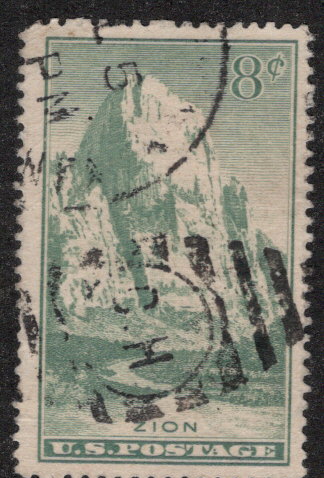 Here is a block of Farley imperf #759, gummed and perforated. 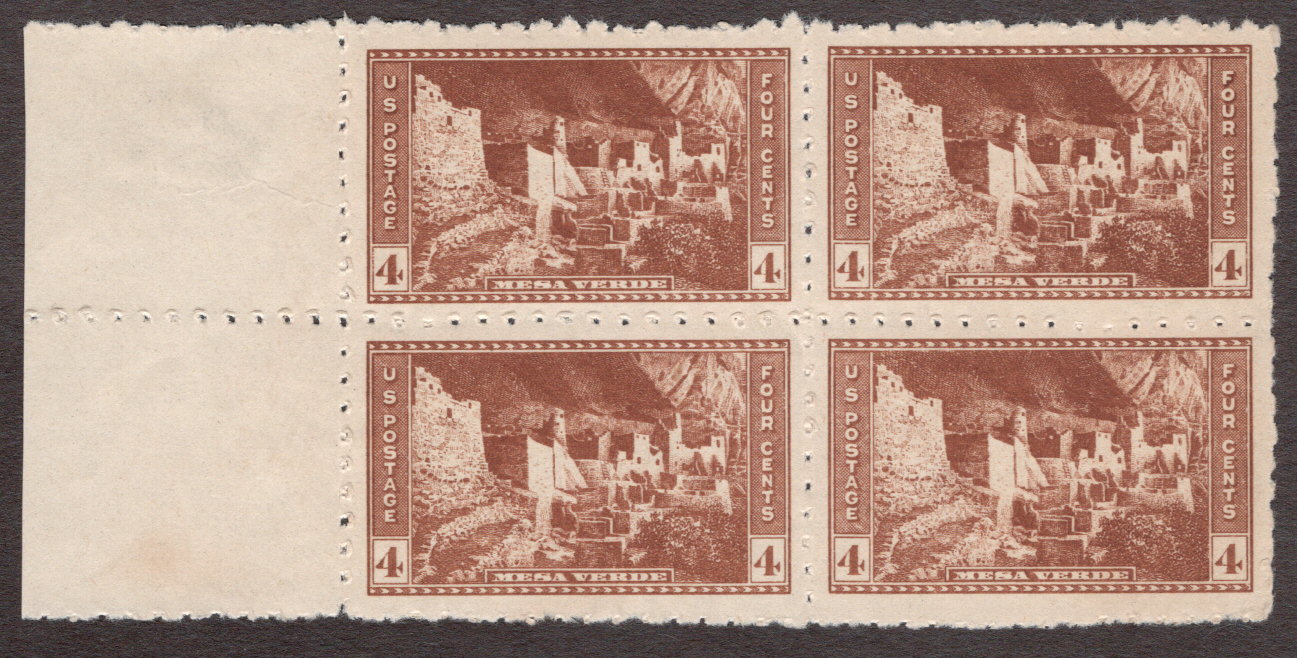 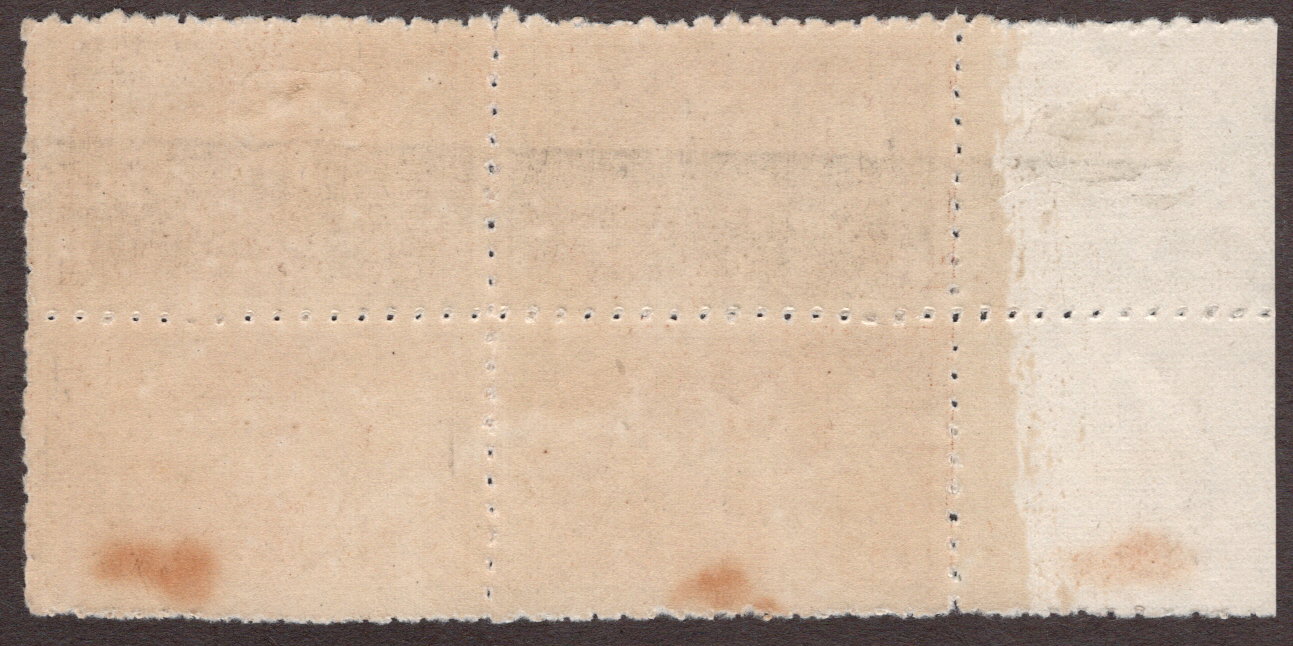 And a Byrd souvenir sheet with perfs added. This one is the correct size for 735, but could also have been cut from the Farley press sheet of 768. 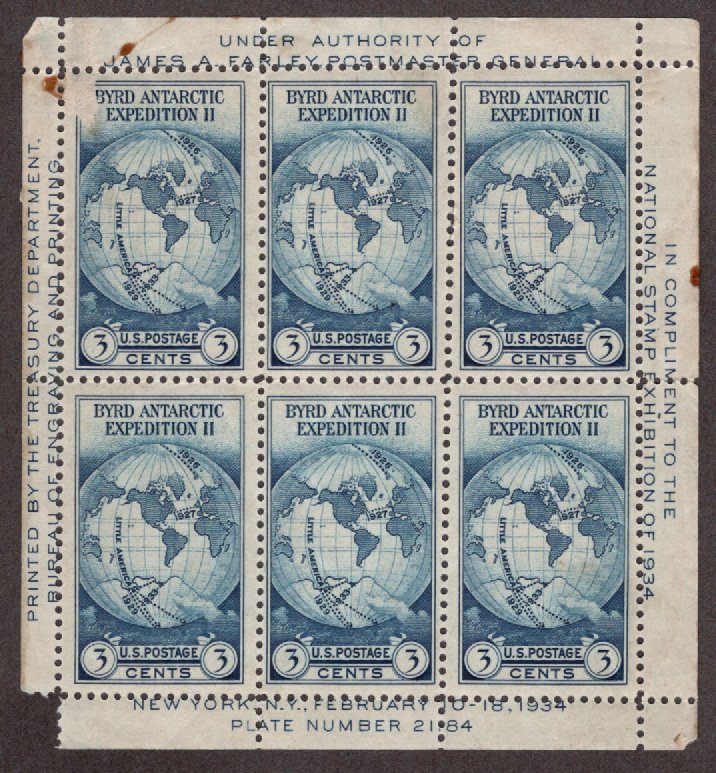 And to follow-up a previous mantion, here is Herman Herst's article from the August 1991 issue of The Specialist: 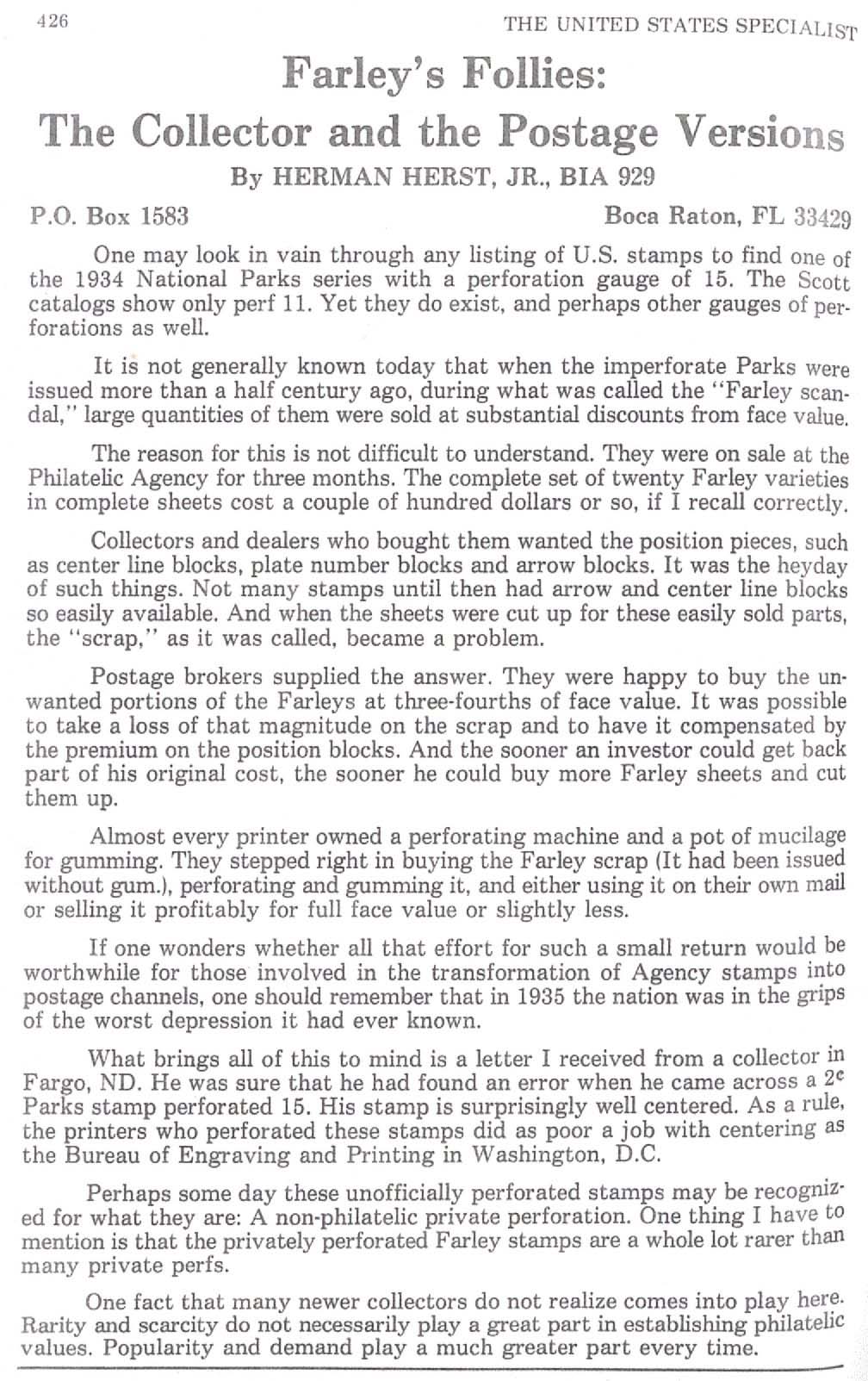 |
|
Send note to Staff
|
| Edited by John Becker - 12/15/2024 09:11 am |
|
|
Bedrock Of The Community
United States
10866 Posts |
|
|
The original pair also has a guideline at top, so I think we can assume it is a fake. |
|
Send note to Staff
|
|
|
Bedrock Of The Community
12774 Posts |
|
|
I found an image in the PF database of a full pane prior to it being cut up for multiples. 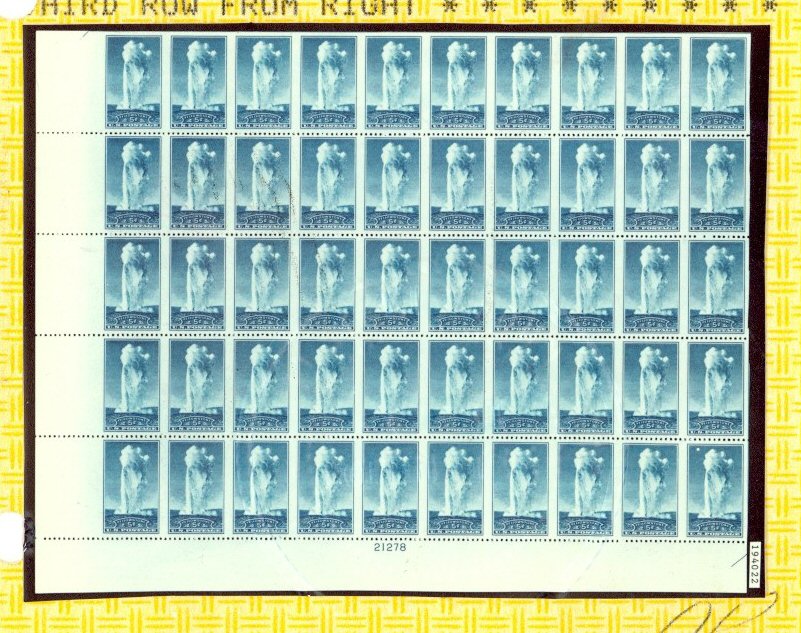 |
|
Send note to Staff
|
|
|
Pillar Of The Community
United States
1159 Posts |
|
|
That's a fairly modern certificate (late 1980s), I'm surprised the sheet lasted so long without being broken up. The right margin looks scissor-cut, unless it is just wrinkles or artifacts in the photo. The other two right-margin pairs pictured above were from the top-left pane, this is the bottom-left pane. I wonder what happened with the two right panes, whether they are still hidden in someone's collection or vault, or if they went to the incinerator where these two panes should have gone. Side note: a 2011 Spink sale had what looks like a complete run of every National Park part imperf and they sold for well over catalog (the 744a left margin pair sold for $4,500.00 against then-catalog $1200. Those were the days. https://stampauctionnetwork.com/f/f13618.cfm |
|
Send note to Staff
|
|
| |
Replies: 15 / Views: 1,313 |
|




 Posted 12/14/2024 3:03 pm