| Author |
 Replies: 17 / Views: 3,146 Replies: 17 / Views: 3,146 |
|
New Member
United States
3 Posts |
|
|
I am in the process of organizing a large stamp collection, which has been an interesting but overwhelming experience. I have a large box of Souvenir Pages (American Commemorative Cancellation Pages) from 1980 to 2003. It is an interesting part of the collection and the sheets are very enjoyable to look at. Most of the pages are sealed in their original envelopes. However, some of the earlier dated envelopes (1980-88) were opened and I have transferred those sheets to acid free plastic sheets to preserve them. I noticed some of the sheets are discolored. I am not sure if this is because they were shipped with non acid-free cardboard or maybe the post office used regular construction paper that has not aged well. Before opening up the sealed envelopes (probably 200 of them), I was wondering if I am unwittingly depreciating their value by removing them from their original packaging? I also have two unused brown albums with gold lettering ("American Commemorative Collections"). On ebay I have seen the sheets stored in these albums. I am debating whether to use these albums or continue using plastic archival protector sheets and sell the albums since I only have 2. Has anyone had issues with storing the FDC sheets in these albums? Any advice or suggestions would be much appreciated. |
|
Send note to Staff
|
|
|
|
|
Pillar Of The Community
Switzerland
500 Posts |
|
|
I am working on an article to be published in a future USSpecialist about that problem. Throw away any brown albums from the USPS, particularly the early (brown on the inside covers) albums used for the Commemorative panels.USPS switched to other albums with white on the inside covers. These seem to be ok. My guess is Souvenir panels also had/have their USPS album equivalent but I remember some collectors used the Commemorative panel albums for storage of Souvenir pages. If your albums came with two brown sheets (for front/back "protection" of any panels, I guess) throw them away immediately. My earliest unwrapped Commemorative panes (known to have been printed on acidic paper) have deteriorated. Some of my very early panels, still shrink-wrapped, are perfectly ok (although the wrapping says "non archival material"). Those opened and stored in the brown USPS albums have deteriorated as well, particularly those closest to the album cover/brown sheets. Here is a picture of some page lifters from three albums: 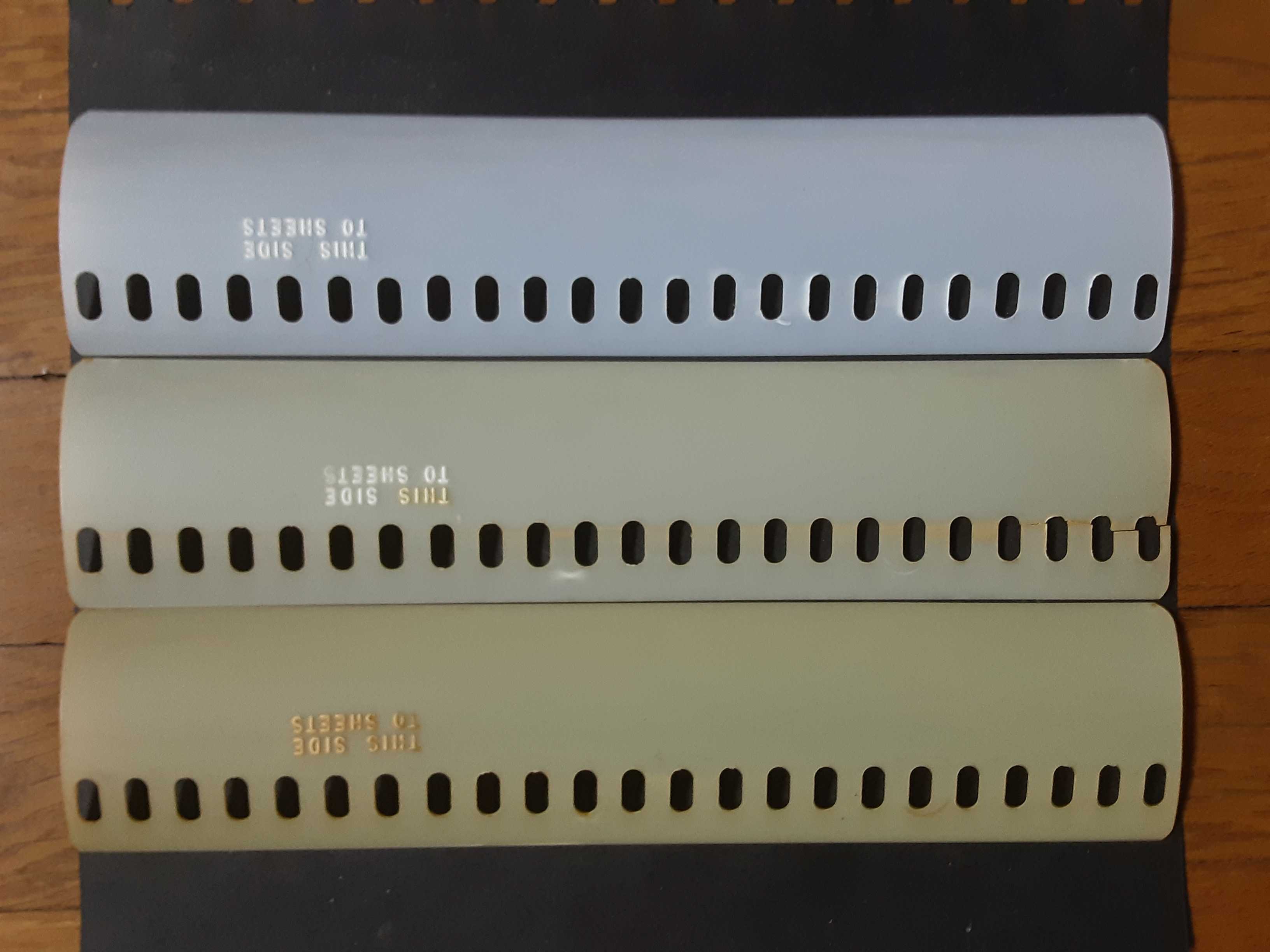 At top: from a white album. About 30 years old Others: from brown albums About 30-40 years old. Unwrapped panels inside have the same brown color along the edges: 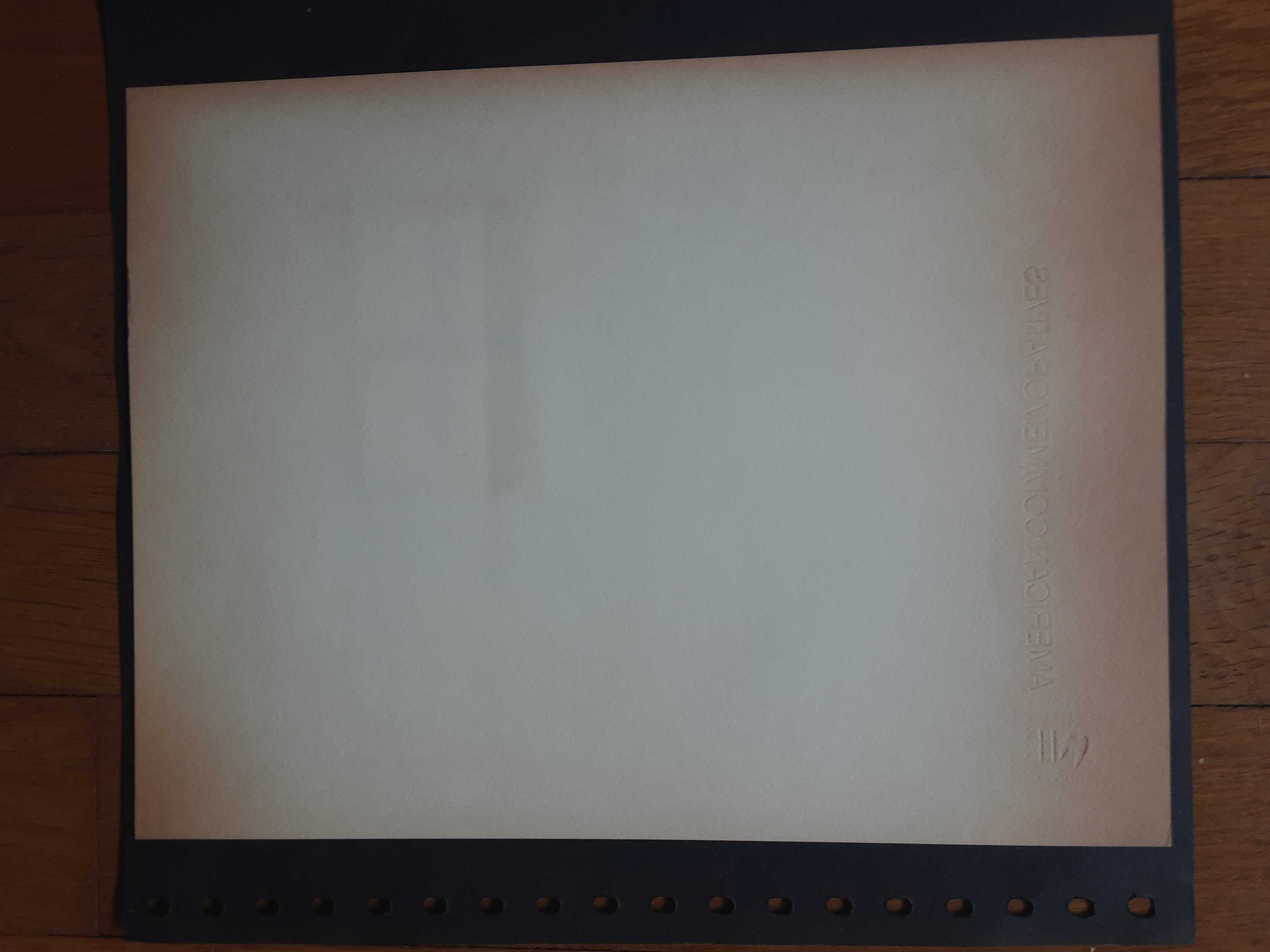 So the short answer is: keep the plastic wrapping (brown stuff kills your panels over time). But check regularly for any "browning" along the edges of the wrapper plastic/panel paper. This warning also applies to "safe" hard pvc sheets. I just tossed 20 brown L* albums and over 400 pvc sheets in the trash because some of my booklet panes turned brown along the edges before I finally noticed the degradation. The moral of the story: Things get ugly after a few decades... |
Send note to Staff 
|
| Edited by drkohler - 02/03/2025 9:39 pm |
|
|
Pillar Of The Community
United States
4193 Posts |
|
|
Bedrock Of The Community
12806 Posts |
|
|
New Member
United States
3 Posts |
|
|
Thank you everyone for the information, expecially about not using the brown books. drkohler I will be interested in reading your article when it is finished.
Any thoughts about whether it makes sense to keep the souvenir pages in the original packaging shipped from USPS? |
|
Send note to Staff
|
|
|
Pillar Of The Community
Switzerland
500 Posts |
|
|
I'd keep them like they are. Just watch if the plastic wrapper has shrunk (some of my Commemorative panel wrappers have slightly shrunk so the panel inside is no longer flat). Also check from time to time if anything "bad" is happening along the edges of any plastic sealing. Plastic starts to degrade where it is most vulnerable, that is usually where plastic is strongly bent or was cut with a blade or glued together. |
|
Send note to Staff
|
|
|
Bedrock Of The Community
12806 Posts |
|
|
I used to get piles of these as part of large carton lots and removed the packaging which only added bulk. This was up until maybe five years ago when you couldn't give souvenir sheets away. They were selling by the pound if at all. Has this changed and do these sheets now have value? |
|
Send note to Staff
|
|
|
Pillar Of The Community
United States
4528 Posts |
|
|
I put mine in poly protective sleeves in binders and recommend either to use a slip case or ensure out of strong sunlight. |
|
Send note to Staff
|
Al |
|
|
Pillar Of The Community
Switzerland
500 Posts |
|
|
This is the end product of an approx. 40 year old "poly protective sleeve": 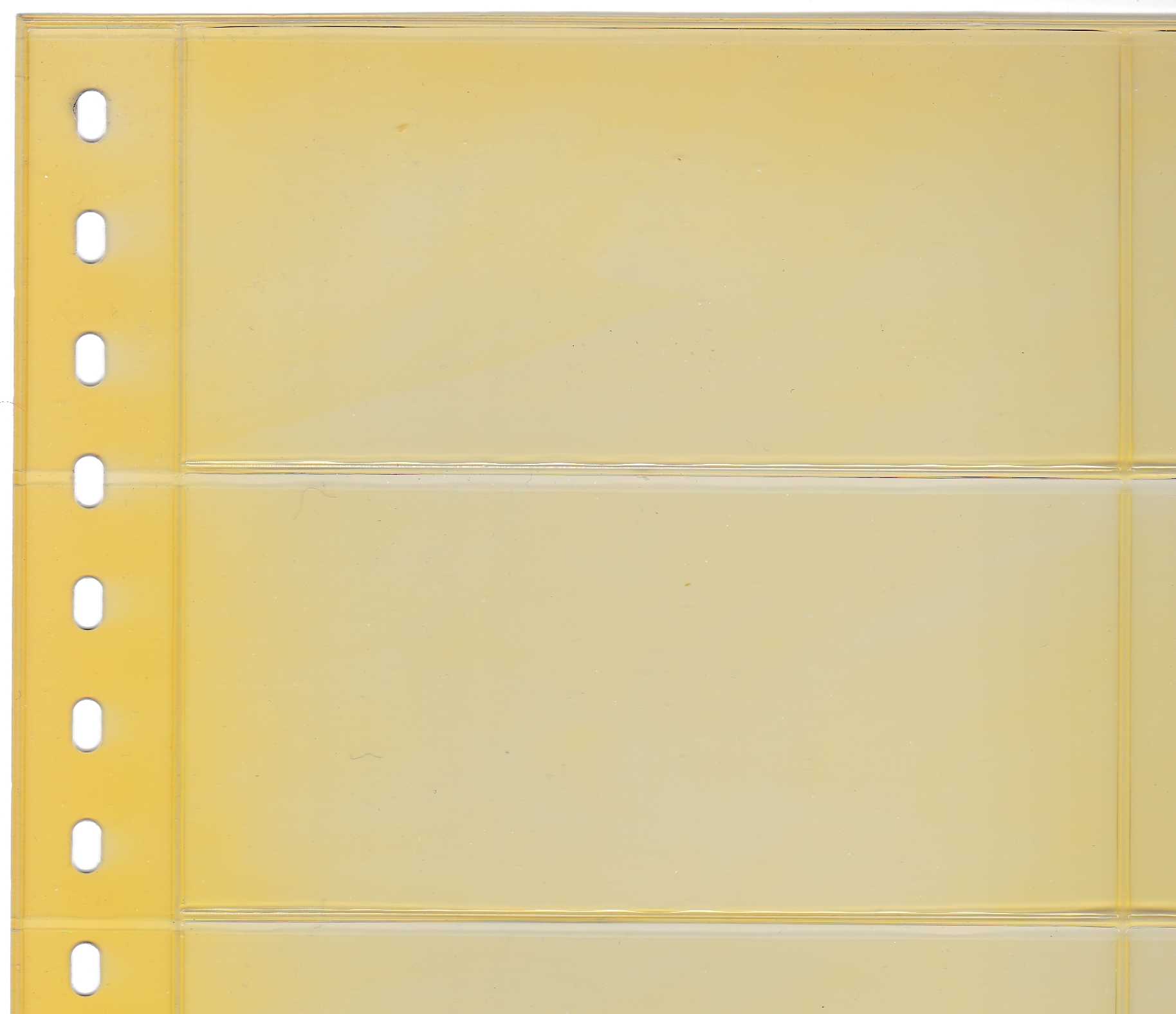 The heinous thing is you don't see the start of the degradation in a brown album as the degraded sleeve colour pretty much matches the color of the album. The booklet pane inside th upper left pouch was toast, essentially. (Fortunately it was a cheap pane that is easily replacable). My strong advice is after about 20 years, one should examine every sleeve, every year. If any one sleeve shows discoloration along the edge(s), the whole album must be tossed (not the stamps inside, obviously). |
|
Send note to Staff
|
| Edited by drkohler - 02/07/2025 3:09 pm |
|
|
Pillar Of The Community
United States
4528 Posts |
|
|
Do you know the actual composition of the material? Polyproplyene sleeves are recommended by the Smithsonian but agree not all sleeves are the same. Just like standard copy paper is not as nasty as advertised. |
|
Send note to Staff
|
Al |
| Edited by angore - 02/08/2025 07:03 am |
|
|
Bedrock Of The Community
12806 Posts |
|
|
Quote:
Do you know the actual composition of the material? Not really a way to tell. I have had those plastic pouches mounted on card that Siegel uses to lot their items and after 40 years they look brand new even though they have a printed warning about long-term storage. USPS doubtless went lowest bidder so I wouldn't expect as much. |
|
Send note to Staff
|
|
|
Pillar Of The Community
Switzerland
500 Posts |
|
|
The image above shows a "safe" pvc sleeve as it is sold by an album maker. Old pvc sleeves were a high risk (due to the softener used, pure pvc is way too brittle to be of any practical use) but were replaced by more modern formulations of softener (like organic oils).
With pvc sleves, there always is the risk of outside influences that degrade it. My supsicion is that the brown albums/carboard/whatever is brown contains copper which is a known substance that degrades or accelerates plastic degradation.
I switched to polypropylene sleeves now from a different album maker. I know that polypropylene contains additives that over time degrade it (and will ikely turn yellowish), but polypropylene sleeves probably are safer than pvc sleeves.
Most likely any plastic sleeves come from China, one way or the other. We can only hope there is some quality control with reputable album makers. The thing is even bad sleeves look good for maybe a few years so there is no way of knowing what you get.
Noone is ever going to tell you what is inside their "plastic". Theoretically it is possible to figure that out but it takes a large amount of material for a costly chemical analysis.
(Incidentally, polymer degradation was the subject of my research at the my University, Dept. of Physics in collaboration with local chemistry companies. I was developing a new method to quantify polymer degradation. But this is 20+ years ago and I no longer have any access to the tools. Most of those chemical companies don't even exist anymore now or were sold. Had this happened 20+ years ago, I would have had the exact tools to find out what is going on.)
Just to make three points clear:
1. If your album maker is telling you they only use pure "plasic", they don't tell you the truth or don't know better. There is no such thing as "pure plastic", everything contains additives (against heat/uv/whatever might be stressing the plastic).
2. Any plastic will degrade over time. Depending on what additives in which amounts are included in the plastic, this can take from months to decades until you see either visible degradation (usually yellowing/browning at the most vulnerable areas like punched holes, edges, etc) or the plasic will crack or tear at some joint.
3. UV radiation probably is the main concern for stamp albums. So keep your sleeves away from sunlight or when examining stamps for tagging with a uv lamp. If you live in Death Valley, thermal degradation will also shorten the lifetime of your sleeves considerably. If you live next to a coalmine, you'll have problems as well. |
|
Send note to Staff
|
| Edited by drkohler - 02/08/2025 08:15 am |
|
|
Pillar Of The Community
United States
4193 Posts |
|
|
" If you live next to a coalmine, you'll have problems as well."
and not just your plastic |
|
Send note to Staff
|
|
|
New Member
United States
3 Posts |
|
|
Thanks everyone. It is a good reminder to check some of the older albums with harder plastic cases designed for FDCs. As for the USPS sheet, I am going to take them out of the mailing envelopes. Based on all the info above, it is not likely a good idea to keep the sheets in their original brown elevelopes from the post office, merely "protected" by heavier pieces of brown cardboard. The sheets I have are not in plastic wrappers. LOL - Next job is to figure if the 500 plastic pages I just purchased from Amazon are polypropylene. Thanks again - I appreciate it! |
|
Send note to Staff
|
|
|
Bedrock Of The Community
12806 Posts |
|
|
Quote:
I was wondering if I am unwittingly depreciating their value by removing them from their original packaging? Hard to depreciate their value when they are so inexpensive to start with. An upcoming Rasdale auction has over 1800 of these from 1980's to 2000's in one lot. The suggested bid is $100 with an opening bid of $50. The lot number is 86. https://stampauctionnetwork.com/RA/ra4645.cfm#13 |
|
Send note to Staff
|
|
|
Pillar Of The Community
United States
1883 Posts |
|
|
I think there may be some confusion regarding what is being discussed here. There are two USPS products with similar names. One is a Souvenir Page, later rebranded American Commemorative Cancellation Pages. They look like this: 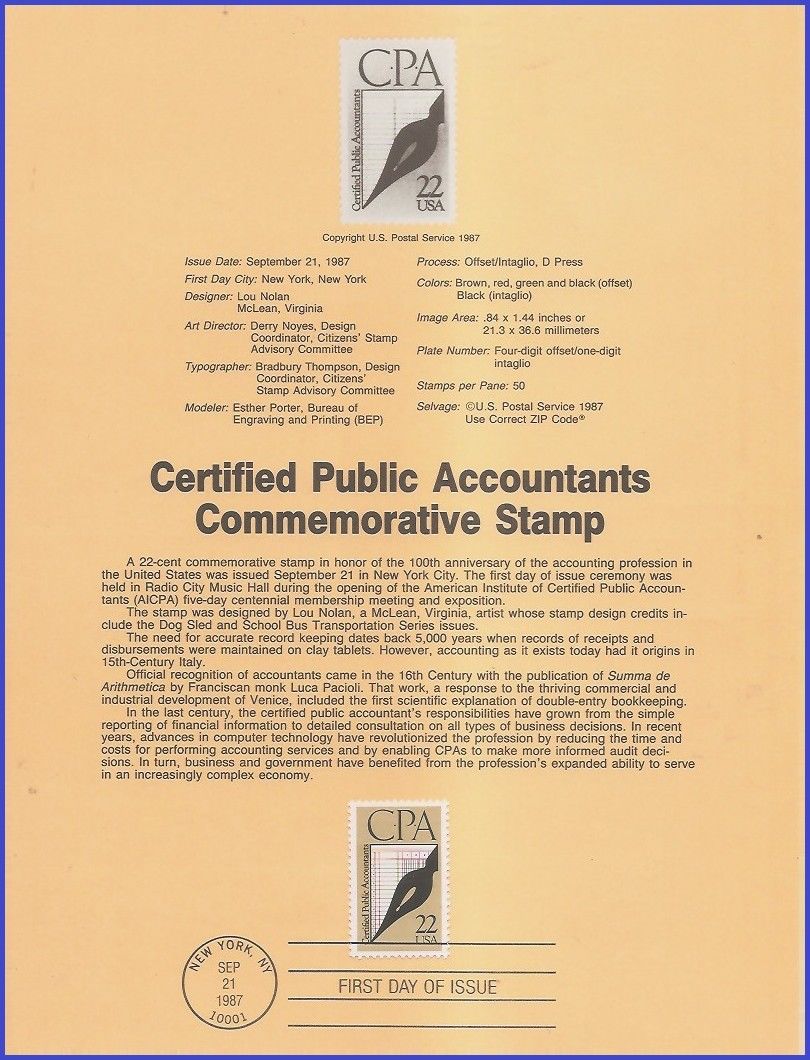 The other is a Commemorative Panel, which had "American Commemoratives" as its header. They look like this: 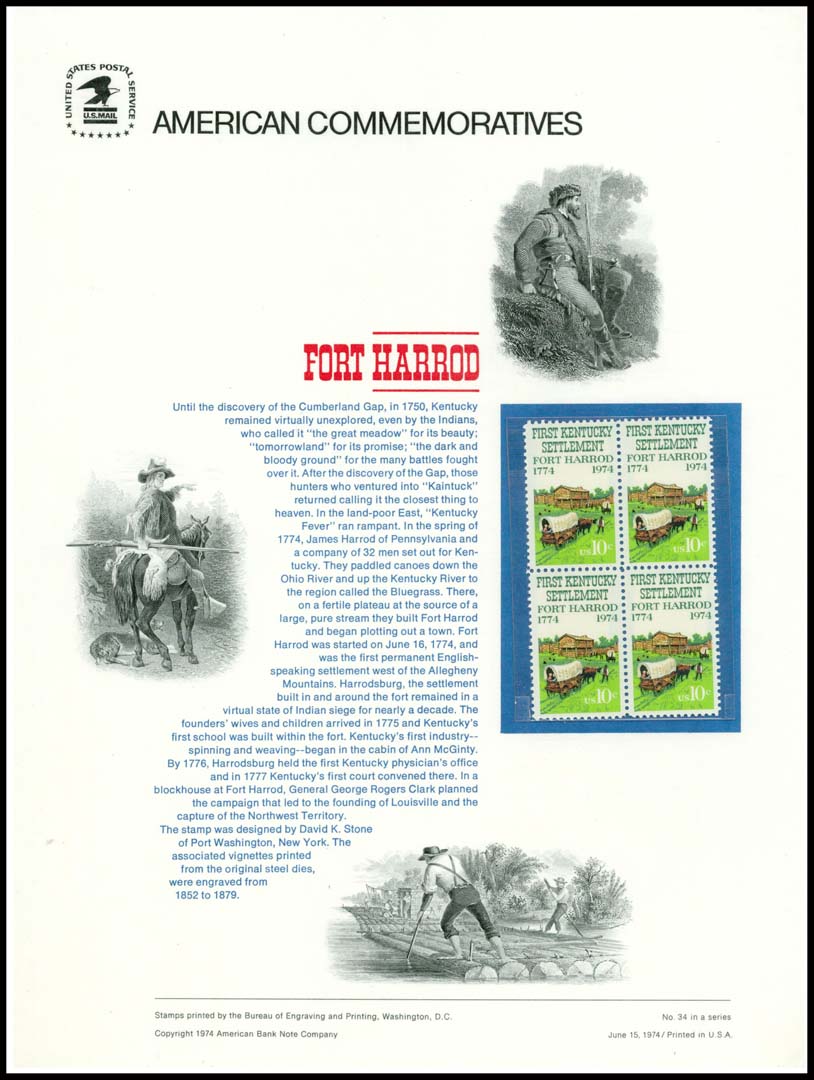 I think the OP is referring to Souvenir Pages, but some of the replies are talking about Commemorative Panels. The panels, which included engraved vignettes, were sold in shrink wrapping, with a cardboard backer that was *not* acid-free in the first year. Many of those have yellowed as a result. I'm not sure how the Souvenir Pages were mailed, but I think they went out in manila envelopes. |
|
Send note to Staff
|
|
|
Replies: 17 / Views: 3,146 |
|




 Posted 02/03/2025 6:57 pm


