| Author |
 Replies: 18 / Views: 2,751 Replies: 18 / Views: 2,751 |
|
Valued Member
United States
98 Posts |
|
|
|
|
Pillar Of The Community
Netherlands
6641 Posts |
|
|
There is no sensible answer to that question. It is impossible to tell a shade from an online picture. Telling you what shades it, possibly, could be is futile.
It depends on the catalogue you use how many shades are listed. Stanley Gibbons, lists 16 in its GB Specialised Vol. 2. The Hendon Stamp Company's Trevor Harris has been issuing certificates for many more shades. He published a 2023 price list (more like a catalogue) that lists many more shades than SG.
The names of the shades, also, should be placed in the correct time frame.
Anyone suggesting shades is purely telling how it appears to him or her but, essentially, is guessing the true colour. |
Send note to Staff 
|
| Edited by NSK - 05/10/2025 01:48 am |
|
|
Valued Member
United States
98 Posts |
|
|
Why do they make a color chart? Isn't that used so someone can check their to stamp to corresponding colors? I wasn't asking for the color of my stamp from the photo taken just wanted a list of colors. Now I know there are to many to list. Thanks NSK.
|
|
Send note to Staff
|
|
|
Pillar Of The Community
United States
8605 Posts |
|
|
PAID ---My advice is to build your own reference records ,you first have to understand the color /shade differences between the 1912-1913 stamps and the 1924 set ,which are a different watermark . Here are the stamps your discussing the bottom three stamps from the cancel are easy to I.D. as from the first series those above which need to be checked for watermarks . Do understand most ink used on postage stamps before WWI came from Germany . After the war then other countries started making ink . I put these all together so you will understand how shades need to be displayed on a computer screen . One stamps doesn't tell the reader anything .  |
|
Send note to Staff
|
|
|
Pillar Of The Community
Netherlands
6641 Posts |
|
|
Quote:
wasn't asking for the color of my stamp from the photo taken just wanted a list of colors. I considered that a possibility. Quote:
Why do they make a color chart? For the same reason they list shades: to make you part with your money. Most colour charts are useful for certain types of printing. And even US and GB charts may not coincide. A famous chart is Pantone's. Why would a 1960s invention be useful for 1912 stamps that were listed soon after? As long as you know how to recognise faded and washed-out colours and understand that cancels, dirt, and paper discolouration may change the appearance of a colour, this Quote:
My advice is to build your own reference records isn't a bad idea at all. Of course, blindly assuming a stamp with any of the three dated postmarks as at the bottom of the preceding post must be a 1912 stamp is silly. In 1913, the ½d and 1d stamps were printed in sheets that had the multiple cipher watermark. These were cut into strips and pasted into rolls first issued in August 1913. These stamps are much more valuable than the corresponding simple cipher printings. So, unless you know what colours you should be looking for, I would check those three stamps (especially the left two) for their watermarks. If you come across a pale scarlet "simple cipher" stamp with a coarse printing and rough paper, especially with a 1922 cancellation, you might want to check whether it is from the experimental Somerset House coil printing. |
|
Send note to Staff
|
| Edited by NSK - 05/10/2025 3:23 pm |
|
|
Pillar Of The Community
United States
8605 Posts |
|
|
Here are some of my 1912 ,multiple cipher watermarks , rechecked all of the watermarks before posting here . As you can see there is a wide range of shades ,I usually will keep three or four shades for my main collection . Since my collection is Worldwide don't really get into the more details of a specialist . Naming shades is too specialitist for me .  |
|
Send note to Staff
|
|
|
Valued Member
United States
98 Posts |
|
|
Wow.  Thanks for the inspiring information everyone. Looking at my stamp it is dated 1920 has crown over script GvR watermark mulitiple up and closely checks out to scarlet vermillion on my color chart. Found out there is a minimum of 17 varieties of colors for this stamp if it has this watermark. I only have one of these stamps but it is better then none. Here is a picture of my stamp and the color chart. I have a Wonder Color Gauge by G.C. Click.  |
|
Send note to Staff
|
|
|
Pillar Of The Community
Netherlands
6641 Posts |
|
|
'Multiple cipher' has rows of the watermark that have alternate offset rows. 'Simple cipher' has columns of the same watermark. Both will show more than a single Crown over Script GvR. 1920 would be an extremely late use of the coil stamp with 'Multiple Cipher' watermark. Unless you mean the columns of watermark are exactly aligned, then you have the 'Simple Cipher' watermark.
I am sorry to say your colour gauge belongs in the garbage bin. It has badly faded and will not show the correct colours. The 1920 cancel very much reduces the probability the stamp is a scarlet-vermilion one.
Also, US colour names may differ from the English ones. |
|
Send note to Staff
|
| Edited by NSK - 05/12/2025 05:42 am |
|
|
Pillar Of The Community
Netherlands
6641 Posts |
|
|
Left is the "Multiple Cipher" watermark. Right is the "Simple Cipher" watermark.  If your stamp has the left watermark, there is good and bad news. The bad news is you do not have the 1912 stamp to begin with. The good news is, you have got the August 1913 issue that is much rarer and valuable, and we can narrow the search for a colour to 'scarlet' (dull, bright or just scarlet). The 1920 cancel, almost certainly, points at the righthand watermark. |
|
Send note to Staff
|
| Edited by NSK - 05/12/2025 04:47 am |
|
|
Valued Member
United States
98 Posts |
|
|
I have a simple cipher watermark on my stamp. Does this help narrow down the color? Thanks NSK
|
|
Send note to Staff
|
|
|
Pillar Of The Community
Netherlands
6641 Posts |
|
|
Stanley Gibbons (2005, Specialised GB Catalogue, volume 2) lists 16 colours for that stamp. The most common colours are scarlet, bright scarlet, and vermilion. |
|
Send note to Staff
|
|
|
Pillar Of The Community

1318 Posts |
|
|
I have the attached I am looking at and am wondering if I have the specialized numbers correct and Wmk correct? Would someone be willing to help confirm ID? I am not so concerned with color being scanned .... Both watermarks / backs are shown as from the back & up. I cannot tell the Wmk on 2nd stamp! Tks! Stamp N3d (SG334/35) 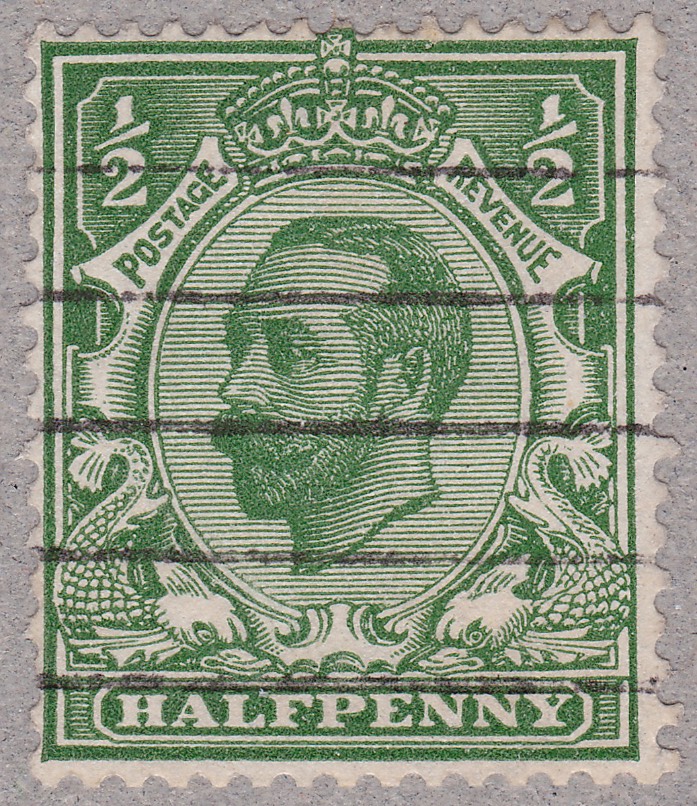 Wmk Simple Cypher, Inverted & Reversed 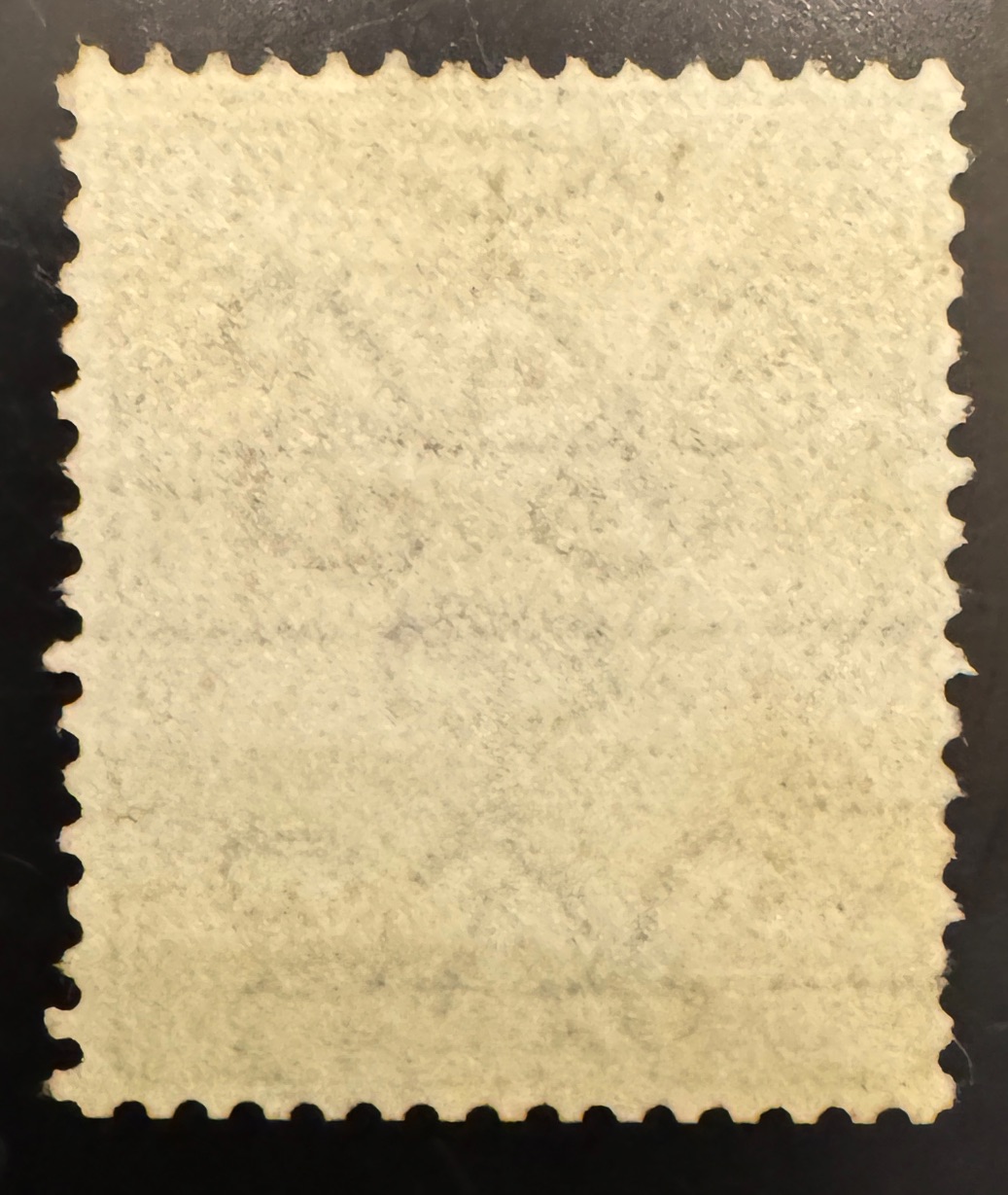 Stamp N12 (SG345) 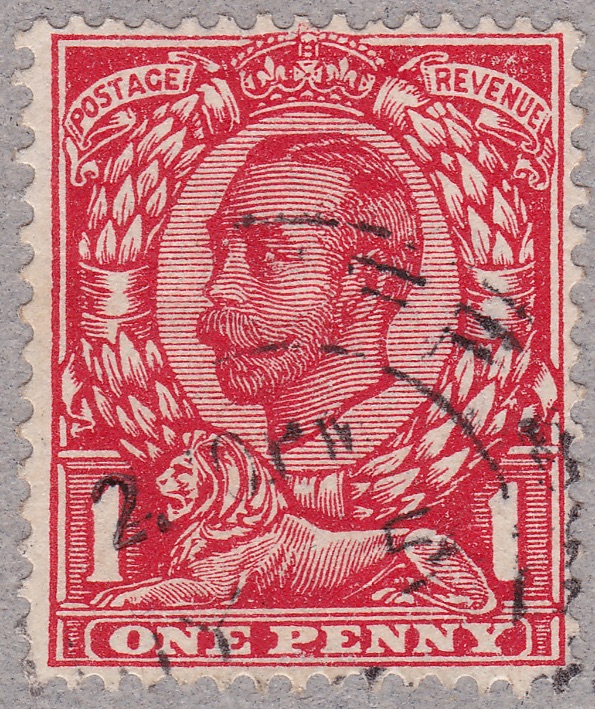 This Wmk Simple Cypher - I cannot tell position - upright?? 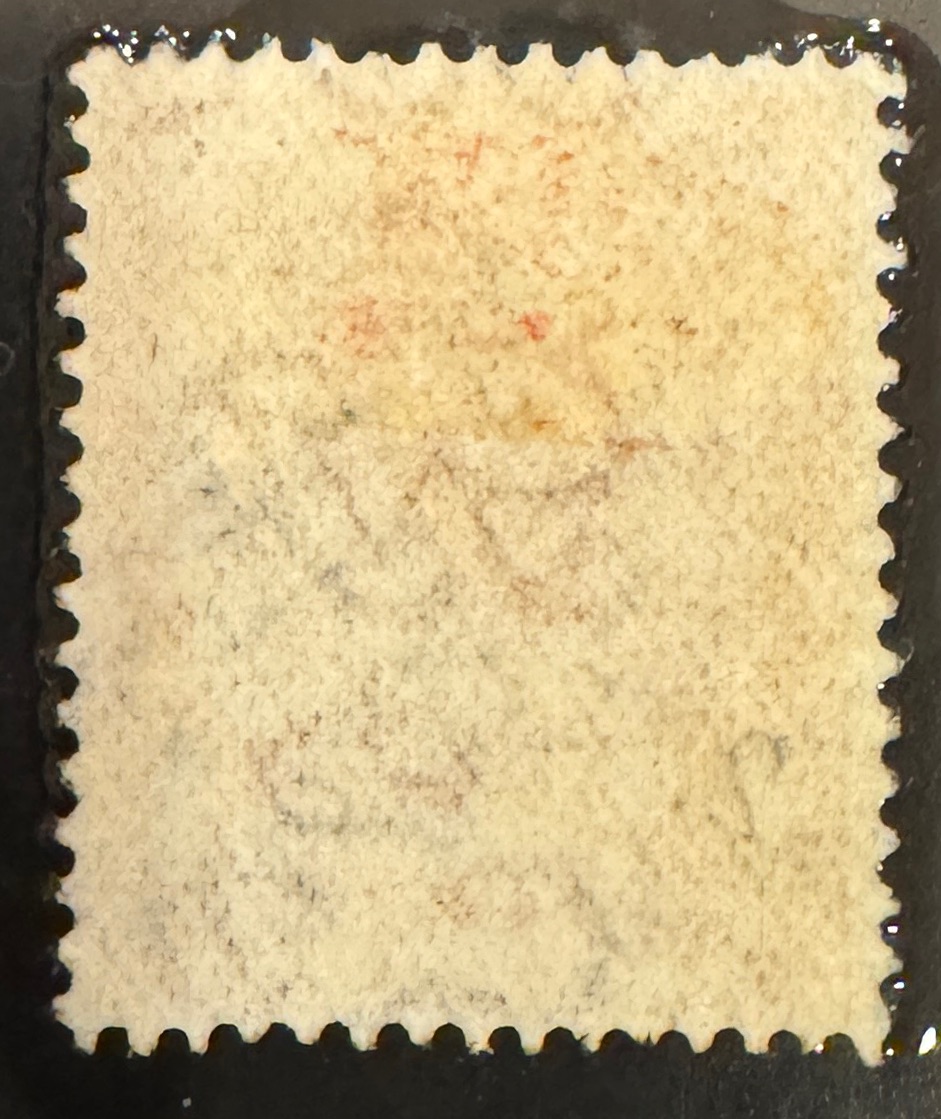 |
|
Send note to Staff
|
All the best… |
|
|
Pillar Of The Community
Netherlands
6641 Posts |
|
|
Pillar Of The Community
1318 Posts |
|
|
Quote:
N3b, inverted watermark, not reversed.
and yes, N12 (upright) Got it. Thank you. Also, curious , "upright" is just another way to say 'normal' , from the back? Also sent you a PM.... EDIT: sorry, I see its disabled. |
|
Send note to Staff
|
All the best… |
| Edited by Stamps4Life - 09/01/2025 4:54 pm |
|
|
Pillar Of The Community
Netherlands
6641 Posts |
|
|
"Upright" is normal, yes. Both from the back and front. So, looking from the back, it would appear mirrored. Quote:
EDIT: sorry, I see its disabled. Not that I am aware of. I, recently, received emails through the forum and have not changed the settings. Edit: Apparently, I had disabled it. |
|
Send note to Staff
|
| Edited by NSK - 09/02/2025 01:23 am |
|
|
Valued Member
United Kingdom
380 Posts |
|
|
The major source of alizarin (madder, also alizarin crimson) was from BASF and other firms in Germany. I'm not well up on stamp pigments, but alizarin crimson lake was used principally by the Midland Railway as the basis for their livery, so that's known as Midland Red.
Anyway, at the end of 1914 the French, having decided to change their military pantaloons from red to a mix of red, white and blue wool fibres, found that they couldn't get hold of the red, because Boche. So they went with Horizon blue, described in Wikipedia as "the indefinable colour which separates the sky from the earth".
According to Jim Jackson at the Big Blue blog regarding Australia "A reason for the many color variations for the 1p red is because the red ink normally used was not available from Germany during WW I. So, mixing and matching of inks that were available to approximate "red" was done - an inexact science as the shade graph attests."
So, maybe, the British 1d stamp also suffered from the same wartime shortage, hence from 1915 onwards they were printed in that indefinable colour which separates madder from maddening. |
|
Send note to Staff
|
|
|
Replies: 18 / Views: 2,751 |
|




 Posted 05/09/2025 11:45 pm


