| Author |
 Replies: 11 / Views: 1,939 Replies: 11 / Views: 1,939 |
|
|
Valued Member
United States
24 Posts |
|
|
|
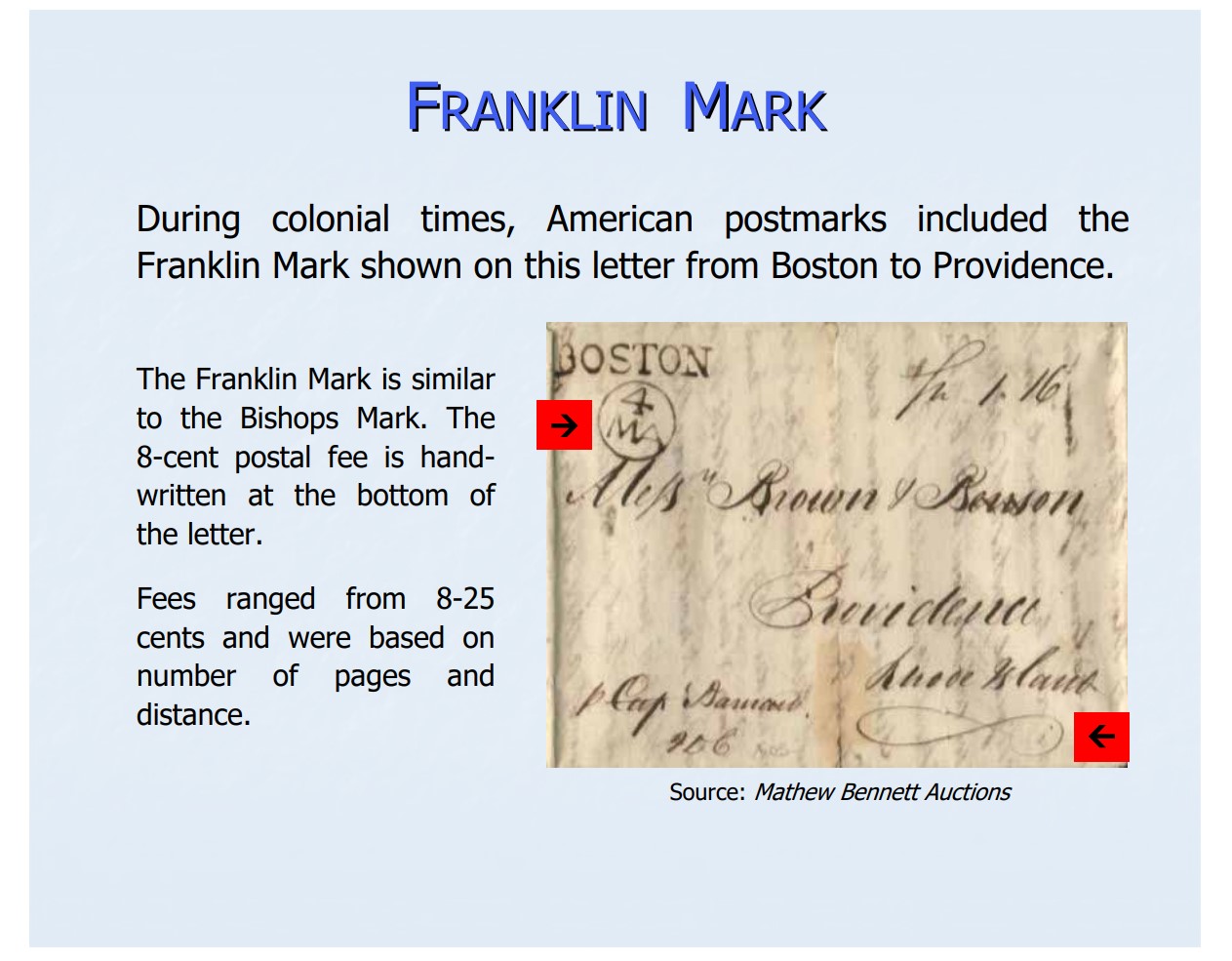
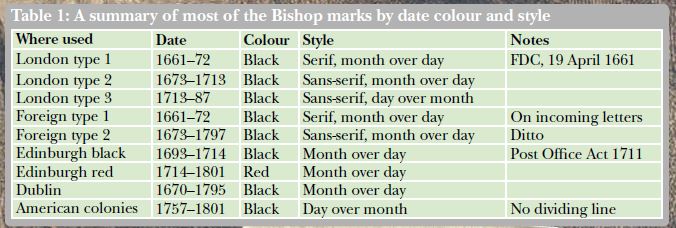
I am having a hard time finding the date of the first "Franklin Mark" on a stampless cover in the colonial era. This would be the same as the Bishop Mark in Great Britain except without the line in the middle separating the date and month.
I am seeing mixed dates from as early as the 1750s to the 1760s. Do any books on the topic state the date of the first cover?
Thank you!
|
|
Send note to Staff
|
|
|
|
|
Moderator

United States
5109 Posts |
|
|
Could you please supply a scan to help some of us understand what you are asking for? |
Send note to Staff 
|
|
|
Valued Member
United States
24 Posts |
|
|
Moderator
United States
5109 Posts |
|
|
Valued Member
United States
24 Posts |
|
|
Thank you Partime. Yes, I did have a chance to review it unfortunately it does not specifically say what year the earliest cover is from. Hopefully someone in the community collects these marks |
|
Send note to Staff
|
|
|
Valued Member
United States
24 Posts |
|
|
This page from Tom Clarke's A Catalog of Philadelphia Postmarks shows the earliest known use date of October 1765. Has anyone seen Franklin Marks without the bisect line prior to this date? What do you think led to the removal of the bisect line? 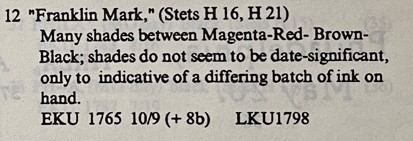 |
|
Send note to Staff
|
|
|
Pillar Of The Community
United States
858 Posts |
|
|
I believe the only (US) colonial office using a handstamp as early as 1757 was New York. So if the 1757 date from Gibbons holds, it's presumably a New York cover. ASCC doesn't specifically track dates of use of those, but notes that the latest reported use of that marking from New York (April 1, 1760) has a franklin mark.
|
|
Send note to Staff
|
|
|
Valued Member
United States
24 Posts |
|
|
Thank you paperhistory. Do you happen to know if the Franklin Mark is without the bisect line or similar to the Bishop Mark in Great Britain? Would you mind posting an image of the page referencing the New York April 1, 1760 date?
I am surprised it lists the latest available use as 1760 when SG has these marks till 1801. |
|
Send note to Staff
|
|
|
Pillar Of The Community
United States
858 Posts |
|
|
Franklin marks by definition don't have the line. That's what makes them franklins and not bishops. None of the US markings have a line so far as I know.
The 1760 date is the specific last use of the particular New York straightline handstamps. Franklins show up broadly (especially NYC, Boston, and Philadelphia) to the end of the 18th century and into the first year of the 19th.
ASCC is available free online via the classics society (always worth downloading). There is also some front material that at least mentions franklin markings (which, as I noted, don't get much specific attention in ASCC, which focuses on town markings). |
|
Send note to Staff
|
|
|
Valued Member
United States
24 Posts |
|
|
Thank you for the detailed reply. The reason I am asking these questions is because I suspect the Stanley Gibbons timeline includes Bishop Marks used in Colonial America. From what I can see there are virtually no covers prior to 1765 that have a true Franklin Mark (no bisect line as you noted). This begs the question what development in 1765 led to the creation of the Franklin Mark? Could it be related to The Stamp Act of 1765 passed on March 22, 1765?
|
|
Send note to Staff
|
|
|
Pillar Of The Community
United States
858 Posts |
|
|
So, I will correct myself. Apparently the early New York covers have a Bishop, with the line. This Siegel auction has 1757 and 1758 examples from NYC. The auction may have other interesting colonial material. https://stampauctionnetwork.com/y/y11713.cfm |
|
Send note to Staff
|
| Edited by paperhistory - 09/09/2025 8:51 pm |
|
|
Valued Member
United States
24 Posts |
|
|
Thanks for sharing. Do you think my theory makes sense? The creation of the Franklin Mark seems to be from 1765 onwards... |
|
Send note to Staff
|
|
| |
Replies: 11 / Views: 1,939 |
|



 Posted 09/08/2025 09:41 am