Introduction
The flat plate 10-cent Motorcycle Special Delivery stamp (Scott E12) was released by the Post Office Department on July 12, 1922. It replaced the 10-cent Bicycle Special Delivery stamps and would eventually be replaced by the more economical to produce rotary press 10-cent Motorcycle Special Delivery stamp (Scott E15) of 1927.
Approximately 333 million copies of the stamp were shipped from the Bureau of Engraving and Printing to local post offices. That is a potential of more than 13 million plate number blocks. Do you have one? Sixty-nine printing plates, each identified with a unique plate number, were used on the flat plate presses at the Bureau to produce the total quantity.
The Flat Press Plate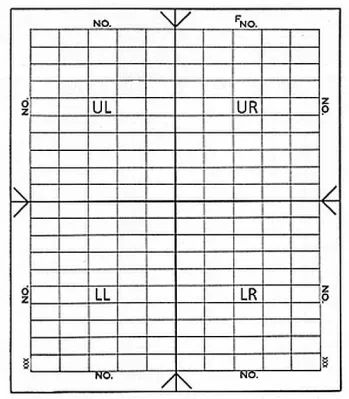
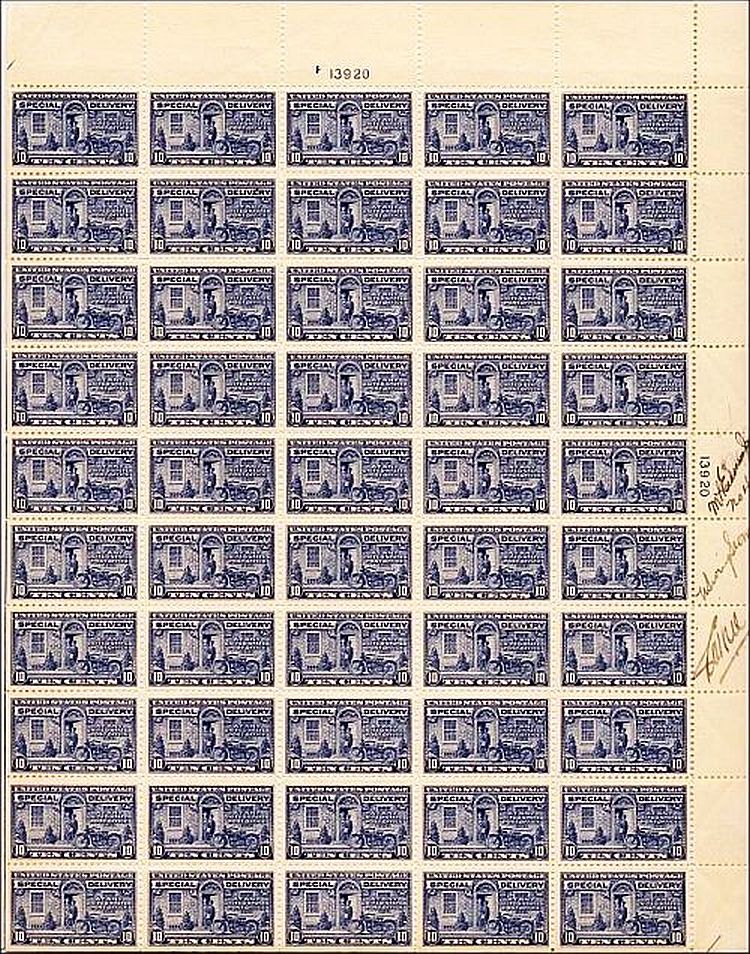
The motorcycle plate, as shown above, has 200 subjects. There are guide lines which divide the plate into four quarter panes; Upper Left (UL), Upper Right (UR), Lower Left (LL), and Lower Right (LR). Each quarter pane has two plate numbers in its margins. Once a sheet was printed from the plate, it would be converted into four post office panes of 50 stamps each.
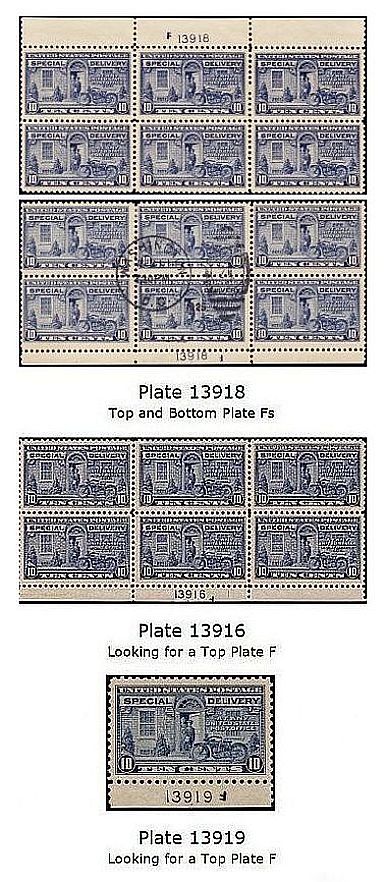
The Six Collectible Plate BlocksThere are normally five collectible plate number block positions on a sheet; top left, top right, left side, right side, and bottom. The top right position has a "F" marginal marking near the plate number which indicated that the plate could be used in production. An unusual sixth collectible plate number block was also found on some panes of the stamp. It will be discussed later. The stamp is often collected in plate number blocks of six or plate number singles.
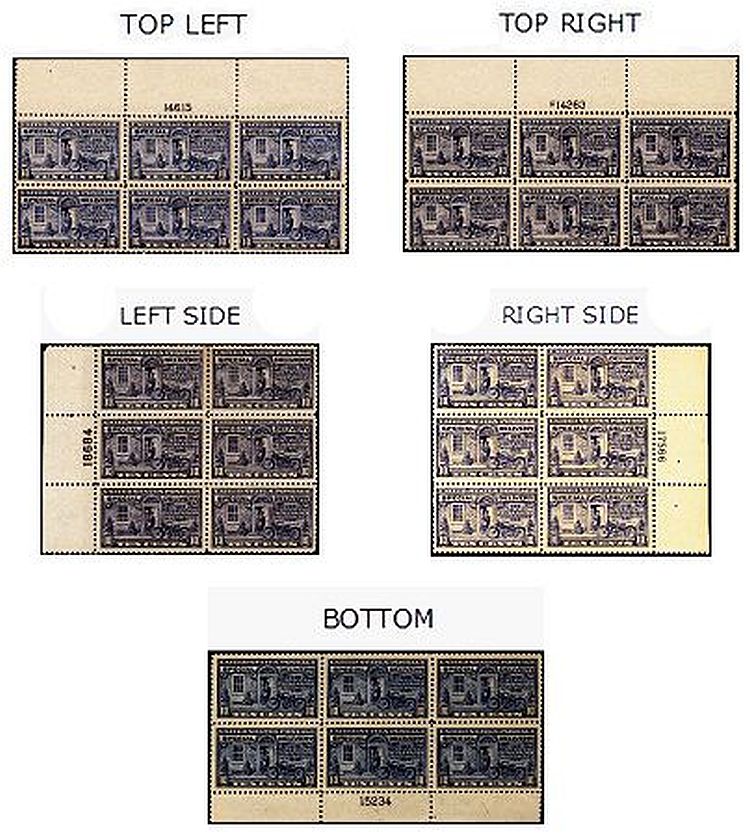
A study of certified plate proofs at the BEP showed that some plates did not initially have a "F" next to the top right plate number. A top right plate number block would end up looking much like a top left plate number block. The "F" was found by other plate numbers. This is true for Scott E12. Three of its first four plates used had an inverted "F" just to the right of the bottom plate number of the lower left pane with no "F" by the top right plate number. Hence the sixth collectible block, a bottom "F" plate number block. . At some point later, the "misplaced 'F's" were removed from the plates and replaced with "F"s in the usual placement. The same situation is also true for Scott Numbers 537, 557, 563, and 570 which only had side "F" positions on some early plates.
 The Autographed Plate Sheets/Blocks
Glover and Michael Eidsness, Jr., Glover's Superintendent of the Division of Stamps, met with Louis A. Hill, the Director of the Bureau of Engraving and Printing, to watch the new stamps being produced at the BEP. Wanting to make the first printing something special, the three of them signed their names on the selvage of the 24 panes of the first six sheets of the new stamp. These panes were put on sale at the Philatelic Stamp Agency on the First Day. While not new, this practice became common practice. Most of the signed panes have been reduced in size to signed plate blocks.
 Flat Plate Press Output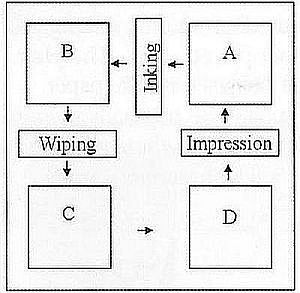
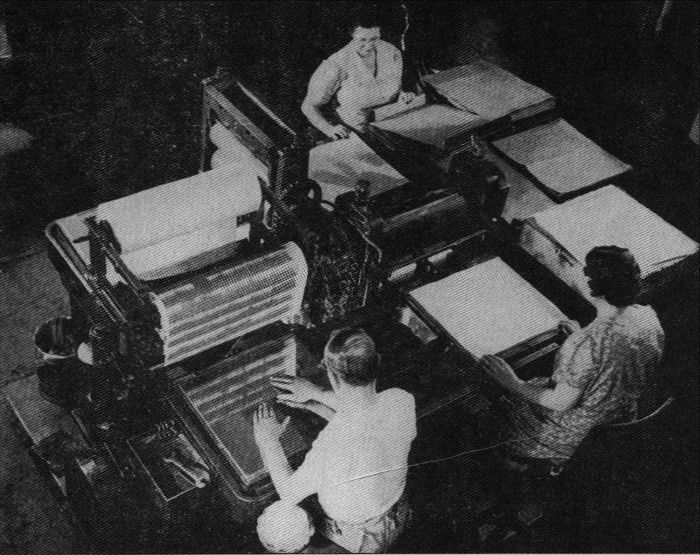
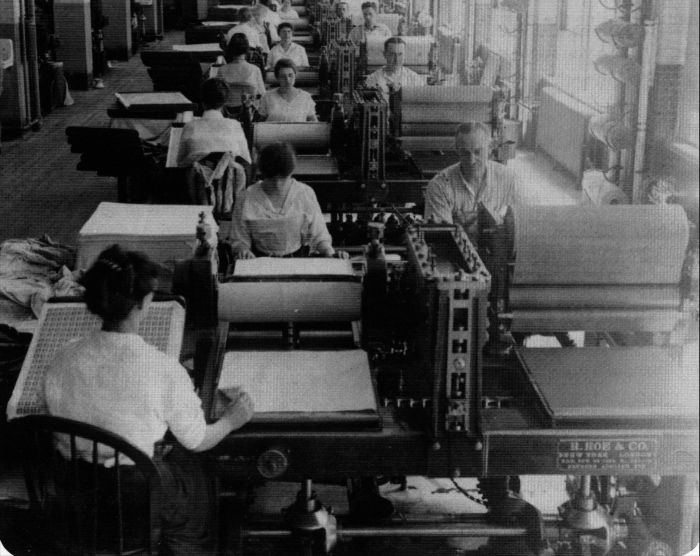
Four plates, each attached to a bed (A,B,C,D), are used at a time on a flat bed press. They rotate counterclockwise. A plate is inked when passing from Position A to Position B. It is mechanically wiped when passing from Position B to Position C. An operator at Position C removes excess ink by hand polishing the plate. A sheet of dampened paper is placed on the plate by a second operator at Position D. An impression is made when the plate passes from Position D to Position A. The printed sheet is removed by a third operator at Position A.
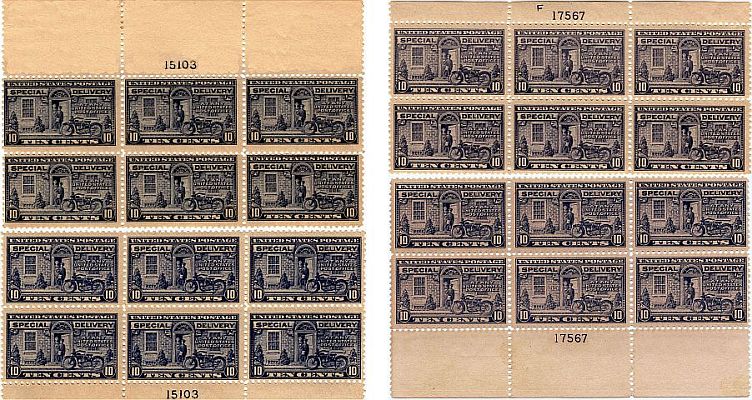
To lengthen plate life, a plate's position on the press bed was turned 180 degrees just before the design was expected to show signs of wear. The plate's position on the press bed determined the width of the printed sheet margins. A wide top margin and a narrow bottom margin indicates that the sheet was printed from a normal position while a wide bottom margin and a narrow top margin indicates that the position of the plate on the press bed had been reversed. The plate block combinations below indicate that plate 15103 was in a normal position and plate 17567 was in the reverse position when their sheets were printed. Note their colors. Deep ultramarine and grey violet are the listed Scott colors.
 The 69 Plate Numbers
Are the 69 different plate numbers found on plate number blocks today? They are for the more common plate number singles. The Bureau Issues Association (BIA) did a survey of ownership of plate numbers several years ago. The number of plate numbers that the survey reported found on flat press 10-cent Motorcycle stamps ranged from 2 to 27 for its various plate numbers. Unfortunately, the survey results did not distinguish between blocks and singles.
The following table contains the reported BIA counts by plate number. The table also shows the BEP's number of sheets printed by each plate. I know that plate number blocks exist for 51 of the 69 different plate numbers. The other 18 plate numbers, those without reported plate number blocks, are highlighted in red in the table. There appears to be some correlation between low counts and low sheet totals, but not for all plate numbers. It is possible that plate number blocks do exist for some of the lacking plate numbers.
Can you report or help me find the missing plate number blocks? I would like to update my records.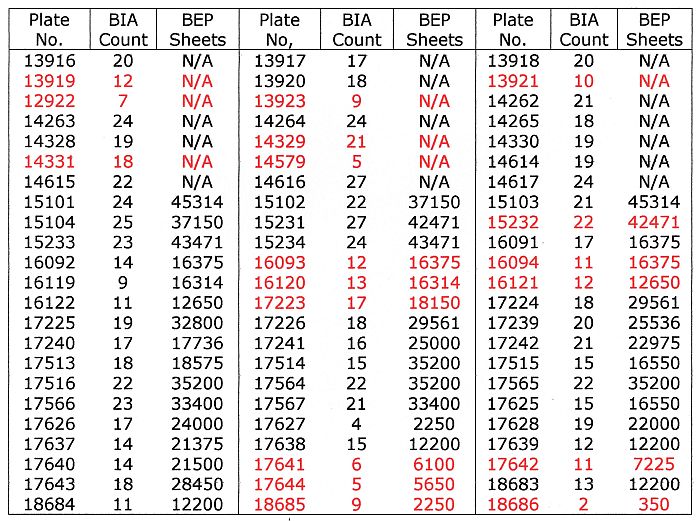





 Posted 10/22/2025 3:45 pm