| Author |
 Replies: 485 / Views: 85,895 Replies: 485 / Views: 85,895 |
|
|
|
Pillar Of The Community
United Kingdom
1216 Posts |
|
|
Pillar Of The Community
Israel
4874 Posts |
|
|
Animals in Space, issued by Niger on December 2, 1999: - Ham, U.S. space program's Project Mercury chimpanzee - Laika, Soviet space dog - Felix, French space program cat - Arabella, US Skylab 3 spider     |
Send note to Staff 
|
|
|
Pillar Of The Community
Israel
4874 Posts |
|
|
Pillar Of The Community
United States
1497 Posts |
|
|
Pillar Of The Community
1918 Posts |
|
|
Valued Member
Slovenia
159 Posts |
|
|
Slovenia - A full member of the European Space Agency (ESA)Slovenia became a full member of the European Space Agency (ESA) on 1 January 2025. 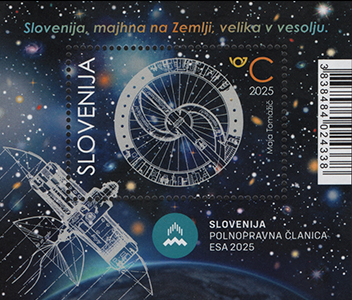 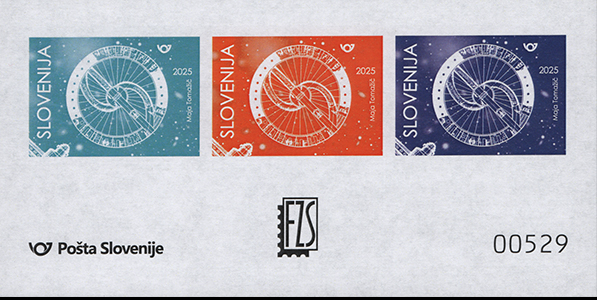 ...........Slovenia. Small on Earth. Big in Space. ...........Slovenia. Small on Earth. Big in Space.In 1928 the engineer Herman Potocnik, writing under the pseudonym Hermann Noordung, published in Berlin a book entitled The Problem of Space Travel, in which he set out his pioneering ideas about space flight and detailed his plans for a space station, which he called the Wohnrad (Living Wheel) - on stamp. |
|
Send note to Staff
|
| Edited by zomirp - 09/25/2025 10:58 am |
|
|
Valued Member
United States
268 Posts |
|
|
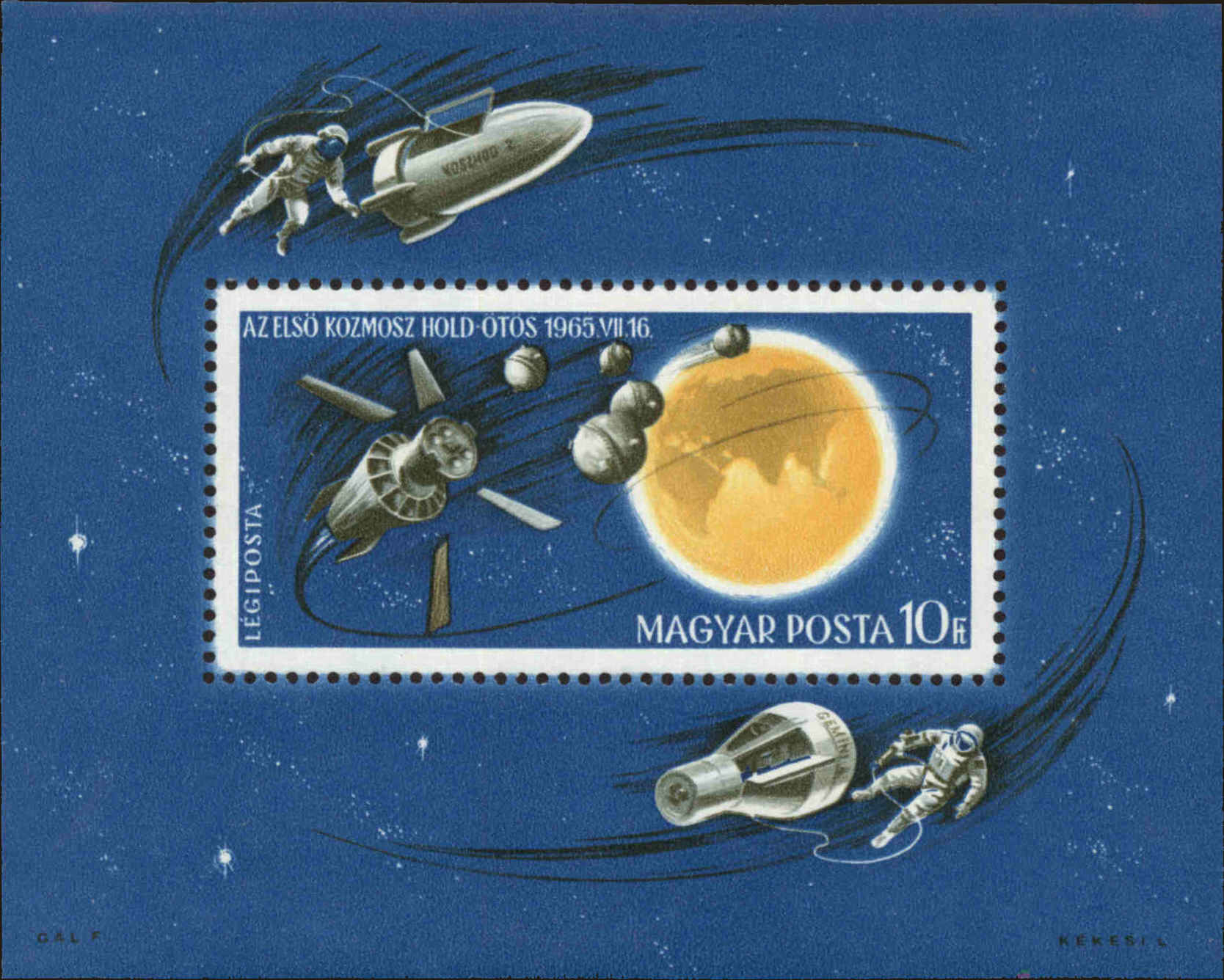
Was reviewing this long thread, these stamps are pictured along the way but not as part of this Hungary 1963 souvenir sheet. 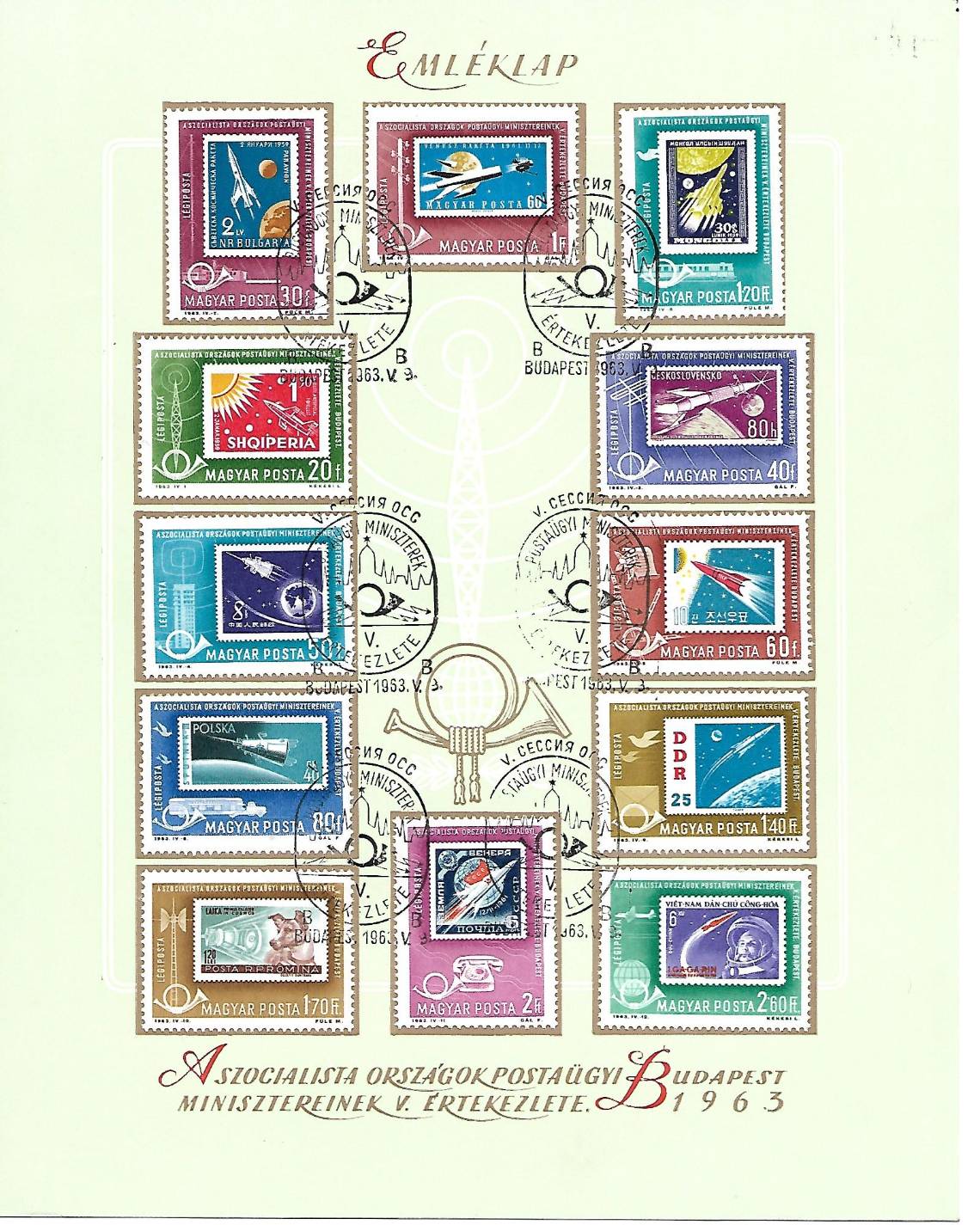 |
|
Send note to Staff
|
|
|
Pillar Of The Community
Israel
4874 Posts |
|
|
Vostok III and IV were twin Soviet space missions launched in August 1962. Andriyan Nikolayev piloted Vostok 3, while Pavel Popovich flew Vostok 4. The two spacecraft were placed in nearly identical orbits and approached each other to within about 6.5 kilometers, marking the first coordinated flight of two crewed spacecraft. The mission demonstrated improved endurance in space and was an important step toward later rendezvous and docking techniques developed during the Space Race. Vostok III and IV program, issued by North Vietnam on December 28, 1962. - Pavel Popovich - Andriyan Nikolayev - Vostok III and IV 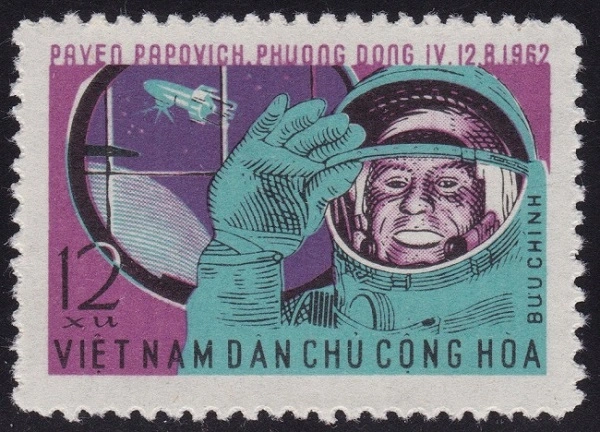 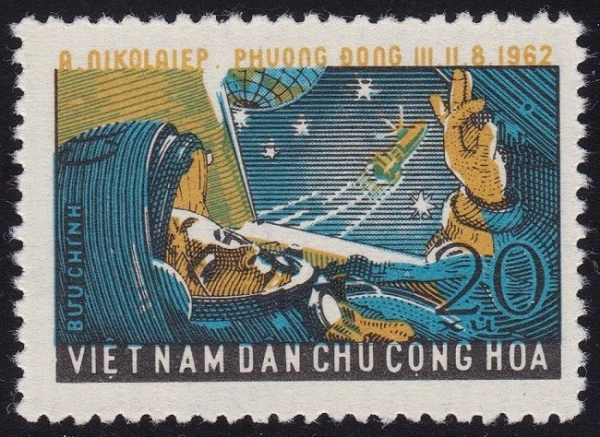 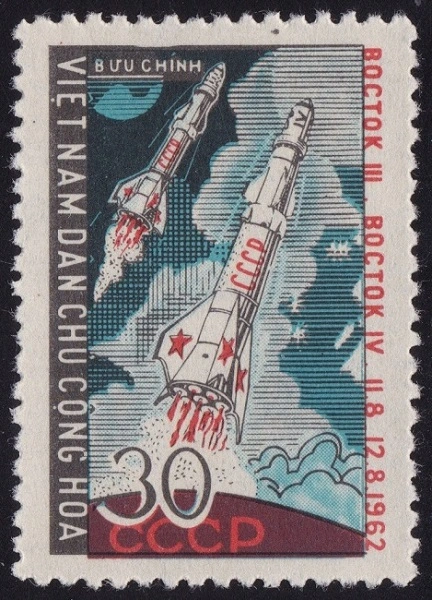 |
|
Send note to Staff
|
|
|
Pillar Of The Community
Israel
4874 Posts |
|
|
Vostok V and VI were Soviet space missions launched in June 1963. Valery Bykovsky piloted Vostok V, orbiting Earth for nearly five days, while Valentina Tereshkova flew Vostok VI, becoming the first woman in space. Their missions overlapped in orbit, marking the first time two crewed spacecraft were in space simultaneously. These historic flights were major achievements for the Soviet space program and important milestones in the early Space Race. Vostok V and VI, issued by North Vietnam on March 25, 1964. - Valery Bykovsky and Vostok V - Vostok V and VI - Valentina Tereshkova and Vostok VI 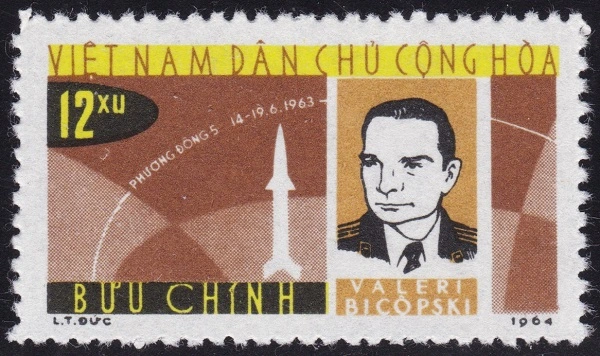 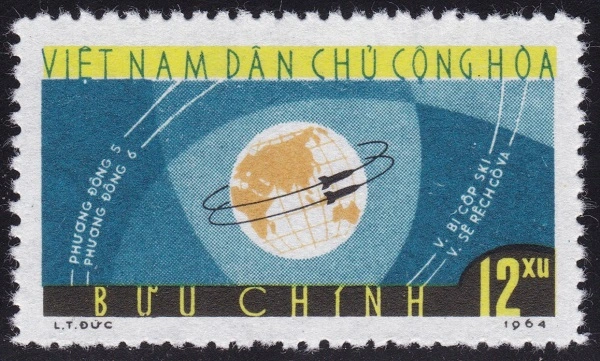 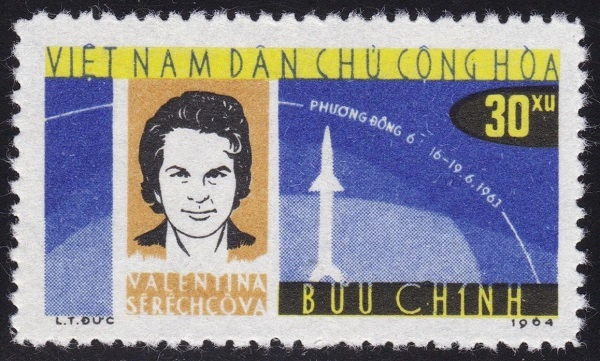 |
|
Send note to Staff
|
|
|
Pillar Of The Community
Israel
4874 Posts |
|
|
On April 12, 1961, Soviet cosmonaut Yuri Gagarin became the first human to travel into space during the historic mission of Vostok 1. Launched by the Soviet space program, the spacecraft completed a single orbit around Earth in about 108 minutes. During the flight, Gagarin reached an altitude of roughly 327 kilometers and safely returned to Earth by parachute after reentering the atmosphere. This achievement marked a major milestone in the Space Race and made Gagarin an international hero. The first space flight by Yuri Gagarin, issued by North Vietnam on June 15, 1961. 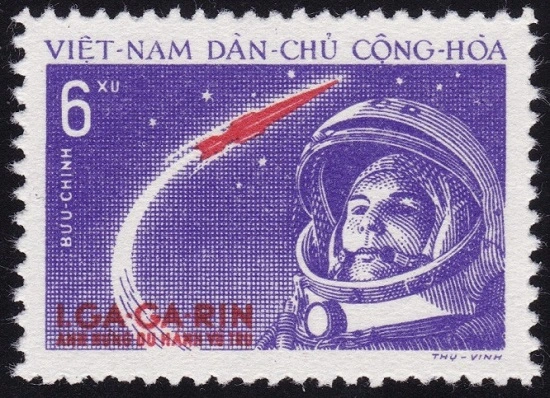 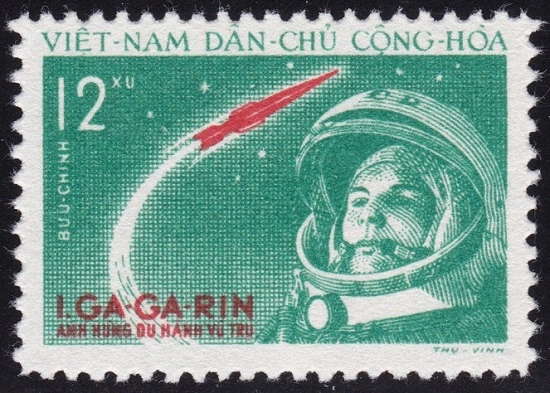 |
|
Send note to Staff
|
|
|
Pillar Of The Community
Israel
4874 Posts |
|
|
Quote:
Vostok III and IV were twin Soviet space missions launched in August 1962. Andriyan Nikolayev piloted Vostok 3, while Pavel Popovich flew Vostok 4. The two spacecraft were placed in nearly identical orbits and approached each other to within about 6.5 kilometers, marking the first coordinated flight of two crewed spacecraft. The mission demonstrated improved endurance in space and was an important step toward later rendezvous and docking techniques developed during the Space Race.
The first anniversary of Vostok III and IV program, issued by North Vietnam on August 1, 1963. - Vostok III and IV - Andriyan Nikolayev - Pavel Popovich 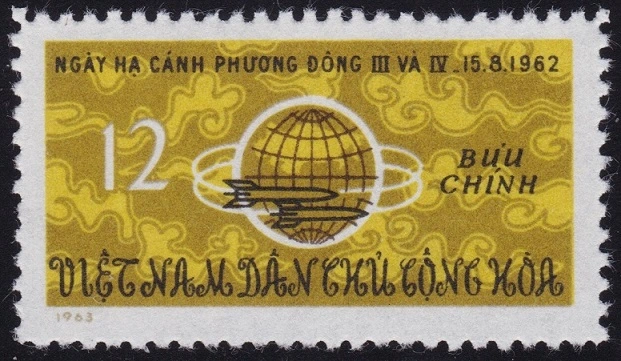 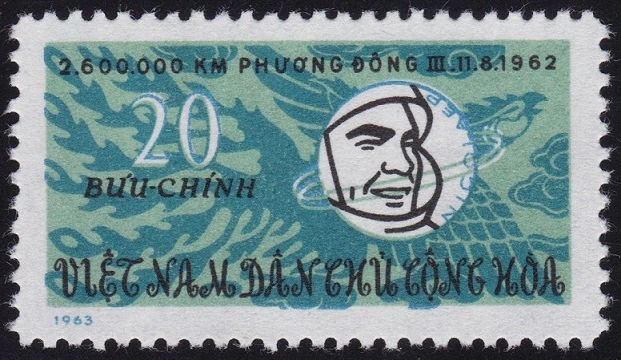 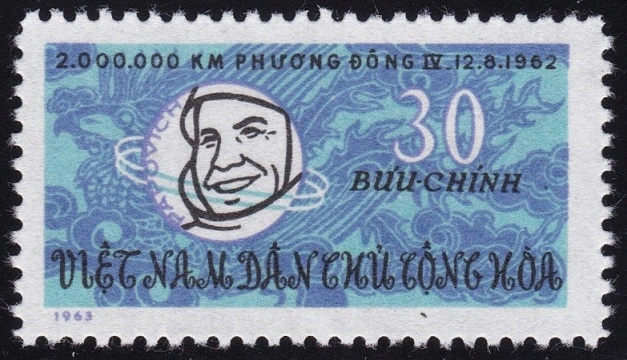 |
|
Send note to Staff
|
|
|
Pillar Of The Community
Israel
4874 Posts |
|
|
Gherman Titov was the second human to travel into space and the first to spend a full day in orbit. On August 6–7, 1961, he flew aboard the Soviet spacecraft Vostok 2, completing 17 orbits around Earth during a mission that lasted about 25 hours. At just 25 years old, Titov became the youngest person ever to fly in space. His flight provided important data on the effects of prolonged weightlessness on the human body and was a significant milestone in the early years of the Space Race. Titov and Vostok 2, issued by North Vietnam on October 17, 1961. 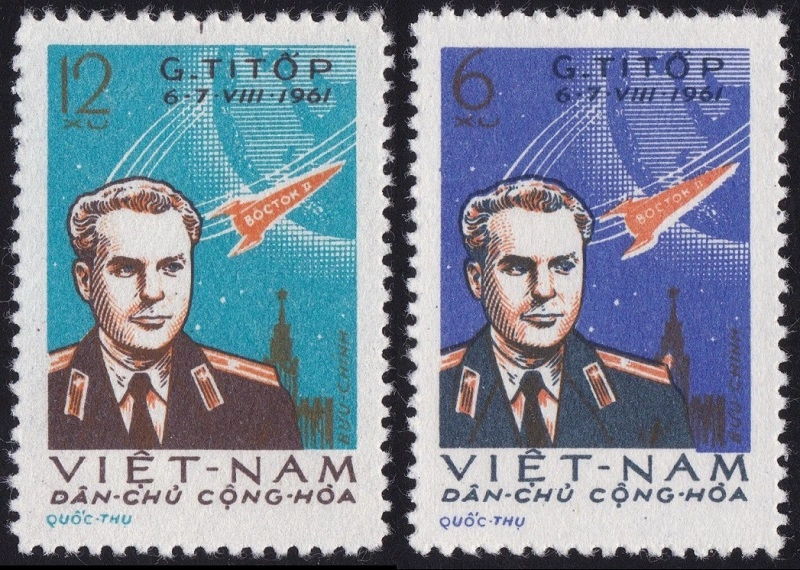 |
|
Send note to Staff
|
|
|
Pillar Of The Community
Israel
4874 Posts |
|
|
On October 12-13, 1964, the USSR launched the spacecraft Voskhod 1, the first mission to carry more than one person into space. The flight carried three cosmonauts, Vladimir Komarov, Konstantin Feoktistov, and Boris Yegorov (depicted on the stamps), who completed 16 orbits of Earth in about 24 hours. The mission demonstrated that a multi-person crew could successfully operate in orbit and marked another important achievement for the Soviet space program during the early years of human spaceflight. Voskhod 1, issued by North Vietnam on March 30, 1965. 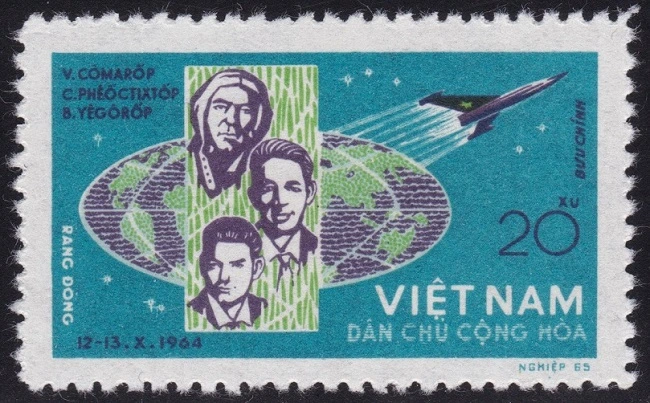 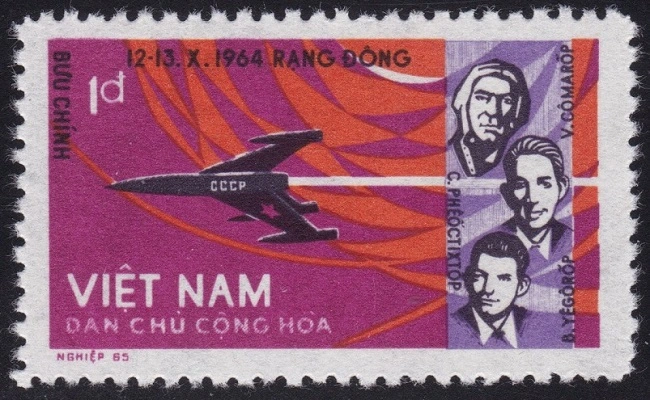 |
|
Send note to Staff
|
| Edited by LaoPhil - 03/12/2026 09:20 am |
|
|
Pillar Of The Community
Israel
4874 Posts |
|
|
Mars 1 was a Soviet spacecraft launched on November 1, 1962, as part of the USSR's early attempts to explore Mars. It was the first Soviet probe intended to fly past Mars and transmit data about the planet and interplanetary space. Although contact with the spacecraft was lost in March 1963 before it reached Mars, the mission provided valuable information about deep-space communication and solar radiation during the early era of planetary exploration. Mars 1, issued by North Vietnam on May 21, 1963. 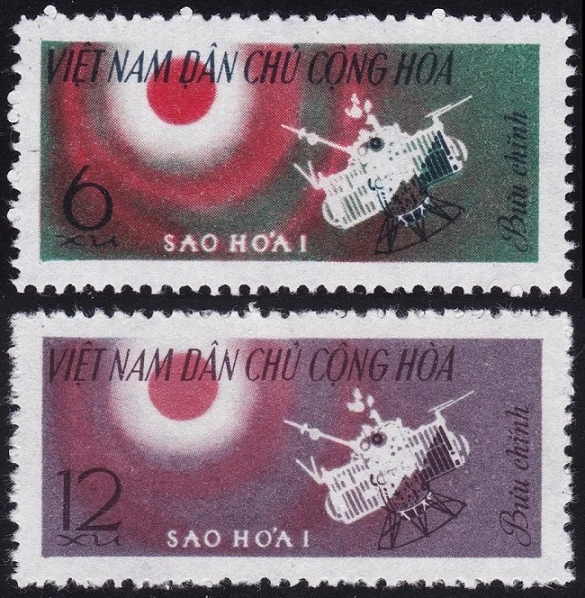 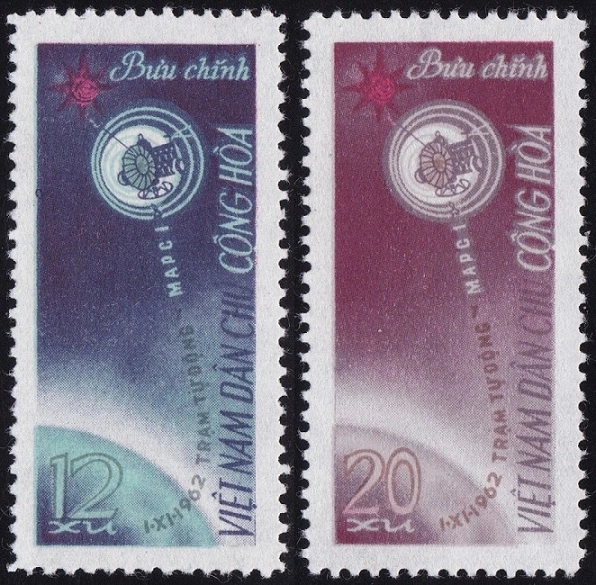 |
|
Send note to Staff
|
|
|
Pillar Of The Community
Israel
4874 Posts |
|
|
Luna 9 was a Soviet spacecraft that achieved the first successful soft landing on the Moon on February 3, 1966. After landing on the Moon, it transmitted the first panoramic photographs from the lunar surface back to Earth. The mission was a major milestone in lunar exploration and demonstrated that spacecraft could safely land on the Moon. Luna 9, issued by North Vietnam on August 5, 1966. 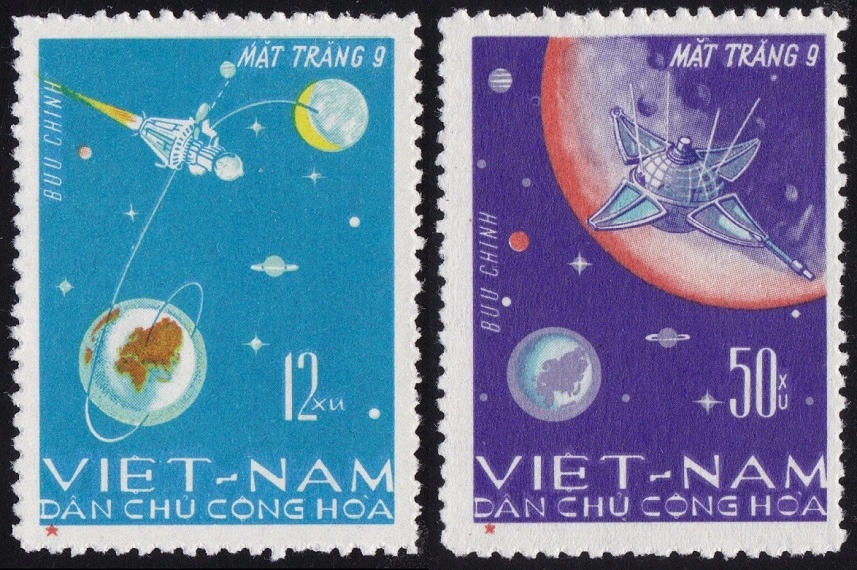 |
|
Send note to Staff
|
|
|
Replies: 485 / Views: 85,895 |
|



 Posted 03/05/2021 1:38 pm