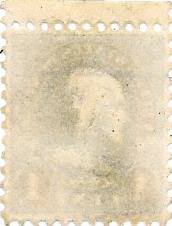
| Author |
 Replies: 59 / Views: 48,062 Replies: 59 / Views: 48,062 |
|
|
|
Valued Member
Australia
30 Posts |
|
|
Pillar Of The Community
3865 Posts |
|
|
This shows that both sides of a # 552 flat plate 11 is usually consistently similarly close both horizontally and vertically (11.2 x 11.2). It is known that the new Instanta gauges are slightly off such as around +0.25 approximately consistently in this case. 11.20 - 0.25 = 10.95. For the perforation measurement that you supplied before as 11.40 x 10.80, then 11.40 - 0.25 = 11.15 and 10.80 - 0.25 = 10.55 so that it may be more like 11.15 x 10.55 which can be the 11 x 10.5 for # 632. Also, 11.40 - 10.80 = 0.60 and 11.00 - 10.50 = 0.50 since there is a big difference between the horizontal and vertical perforations which one would not expect there to be for # 596 but for # 632. However, an expert should be consulted, if necessary to be sure. |
Send note to Staff 
|
| Edited by jogil - 08/10/2013 06:31 am |
|
|
Pillar Of The Community
United States
2547 Posts |
|
|
Stewart, Your stamp is a Scott 632. The color of your stamp is yellowish green which was used much later. The 596 were perforated both ways on the flat plate perforators and the gauge is the same on both the vertical and horizontal perfs. |
|
Send note to Staff
|
|
|
Pillar Of The Community
3865 Posts |
|
|
It is the wish of many U.S. stamp collectors to find a U.S. # 596 and/or a U.S. # 613 which appear to have both been made in the same way from rotary press sheet waste and perforated 11 x 11 on a flat plate perforator. U.S. # 596 can be considered to be a combination of both U.S. # 552 (flat plate perforation 11) and U.S. # 581 (rotary press printing). U.S. # 613 can be considered to be a combination of both U.S. # 610 (flat plate perforation 11) and U.S. # 612 (rotary press printing). For those on the lookout for these stamps (# 596 and/or # 613), it would be practical to have at least a reference copy of each of those stamp combinations (# 552 and # 581, # 610 and # 612) with some of their similar characteristics (flat plate perforation 11 and rotary press printing). |
|
Send note to Staff
|
| Edited by jogil - 08/10/2013 11:03 am |
|
|
Valued Member
Australia
30 Posts |
|
|
Thanks to everyone for your responses, I just guess I will have to settle for a #632 instead of a #596
Back to the poor house. |
|
Send note to Staff
|
| Edited by Stewart - 08/11/2013 06:12 am |
|
|
New Member
United States
2 Posts |
|
|
New Member
United States
2 Posts |
|
|
Pillar Of The Community
United States
2547 Posts |
|
|
Pillar Of The Community
United States
2547 Posts |
|
|
Valued Member
180 Posts |
|
|
A 594 can have a straight edge on the bottom,so can a 596,there is a 613 Harding with a bottom straight edge. 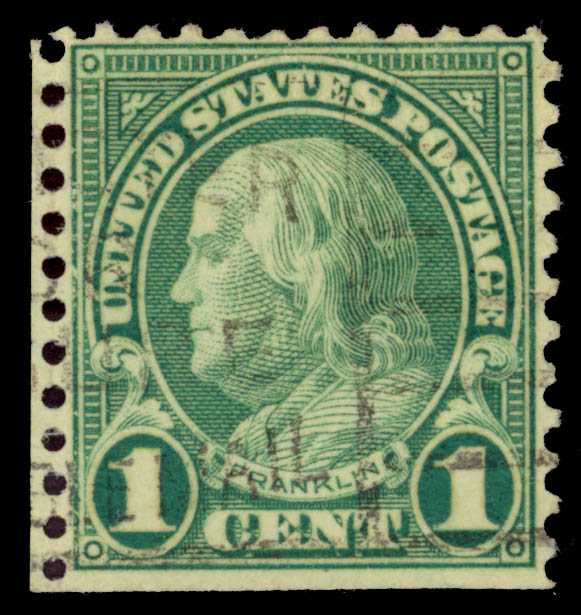 |
|
Send note to Staff
|
|
|
Valued Member
United States
293 Posts |
|
|
I have a perf 11. on all 4 sides.With the correct measurements of 19-1/4 by 22-1/4 the ink is much darker. And the Perfs is spot on. no guessing dead center of gauge. Thank you for pointing this out . I never new I had this stamp. just joined a few days agoe and learning alot from everyone.
|
|
Send note to Staff
|
|
|
Valued Member
United States
293 Posts |
|
|
This is the one I own perf 11 all four sides with the same measurements . Sorry about the pic it was from my phone. 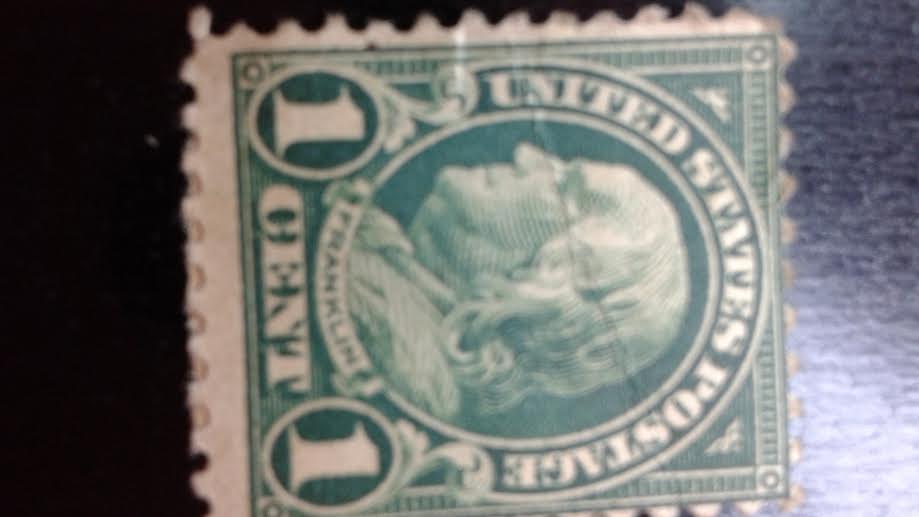 |
|
Send note to Staff
|
|
|
Pillar Of The Community
United States
2948 Posts |
|
|
Valued Member
180 Posts |
|
|
I've learned a lot here from these guys,that's a 552,a 596 would look like a "bricked wall" in the area of green that is solid on yours. |
|
Send note to Staff
|
|
|
Pillar Of The Community
571 Posts |
|
|
Replies: 59 / Views: 48,062 |
|




 Posted 08/10/2013 05:17 am