| Author |
 Replies: 22 / Views: 4,417 Replies: 22 / Views: 4,417 |
|
Pillar Of The Community
Australia
2156 Posts |
|
|
I'm currently thinking of sending a stamp to the US for expertisation. I read on William Weiss's website, the following: 'All mainstream philatelic public auction firms, and most top retail dealers allow buyers to place purchases "on extension" for certification.' I'm not sure what this actually means. Can anyone explain it to me? Weiss then states that 'Unfortunately, not all sellers on ebay allow certification. Therefore, to buy expensive stamps from such sellers is a big gamble.' How would I 'allow certification' if I were to list this stamp for sale on ebay without prior certification? |
|
Send note to Staff
|
|
|
|
|
Moderator

United States
4788 Posts |
|
|
It means they will extend the return period on the purchase, allowing you time to submit the stamp for certification. If it turns out to be a fake, you can return it for a full refund even though you may have passed the normal ten-day (or whatever) return policy.
KirkS |
Send note to Staff 
|
|
|
Rest in Peace
Canada
6750 Posts |
|
|
Hi, I've seen that on ebay once in a while. Usually it means that the seller is willing to extend the refund period while the buyer buyer gets the stamp certified. If the stamp turns out to be other than what the seller claims it is, then the seller will take the stamp back and refund the purchase / shipping price. Some sellers say they will only refund the purchase price and not any expertizing price but that would be up to you of course. |
|
Send note to Staff
|
|
|
Pillar Of The Community
Australia
2156 Posts |
|
|
Thanks, KirkS, Puzzler. That's what I thought (and hoped) it meant.
Do you think it's a viable way to proceed? It would certainly be the easiest option for me, as a seller not located in the US selling a stamp likely to be purchased by a US buyer.
Or will buyers always prefer stamps that already come with a certificate? |
|
Send note to Staff
|
| Edited by jimjamtwo - 12/24/2011 6:59 pm |
|
|
Pillar Of The Community
United States
2480 Posts |
|
|
Jimjamtwo, I think a buyer will feel more comfortable, and possibly more generous, bidding on a high value stamp that has been certified by a reputable expert. If you have the item certified in advance of sale, that is one less potential headache for you post sale. As the others have said, allowing a buyer to certify typically extends the return period, but you should require advance notification and will need to decide responsibility for certification costs. Here is an example that I just pulled off of a U.S. ebay seller's cite: Quote:
Generous extensions are readily provided to buyers who wish to obtain certificates for individual stamp lots. Simply notify us in advance or at the time of purchase and advise how much time you require to submit and obtain a certificate. Failures are refunded at 100% of the purchase price, plus shipping both ways only; actual certificate costs are not refunded. |
|
Send note to Staff
|
|
|
Pillar Of The Community
Australia
2156 Posts |
|
|
tomiseki, thanks for your comments. I might have to plagiarise that notice!
|
|
Send note to Staff
|
|
|
Pillar Of The Community
United States
2480 Posts |
|
|
I've seen some items where the seller even offers to pay the certificate cost if the stamp turns out to be something other than what had been advertised. |
|
Send note to Staff
|
|
|
Rest in Peace
Canada
6750 Posts |
|
|
Having a certificate helps ease the buyers mind somewhat but not totally if they are not familiar with you. Your reputation and how you present yourself, on and off ebay, matters also. Some will not want to buy from an unknown seller but others are more comfortable with their own skills at self-expertising and will not worry about it. I think it will be easier to sell, with more bidders, if you do indeed have a certificate though. Some like finding a rare stamp themselves and some are more content to buy something that they trust is what they are paying for (their trust being in the certificate mostly). The cert won't guarantee a high selling price, the stamp's condition will. |
|
Send note to Staff
|
|
|
Pillar Of The Community
Australia
2156 Posts |
|
|
On consideration, the benefits of certification seem apparent. There is an ebay seller already selling the same stamp. I don't think his item is the genuine article - in any case, his scan isn't very good, and the scans ought to be good for the kind of stamps we're talking about here (bluish paper varieties). He also doesn't offer an extension for certification. I'd be surprised if his item sells. So I'm starting to think that advance certification would be worth the extra time, trouble, and cost. |
|
Send note to Staff
|
| Edited by jimjamtwo - 12/24/2011 7:30 pm |
|
|
Pillar Of The Community
Australia
578 Posts |
|
|
There is a structural constraint within ebay for certification extensions - after 60 days feedback cannot be left for the transaction. |
|
Send note to Staff
|
|
|
Pillar Of The Community
United States
1360 Posts |
|
|
Plateflaw-- that's why Weiss is such a good service for ebay buyers. I've sent 15-20 items to Bill now, and never has the entire process of sending the material from here (Nashville area) to Weiss (Pennsylvania), and receiving it back ever taken more than 2 weeks. I had one auction last summer that the seller would not auth more than 7 days for any reason, so I sent to Weiss, and instructed him that if the cert was good, it would be mailed back to me, and if NOT Good sent to the seller, but an email to me first, so I could alert the seller within 7 days. It turned out to be a FAKE "E" Grill being touted as an "F" Grill (#91-- tough stamp, BTW). I had an item that I handed to Randy Shoemaker from PSAG at the APS show in Columbus, and it was at least 6 weeks until it came back to me, because PSAG (and other services) will then send the material out to other "experts" for multiple opinions. For a Weiss Cert, you only get Bill's opinion, but that's one pretty darn good opinion, and per some of the conversation on VSC, some of the Experts and Dealers agree that when it comes down to selling, a Weiss cert did not make an item worth less than a PF, APS, PSAG or PSE Cert. Hope this helps! Ray |
|
Send note to Staff
|
|
|
Pillar Of The Community
Australia
2156 Posts |
|
|
Those are very helpful observations, Ray. I will certainly make of use Mr. Weiss's well-regarded services down the track. I'm in a bit of a dilemma because of the nature of the particular stamp I'm concerned with, which is a blue paper variety. The reverse of my stamp undoubtedly looks darker than regular issues and so could possibly be the genuine article. However, I'm ALSO told that there is no way, effectively, to tell the difference between a blue paper variety (which actually looks grayish) and a stamp that has toned over time to the same grayish colour. In this case, I'm questioning whether this matter should just come down to one person's opinion. Isn't there a scientific test that could objectively determine whether the stamp has the 10% rag content that defines the blue paper variety or if it's just on ordinary paper? It seems to me that this is a unique case; even if my stamp was certified, it may help me sell it, but I would always be left wondering how it was possible for anyone to tell whether or not it was the genuine article! Let's call this the 'bluish paper dilemma.' |
|
Send note to Staff
|
| Edited by jimjamtwo - 12/26/2011 02:10 am |
|
|
Valued Member
United States
495 Posts |
|
|
"However, I'm ALSO told that there is no way, effectively, to tell the difference between a blue paper variety (which actually looks grayish) and a stamp that has toned over time to the same grayish colour."
I hate to say this, but if there is no way to tell the difference, than WHO CARES?
|
|
Send note to Staff
|
|
|
Pillar Of The Community
Australia
2156 Posts |
|
|
joe, the presumption is that experts can tell the difference, but that this is extremely difficult to do, even for them.
It's actually quite a fascinating question! |
|
Send note to Staff
|
|
|
Pillar Of The Community
United States
1360 Posts |
|
|
jimjamtwo-- There is a topic on the blue papers on this board from a few months back, with several good comparison pictures. Have you put them on bright orange paper yet? That's about the only way to see the "blue"-- otherwise, it's grayish, not really bluish. You can find the information under guidance on bluish paper US stamps in US Classic Stamps Mint and Used. Did you buy the stamp as a blue paper? Is it something other than the 1c or 2c value? For the answer to both of the above-- if it was just on a page, and not certified, chances are that it may not be a bluish. If it's anything other than 1c or 2c, there is REALLY not a good chance that it's bluish. If it's 4c or 8c, forget it-- there isn't a chance at all-- there were only 100 of each printed, and they aren't growing on trees  . Good luck-- and the experts, who have seen hundreds of these stamps, CAN ABSOLUTELY tell you whether it's bluish or not, or whether instead it's a china clay (you would really be lucky if that was the case). Happy Holidays! Ray |
|
Send note to Staff
|
|
|
Pillar Of The Community
Australia
2156 Posts |
|
|
Thanks for the comments, Ray. Is this the shade of bright orange you mean? All I can say is that in my opinion the colour of the paper isn't due to toning. What else it could be due to I cannot say. 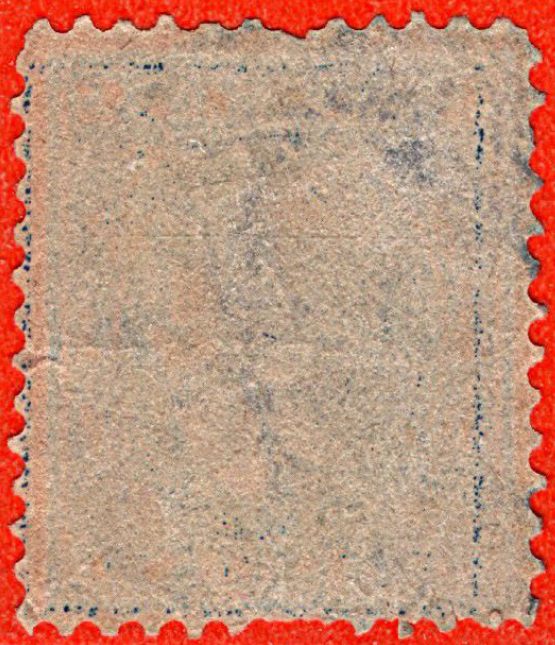 |
|
Send note to Staff
|
|
|
Replies: 22 / Views: 4,417 |
|




 Posted 12/24/2011 6:44 pm


