| Author |
 Replies: 7 / Views: 2,709 Replies: 7 / Views: 2,709 |
|
|
Valued Member
United States
166 Posts |
|
|
I have just aquired a very large collection and the gentleman that sold it to me showed this stamp to me and has always wondered what this was. It is very unusual. It has two layers that are thinly attached at the top of the stamp. The front layer is very thin and translucent. It has eight small holes in a circular pattern on the front piece of the stamp. The back piece of the stamp feels a little firmer and has gum on the back of it. It has been hinged in an album at one time. Here are a few pictures. Let me know what you think. 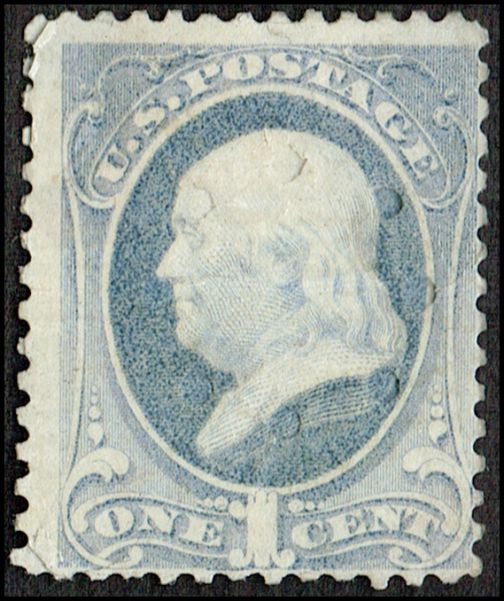   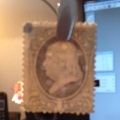 |
|
Send note to Staff
|
|
|
|
|
Valued Member
United States
166 Posts |
|
|
Rest in Peace
United States
7097 Posts |
|
|
Just a guess here but it could have been a prototype for one of those re-use resistant or self cancelling (by small explosion)stamps. It could have contained gunpowder at one time! The idea was a clever one but it both dangerous to the purchaser as well as the postal clerk. They often blew holes clean through the letters contents and could catch fire! lol But this is only a guess. There was "two ply" stamps made but don't know too awful much more than that though. I'm pretty curious as to what this is myself! |
Send note to Staff 
|
|
|
Bedrock Of The Community
United States
10862 Posts |
|
|
This is listed in the Scott Specialized under #206. It does not have a number, but it does catalog $200 (2012) |
|
Send note to Staff
|
|
|
Bedrock Of The Community
United States
10862 Posts |
|
|
From the Siegel power search sale 1053 2013-10-09
United States Essays and Proofs
1c Gray Blue, Douglas Patent Punch (206 var). Sheet margin at top, original gum, lightly hinged, fresh color, showing the eight patent punches in a circle, faint toning, light horizontal crease in selvage only, Very Fine, the Douglas Patent was designed to prevent the re-use of stamps through printing on two thin layers of paper, which would break apart when removed from a cover, it is reported that some were sold at the Washington D.C. post office
|
|
Send note to Staff
|
| Edited by revcollector - 11/29/2013 7:02 pm |
|
|
Rest in Peace
United States
7097 Posts |
|
|
Pillar Of The Community
United States
1946 Posts |
|
|
The so-called "Douglas" patent was named that by John Luff in the late 19th century, and he included this variety in his 1902 book on early US. However, no patent associated with anyone named Douglas, first or last name, has ever surfaced. Other versions of this sort of device were tried out in 1881-82, using the 1c and 3c almost exclusively. Two patents qualify as possible candidates for these devices, one from Spencer M. Clark in the 1860s, the other from an inventor named Massey closer to the time of these tests. However, back at the time when the Sanitary commission was running its Sanitary Fairs, there was some testing of a concept very like this on some Sanitary Fair stamp essays. That was apparently being done by Joseph Carpenter who had the contract for revenue stamps at the time. So the identification of the patent is still up in the air.
The example in this thread is in rather good shape, inasmuch as the upper layer is very thin and notoriously brittle. Seeing the pic of the stamp being held by its upper layer prompts a bit of caution, since an example in nice shape like this will fetch $50 to $150 in the right market.
The concept was that the upper layer would be punched, lightly affixed to a backing sheet, and then printed on the face so some of the design would print through the holes. The upper sheet was supposed to be susceptible to damage, since it was to be decimated in any attempt to clean the stamp for re-use. However, sometimes the paper would rupture during printing and more of the design would end up on the backing sheet than intended. For that reason they explored different numbers and sizes of holes.
I can show you some of the variations if you wish to see them.
These stamps are very rare as stamps go, but only moderately rare as experimentals go. It's always a kick when they turn up unexpectedly. Scott is not yet uniform in its handling of the experimental stamps, but if I recall correctly these have been listed as sub-varieties practically since the beginning of the U.S. Specialized in 1924. They have been called the "Douglas patent 8-holes-in-a-circle" variety for so long, it probably won't change when we eventually figure out who REALLY did secure the patent.
|
|
Send note to Staff
|
| Edited by essayk - 11/30/2013 12:48 pm |
|
|
Bedrock Of The Community
United States
10862 Posts |
|
| |
Replies: 7 / Views: 2,709 |
|



 Posted 11/29/2013 6:08 pm