| Author |
 Replies: 34 / Views: 6,726 Replies: 34 / Views: 6,726 |
|
Pillar Of The Community
United States
937 Posts |
|
|
I have a 3c 1861 stamp with a grill that has 12 points across and 18 points vertically. Overall the grill measures 9 x 14 mm. This doesn't match a listed grill type. The 18th row is narrow. What information am I lacking?  The blue green tones are image artifacts. |
|
Send note to Staff
|
Ryan = HDNAC = DNA = HDC = Hysterical DNA Collector = Historical DNA Collector = me who just loves stamps :) |
|
|
|
|
Pillar Of The Community
United States
6668 Posts |
|
|
Pillar Of The Community
United States
937 Posts |
|
|
stallzer, that is certainly possible. Why does it look manufactured to you? I assume that you use that term to mean NON-officially manufactured.
The stamp's color is dull rose which according to the 3c 1861 shade expert Mike McClung is found on all of the grill types of this series. Other than that, I don't know how I can provide more information. |
Send note to Staff 
|
Ryan = HDNAC = DNA = HDC = Hysterical DNA Collector = Historical DNA Collector = me who just loves stamps :) |
|
|
Rest in Peace
United States
763 Posts |
|
|
The points look distorted probably because of the graphite + scanning, but I think it's OK, and it's a genuine "F" grill, even though it has 18 horizontal rows and Scott says 15-17. The points align both horizontally and vertically very well. Last, I doubt anyone would bother faking what can only be an "F" grill with only 12 vertical rows. Granted, a faker might conclude that to make one with 18 horiz. rows would be very "rare" and noteworthy, but I vote for a genuine grill. Let's see what the others think. |
|
Send note to Staff
|
|
|
Pillar Of The Community
United States
1756 Posts |
|
|
Quote:
The points look distorted probably because of the graphite + scanning, Agreed... Bill... would you positively ID it as 18 or 17.5 given the possibility of the top row being a half row... DNA... do you have a scan prior to 'graphite-ing' or did you acquire it this way... |
|
Send note to Staff
|
|
|
Pillar Of The Community
United States
937 Posts |
|
|
disi, this is not my handiwork nor handwriting. I wonder about the "half" row having some significance that is explained by the history of grill production. Regardless, I don't imagine that this grill is some holy grail. I imagine that the extra row is explainable in an obvious manner that I hope to learn about.
In essence, I expect to learn that there is a simple explanation about how this is somewhat common. Hopefully our members will be able to make sense of this situation. I also wonder what essayk's thoughts are.
Edited to clarify late night ramblings. |
|
Send note to Staff
|
Ryan = HDNAC = DNA = HDC = Hysterical DNA Collector = Historical DNA Collector = me who just loves stamps :) |
| Edited by Historical DNA Collector - 02/18/2015 8:07 pm |
|
|
Valued Member
United States
485 Posts |
|
|
Rest in Peace
United States
7097 Posts |
|
|
Pillar Of The Community
United States
1820 Posts |
|
|
Rest in Peace
United States
763 Posts |
|
|
No.....a "D" has 15 vertical rows. This has 12. I've never seen a grill misinng 3 rows. And I agree that the top row could be what is called a half row by my good friend Clark Frazier. So bottom line, it's a genuine "F" grill. |
|
Send note to Staff
|
|
|
Pillar Of The Community
United States
937 Posts |
|
|
Bill, or Clark, tell me more about this half row that Clark speaks of and how it might be applicable to my 18th row. I've seen similar "half rows" on other stamps and wondered about their significance. Are deviations from the commonly accepted grill descriptions somewhat common? I agree that it's probably an oddball F grill and I hope for an explanation as to how the 18th row could occur. So far, it doesn't seem that anyone else has seen such a thing. Here's the front: 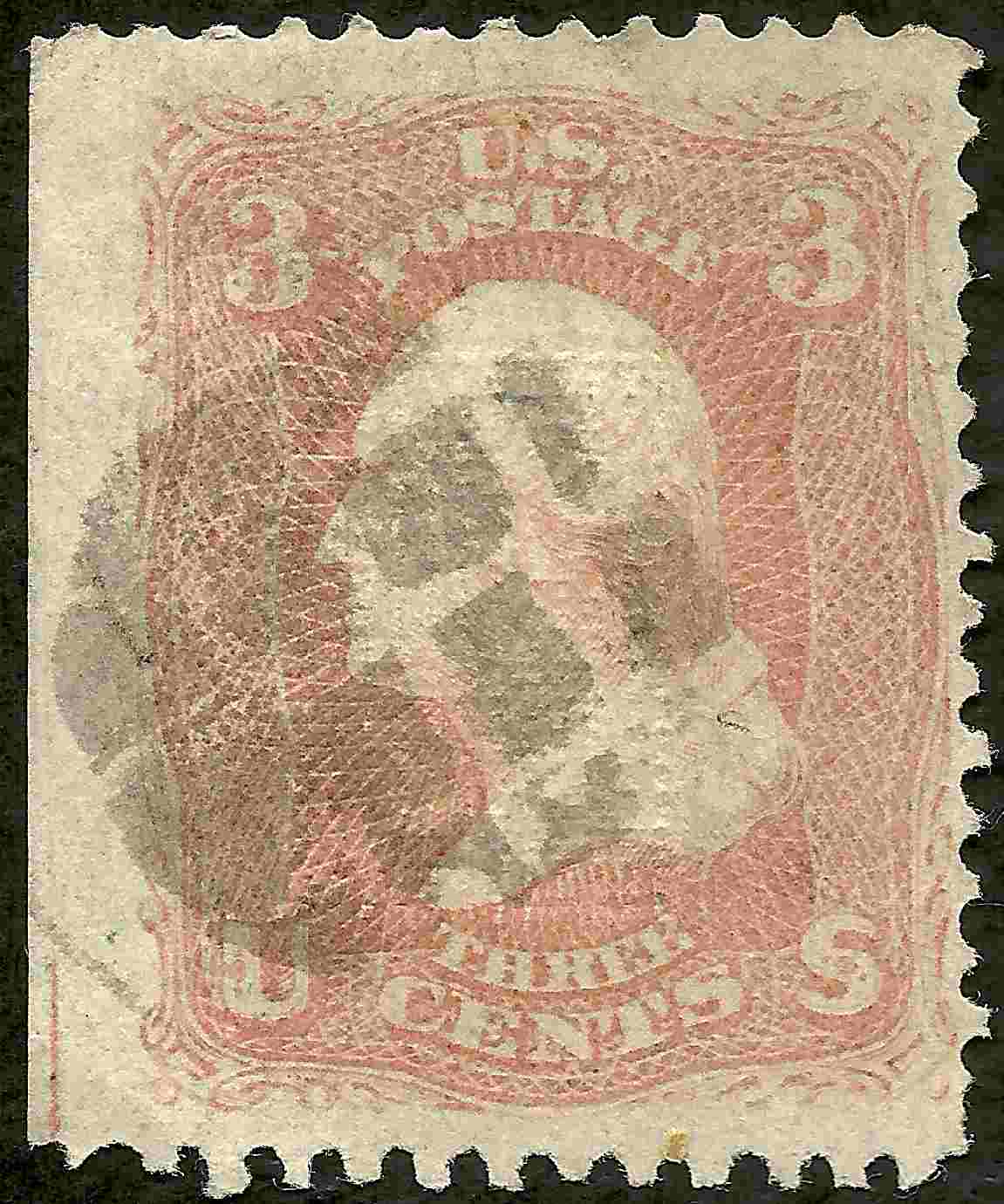 |
|
Send note to Staff
|
Ryan = HDNAC = DNA = HDC = Hysterical DNA Collector = Historical DNA Collector = me who just loves stamps :) |
|
|
Pillar Of The Community
United States
937 Posts |
|
|
Bill and Clark are right yet again. Imagine that! Quote:
The D grill always has 15 full vertical rows of points.
The E grill always has 14 full vertical rows of points.
The F grill always has 12 or fewer vertical rows of points.
All the points-down grills can occur with partially erased rows of points; these appear as a series of horizontal or vertical dashes at the top, bottom or sides of the grill. They should not be counted when determining the type of grill. Also mentioned is that the size of the grill is not the determining factor for identification. The counting of full points is what matters. This is from "THE 1867-68 GRILLS: WHAT WE KNOW AND WHAT WE DON'T KNOW" by Mike McClung published in the USPCS Chronicle that can be found at http://chronicle.uspcs.org/PDF/Chro...87/18018.pdf He appears to be using the most modern definitive work on grills as a reference: "The Story of the United States Grilled Postage Stamps" by William K. Herzog published in the 1978 Forty-Fourth edition of the American Philatelic Congress Book. I happily found that the U.S. Philatelic Classics Society offers all of the Issues of the Chronicle before 2009 without membership nor payment. When I have the opportunity, this will be the first group that I join. Hopefully the information that I repeated here is correct. I don't want the viewers of this thread to not have a final answer. |
|
Send note to Staff
|
Ryan = HDNAC = DNA = HDC = Hysterical DNA Collector = Historical DNA Collector = me who just loves stamps :) |
|
|
Pillar Of The Community
United States
1414 Posts |
|
|
Bill,
Partial or "half" rows exist because of the way grill cylinders are manufactured. A blank cylinder was scored in one direction with a screw machine or lathe around the cylinder. After scoring at right angles across the cylinder, the unwanted grill points were burnished off. Because of the drift of the grooves running around the circumference of the cylinder, some grills will show partial rows and some will not. The effect can be seen in large multiples of grilled stamps. It should be noted that all of the partial grill rows are horizontal except for the Z grill which can have vertical partial rows.
Clark |
|
Send note to Staff
|
|
|
Pillar Of The Community
United States
1946 Posts |
|
|
Looks like I missed the party on this one, since this is the first time I've seen this thread.
I'm not wild about the shape of the grill points here, on either side of the stamp, but as for count - yes, the row of half points is how I would understand the count, and Clark is giving the same explanation of where they come from that Rich Drews has discussed with me on a couple of occasions. We see these on the early grills of 1867-68, far more than the later. I am not aware of them at all for 1869 nor for the Continental grill, but extra rows do exist for the H type grill, though they are not at all common. |
|
Send note to Staff
|
|
|
Pillar Of The Community
United States
1756 Posts |
|
|
Hopefully, this 85B Z-Grill scan will demonstrate the half row clearly...   |
|
Send note to Staff
|
| Edited by disi123 - 02/28/2015 03:11 am |
|
|
Pillar Of The Community
United States
937 Posts |
|
|
Here's an ebay example where both the top and bottom horizontal rows are half points. It is an E grill that has 14 x 16 full points and could fool someone into thinking that it is a 14 x 18 Z grill. This fooling effect is also mentioned in the McClung article. 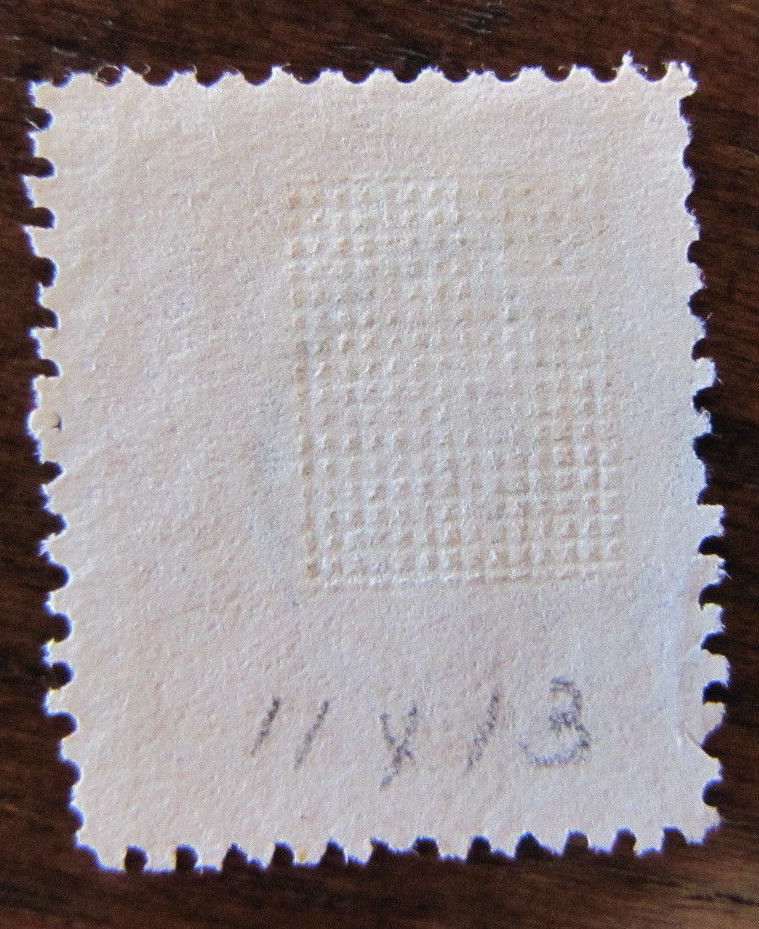 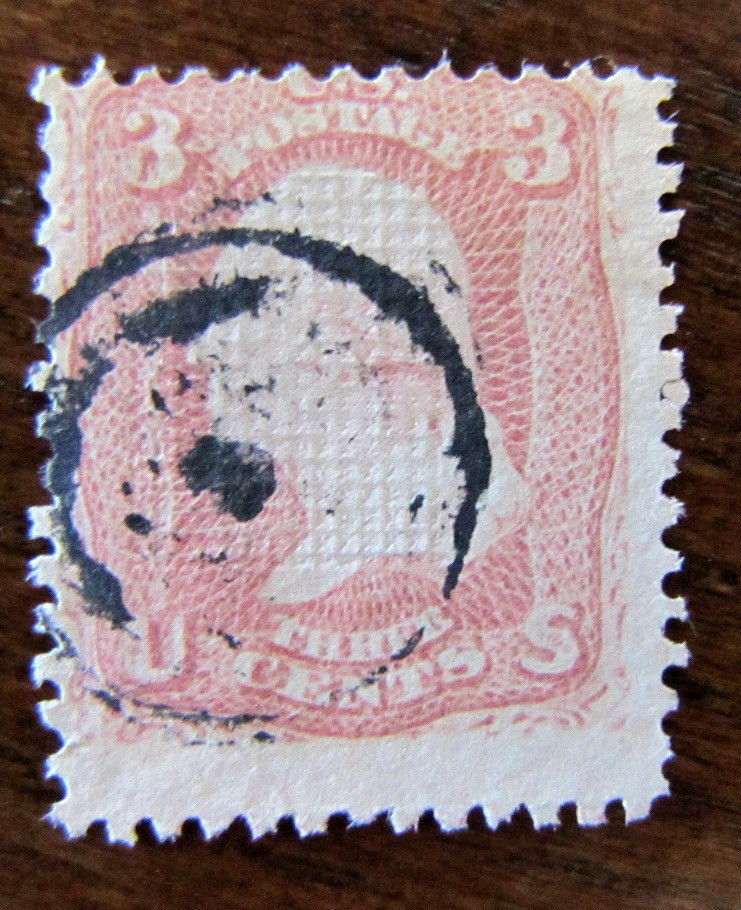 |
|
Send note to Staff
|
Ryan = HDNAC = DNA = HDC = Hysterical DNA Collector = Historical DNA Collector = me who just loves stamps :) |
| Edited by Historical DNA Collector - 02/28/2015 12:03 pm |
|
|
Replies: 34 / Views: 6,726 |
|




 Posted 02/17/2015 8:51 pm


