Stamp Community Family of Web Sites
Thousands of stamps, consistently graded, competitively priced and hundreds of in-depth blog posts to read


Stamp Community Forum
 
Username:
Password:
Save Password
Forgot your Password?

This page may contain links that result in small commissions to keep this free site up and running.

Welcome Guest! Registering and/or logging in will remove the anchor (bottom) ads. It's Free!

No Grill On Sc#114? Vs 125?

 
To participate in the forum you must log in or register.
Author Previous TopicReplies: 7 / Views: 2,521Next Topic  
Valued Member
324 Posts
Posted 07/24/2015   11:10 pm  Show Profile Bookmark this topic Add lukusw to your friends list Get a Link to this Message
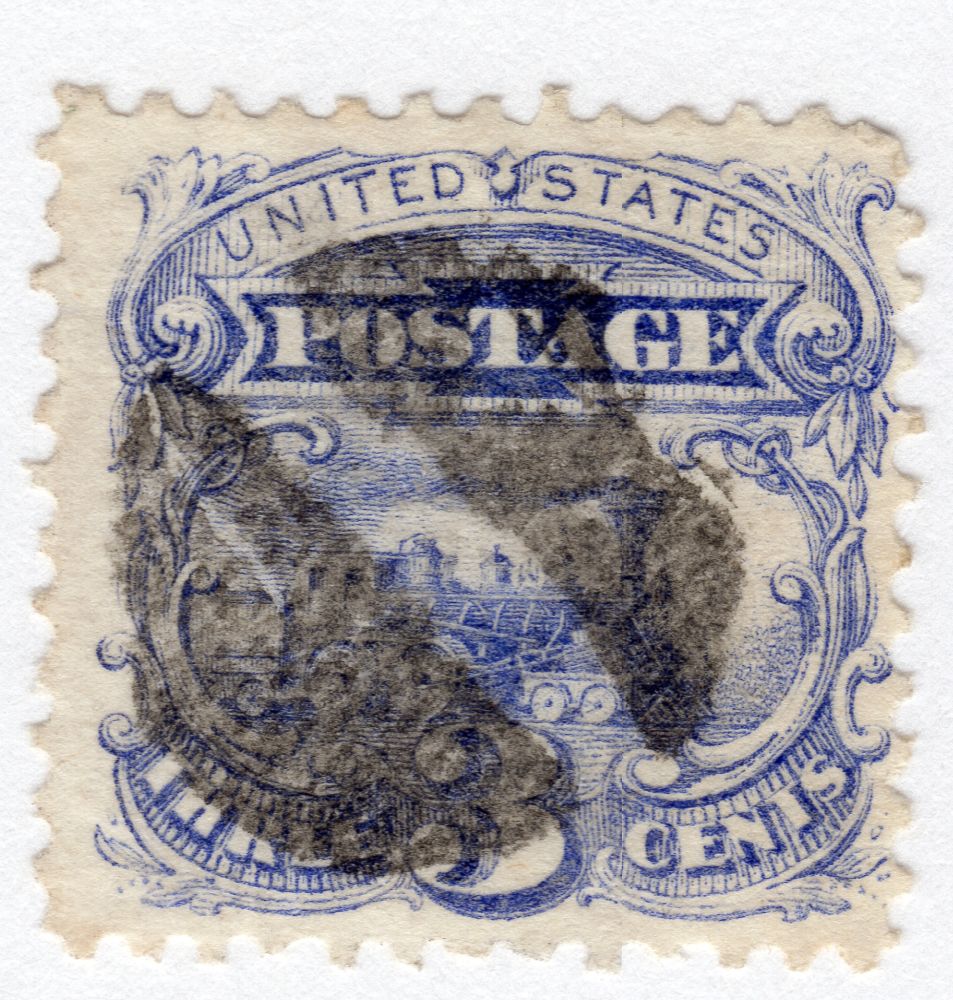
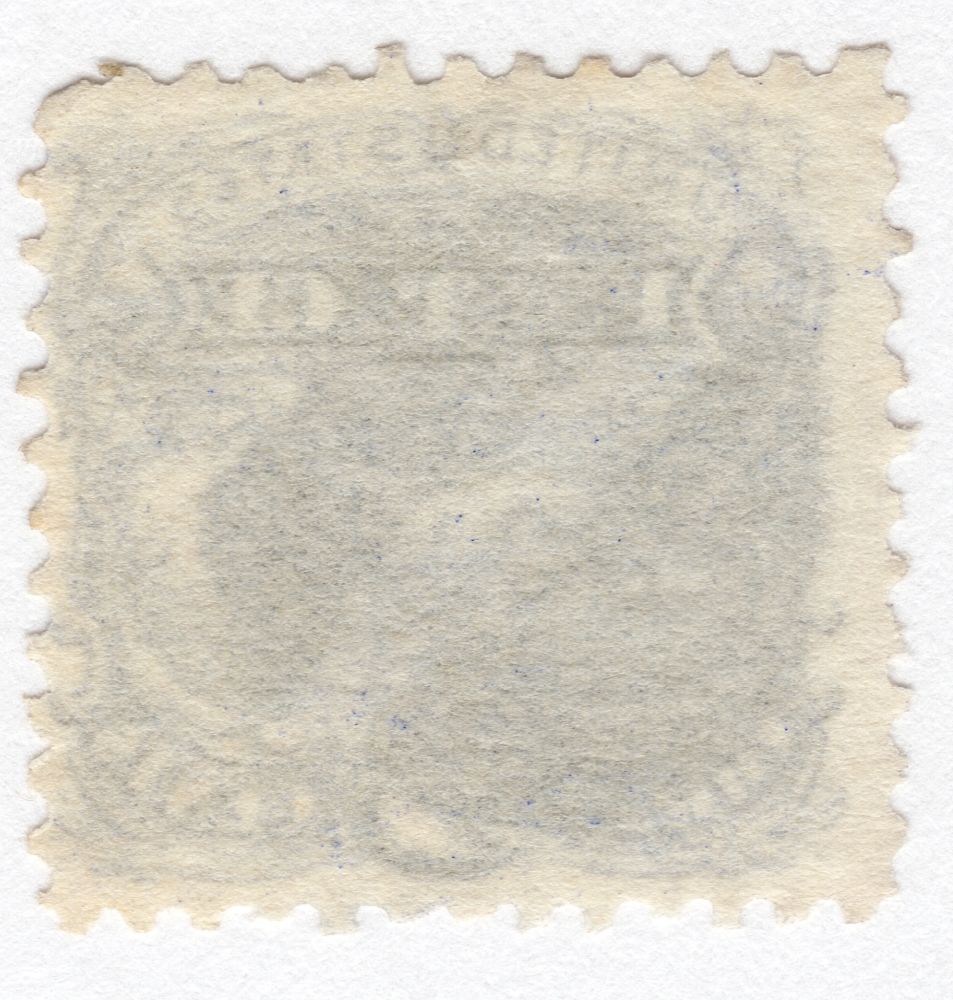
I have a #114 design stamp that I can find no evidence of a grill on the back. It don't know if it is a #125 Re-issue, because it doesn't seem to have a strong vivid color or design (but I have only rarely seen re-issues in person so I definitely could be wrong). And apparently 114a (w/o grill) is really rare...

so, I assume I'm missing something here. Any tricks to finding faint grills or slight partial grills when they are not readily evident?

Send note to Staff

Pillar Of The Community
United States
6661 Posts
Posted 07/25/2015   06:08 am  Show Profile Bookmark this reply Add stallzer to your friends list  Get a Link to this Reply
Dip it.
Send note to Staff  Go to Top of Page
Valued Member
United States
466 Posts
Posted 07/25/2015   08:56 am  Show Profile Bookmark this reply Add Crouse27 to your friends list  Get a Link to this Reply
I think I can make out three horizontal grill points that are weak in the bottom right quadrant toward center. Nice clear scan.

Just a guess here, but did you try applying lighting from multiple angles including from a side edges of stamp? Trying to maximize contrast across the stamp from several angles might make a few points pop out better.

Another guess, but I imagine 114s have been ironed to make them appear non-grilled. With a paper thickness micrometer this could be determined as compared to several grilled reference 114's.
Send note to Staff  Go to Top of Page
Valued Member
324 Posts
Posted 07/25/2015   09:42 am  Show Profile Bookmark this reply Add lukusw to your friends list  Get a Link to this Reply
Stallzer, dip it in watermark solution or just straight water?

Crouse27, thanks for the tips! I tried just eyeballing it at different angles and didn't see anything obvious, but I will do it again looking at the area you mentioned.

Thanks for the help!
Send note to Staff  Go to Top of Page
Pillar Of The Community
United States
937 Posts
Posted 07/28/2015   10:52 pm  Show Profile Bookmark this reply Add Historical DNA Collector to your friends list  Get a Link to this Reply
stallzer suggests one method which utilizes watermarking solution (for example Ronsonol lighter fluid) to help see a grill. Another method is using graphite and smearing it on the reverse to highlight a grill. There are good and bad aspects to using graphite to help see a grill. Search around on this forum to find more opinions on the pros and cons about using graphite.

As for just you seeing (not trying to show us) a grill, oblique lighting is very helpful. This means to hold a stamp with a light source behind it. This is what Crouse27 is describing. Rotate it so that the plane/flat view of the stamp points towards the light source. In essence you are looking for shadows from the grill which sticks up slightly from the flat surface of the stamp.

Please don't hesitate to ask for further clarification or how to utilize any of the above methods.

Send note to Staff  Go to Top of Page
Ryan = HDNAC = DNA = HDC = Hysterical DNA Collector = Historical DNA Collector = me who just loves stamps :)
Valued Member
324 Posts
Posted 08/01/2015   09:18 am  Show Profile Bookmark this reply Add lukusw to your friends list  Get a Link to this Reply
Hist. DNA -- thanks for the clarification. I'll try this when I get some time this weekend.
Send note to Staff  Go to Top of Page
Valued Member
United States
447 Posts
Posted 08/01/2015   2:30 pm  Show Profile Check dcaraz1949's eBay Listings Bookmark this reply Add dcaraz1949 to your friends list  Get a Link to this Reply
Hi lukusw, I was sure earlier this year that I had found a #124 mint original gum, never hinged.
An experienced dealer at the NYC ASDA Dealer Show showed me the bleached but faint "X" cancel that showed on the back with watermark fluid, explained how the stamp is often ironed to remove the grill, and re-gummed.
Color me a bit smarter after my "education".
Send note to Staff  Go to Top of Page
Rest in Peace
United States
205 Posts
Posted 08/01/2015   4:03 pm  Show Profile Bookmark this reply Add Tipzi to your friends list  Get a Link to this Reply
This might be of some help: the paper grain of the 1875 reissue is oriented differently than on the 1869 regular issue, so shrinkage is in a different direction. I heard this mentioned a long time ago but only recently got around to looking into it myself. I've found that the #125 is about a half millimeter taller and a quarter millimeter narrower than the regular issue. A half millimeter is about half a perf hole diameter so is noticeable. What happens is that all the stamps print the same size but as the paper dries it shrinks - across the grain, I believe. Same issue with flat-plate booklet pane singles appearing to be rare rotary press varieties - until one notices they are not just taller or wider on one direction but shorter or narrower in the other direction (rotary impressions are either taller or wider due to bending the plates into cylinders but remain unchanged in the other dimension).

Same difference for the 1875 reissues of the 1861 issue, except the reissue is noticeably shorter and a tiny bit wider than the regular issue. If you look at enough 1875 reissue (Scott #102 through #111) you begin to see how much more square in aspect they appear than the regular issue. This is significant because a sheet of 200 stamps is rectangular so there's only one way to orient the paper. It has to be manufactured differently for the grain to have a different orientation. Evidentially the paper used in 1875 for the small reissue quantities was not manufactured the same as for the 1861 and 1869 general issues.
Send note to Staff  Go to Top of Page
  Previous TopicReplies: 7 / Views: 2,521Next Topic  
 
To participate in the forum you must log in or register.

Go to Top of Page

Disclaimer: While a tremendous amount of effort goes into ensuring the accuracy of the information contained in this site, Stamp Community assumes no liability for errors. Copyright 2005 - 2026 Stamp Community Family - All rights reserved worldwide. Use of any images or content on this website without prior written permission of Stamp Community or the original lender is strictly prohibited.
Privacy Policy / Terms of Use    Advertise Here
Stamp Community Forum © 2007 - 2026 Stamp Community Forums
It took 0.32 seconds to lick this stamp. Powered By: Snitz Forums 2000 Version 3.4.05
