| Author |
 Replies: 15 / Views: 1,872 Replies: 15 / Views: 1,872 |
|
|
Valued Member
Germany
284 Posts |
|
|
|
|
Valued Member
United States
82 Posts |
|
|
Pillar Of The Community
United States
2555 Posts |
|
|
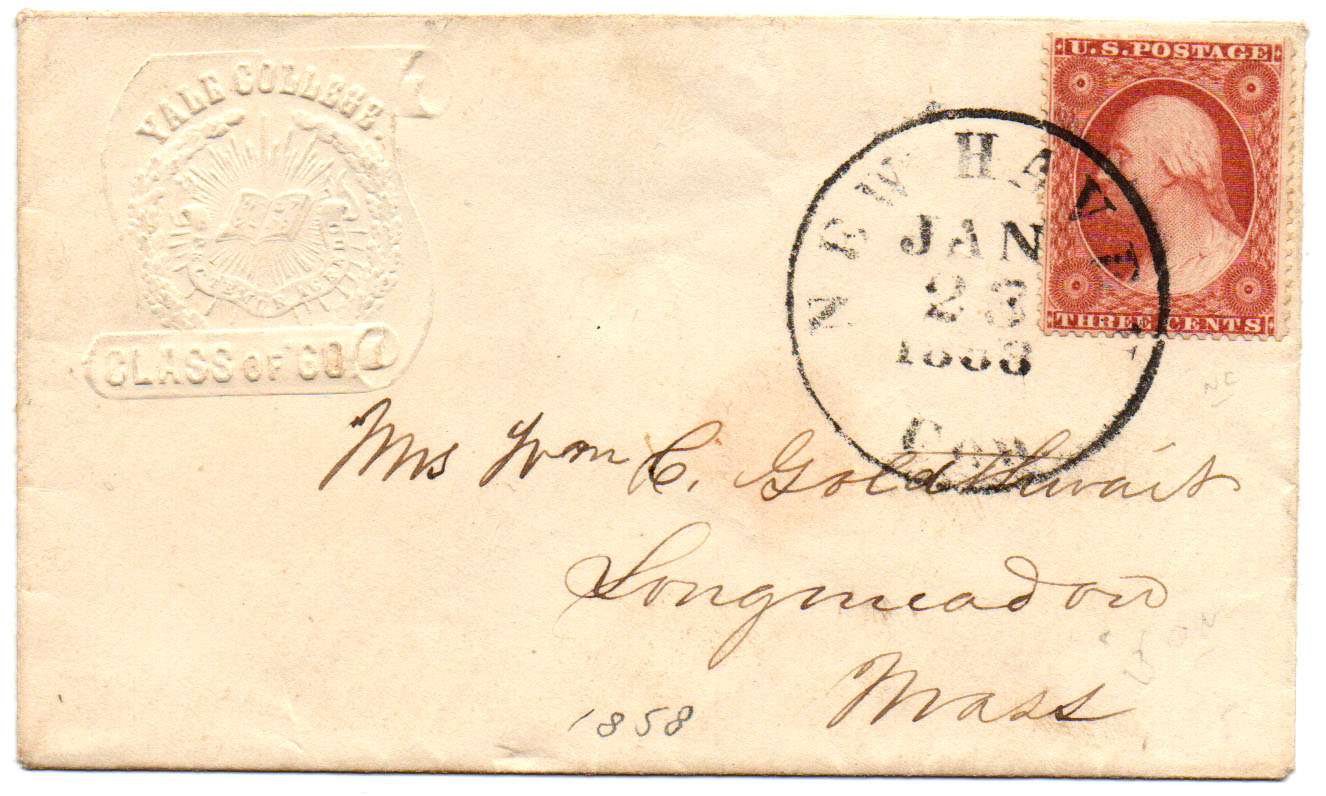
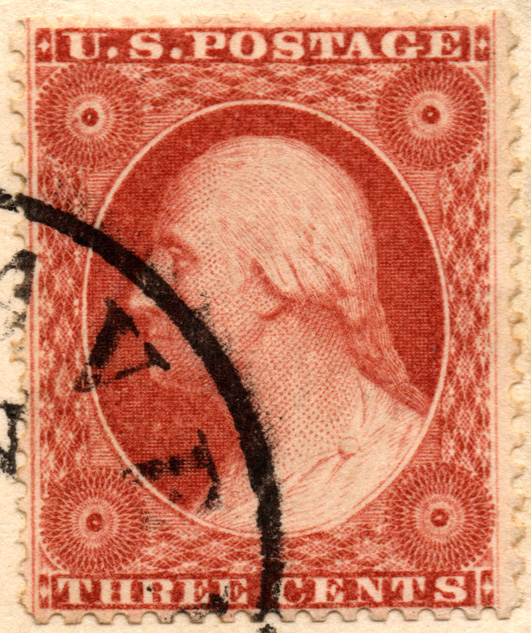
On my monitor I see brownish carmine. There were some orange brown printings in 1858 but unless the actual color is dramatically different than what I am seeing, there is no way it could be OB. The OB shade on #26 is rare. |
Send note to Staff 
|
|
|
Valued Member
Germany
284 Posts |
|
|
Pillar Of The Community
United States
937 Posts |
|
|
Beautiful cover, but I agree with sinclair2010 that it is not orange-brown. Especially because of the 1853 date. |
|
Send note to Staff
|
Ryan = HDNAC = DNA = HDC = Hysterical DNA Collector = Historical DNA Collector = me who just loves stamps :) |
|
|
Pillar Of The Community

United States
1773 Posts |
|
|
Valued Member
Germany
284 Posts |
|
|
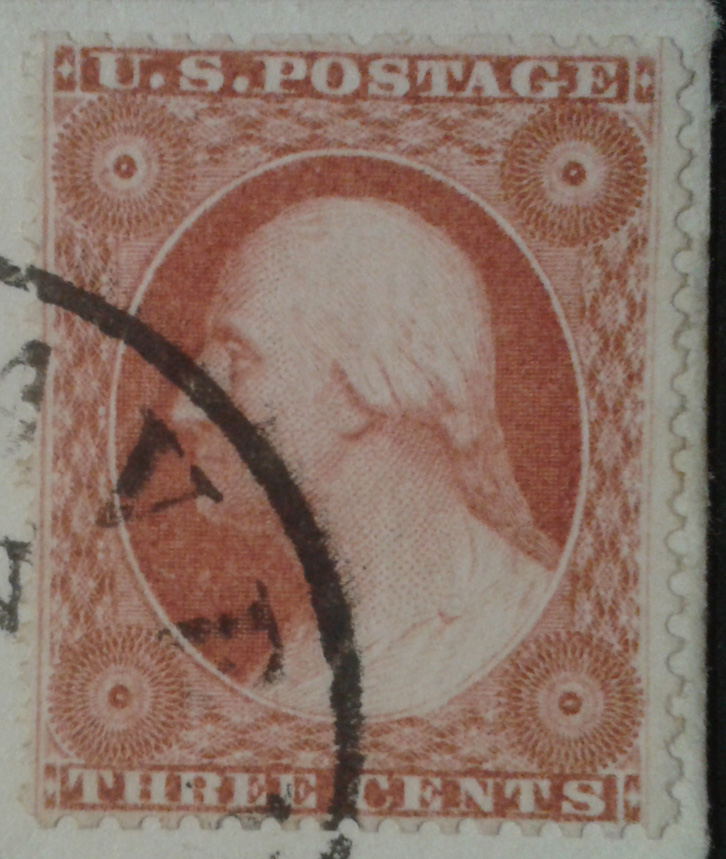
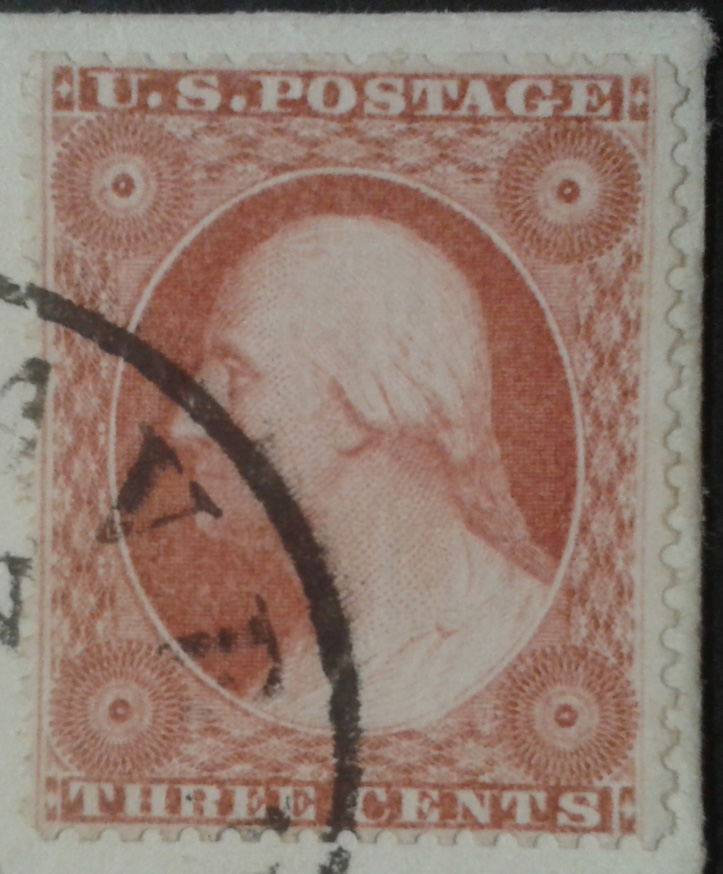
thanks for your help. I have scanning with #10 and this stamp 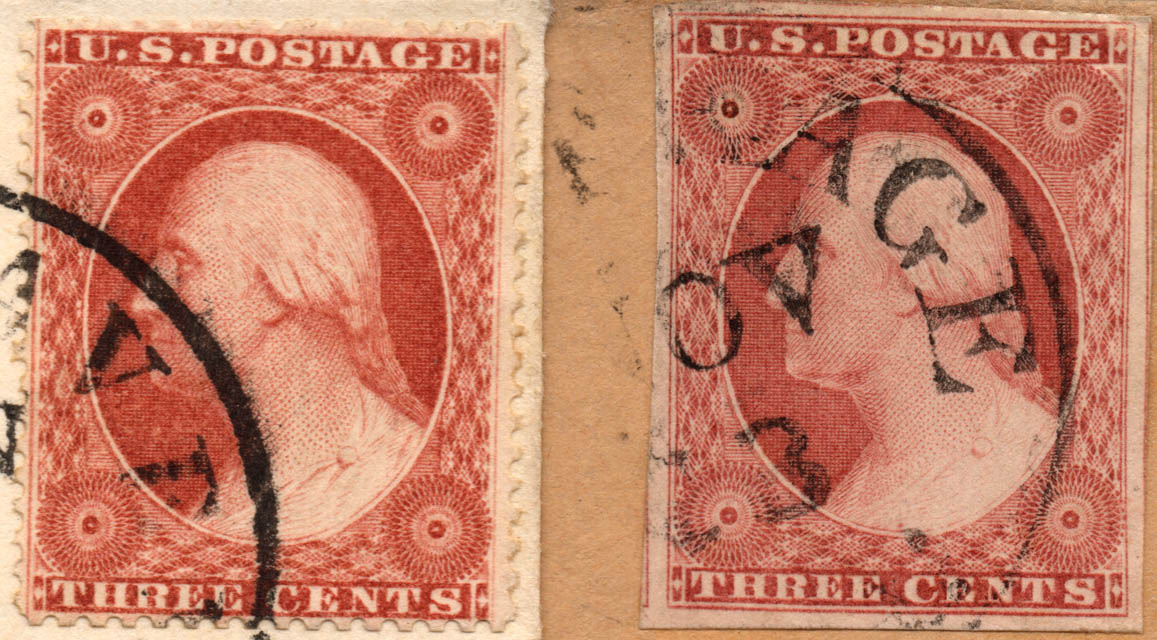 and with #10 to stamp from 11/16/1858 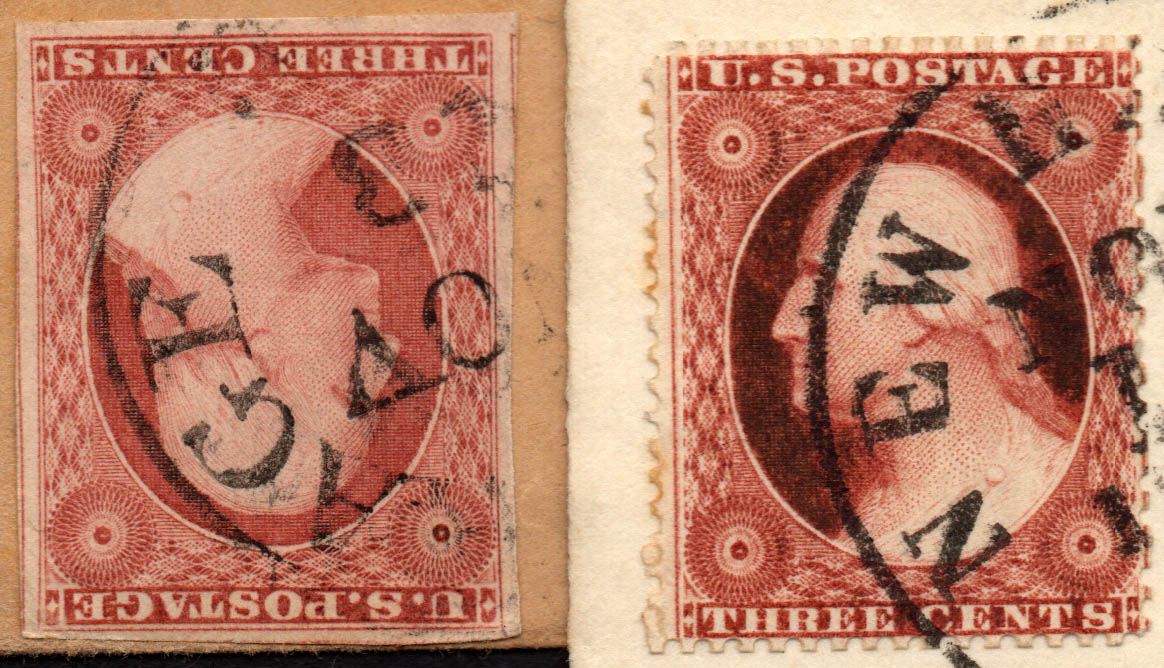 |
|
Send note to Staff
|
|
|
Pillar Of The Community
United States
2555 Posts |
|
|
Are you sure the stamp you think is a #10 is actually a #10. By the way, the stamp has inner lines so would be a Type II, Scott #10A using the current classification system.
Type I has four outer framelines and no inner lines.
Type II has four outer framelines and at least one inner line recut, even if only partially recut.
Type III has framelines along the side of the stamp and are not unbroken between stamps. The framelines are continuous from the top of the plate to the bottom of the plate. There are no framelines at the top or bottom of the stamp.
Type IV is the same as Type III but the framelines are broken between each stamp. |
|
Send note to Staff
|
|
|
Valued Member
Germany
284 Posts |
|
|
Pillar Of The Community
United States
2948 Posts |
|
|
Quote:
Type I has four outer framelines and no inner lines.
Type II has four outer framelines and at least one inner line recut, even if only partially recut. I tried to illustrate what sinclair2010 listed. The first stamp below is a type I imperferate. You can see it has the outer frame lines, both sides, and top and bottom. Then note, it does not have inner frame lines on either side. 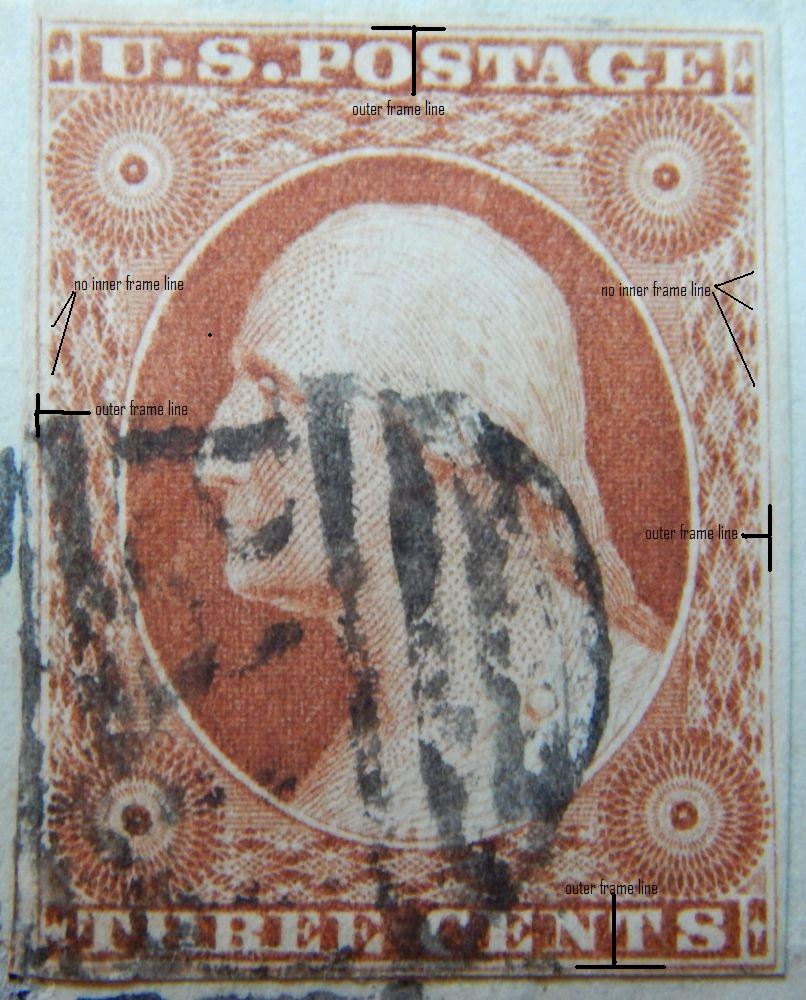 The stamp below, I have shown a type II. You can see this stamp has the inner lines that the above stamp lacks. I've marked the right side for reference, You can plainly see the left side also has the inner frame line. 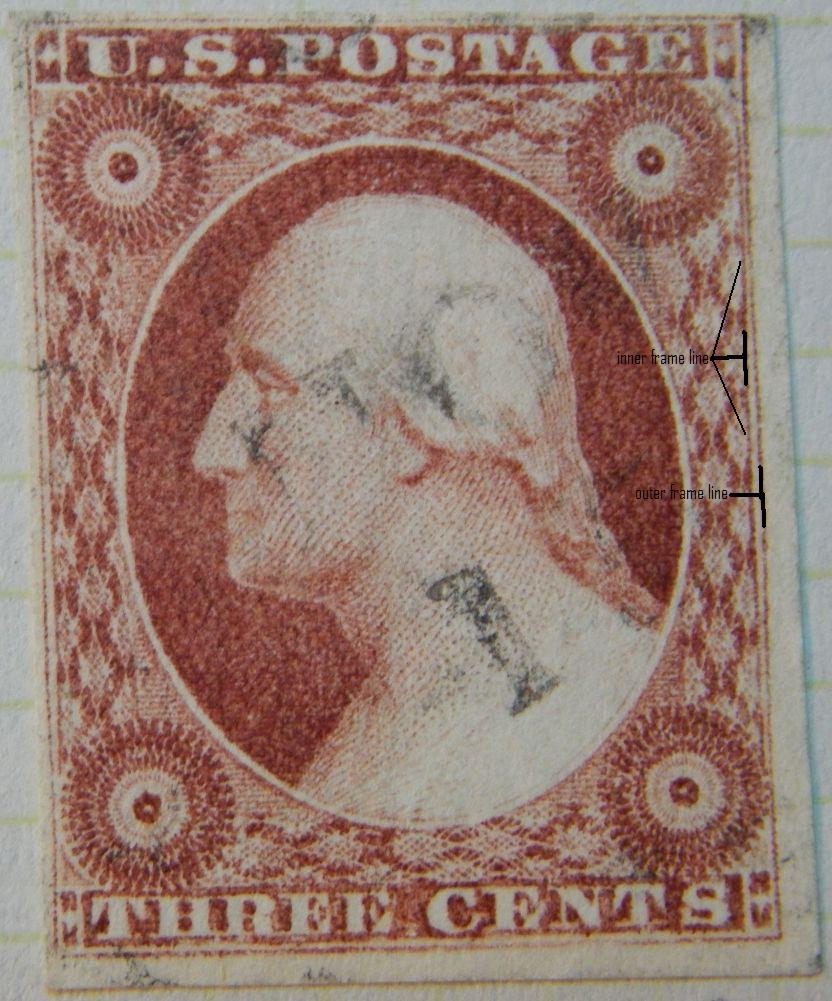 |
|
Send note to Staff
|
| Edited by stampcrow - 11/08/2015 10:46 am |
|
|
Pillar Of The Community
571 Posts |
|
|
first row stamp on right (type 11), isn't it the exact same stamp as the left side on bottom row upside down? |
|
Send note to Staff
|
|
|
Valued Member
Germany
284 Posts |
|
|
the right top row stamp is left stamp bottom row = #10 typ II Orange Brown
i to wonder about color from #26 |
|
Send note to Staff
|
|
|
Pillar Of The Community
United States
2948 Posts |
|
|
Imperforate 3 cent 1851-57 Scott #10 are Type I only. see my top stamp in post above.
dittrich, the imperforate stamp you have pictured, is a type II. See my second stamp in post above. Type II would be a Scott #10A or #11A. |
|
Send note to Staff
|
| Edited by stampcrow - 11/08/2015 11:44 am |
|
|
Pillar Of The Community
United States
937 Posts |
|
|
KRelyea,
Thank you. I finally found a way to remove my foot from my mouth. Yes, 1858 makes much more sense considering it has perforations. Despite noticing that the date could only be 1858, my tired brain still typed in the wrong one. Doh!
dittrich,
Beautiful cover and stamp! |
|
Send note to Staff
|
Ryan = HDNAC = DNA = HDC = Hysterical DNA Collector = Historical DNA Collector = me who just loves stamps :) |
|
|
Valued Member
Germany
284 Posts |
|
|
Pillar Of The Community
United States
1773 Posts |
|
|
No problem DNA. Actually my Alexander Simpson "US Postal Markings 1851-1961" reports the only 1853 yrdate cancels are from New York and Greenville Maine. |
|
Send note to Staff
|
|
| |
Replies: 15 / Views: 1,872 |
|



 Posted 11/07/2015 5:14 pm