| Author |
 Replies: 15 / Views: 3,014 Replies: 15 / Views: 3,014 |
|
|
Valued Member
China
460 Posts |
|
|
|
|
Pillar Of The Community
United States
6668 Posts |
|
|
Pillar Of The Community
United States
8956 Posts |
|
|
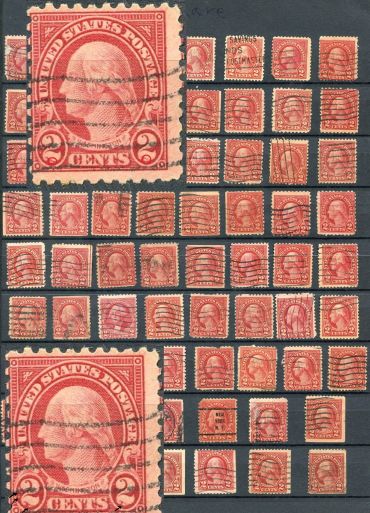
Same, I believe you mean if there is variation between all stamps on the page? Yes, quite a bit. Try http://stampsmarter.com and go to the Washington/Franklin site. It has a great way of identifying all of the different ones. Peter |
Send note to Staff 
|
|
|
Valued Member
China
460 Posts |
|
|
Pillar Of The Community
United States
8956 Posts |
|
|
What are you asking? I see you are putting a circle around the "2", but it is too small. Can you post a scan of just that stamp, or even better an enlargement of that area?
Peter |
|
Send note to Staff
|
| Edited by Petert4522 - 07/28/2016 10:55 am |
|
|
Pillar Of The Community
United States
8956 Posts |
|
|
You know, it would be nice if you'd explain yourself to start with. But I guess you added arrows and that must translate into "what are these white spots". They are just places where the ink did not get to for one reason or another. Maybe a foreign object on the plate like pieces of paper or underinking of the plate. You most likely won't find another one just like it, so it is not an error. More like an oddity or a freak.
I hope this is what you were asking?
Peter |
|
Send note to Staff
|
|
|
Valued Member
China
460 Posts |
|
|
Hello
Petert4522: Thank you for the information.
Yes, this is what Ovsd.
Alda spots under number two.
I really do not ask about the cause of these spots. But ask if it was commonplace?
Several years ago I was trying to find a postage stamp has a white spots under the number two, but I did not find. |
|
Send note to Staff
|
|
|
Valued Member
China
460 Posts |
|
|
Pillar Of The Community
United States
8956 Posts |
|
|
If you ask me if it is common? Yes and no - read my last post. If you know what causes it you also know more or less how common it is. A dropout in the ink is fairly common, but no two are alike.
There are varieties that are more common, but they have the white spots on top of the "2". Those varieties are called "Cap on left 2" and "Cap on right 2". Lots of studies have been made about these. If you like to know more about those please use the search function on this page and search for cap on 2.
Peter |
|
Send note to Staff
|
|
|
Pillar Of The Community
United States
1414 Posts |
|
|
Petert4522: In what way is this relevant to the Fourth Bureau issue? If there is extra ink in the bottom numeral 2 on the left or right, check the Encyclopedia of Plate Varieties on U.S. Bureau-Printed Postage Stamps by Loran C. French. Lack of ink may be related to poor inking or relief breaks in the transfer roller. In the case of a relief break, the variety will be constant on the plate. Extra ink may be due to some printing issue or a plate variety like a double or shifted transfer, a reentry, plate damage or a cracked plate. Changes to the plate will show up in later printings. Also check the United States Stamp Society web site: http://www.usstamps.orgPost first, research later may not be helpful to budding philatelists. |
|
Send note to Staff
|
|
|
Valued Member
China
460 Posts |
|
|
Pillar Of The Community
United States
6668 Posts |
|
|
Rest in Peace
United States
920 Posts |
|
|
There is something not right with this post. The 2 stamps enlarged are the same stamps, down to the smallest perf fuzz but with the detail under the '2's'changed. |
|
Send note to Staff
|
|
|
Moderator

United States
5107 Posts |
|
|
Quote:
The 2 stamps enlarged are the same stamps, down to the smallest perf fuzz but with the detail under the '2's'changed. That was part of the initial problem. In the first post, it is the same stamp, but the OP tried to circle the issue in the top picture, and point to the issue in the bottom picture. (The circles are in RED, further confusing things.) However, since he didn't explain what he was doing, there was a lot of confusion. I think there is only one stamp in question, and that is one in the later posting. |
|
Send note to Staff
|
|
|
Pillar Of The Community
United States
1946 Posts |
|
|
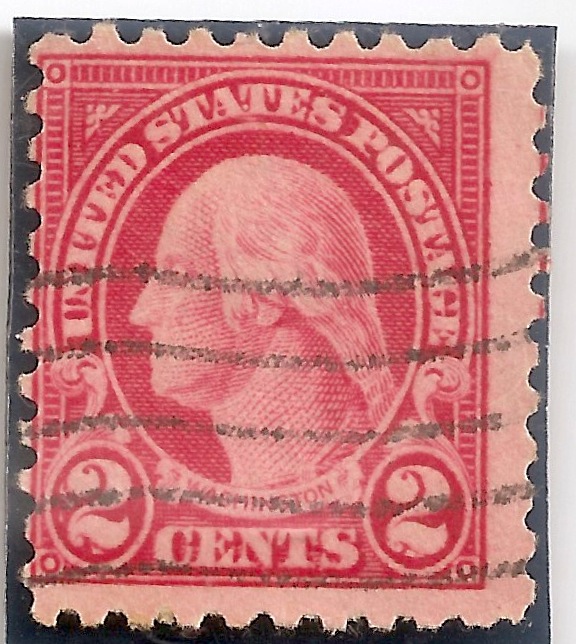
@same - two days ago you posted a larger image of the stamp about which you created this thread. So far I have not seen a response to the larger image. I will attend to that now.
I understand that you want to know about the white spots below the right and left numeral "2." As Peter and Clark have said, spots like those can come from two different types of production variations: relief breaks, and printing anomaly. Philatelists are generally more interested in the first problem than the second. Relief breaks result from the crumbling of the metal of a stamp design as it exists on a transfer roll. Because a single relief may be used to produce many dozens of images on a printing plate, a relief break may appear many times on a single plate. A relief break changes over time, but usually not all at once. Interested specialists will try to get examples of all known stages of the breakup.
Printing flaws are much more random, unpredictable, and are not constant. The most common source of printing flaws is uneveness in the wiping of excess ink on the surface of a plate. A telltale sign that a flaw is merely a glitch in printing, and not more serious, is the simultaneous appearance of problems in more than one part of the design.
Your stamp has colorless printing glitches below the numerals, but they are not alone. Also:
to the left of the left numeral "2,"
below the left crossbar of the letter "T" in "UNITED" and also the second "T" in "STATES,"
in the vignette frame below "AT" of "STATES" to name a few.
There are two other features about this stamp that make it almost certain that these problems were the result of something irregular in the plate wiping.
1. Notice that the area in and around the name "WASHINGTON" and the left numeral "2" is paler than the rest of the design. So is the top quarter of the word "CENTS." Not only are these areas paler, but they appear to be a bit smeared and indistinct ("fuzzy").
2. Now look at the right vertical frameline and you will find that ink from the frameline "feathers" out into the right margin in several places. You can see it very clearly in the UR corner. Indeed, the entire surface of paper around the stamp design on all sides has a pinkish cast to it from a light smear of ink that was left on the plate by the wipers.
Understood as a printing variety due to uneven plate wiping, we can say that finding an exact duplicate will be all but impossible, but finding other examples of the same type of stamp will not be difficult at all. They are numerous.
|
|
Send note to Staff
|
|
|
Valued Member
China
460 Posts |
|
| |
Replies: 15 / Views: 3,014 |
|




 Posted 07/28/2016 10:08 am