| Author |
 Replies: 8 / Views: 3,877 Replies: 8 / Views: 3,877 |
|
|
Valued Member
United States
54 Posts |
|
|
Hi Guys, I put this stamp aside, figuring it was a 367 and that possibly something had been spilled on it or it was soaked off of brown and the paper turned yellow. Then I was looking through some auction sites, I sea a listing for a stamp on "bluish" paper and saw that the stamp in the picture had yellowed like my stamp. I looked around a little more and read a short article about tiny bits of coal being embedded in bluish paper, which is apparent on my stamp. Was my initial instinct correct, a bad 367? Or, could this be a 369? 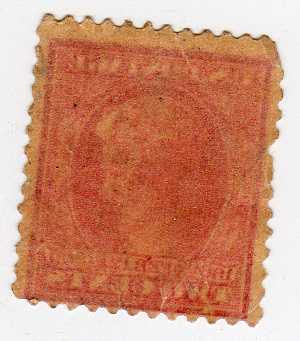 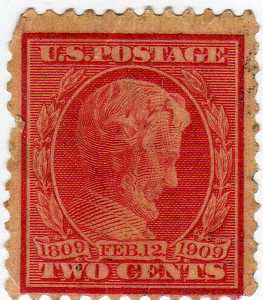 Thanks, Jon |
|
Send note to Staff
|
|
|
|
|
Pillar Of The Community
USA
1881 Posts |
|
|
Hi Jon....... Sorry.....it's not a #369........That bluish paper group looks very different compared to normal stamp paper. (image borrowed from ebay) 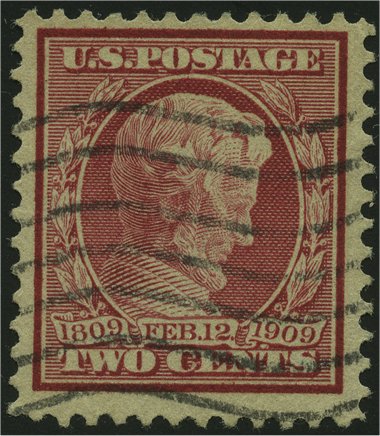 |
Send note to Staff 
|
|
|
Valued Member
United States
54 Posts |
|
|
Thanks Tom,
I read a couple of things and started to get my hopes up. But on a positive note I finally figured out how to get my scanner to work :) |
|
Send note to Staff
|
|
|
Valued Member
Australia
312 Posts |
|
|
It's extremely difficult to identify stamp or paper shades/types from scans though, as everyones scanner and monitors are different and won't display the same. The below stamp on Stampwants has a PSE cert. as a 369 bluish paper, and you can see how different it is to the scan from ebay.  So my conclusion is that I can't tell from the scan.  Balf |
|
Send note to Staff
|
|
|
Pillar Of The Community
United States
6756 Posts |
|
|
I would not buy a #369 without a certificate. As Balf points out, scans are pretty meaningless when it comes to "blued" paper. Just tweak the tinting and any stamp looks like it's on "blued" paper. A certificate is a definite must for a used #369, as the Scott catalog price is italicized for correct period of use copies. Quote:
I looked around a little more and read a short article about tiny bits of coal being embedded in bluish paper, which is apparent on my stamp. Jonnio, do you have a link or can you provide a reference? That is the first time I've heard of that for #369. I guess my question is, was that article specifically speaking about the blued paper for #369?  k |
|
Send note to Staff
|
|
|
Pillar Of The Community
United States
1947 Posts |
|
|
All illustrations I have ever seen, whether in books or on the computer are problematical. The bluish paper is certainly not obvious and the paper is certainly not blue. The bluish paper is very subtle. I do think that if you buy the stamp from a reputable, experienced, dealer, unused, a certificate is not necessary. Desirable perhaps, but not a must. Used is another story, since it must be a contemporary usage and that may very well require a certificate, since it is not the stamp being certified (although that does come into it), but the correct time frame usage.
Mmmmbalf, is the image you posted supposed to be on bluish paper? If so, maybe it is an artifact of my monitor, but it does not look bluish. It just illustrates my point that an image is not sufficient to identify a bluishpaper stamp. |
|
Send note to Staff
|
| Edited by rohumpy - 10/13/2009 06:54 am |
|
|
Valued Member
United States
54 Posts |
|
|
Quote:
Jonnio, do you have a link or can you provide a reference? That is the first time I've heard of that for #369. I guess my question is, was that article specifically speaking about the blued paper for #369? I found the reference to the specks of coal here: http://www.stampnotes.com/Notes_fro...stnote72.htmProblem with the stamp is that I didn't buy it as a 369. I found it mixed in a collection that was being unloaded at a show by a collector's widow. I don't think a collector would've missed a 369, but other items were stuck in glassines with common stamps. Like a LO6 I found mixed in with about 50 or so #1402. If it help the paper is much thinner and crisper that the paper for the other 367 that I have. |
|
Send note to Staff
|
|
|
Pillar Of The Community
United States
6756 Posts |
|
|
Thank you for the link Jonnio!
The reason the "bluish" paper is hard to see in the scans is also because it's actually supposed to be grayish blue, not true blue. The term "bluish" paper is simple, but slightly misleading.
The stamp is certified not by the paper color, but the paper type. The paper is 35% rag stock instead of 100% wood pulp.
Regarding certification for #369. Yes, if you buy from a reputable dealer, you might feel confident and certification is unnecessary. But the problem arises if you need to sell it (or your heirs try to sell it). As buyers, we are usually not as well-known as the reputable dealer, so that "reputation" factor doesn't carry along with the stamp unless you are a well-known buyer. |
|
Send note to Staff
|
| Edited by khj - 10/13/2009 09:36 am |
|
|
Pillar Of The Community
United States
1947 Posts |
|
|
Oh yes, khj, the problem arises if you want to sell.
If you want to buy a stamp that really needs to be certified what kind of premium would you pay to get the dealer to have it certified? Will a dealer even do that, assuming that the buyer is willing to pay extra? |
|
Send note to Staff
|
|
| |
Replies: 8 / Views: 3,877 |
|




 Posted 10/12/2009 4:36 pm


