| Author |
 Replies: 20 / Views: 9,498 Replies: 20 / Views: 9,498 |
|
Pillar Of The Community
USA
1881 Posts |
|
|
Hello everyone..... Just thought you might like to see a sample of the reverse printing described in Scott for the Overrun Countries. Top stamp is the common print......bottom reverse print.  Shading on top of the stripe. 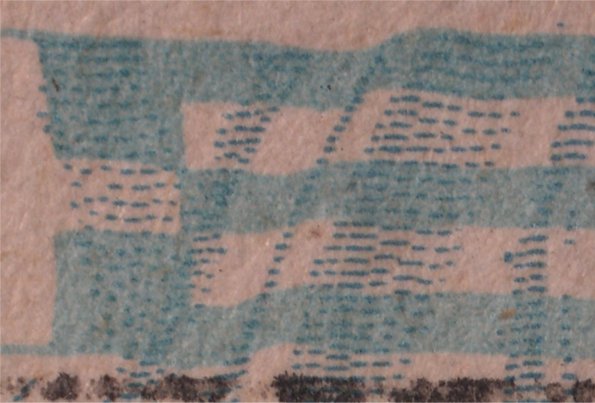 Shading under the stripe. 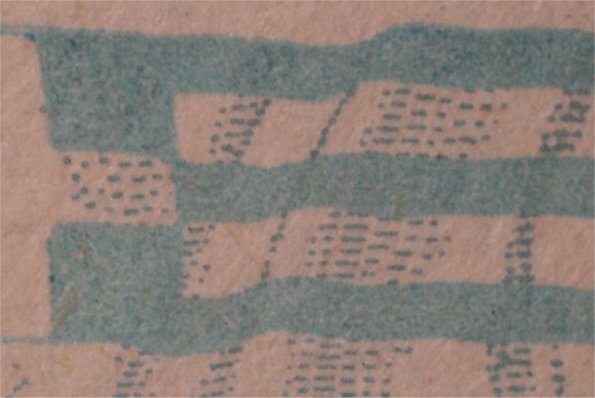 |
|
Send note to Staff
|
|
|
|
|
Pillar Of The Community
United States
6756 Posts |
|
|
Very nicely scanned, Tom!! The reverse printing on the Korea issue is the hardest to identify. Congratulations and well-done!  k |
Send note to Staff 
|
|
|
Pillar Of The Community
USA
1881 Posts |
|
|
Hi Kim......
Thanks.......but I use photos, not scans..........haven't seen a scanner yet that can compete with a camera for really close work.. |
|
Send note to Staff
|
|
|
Pillar Of The Community
United States
6756 Posts |
|
|
Agreed! A good camera captures more than a scanner can. Unfortunately, I have neither a good camera nor a good scanner nor good software. I do wish I had my Macintosh back instead of being stuck on the PC now. Guess that's what happens when you spend too much money on stamps.  k |
|
Send note to Staff
|
| Edited by khj - 10/13/2009 11:16 pm |
|
|
Pillar Of The Community
2664 Posts |
|
|
if youa re feeling bad K I can help you spend even more money on stamps :) |
|
Send note to Staff
|
|
|
Pillar Of The Community
United States
1947 Posts |
|
|
Pillar Of The Community
2664 Posts |
|
|
Pillar Of The Community
USA
1881 Posts |
|
|
rohumpy.....
Reverse printing as described in Scott is changing the order of printing......flag/shading....shading/flag.
Seems to me that it could be described more accurately as......reverse order of printing colors.....but that would take up too much room in the listings so reverse printing was probably used to save space.
I wonder if other stamps from that time period from the same presses were also printed in reverse order ?
|
|
Send note to Staff
|
|
|
Pillar Of The Community
2664 Posts |
|
|
Valued Member
Canada
208 Posts |
|
|
nr-notrare, I am so glad that you said you used a cammera. It got me to try and see if my camera will do good close ups of stamps. And yes it does. So I think I will be using it more often as well.
I had read about reverse printing, but I never knew what it was. Thanks for sharing. I have learned so much in the last few weeks since joining this sight. It's great. |
|
Send note to Staff
|
|
|
Pillar Of The Community
USA
1881 Posts |
|
|
Hi Doodles...... Nice to know that at least some of what we post here actually helps. My only camera is a Nikon 4300 cool-pix digital, not the best for scenery or wildlife shots but for close-up it works well......But, I have been able to push the limits of it's capabilities by attaching it to my telescopes and getting some very decent wildlife shots and some fantastic shots of the moon and I've actually been able to locate Jupiter along with it's 4 largest moons, not a great photo, but I was excited just to actually locate it. Also, by creating my own homemade lenses from broken binoculars I'm able to get some incredible close-up shots of stamp detail and paper structure. Also, by attaching it to my microscope I've been able to get photos of things as small as pollen. I've been working on a photo science book for kids that is basically a very close look at everyday common items like paper, pollen and common table salt. A few samples......if anyone would like to see more I could send larger pictures through email.  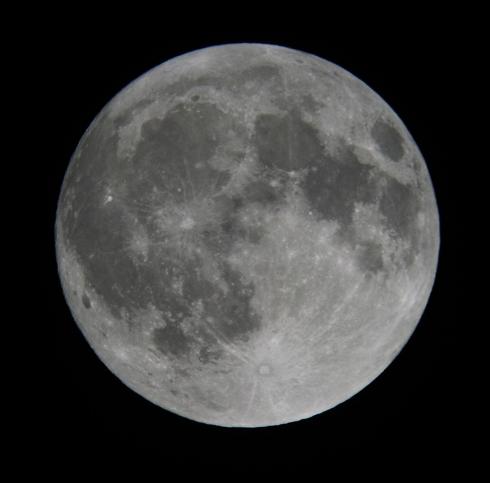  from my Penny Black.  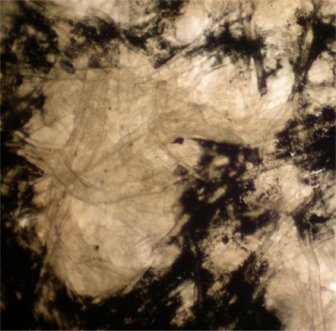 Sunflower pollen.  Salt.  |
|
Send note to Staff
|
|
|
Pillar Of The Community
United States
6756 Posts |
|
|
Quote:
I wonder if other stamps from that time period from the same presses were also printed in reverse order ? The other stamps of this time period were either monocolor or bicolor. This issue was special because it was 4-color, and the printer did not divulge much of the printing process. As a result, there are numerous printing variations and printing flaws for this series. Although there was a procedure for the subsequent printing sequence, obviously the printer was not very rigorous in following that sequence. Ironically, on the Greece stamp that Tom showed, the reverse printing (pale blue stripes over pale blue shading) is actually the common printing, whereas the correct printing sequence (pale blue shading over the pale blue stripes) is actually the less common! This is only true for this stamp in that series. In the other stamps, the reverse printing is less common. |
|
Send note to Staff
|
|
|
Pillar Of The Community
USA
867 Posts |
|
|
Hi Tom,
What you post always helps. You have come up with some very original methods to use with your camera. Who would have thought of that??
Butch |
|
Send note to Staff
|
|
|
Pillar Of The Community
Canada
1755 Posts |
|
|
Tom:
Thank-you!
I never really understood the reverse printing until now.
David
(...always learning)
|
|
Send note to Staff
|
|
|
Pillar Of The Community
United States
1947 Posts |
|
|
Thanks. It is amazing what you learn here.
I wonder on the modern printings by multiple printers if something similar might not be possible. Or all stamps now printed in one run through the presses no matter how many colors are involved? |
|
Send note to Staff
|
|
|
Pillar Of The Community
2664 Posts |
|
|
yes at least the indian ones are. otherwise we would be crying a lot more at least here we have just gone to the wet offset style of printing |
|
Send note to Staff
|
|
|
Replies: 20 / Views: 9,498 |
|




 Posted 10/13/2009 9:57 pm


