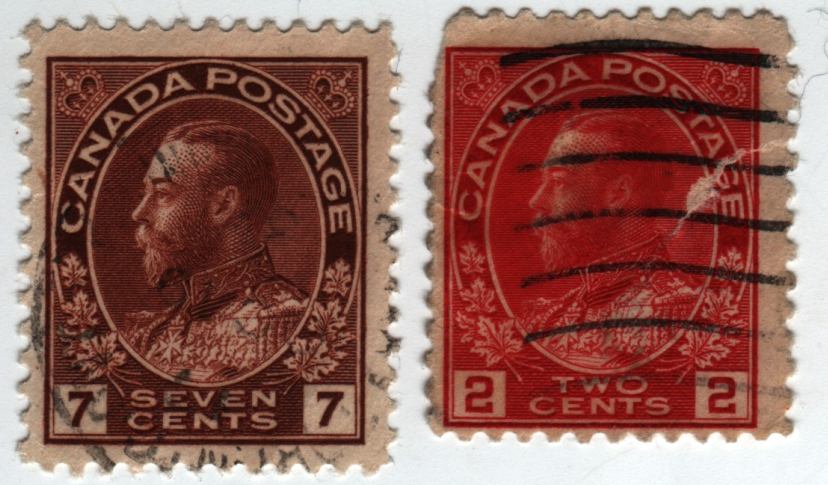
Some of the admiral series were 'wet' printed and some 'dry' printed. That is the paper in the wet type was moist during printing and the gum was applied after the paper dried. With the wet method the paper shrank across the grain of the paper to such an extent that the stamps appear squat or narrow depending on whether the stamps were printed on the horizontal or vertical wove paper. Dry printing was done on, you guessed it, dry gummed sheets of paper and was introduced in 1922.(paraphrased from Unitrade) You 7c is a dry print SC#114. Your 2c is a wet print print #106.
Thanks jamesw...That is great information...Thought it had to have a realistic reason why it was the way it was...There must be tons of them out there and I didn't even realize it.
I saw this thread regarding the dry and wet printings. I have several MNH Admirals and the gum is totally different. On several it looks similar to US gum breakers. Would this be typical of the wet printing gum?
Disclaimer: While a tremendous amount of effort goes into ensuring the accuracy of the information contained in this site, Stamp Community assumes no liability for errors. Copyright 2005 - 2026 Stamp Community Family - All rights reserved worldwide. Use of any images or content on this website without prior written permission of Stamp Community or the original lender is strictly prohibited. Privacy Policy / Terms of UseAdvertise Here





 Posted 01/28/2012 8:47 pm