| Author |
 Replies: 11 / Views: 1,724 Replies: 11 / Views: 1,724 |
|
|
Valued Member
Canada
80 Posts |
|
|
|
|
Valued Member
United States
293 Posts |
|
|
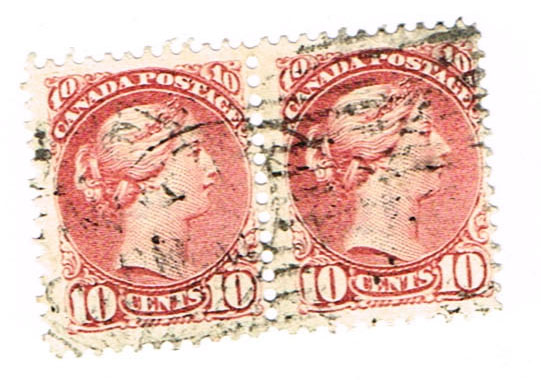
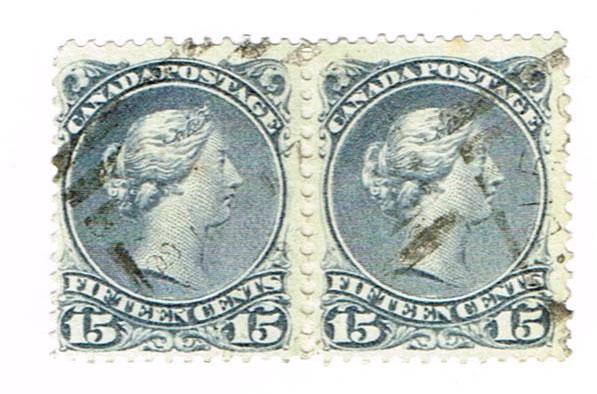
I would keep them together. Not sure how you are mounting or what album you are using but maybe there is a way to include both the stamps.
The pairs add to the stamps in my opinion in many different ways. I do not collect Canada stamps but if I did I would not even think twice about pulling any of these apart. You could damage the stamps and it also takes away from the cancel, etc.
Others will surely chime in on this. |
Send note to Staff 
|
|
|
Pillar Of The Community
United States
2963 Posts |
|
|
Scott catalogues typically adds a 10% premium for pairs as apposed to two singles. Unitrade does not currently list values for multiples, but I think the same rule applies. Multiples are almost always worth more than singles.
I vote to keep them together (esp the 15c large queen).
Brian |
|
Send note to Staff
|
|
|
Rest in Peace
Canada
5701 Posts |
|
|
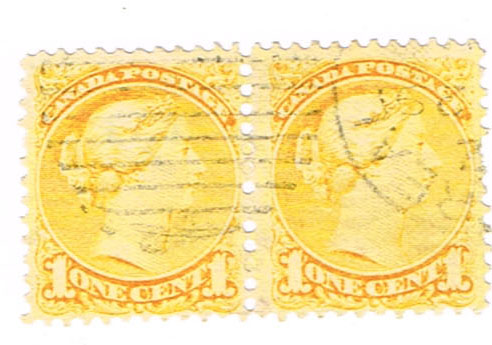
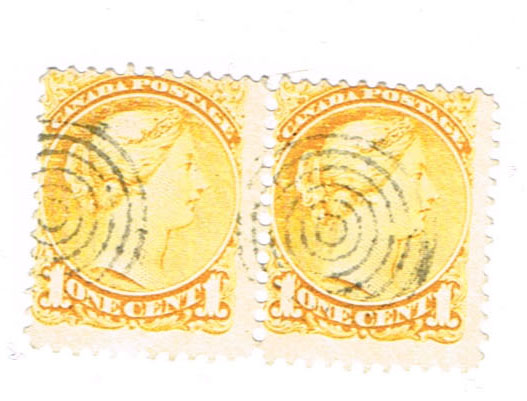
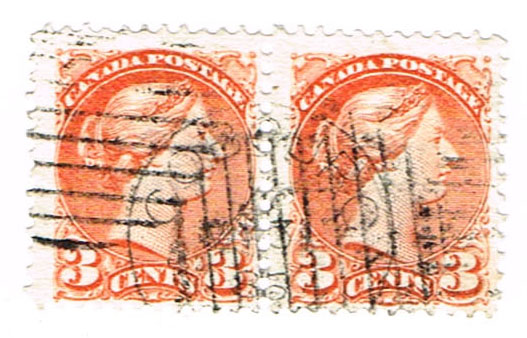
I would keep them together also. Those pairs can be great tools to study the perforations of the small queens. Mystic, can you measure the distance over the perforations of the pairs so that the perforation can be calculated as I did here: https://goscf.com/t/22546#197234I can see the lower right dot on your fourth image, that would make it a #37. Thanks! |
|
Send note to Staff
|
|
|
|
Valued Member
Canada
80 Posts |
|
|
It measures to 23 holes over 36.5mm, which works out to 12.60 over 2 cm. Perhaps a 37d perf 12.5"? |
|
Send note to Staff
|
|
|
Rest in Peace
Canada
5701 Posts |
|
|
Mystic, make sure the first and last holes count as half each. If it is in fact 23, then yes the perforation on the side is 12 1/2. if it is 22 holes then it is 12. |
|
Send note to Staff
|
|
|
|
Valued Member
Canada
80 Posts |
|
|
Ok, did not know to make those half. In that case it is 22 holes over 36.5mm, so 12.05.
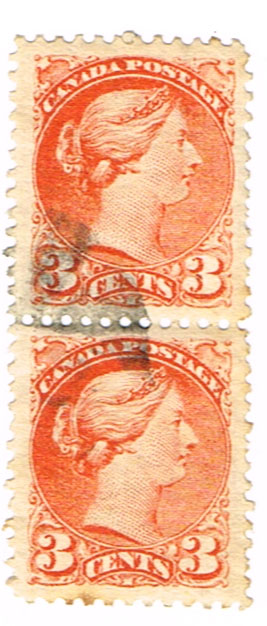
I measured the vertical on the ones in the third image, and I get 26 perfs in 42mm, so 12.38 in 2cm. |
|
Send note to Staff
|
| Edited by mystic226 - 02/06/2012 7:21 pm |
|
|
Rest in Peace
Canada
5701 Posts |
|
|
Pillar Of The Community
Canada
2277 Posts |
|
|
The 1-2-3 cent small queens are relatively easy to find in pairs (although the 37/41 3 centers should be watched as noted by bee see)But the 10c and especially any large queens such as your 15 centers definatly need to be kept as pairs. Very nice examples and please show more. |
|
Send note to Staff
|
|
|
Rest in Peace
Canada
5701 Posts |
|
|
Mystic, if you can do the perf measurement on the other pairs, and check for lower left dots, that would be great. |
|
Send note to Staff
|
|
|
|
Valued Member
Canada
80 Posts |
|
|
Bee See
First 1c - perf 12.00
Second 1c - perf 12.05
10c - perf 11.83
15c - perf 12.04
No dots on any of them. I have many, many more of these blocks, as well as some blocks up to 4 wide and some up to 6 tall. (there is also a 10 wide by 10 tall 6c large queen block with plate number, but it is in a frame behind glass and is really hard to do anything with) I will make a new post when I get time with images and the calculated perfs. |
|
Send note to Staff
|
|
|
Rest in Peace
Canada
5701 Posts |
|
|
Thank you Mystic! I find it odd there are not any plate dots on the 10c, as the perf 11.8 is generally associated with Montreal printings. However, according to Hillson, " Perforations were generally 12 all round [for 2nd Ottawa printings], but 12 x 12.25 (approximate) can be found, probably the more early prints as this combination were in use in the final Montreal years. It is also possible to find some gauging 12 x 11.85." The more I study these stamps, the more complicated they become  |
|
Send note to Staff
|
|
|
| |
Replies: 11 / Views: 1,724 |
|



 Posted 02/06/2012 4:32 pm