Here's a quote from a reply I made earlier on this board to a similar question, but which might be tough for anybody to spot since it was in response to a question about fluorescent ink found on a German stamp.
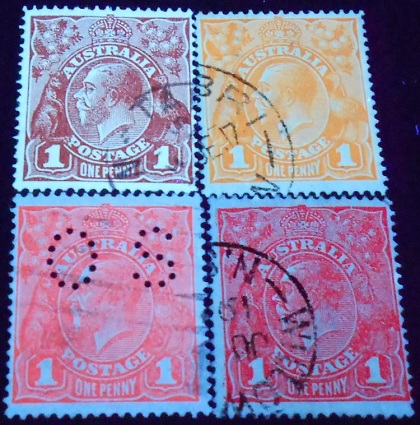
Quote:Natural substances do show fluorescence / phosphorescence, and it's certainly possible that the ink contains a component that fluoresces, regardless of the time period in which the stamp was printed. A notable example of that is the rare eosin colour variety on Australian KGV one penny side-face stamps. The ink is pinkish red, but it shows up as yellow-orange under UV light.
In fact, the huge number of red shades on those Australian KGV stamps are often distinguished from one another by their fluorescent characteristics. Not exactly what you'd expect from stamps printed around the time of WWI, but that's the way it is.
The image below was pilfered from another chat board. It shows the strong difference in colour when viewed under UV light (these stamps have relatively minor differences in shades when viewed under normal light). The page below describes, among other things, the difference in UV reactions for the shades found on these 90+ year old stamps.
http://www.glebecoins.net/kgv/The_K...v_1d_red.htmRyan





 Posted 05/20/2013 06:07 am