| Author |
 Replies: 13 / Views: 2,757 Replies: 13 / Views: 2,757 |
|
|
Pillar Of The Community
United States
2423 Posts |
|
|
|
|
Pillar Of The Community
United States
8956 Posts |
|
|
Well, where did you find this term. A bit clarity here goes a long way if you want us to help.
Peter |
Send note to Staff 
|
|
|
Pillar Of The Community
United States
6756 Posts |
|
|
I assume it applies to serpentine die-cuts?
However, I have heard it used on perforation errors on panes which have irregular or odd-shaped perforation. In those cases, the sheets were fed into the perforator in the wrong direction, causing the entire perforation layout to be inverted (much like design invert errors). An example I've seen is the US 1976 Bicentennial S/S in which the perforations for the 5 stamps are upside-down in relation to the actual position of the stamps. |
|
Send note to Staff
|
| Edited by khj - 10/10/2015 6:17 pm |
|
|
Pillar Of The Community
United States
2423 Posts |
|
|
k, thank you. That must be it!
I suppose there are examples, also, in the British stamps that have that funny indentation as part of the perf. |
|
Send note to Staff
|
|
|
Pillar Of The Community
USA
646 Posts |
|
|
Quote:
in the British stamps that have that funny indentation as part of the perf. those are called syncopated perforations. |
|
Send note to Staff
|
|
|
Pillar Of The Community
923 Posts |
|
|
Canada has used these (syncopated perfs) on occasion - joint issues with other countries: 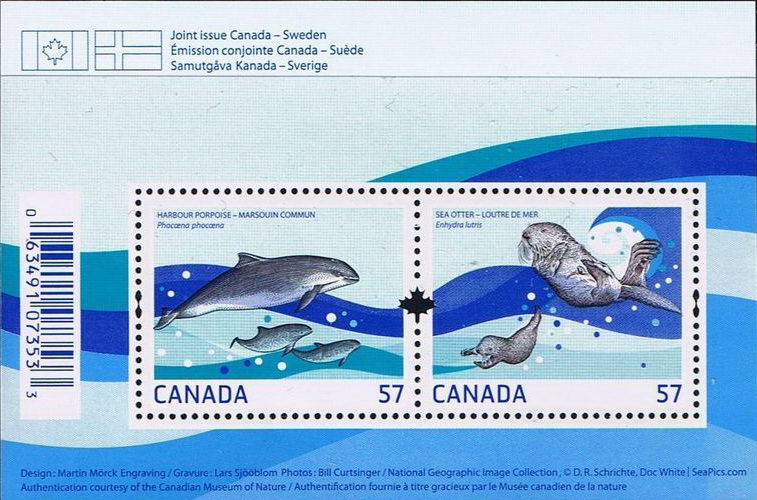 It's the maple leaf motif! |
|
Send note to Staff
|
|
|
Pillar Of The Community
Germany
1714 Posts |
|
|
Royal Mail issued these two GB stamps in the Merchant Navy prestige booklet 2013. Normal stamps have the "wide perforations" at the bottom but these were inverted by the printers in error. They were issued that way as RM decided the "error" was not significant. 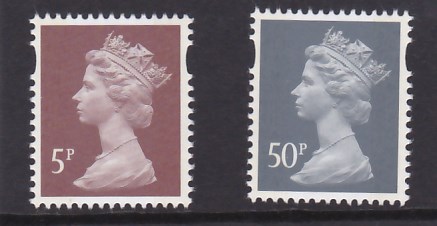 |
|
Send note to Staff
|
|
|
Pillar Of The Community
United States
2423 Posts |
|
|
Pillar Of The Community
Canada
5821 Posts |
|
|
Valued Member
United Kingdom
314 Posts |
|
|
UK collectors call the British "funny indentations" / "wide perforations" / "security perforations" mentioned above, "elliptical perforations". GLENN |
|
Send note to Staff
|
|
|
Pillar Of The Community
United States
1947 Posts |
|
|
Is it just me, or does anyone agree with me that the syncopated perfs on the British stamps spoil the stamp? I think they are hideous. |
|
Send note to Staff
|
|
|
Pillar Of The Community
Germany
1714 Posts |
|
|
"UK collectors call the British "funny indentations" / "wide perforations" / "security perforations" mentioned above, "elliptical perforations"GLENN."
This is not the case... I am a UK collector and call mine various names... currently I call the left side "Morcambe" and the right side "Wise" after a pair of GB comedians so this would perhaps be in the "funny indentations" category or even the "very funny" category. I intend to call the inverted/upside down ones "Paul Hogan" and "Tim Minchin" who are very funny comedians from Down Under in Australia. I see 65170 calls his GLENN and that is ok too as long as we know what is referenced. |
|
Send note to Staff
|
|
|
Pillar Of The Community
United States
4175 Posts |
|
|
Quote:
Is it just me, or does anyone agree with me that the syncopated perfs on the British stamps spoil the stamp? I think they are hideous I do find them distracting. And I dooubt they provide any real deterence to counterfeiters. |
|
Send note to Staff
|
|
|
Pillar Of The Community
Canada
1401 Posts |
|
|
To illustrate where the "inverted perforations" appear. 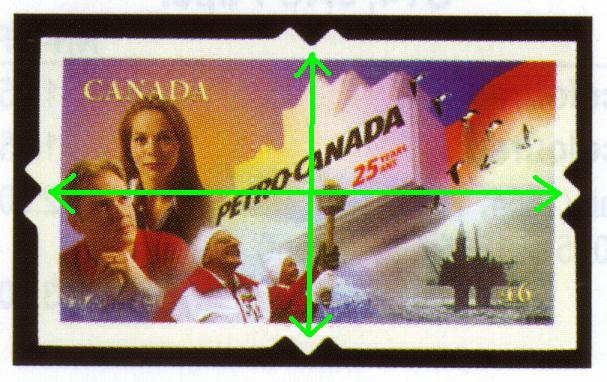 The September 13, 2000 25th anniversary of Petro-Canada issue (SC 1867) was printed by Canadian Bank Note Company, Limited as a self-adhesive twelve stamp booklet pane of 46 cent stamps printed in four colour lithography on GT4 tagged JAC paper. 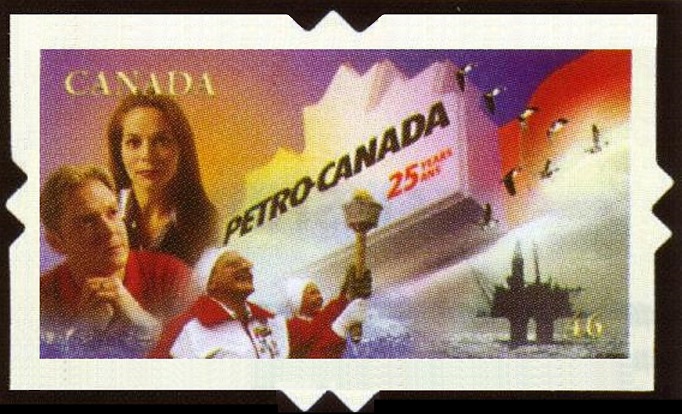 A single stamp from the booklet (SC 1867b), sold only in the Quarterly Pack and Annual Collection, has the perforations on the four sides reversed from the stamp in the booklets sold through post offices and Canada Post's Philatelic Centre. 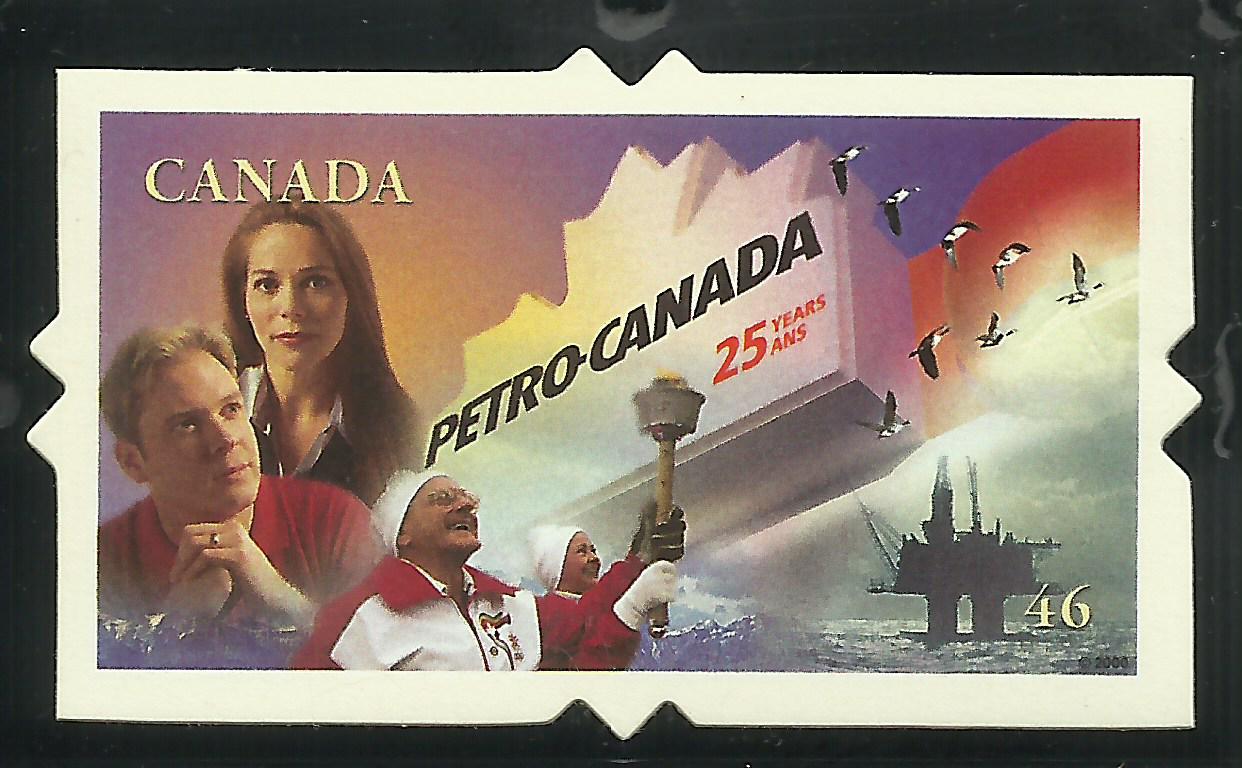 |
|
Send note to Staff
|
|
| |
Replies: 13 / Views: 2,757 |
|



 Posted 10/10/2015 5:50 pm


