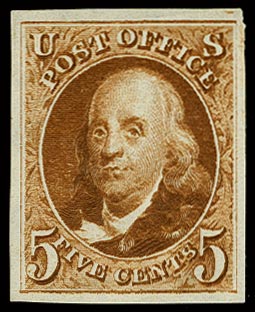
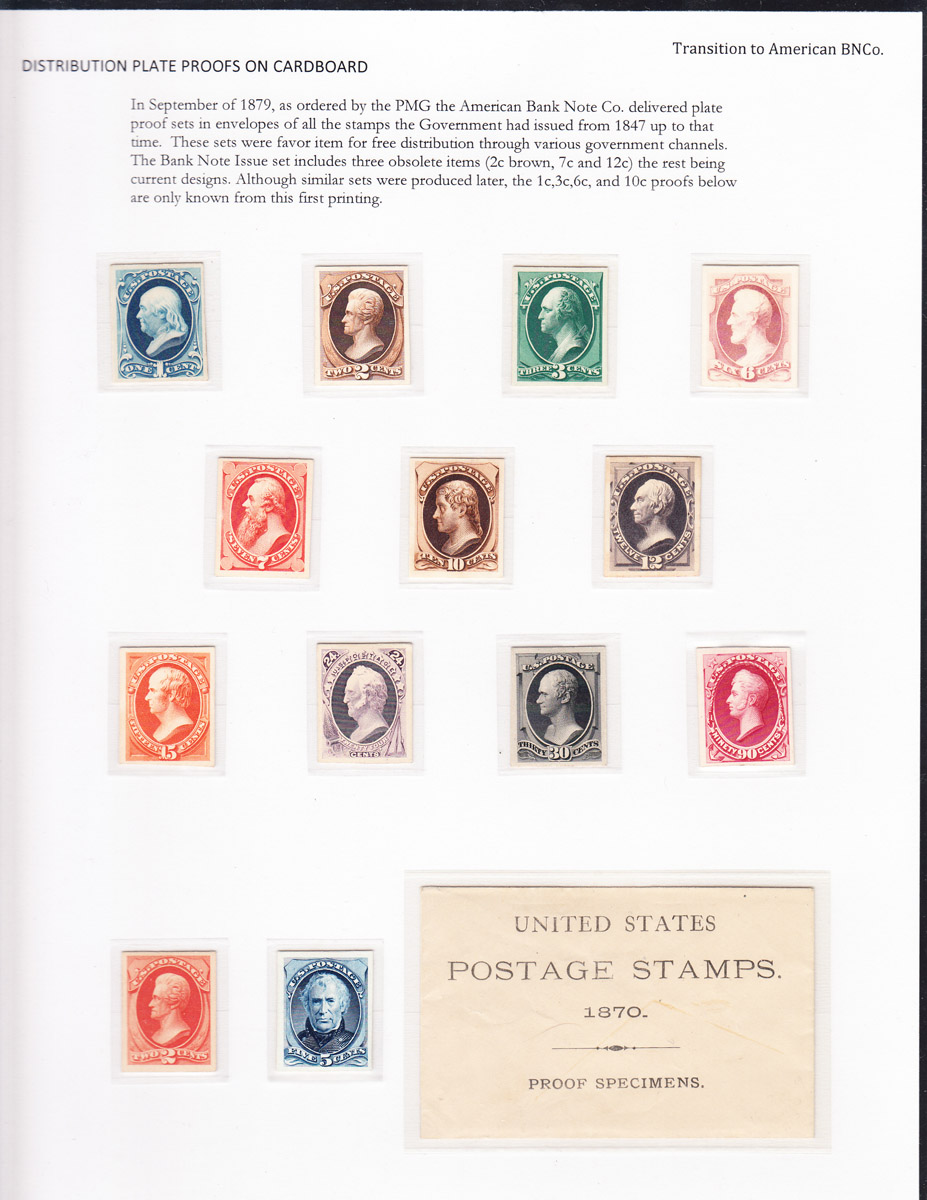
In a 2015 presentation I made to the local stamp club, I created an 81 page booklet which showed the card proofs I had in my collection. At that time, I was needing only three proofs to complete the regular issues while the Special Delivery, Postage Dues, Officials and Newspaper issues were complete. That number does not include one card proof, Scott 286P4, of which there are only two known, one of which is rather seriously creased. This was outside the five BEP printings done between 1875 and 1894, so it was not included in the requirements I set myself for a "complete" collection. Is it a card proof? Yes. Should I include it? No, but that's my choice. It could very reasonably be argued that it "belongs" in a collection of card proofs. So, excepting the 286P4, I can now say that collection is completed.
In my research for that presentation, I found the Scott U.S. Specialized Catalog to be a good starting point. You can determine which issues were created as card proofs by looking for all issues with the "P4" suffix in the Proofs section. That was my starting point.
The next source which was invaluable was Lester G. Brookman's
The United States Postage Stamps of the 19th Century, Volume III. Starting on page 217, Brookman goes over the types of essays and proofs, providing the basis from which the Scott listings were compiled. On page 221, he explains the five different printings, in general terms. Not all colors or stamps were created in proof form in each printing, which explains why some are extremely scarce and, consequently, pricey.
What Brookman relays, in short, is that there were five printings. The first was done in 1875 and were sold to collectors as sets for each issue, at face value. No numbers are listed for that printing. Subsequent printings in 1879, 1885, 1893 and 1894 had 500 individual sets of proofs for the stamps which had been issued to that point in time. Brookman states that 500 sets were individually cut apart and made available, but it is known that the Earl of Crawford had a complete set of all issues in panes of 50 each.
The "500" for each printing seems a bit low and I question whether that was 500 individual proofs or whether that was 500 sheets? The latter would tend to make more sense, from a purely economical standpoint for the printing companies (1875, 1879 and 1885) and the BEP (1893/1894). This would also explain how the Earl of Crawford collection had the panes of 50 for each issue.
So, the bottom line appears to be that the more common issues likely have a printing maximum somewhere in either the 2,500+ range up to 125,000 while the later issues would have a printing which would be a maximum of 25,000 or fewer pieces. Since there are no known numbers extant for the 1875 first printing, these number could vary somewhat.
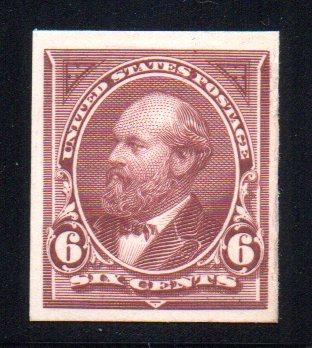
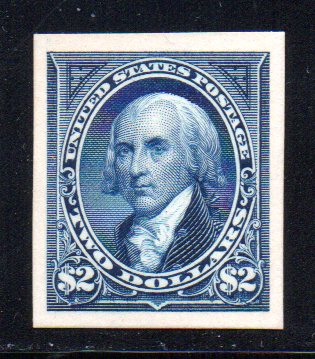
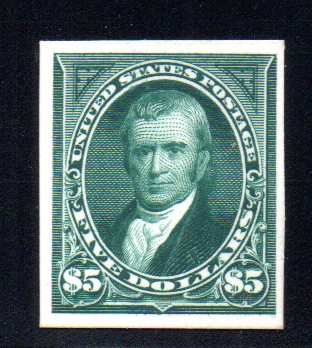
The key items are Scott 212P4, which had only one sheet of 100 printed, Scott 193P4, which again had only one sheet of 100 printed and the last five proofs which came from the 1894 bureau issue with triangles (Scott 247P4, 248P4, 256P4, 262P4 and 263P4). The keys to the Officials are the four dollar values of the State Department as these were printed in smaller panes because of the size of the stamp itself.
At some point in the future, I'll try to upload the collection on this thread, much as I did for the thread I ran on the National Parks series and Farley Reprints.
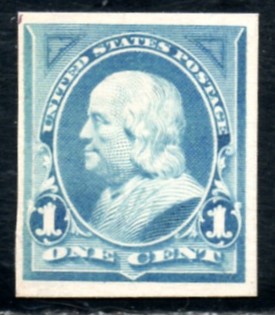
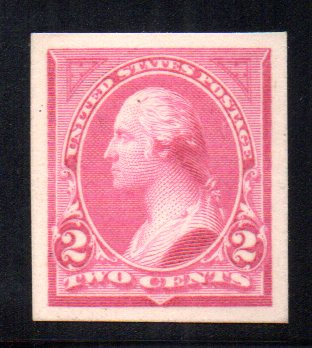
Here's a teaser: These are the five issues of the 1894 series which were produced as card proofs.





 Posted 07/25/2017 09:38 am