Quote:
The whole war was appalling. Upwards of 60 million people died and probably 80% were civilians, possibly more. I have never understood the idea of taking one event out of context from the whole war.
I agree. And for some context, of all those lives lost, more were lost by the victors than by the vanquished. Two other facts worth noting. The largest loss of life from a single bombing was from the bombing of Tokyo with incendiaries, not the bombing of Hiroshima or Nagasaki. Plus, the largest air raid of the war against Japan, in terms of planes launched, occurred after Nagasaki; Japan's surrender was announced as the planes on this raid were returning to the Marianas.
There will always be a debate on whether the war would have ended soon anyway without the bombs dropped on Hiroshima and Nagasaki. But even if so, until then the large scale bombing raids with "conventional" napalm would have continued, maybe even taking just as many lives over time as did the two single bombs over Hiroshima and Nagasaki. And the moral compass of whatever technical means was used to bring the war to an end must take into account the lives saved by ending the war sooner than later. Some would point out that the atomic bombs saved more Japanese lives in the long run by bring the war to a swifter end. Perhaps, but we will never know.
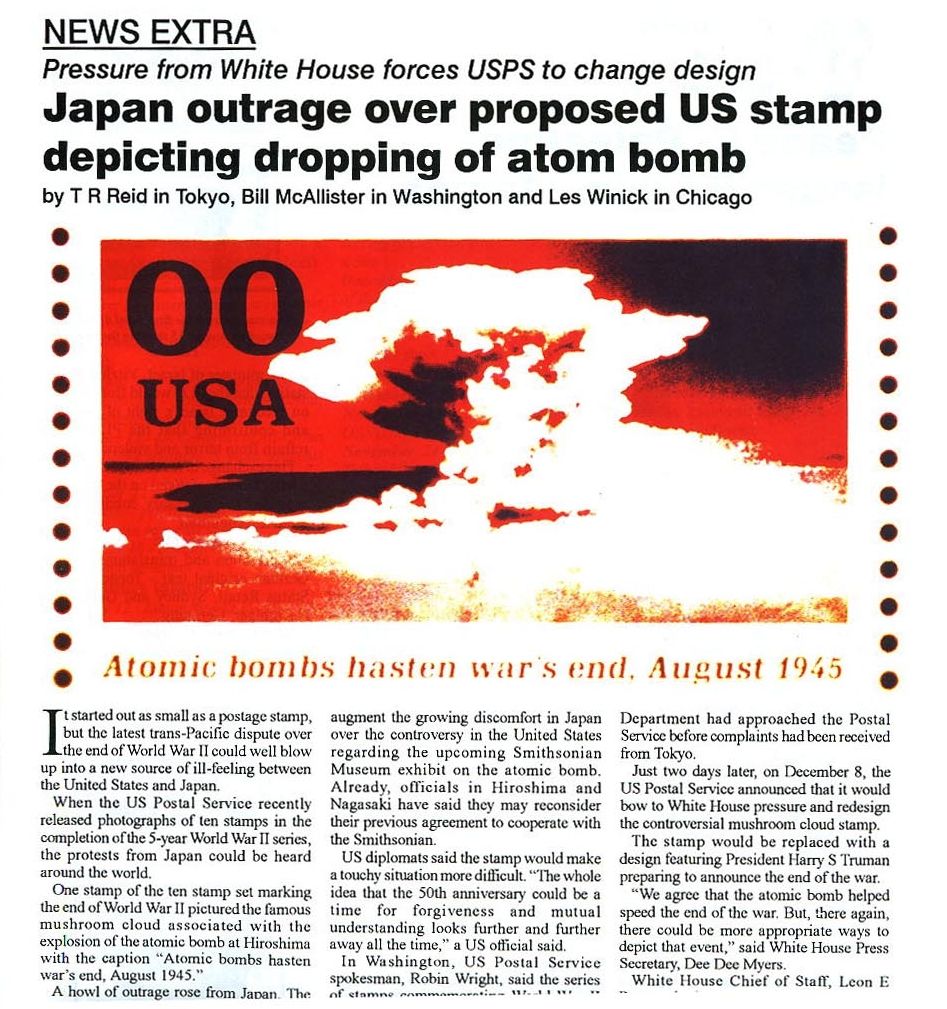
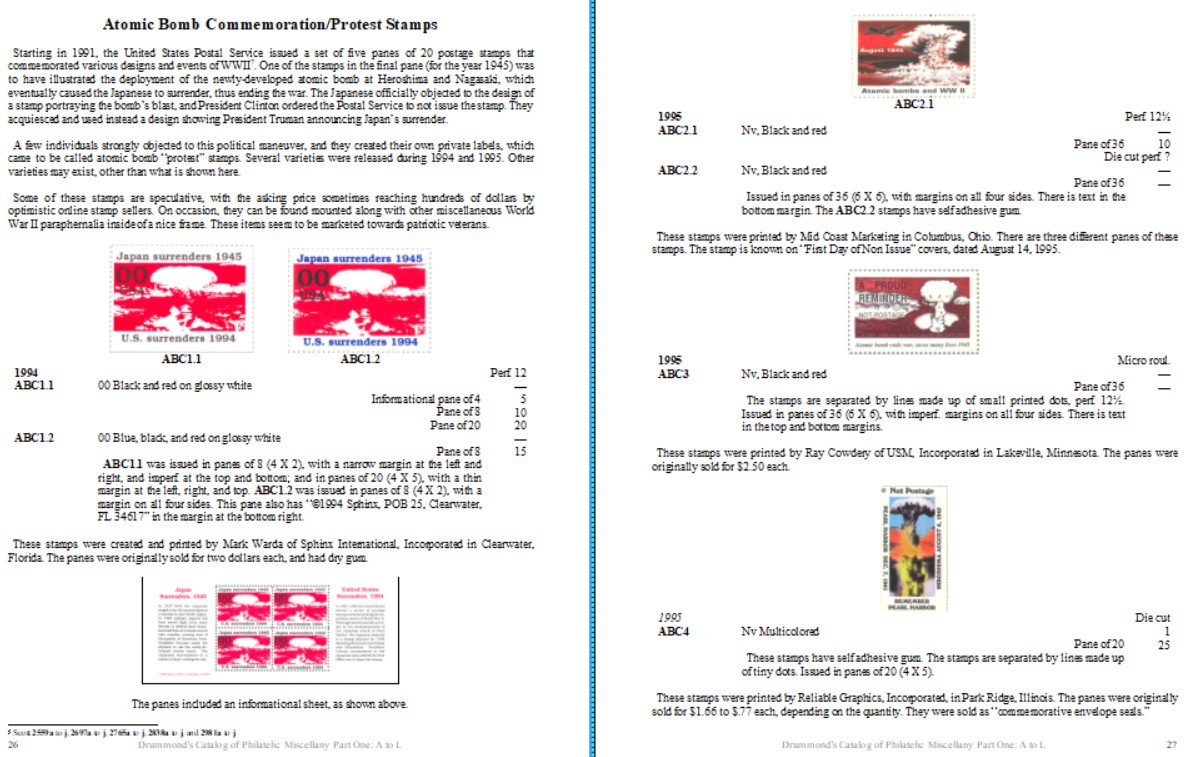
To stay on topic, was this event appropriate for "commemorating" on a stamp? The 1995 WW II commemorative minisheet included a Holocaust stamp. Why one and not the other?
And what about the fact that the political pressure brought to bear by the Clinton administration on the Postal Service was unprecedented? Supposedly, this is the only proposed stamp design to ever be withdrawn because of political interference.
Remember what Santayana said. Stamps help us remember history, both good and bad.





 Posted 11/24/2017 5:15 pm