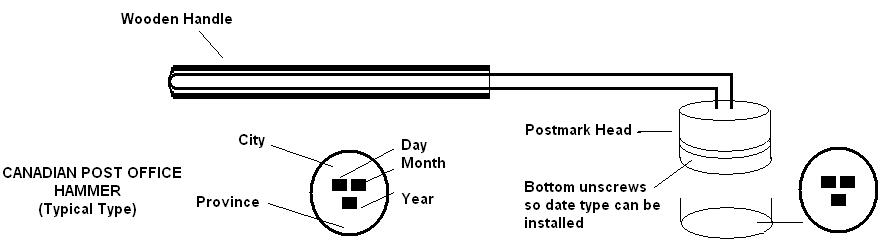
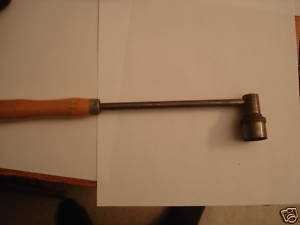
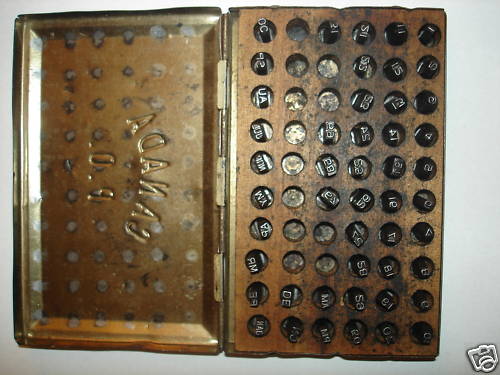
If I'm not mistaken, the USPS also used hammers, but whether they called them that, I don't know.
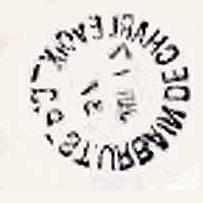
Here is an example of a Canadian Duplex Hammer cancel, with a conventional postmark at the left and a killer cancel at the right:
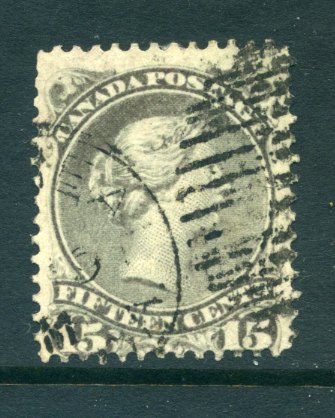
which is typical.
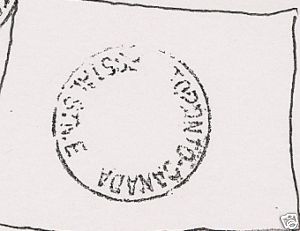
Note this American example of the same sort of thing:
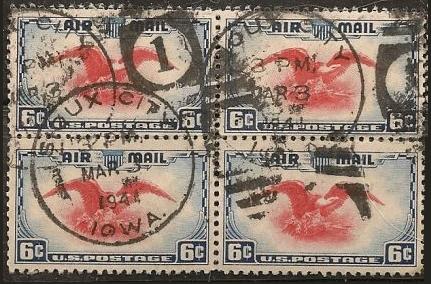
which was cancelled
three times. Somebody must have been lousy at aiming! Note that the left impression is inked as much as the one at the upper right, and the lower middle one shows that it was made last because parts of it aren't even inked anymore.
However, this is typical; as I recall, the metal stamp was usually good for two stampings before it became largely illegible and had to be re-inked.
As to facing slips, one of those you posted in your other thread shows more clearly a duplex hammer cancel:
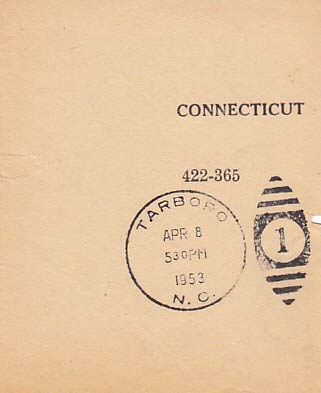
Facing slips (at
Canada Post, we still called them that or sometimes they were called "bundle slips") were put on bundles of letters to show the destination of the whole bundle; an elastic band was usually pulled over them to hold the facing slip down and the letters together. This bundle was then put into a mailbag. A mailbag could carry several bundles, all with different facing slips depending on the mail routing from that office. When the bag was dumped at the destination, the bundles would be pulled out, and those for that town would be sent over to be sorted; those for another town down route would be put into that office's bag for that destination.
For example, I worked at the Post Office in Fort Frances, Ontario. If we were sending a bag to Thunder Bay, there would be bundles of letters bearing the following facing slips: Thunder Bay, Finmark, Raith, Upsala, Pine Portage, Geraldton, Beardmore, Longlac, Nakina, and Manitouwadge.

The clerk who opened the bag in Thunder Bay would send the bundles bearing the facing slip that said Thunder Bay over to the desk where they sorted City mail. Those for Finmark, Upsala, and Raith would go into either mailbags for each of those towns (which would all go on the same mail truck headed west since they're all in the same direction), and those for Pine Portage, Beardmore, Geraldton, and Longlac would also go into their own bags and all go onto the mail truck driving east. The bundles for Manitouwadge and Nakina would also go into the Longlac bag.
At Longlac, when they opened their bag, the bundle for Longlac would then go to the desk where they sorted the town's mail, and the bundles for Manitouwadge and Nakina would go into bags for each of those towns; Nakina's would then go on a train heading north from Longlac and Manitouwadge's would go on a train heading south from Longlac.
The facing slip, when received, tells the clerk that all letters under the facing slip are for the town named on the slip and that they were dispatched from the town whose postmark appears on the facing slip on the date in the postmark.
Anyway, whether these tools were called hammers in the USPS, I don't know. The best way to find out would be to ask your local Postmaster; if he/she is young, they likely have an older colleague that they can find the answer from.





 Posted 01/07/2010 05:17 am