| Author |
 Replies: 111 / Views: 23,112 Replies: 111 / Views: 23,112 |
|
|
|
Pillar Of The Community
United States
6480 Posts |
|
|
Can you provide images of the PF and APEX certs so we can see the exact wording on them? When I search 314A at both the PF and APEX cert archives, I do not find this item.
Thanks. |
Send note to Staff 
|
|
|
|
Moderator

United States
5109 Posts |
|
|
A very interesting topic. I'm no expert in this whatsoever, and I only have a used, VG copy of 303, but I did a quick search on ebay and found this example offered for sale ending today. Couldn't this stamp have been trimmed easily to simulate a 314A? 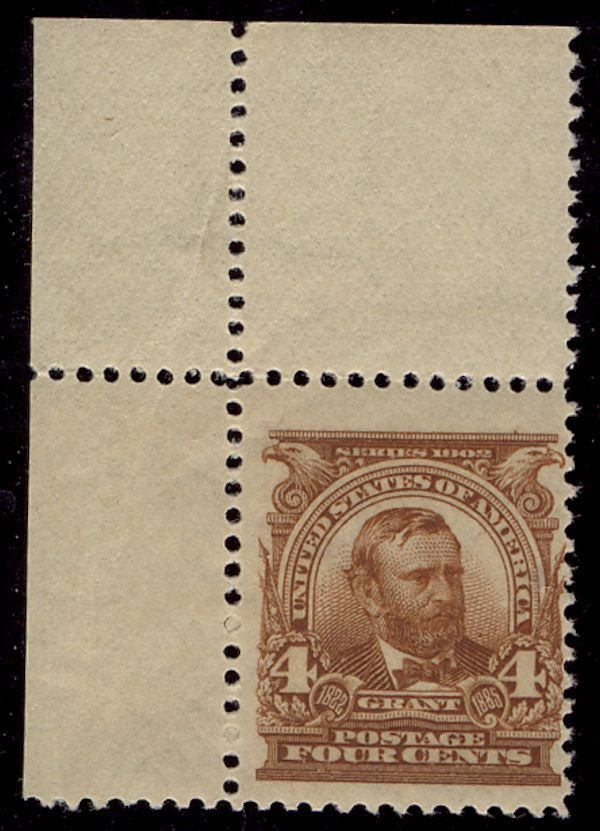 |
|
Send note to Staff
|
|
|
Moderator

United States
12330 Posts |
|
|
Welcome 608k,
Reversing decades of thinking is a very tough row to hoe but I have always followed one premise; extraordinary claims require extraordinary evidence. Since I have not yet seen any extraordinary evidence (but some interesting theories) my current opinion is the simplest explanation (altered stamp) is the most likely. But if you can get definitive documentation or evidence it would be quite the story.
Don
|
|
Send note to Staff
|
|
|
Bedrock Of The Community
United States
10870 Posts |
|
|
The right margin is far too small to be useful. Plus it is almost impossible to accurately produce the cuts themselves. Modern instruments are too sharp, and would not be used in the method of the originals. The edges have a very specific look to them that really cannot be duplicated.
ALL of the documentation that exists on this stamp shows that it was never issued and cannot exist. And there has been extensive study of these issues over the last 100+ years. |
|
Send note to Staff
|
|
|
Valued Member
21 Posts |
|
|
A couple of comments...I have seen a number of stamps on ebay that looked large enough but when the dimensions are revealed they came in around 26 mm high. If you subtract the depth of the perfs the final stamp would be less than 25mm. My coil measures 25.16 mm as this value was obtained from the CVS 6000 study. For reference, my stamp is larger than most Schermack type III coils, including the ones produced from the 4 cent Grant imperfs. Rev collector...I miss your point about theories. All the information I presented is factual. Logic dictates that the coil stamp was produced from an imperforated stamp. The key fact is the private perforations on the stamp! If the stamp has private perfs it could not be generated from a # 303 as the side perfs on my coil measure about 1.4 mm. For reference, the Smithsonian removed from their website the claim that only 10,000 4 cent Grant imperfs were ever produced as there is no factual evidence supporting this statement. Having an APS expert write a column where he claims the Dog Eat His Homework...Translated the National Archives lost the documents supporting his statement that only 10,0000 imperfs were ever produced does not cut it. |
|
Send note to Staff
|
|
|
Pillar Of The Community
United States
578 Posts |
|
|
Wow, Partime. That stamp could probably produce a 27+ mm high "coil"! Very nice reference piece, and worth showing every time someone presents an item like this claiming it's genuine because (in part) it's 25mm high... |
|
Send note to Staff
|
|
|
Pillar Of The Community
674 Posts |
|
|
Kenith - (I assume that is your name from a prior post?) Welcome to the forum. It's a fascinating conversation. To echo & add to some prior comments/questions: Can we see a better scan - of just the stamp? Especially the top right corner, which is very blurry in the one posted picture. Can we see the PF & APEX certs? Quote:
Three philatelic sources have confirmed that my 1907 coil stamp has private perforations. Can you elaborate/provide info on these 3 sources? Finally, what is your intention? You obviously want this certified as a 314A. Is it your plan to sell it? Clearly, getting a cert is going to be a challenge. Don said it accurately: Quote:
Extraordinary claims require extraordinary evidence The story is great, but you haven't given convincing evidence. All of the (great!) info on production quantities does not speak to the stamp in your hand. (Is this just a piece? Or is it a full cover?) The date of the cancel (if the 1907 is accurate) is very problematic. Quote:
There are a number of other facts that the experts at APS & PF are dismissing. Can you elaborate?? What other facts?? The 'experts' at all of the organizations have certainly been known to make mistakes. They are not perfect. Especially when dealing with items of such a rare nature that few of them, if any, have ever seen one. But I'll suggest that the expertise being provided here is equal to either the PF or APEX - and you haven't convinced anyone here as yet. Getting the PF or APEX to give a clean cert is not going to be simple. I'll be very eager to see some more pictures & answers to the questions posed above! |
|
Send note to Staff
|
|
|
Moderator
United States
5109 Posts |
|
|
Quote:I have seen a number of stamps on ebay that looked large enough but when the dimensions are revealed they came in around 26 mm high. If you subtract the depth of the perfs the final stamp would be less than 25mm. My coil measures 25.16 mm as this value was obtained from the CVS 6000 study. Again, I'm not an expert on this issue, but I was able to (closely) put my picture beside the original item in question, attempting to line up the stamp as well as possible. The bottom perfs in the stamp on the left are a little too high, so I will give a slight bit on the bottom. However, the top section on the stamp on the left has an enormous amount of room. I would almost guarantee that trimming my example stamp would result in a stamp height of at least 25.16 mm. 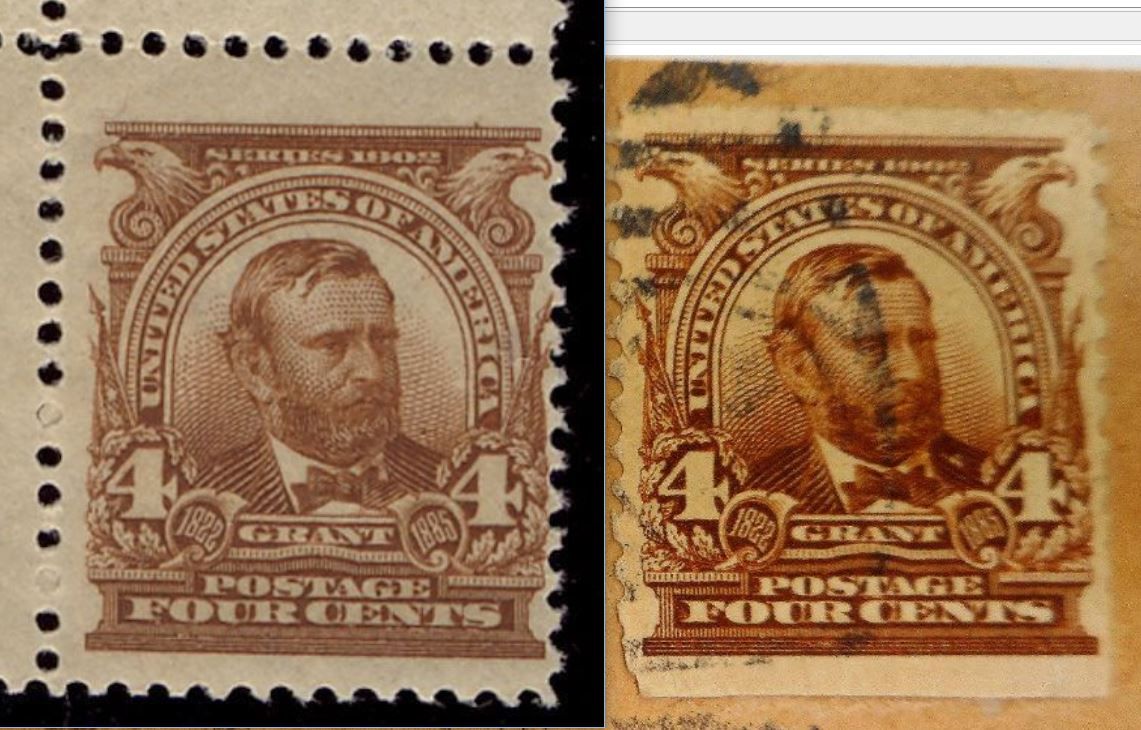 |
|
Send note to Staff
|
|
|
Moderator
United States
5109 Posts |
|
|
Did anyone notice that the 1907 date on the original item is actually 1507 with an inverted 5? Interesting. 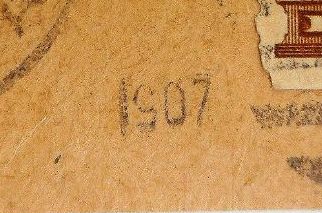 |
|
Send note to Staff
|
|
|
Pillar Of The Community
703 Posts |
|
|
Hi 608K, Thank you for providing additional info and maintaining a stiff upper lip at the non-believers. Certainly not my area of specialty, but extremely interesting! Quote:
Can we see a better scan - of just the stamp? Especially the top right corner, which is very blurry in the one posted picture. Please use a flatbed scanner at the highest possible resolution cropped to just the stamp. Two observations from me at this time. 1. That bottom edge "appears" to resemble a roller coaster. I hope it is just the scan making it look that way 2. That top right corner (the blurry focus part) "appears" to have visible perf marks. It may just be my mind creating the illusion, and I assume one of the experts who have seen it would have pointed it out, but we have seen a slew of ebay lots with trimmed perfs that become instantly obvious when viewed on a large monitor These two are way too obvious to have not been pointed out previously. A high quality scan (not cell photo) will put those to bed. Thanks again for providing the background info. I look forward to reading more as this progresses! |
|
Send note to Staff
|
|
|
Bedrock Of The Community
12784 Posts |
|
|
I have yet to find a postmark similar to the one on this stamp. All West Philadelphia postmarks that I have found thus far at the time that this piece would have been mailed are flag and machine type cancels tying the stamp to piece with an associated Philadelphia datestamp. |
|
Send note to Staff
|
|
|
Rest in Peace
United States
205 Posts |
|
|
608K, Thanks for the posts; this is exactly the information I had asked for, that a conversation could ensue. I agree with you that the perforations being declared as "private" is a most important fact, which means it deserves rigorous scrutiny. Because if the stamp's perforations were gauge 12 bureau perforations, then any number of explanations could be offered more probable than being a unique private coil issue, cancelled months before the first usage of the earliest Schermacks. One possibility is that the stamp has a natural straightedge at top and was trimmed at bottom only. Another more glamorous possibility is that it is kin to Scott #320d, an error whereby a sheet was at least partially missing horizontal perforations, and this is the only copy that has come to light. Neither explanation requires an imperforate sheet and both would be much more probable occurrences. Do you recall why the three philatelists felt these were private perfs, not government perfs? Did they mean private as in "some collector playing around", such as Alan Fillstrup and his coils, or did they mean private coil like a Schermack or a US Auto Vending? Problem is, no private perforations on coils exist that look like these. Private coil perforations facilitated the advancing of the stamps, that they be severed in the gutters rather than through the design. Everyone trying to perfect stamp affixing machines knew the government perf 12 stamps were too brittle, because prior to the availability of imperforate sheets in late 1906 they used the perforated sheet stamps torn into strips. Therefore, it makes no sense that the earliest such private coil would mimic the government perforation, having all the disadvantages of the perforated stamps, readily available, but none of the advantages required to be reliable in a machine that affixed 250+ stamps a minute. Which, by the way, cut the stamps apart - no such cutting is evident on either side of this stamp. The image is of a comparison of the perforations of the two stamps shown in this thread. We know one is a #304. I attempted to make the stamp images the same size, as well as can be done with the images provided, and copied the right side of the #304 against the left side of the suspected 314A. The perforations appear to gauge very close. I suspect they do gauge 12 on the patient; because if not, the PF and APEX both would have noted the sides as reperforated or as having private perforations of unknown origin. Once determined to be government perforations then there would be no need to look any closer at the top and bottom edges. Which is a long-winded way of explaining why I'm skeptical of the private perforation claims. This is your only real evidence that the stamp was issued imperforate, so that assertion screams for a conclusive analysis of the perforations. 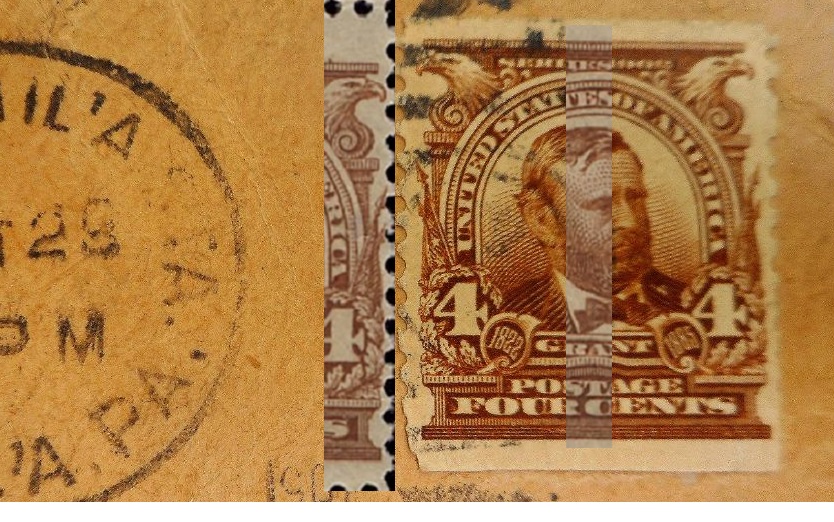 Last, for now, is that the experiment involving the vending machines, being conducted by the PO 1907-08, was for dispensing government coils (both perforated and imperforate). These coils did not appear until February 1908 - the machines were designed and manufactured for this experiment starting in 1907. There was no cooperation with private coil manufacturers, who were the competition in a sense. That experiment is not relevant to this discussion because government coils have parallel cuts, which this stamp does not have, as you've noted. |
|
Send note to Staff
|
| Edited by Tipzi - 12/29/2017 7:42 pm |
|
|
Pillar Of The Community
United States
1874 Posts |
|
|
The print quantity of 10,000 is conclusively proven, based on primary sources, in Ken Lawrence's recent authoritative article on this stamp published in The United States Specialist and available to USSS members for download as Research Paper 24. The suggestion that the Smithsonian doesn't accept the 10,000 print quantity is not a useful comment. Experts do. Anyone participating in this thread should read paper 24 for solid background info on this issue. |
|
Send note to Staff
|
|
|
Valued Member
21 Posts |
|
|
I need to pull together some information to address a number of questions. I will do that in the near future as I am working on an article.
However, I would like to address Lawrence's article that the USSS has included in its research area. Lawrence claims that there is factual information confirming only 10,000 imperfs were ever produced.
If one reads his article carefully, each reference he gives goes back to the Post Office Dept distribution memo issued in early 1909 stating that 10,000 stamps were shipped to Detroit. No where in his article does he provide the production numbers from the BEP.
There is a reason why Lawrence can't provide the BEP production numbers:
Mr. Tab Lewis, Textural Reference Operations at National Archives, provided this information, "Records of the BEP (Record Group 318) do not include separate files relating to or production records of stamps. The earliest date in the 'Central Correspondence File' where such information is sometimes found is 1913. I have searched a series entitled "Official and Miscellaneous Letters Received, 1864-1912, but found no separate files on any stamps."
In March 1911, after Arthur Travers was dismissed from service BEP Director Ralph wrote to the Secretary of the Treasury about the findings by postal inspectors about BEP records "...some irregularities in the Office of the Third Assistant Postmaster General called my attention to the fact that no count was made of all the sheets in the bureau since 1905..."
I can understand, to some extent how Linn's would accept Lawrence's position, however, the team at USSS are supposed to be knowledgeable. I am surprised they accepted Lawrence's article without doing the proper due diligence! |
|
Send note to Staff
|
|
|
Moderator
United States
5109 Posts |
|
|
I think this thread has veered a bit from the original intention. The latest discussion about an issue of 10,000 seems irrelevant to me. I would rather see a scan of the item in question to try and prove / disprove the notion of clipped perforations. That alone would silence many of the critics. A copy of the certs would also be extremely helpful.
I think we have already shown that existing stamps could have been easily cut to simulate the 314A, and there hasn't been much proof that the perforations are privately issued. Without supporting scans and certs, we certainly aren't building any consensus on a 314A yet. |
|
Send note to Staff
|
|
|
Replies: 111 / Views: 23,112 |
|




 Posted 12/29/2017 12:06 pm





