|
This page may contain links that result in small commissions to keep this free site up and running.

Welcome Guest! Registering and/or logging in will remove the anchor (bottom) ads. It's Free!
To participate in the forum you must log in or register.
| Author |
 Replies: 111 / Views: 23,113 Replies: 111 / Views: 23,113 |
|
|
|
Valued Member
324 Posts |
|
|
608K, welcome to the forum. I too would love to see a high quality scan so there were not blurry parts of the stamp, and would love to know the sources and detailed information of the "private perfs" conclusion.
I collect (I would not call myself an expert) privately perforated stamps for the known vending and affixing coil companies. As Tipzi points out above, the apparent perfs on your stamp do not match any known V&A stamp. Obviously, it is not 314A, which by definition has Schermack Type III perfs. |
Send note to Staff 
|
|
|
Valued Member
21 Posts |
|
|
This forum is very interesting as it does make one think. By the way, along with other things Comcast screws up they misspelled my name...Kenneth. I go by Ken. Certs are locked with stamp in safe deposit box. However, the cert numbers are Phil. Foundation 255475...it will state it was trimmed top & bottom. APS cert # is 208057 It will state that it is a straight edge on top trimmed on bottom. I suspect my friend Bill Crowe did the PF cert & I know Lawrence took 3 months to do the APS cert. Partime...I think you miss a key point about the 10,000 imperfs being the only ones produced. Informally I know that is the expert opinion that my stamp can't exist because only 10,000 imperfs were produced. However, even Lawrence is careful to state that the records show 10,000 were ISSUED. Big difference as we know the belief that only 10,000 were produced is a 100 year old myth. Since we do not know how many 4 cent Grant imperfs were produced we now need to examine the stamp closely. Question: if the top & bottom of the stamp have similar indents why did APS claim it was a straight edge on top? This is not a casual question because the stationary blades of that era caused rough edges. 1907 tests: The post office had 1 room with 6 test machines which Lawshe's group controlled. ( Arthur Travers was a key player here) All 6 machines were rejected by early 1909 due to the fact the stamps were being damaged. Private perforations...Tipzi you make an interesting observation about the 12 perfs on both a government issued # 303 & my stamp. I did not claim that my stamp was not a perf 12.. I am stating it was not the typical perfs found on a government issued # 303 or any stamp of that series. Interesting sources: Melvan Getlan in an email to me a few years back stated that once the experts state it is a fake it will be difficult to get them to revise their position. His comment about the perfs on my stamp "Looking at both sides I don't believe I have seen any known or unreported vending company that made or caused that set of perfs." He also commented that they were not government perfs. Kent Wilson, APS expert & Emeritus Philatelic Judge stated "I would say that this item was from a sheet or number of sheets pulled from production prior to perforating. After that it was privately (i.e. not in the normal production cycle) perforated on the sides. It was not trimmed from a larger copy. The imperfections in both top and bottom edges are from handling during and after removal of the single from the sheet and from the strip during the perforation process." In a response to a series of articles in the "Pennsylvania Postal Historian" by myself and Lawrence Dr. Harry Winter, responded that he felt the stamp did not have government perforations and probably was generated from an imperforated stamp. His comment, "and how two expertizing services came to that conclusion (that it is a trimmed # 303) is a mystery" Although Dr. Winter does not claim to be an expert he is well known to Lewis Kaufman of the PF. Let's talk about Scott's Catalog. For 100 years Scott's stated that no # 303 imperforated stamps were issued by the government. All known copies have large oblong perforations on the sides. By the way the 1912 Scott's had the #1 mint at $8.50 & # 2 at $35.00. A few years ago, about the time the PF & APS declared my stamp a fake by trimming; Scott Catalog modified its statement to read: "This stamp was issued imperforate but ALL examples were privately perforated with large oblong perforations at the sides." This brings us full circle to how many imperfs were produced. Scott makes this claim without any BEP documents...interesting that they changed the wording from ALL KNOWN to ALL. Scott continues to make a very critical point: "Beware of examples of the # 303 with trimmed perforations and fake PRIVATE perfs added." This last sentence was added after my stamp became known & Melvan Getlan's comments were shared with Lawrence. So now let's look at that beautiful ebay stamp that was posted to show a stamp could be trimmed & exceed the 25 mm height guideline issued by the N.Y. Collector's Club study. Please look at the right edge, mentally trim that side & add private perfs you would cut into the picture of Grant. To produce sides as wide as mine you would need to start with margins about 2.5 mm wide on each side. I have only seen imperforated stamps with the height & width necessary to achieve what Scott's is now claiming. If I was paranoid I would almost feel like the boys are circling the wagons. As I stated I did 3 research papers on this era so as questions come up I will be happy to address them. Ken |
|
Send note to Staff
|
|
|
Pillar Of The Community
United States
6480 Posts |
|
|
There must be a typo in the PF cert number. PF #255475 is Scott #37a.
The APEX cert shows up; I missed it the first time as I was searching for 314A, whereas it is listed under 303.
Wording on APEX cert:
"United States, Scott No. 303, used on piece, genuine, natural straight edge at top but altered with perforations trimmed off bottom." |
|
Send note to Staff
|
|
|
|
Moderator

United States
5109 Posts |
|
|
OK, so what are we trying to accomplish here? The two certs, per 608k, state that this is a trimmed 303. There is a slight discrepancy on whether the top is a straight edge, or not, but the conclusion is still a trimmed 303.
We have a discussion concerning private perfs, but this was not mentioned on either cert, and all of the pictures seem to show normal perfs expected with a 303. In fact, 608k does not deny this. The "beware" comment added to Scott's is perceived to be due to 608k's item, but no proof was given, and, even if it was, this is still more evidence to say that we do not have a 314A.
So, what are we trying to prove? That the certs and one set of experts are wrong? If so, resubmit to a different source and see if you can get a different cert. I'm going to stay out of this conversation unless something else of interest is added. Good luck. |
|
Send note to Staff
|
| Edited by Partime - 12/31/2017 11:00 am |
|
|
Rest in Peace
United States
205 Posts |
|
|
Ken,
Some thoughts:
Partime...I think you miss a key point about the 10,000 imperfs being the only ones produced. Informally I know that is the expert opinion that my stamp can't exist because only 10,000 imperfs were produced. However, even Lawrence is careful to state that the records show 10,000 were ISSUED. Big difference as we know the belief that only 10,000 were produced is a 100 year old myth. Since we do not know how many 4 cent Grant imperfs were produced we now need to examine the stamp closely.
Stamps that are produced, but not issued, are destroyed; therefore, the production number is irrelevant. Further, EVERY stamp is produced imperforate before being perforated and/or stripped into coils, etc. When Schermack placed an order for 10,000 imperforate stamps (which I believe was the minimum order) at the Detroit P.O., the BEP simply issued 25 sheets of stamps that had not yet been perforated.
Any other means by which an imperforate sheet got out of the BEP makes of that sheet printer's waste. Only if sold through a postal window would that sheet be a legitimate issue/error.
Question: if the top & bottom of the stamp have similar indents why did APS claim it was a straight edge on top? This is not a casual question because the stationary blades of that era caused rough edges.
We don't know whether the blades were or were not stationary because we don't know who produced them. The problem is that the bottom margin is not stripped, it's scissor cut. The top margin, however, appears from the image to be straight. A person can look at a natural straight edge, which are typically rough, and see what looks like evidence of trimmed perforations while another may not have the same interpretation. But since both expert bodies called the bottom as trimmed, that is all that is required to conclude that it's a trimmed #303, absent evidence of private gauge 12 perforations being applied to stamps as of the date of the cancel.
1907 tests: The post office had 1 room with 6 test machines which Lawshe's group controlled. ( Arthur Travers was a key player here) All 6 machines were rejected by early 1909 due to the fact the stamps were being damaged.
These were machines for vending government coils of the 1902 series. The post offices loaded the coils into the machines; there was no need for the machines' manufacturers to have been issued stamps of any kind. Now, after being rejected by the P.O. some did go on to produce their own proprietary coils for their machines, such as US Automatic Vending. But we know their perforations, and none are gauge 12.
Private perforations...Tipzi you make an interesting observation about the 12 perfs on both a government issued # 303 & my stamp. I did not claim that my stamp was not a perf 12.. I am stating it was not the typical perfs found on a government issued # 303 or any stamp of that series.
In order to claim these are not government perforations, it's not enough to say they look different. You have to establish gauge 12 perforations were privately applied to stamps in 1907 by company XYZ. Otherwise, given the choice of an odd presentation of genuine government perforations against the hypothesis that these are unknown private perforations, the former wins every time. Now, had these perfs been gauge 12.5 to 13 then it would be a whole 'nuther ballgame.
Interesting sources: Melvan Getlan in an email to me a few years back stated that once the experts state it is a fake it will be difficult to get them to revise their position. His comment about the perfs on my stamp "Looking at both sides I don't believe I have seen any known or unreported vending company that made or caused that set of perfs." He also commented that they were not government perfs.
Getlan is certainly stating fact on the first two points, but he's speculating on the third.
In a response to a series of articles in the "Pennsylvania Postal Historian" by myself and Lawrence Dr. Harry Winter, responded that he felt the stamp did not have government perforations and probably was generated from an imperforated stamp. His comment, "and how two expertizing services came to that conclusion (that it is a trimmed # 303) is a mystery" Although Dr. Winter does not claim to be an expert he is well known to Lewis Kaufman of the PF.
It cannot be said that a stamp is "probably" generated from an imperforate stamp when no such stamp exists. That's a beef I have with certain experts - they are too quick to conclude alteration, usually to condemn a stamp, without adequately considering how unlikely the source stamp could actually exist. Given there are hundreds of trimmed #303's but zero imperforate four cents stamps, in no way can one state "probably" when speculating an imperforate stamp was the source of this stamp.
In fact, logic dictates that the moment any such private perforations were applied, the stamp became a forgery. And being a forgery, the most likely means by which it was forged was the trimming of the bottom of a #303 with a straightedge at top. Regardless, if unfinished sheets were spirited out of the BEP in 1907 and bejeweled with private perforations, they are contraband as well as fantasy issues.
And that begs the question - since the 314A had not been issued until months later, why take an imperf sheet of four cent stamps? The rare stamp that one would imitate doesn't even exist yet. Why not an imperf sheet of $5 stamps?
A few years ago, about the time the PF & APS declared my stamp a fake by trimming; Scott Catalog modified its statement to read: "This stamp was issued imperforate but ALL examples were privately perforated with large oblong perforations at the sides." This brings us full circle to how many imperfs were produced. Scott makes this claim without any BEP documents...interesting that they changed the wording from ALL KNOWN to ALL.
All the issued imperforate sheets went to Detroit to fulfill an order. Any imperforates PRODUCED but not ISSUED were finished with 12-gauge perforations, and then issued. The change in wording is probably from being corrected by philatelists as scholarship dictated.
Scott continues to make a very critical point: "Beware of examples of the # 303 with trimmed perforations and fake PRIVATE perfs added." This last sentence was added after my stamp became known & Melvan Getlan's comments were shared with Lawrence.
I'm sure Scott refers to Schermack perforations, not any other kind.
|
|
Send note to Staff
|
| Edited by Tipzi - 12/30/2017 10:25 pm |
|
|
Pillar Of The Community
United States
4189 Posts |
|
|
You aren't going to convince anyone of anything without a better image of the stamp - the one you posted is out of focus on the right side of the stamp |
|
Send note to Staff
|
|
|
Moderator
United States
5109 Posts |
|
|
Quote:
You aren't going to convince anyone of anything without a better image of the stamp I don't think 608K even has to do that. He has already stated that the certs say it was a trimmed stamp. Showing us an image will only confirm that it is a trimmed stamp. We're just going in circles. |
|
Send note to Staff
|
|
|
Valued Member
21 Posts |
|
|
Just a quick note before heading to bed: 1. If you read the indictments against Travers & Steinmetz you might want to revise your comment about waste stamps being destroyed. Part of the indictments covered the fact that Travers did not destroy waste stamps he fudged the reports. 2. The Post Office obtained 10,000 stamps from BEP & distributed them to Detroit. How does this statement guarantee that only 10,000 were produced? 3. If one looks carefully at the perfs especially the ones on the left they do not look like the sharp nice perfs on a # 303. The test equipment available to Lawshe group were set to produce perf 12 stamps. They were not government approved machines therefore, the perfs are private. Look at the top left perfs they really don't line up with the # 303 perfs...they are close but they should be exact. I see you all have dismissed Mr. Wilson's statements about the perfs! 4. Scott's change after 100 years must be a pure coincidence especially the new comment about trimmed stamps with private perfs. They were not talking about fake Schermack perfs as that has been going on for 90 years! 5. If you are going to trim a stamp and add fake perfs on the side it requires a stamp capable of achieving this. No one has produced a stamp large enough to duplicate the size of my coil. Even the "large" ebay stamp you all were cheering can't meet this requirement. Conclusion: as a scientist I recognize logical solutions: The coil had to be produced on one of the test machines by Travers & friends with a 4 cent Grant imperforated stamp. There is no other intelligent conclusion unless someone can find a # 303 large enough to put funny perfs on each side and have the stamp measure 25 mm in height and have 1.4mm margins on the side. As an aside...I wonder why the USSS management did not do the proper due diligence in posting Lawrence's article in their research file? Good night all! |
|
Send note to Staff
|
|
|
Moderator

United States
12330 Posts |
|
|
The discussion regarding the possible production scenarios is interesting but does not prove the existence of a previously unknown stamp. We can debate for months about how things could have happened, but this still does not prove that it did happen.
If I was trying to convince others that Big Foot exists, making a case for the vastness of wilderness and/or available food sources certainly is not the same as proving that the animal actually exists. I would only expect to get others to believe in Big Foot if I could produce definitive evidence such as a captured animal or its DNA.
In my opinion the burden of proof for a previously unknown stamp is very large; it is going to take evidence such as production documentation or additional supporting examples of the stamp to overturn decades of research and knowledge.
Don |
|
Send note to Staff
|
|
|
Valued Member
21 Posts |
|
|
Dear Don,
I am wondering about what research & knowledge about that era you are referring to? Most info shared so far indicates that the philatelic community does not have a good grasp on the actual facts dealing with so many details associated with the Travers years.
Most of the experts seem to lack knowledge about the era. They didn't even seem to know that stationary cutting blades caused indents & damaged edges. In fact one expert dismissed the indents on the top edge that were similar to the bottom & called it a natural straight edge.
From my perspective I would expect experts to at least know the difference between a natural straight edge and an edge produced from stationary cutting blades. |
|
Send note to Staff
|
|
|
Moderator
United States
12330 Posts |
|
|
I was referring to experience and knowledge of folks who do not have a vested interest in this topic. Independent opinions will always carry more influence than those from who will gain a financial windfall.
You are welcome to try to influence folks and I appreciate that you are trying to present a logical case for the possible existence of a previously unknown stamp. But as I stated, making a case that something might exist is a long way from proving that something does exist. In my opinion you have only two ways that you might be able to change the current thinking.
1. Present documented evidence that this stamp was legitimately produced or uncover additional examples which firmly support it's existence.
2. Get a consensus of independent expert opinion to agree with this stamp was legitimately produced.
Frankly both seem like very long shots but I am sure of one thing. As the person who owns the stamp and stands to financially benefit, your opinion will be discounted by many.
Don |
|
Send note to Staff
|
|
|
Pillar Of The Community
United States
6480 Posts |
|
|
Quote:
As the person who owns the stamp and stands to financially benefit, your opinion will be discounted by many. And just to expand on that thought, it's nothing personal. I cannot count the number of times over the years in various collectibles fields that an owner of a self-proclaimed rarity has remained steadfast as to the legitimacy of their item, despite evidence and opinions from recognized experts in the field in question. Part of that is human nature. However, the item in question must stand upon its own merits in the face of scrutiny; it has to prove itself... the burden is not upon others to disprove it. Even if it were, all one has to do is point to the wandering bottom edge and the two previous expertization opinions. In order to disprove and overcome the previous expertizations, you must have compelling evidence; all we have seen thus far is conjecture. Sorry. |
|
Send note to Staff
|
|
|
|
Moderator
United States
5109 Posts |
|
|
For those still interested in this topic, here is the picture grabbed from the APS cert. A little small, but probably from a flat bed scanner. 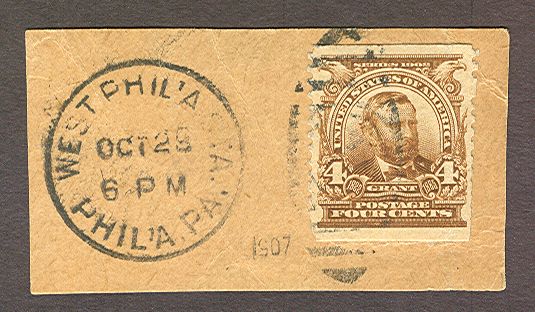 |
|
Send note to Staff
|
|
|
Valued Member
21 Posts |
|
|
Partime thanks for posting this photo from APS. For clarification the dark line across the top is a shadow from the way the photo was taken. Unfortunate in a way as one can not see the roughness of the top edge. |
|
Send note to Staff
|
|
|
Pillar Of The Community
703 Posts |
|
|
Partime - thank for the photo! OK - here goes. I stated earlier this isn't my area, but I am not sure that matters, particularly with this better (but still not good) scan. When I first saw the initial scan, I immediately thought of the US Official Specimen overprints. As many of you may know, some of the rarest copies were butchered by clerks who should have known better at the sales counter. As such way too many of these very rare stamps are known with scissor cut perfs. here are two good examples (if that is possible) where the stamp received the better end of the cuts, and a third example where the copy lost most of its perfs. 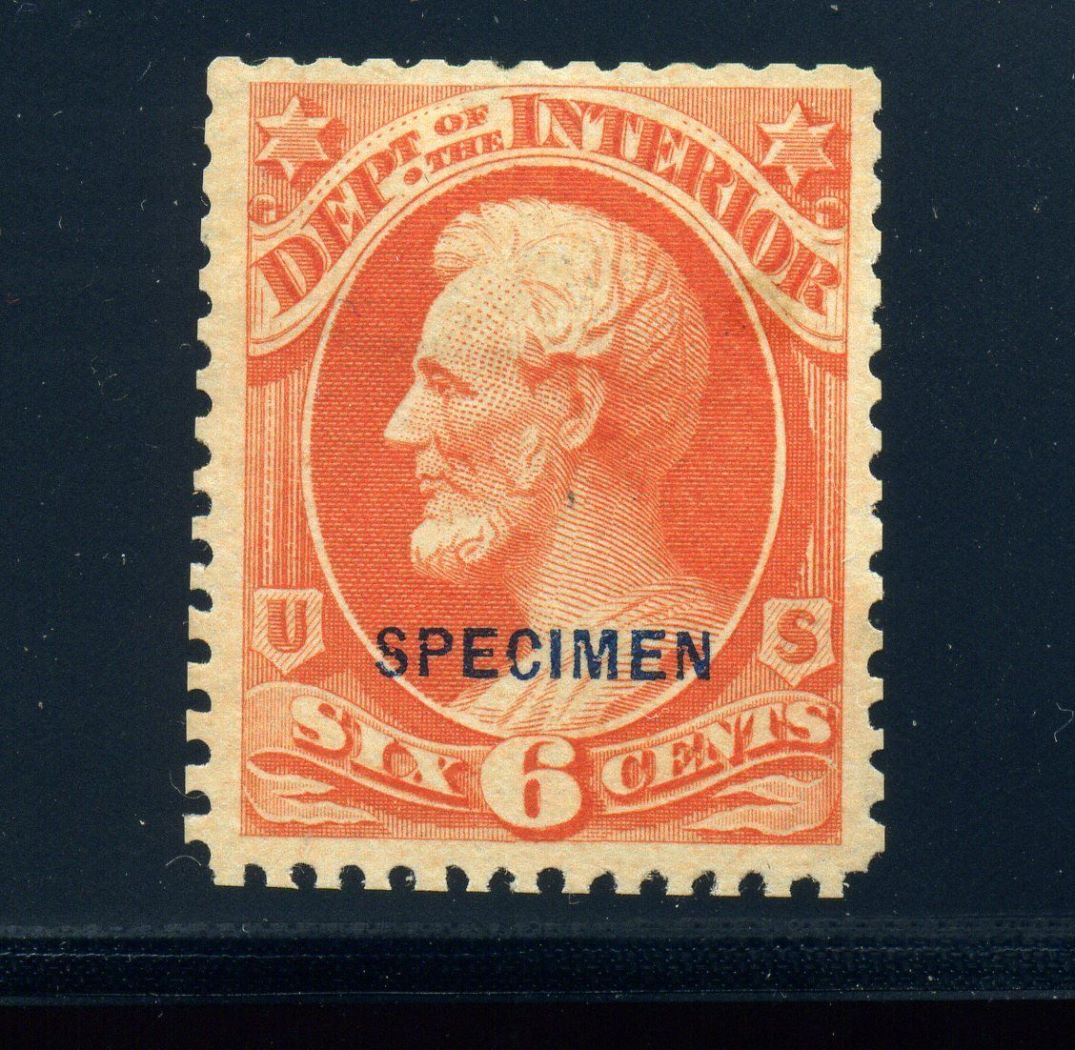 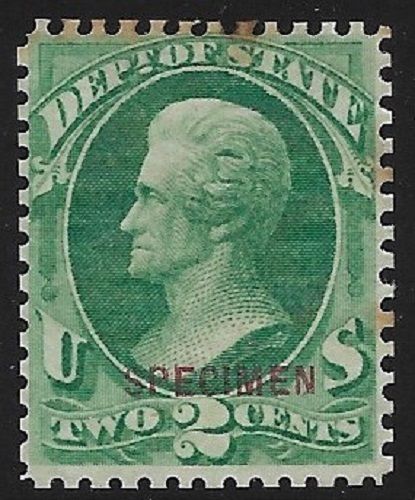 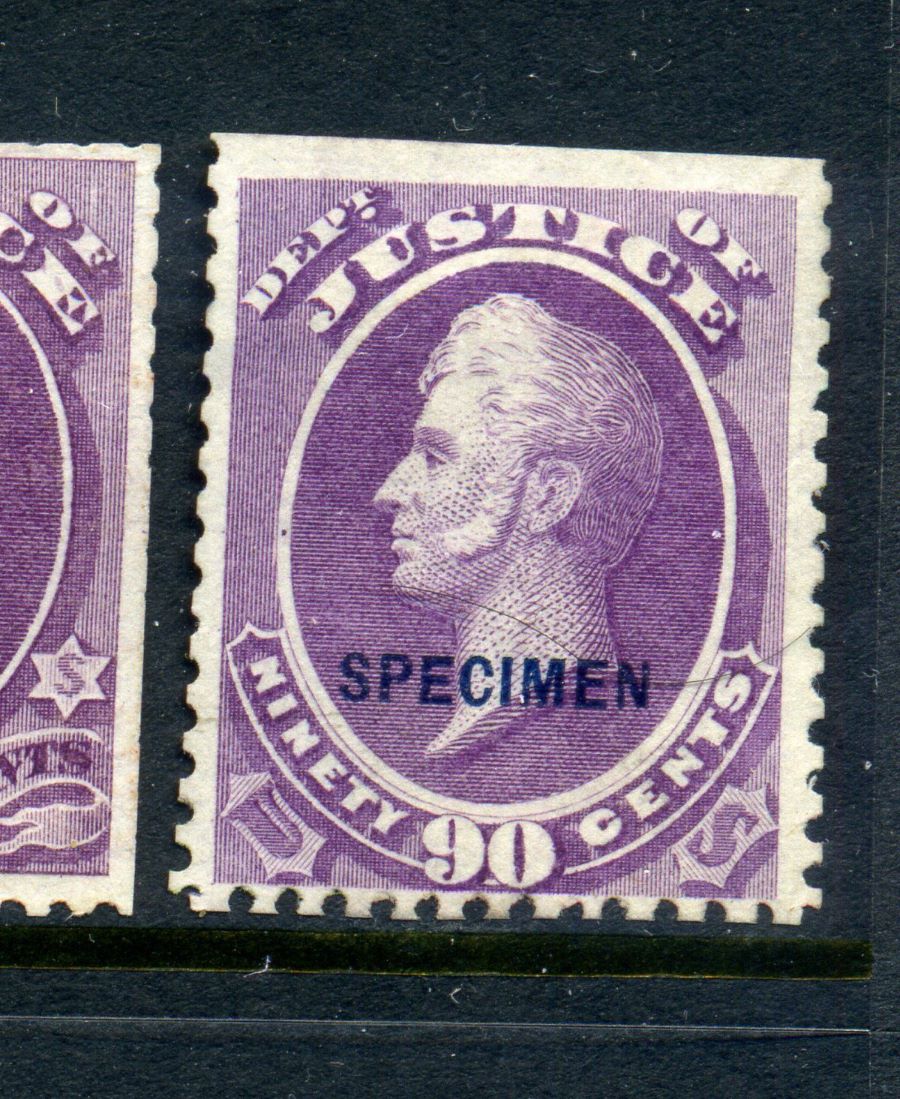 Long way to describe my opinion? Simply a normal stamp the clerk cut from the sheet using scissors. The right edge shows it, both certs agree the bottom is cut. Perhaps not case closed, but far more likely than a sole surviving copy of a stamp nobody has discovered in 100 years. Of course, this is just my opinion for what little that is worth. |
|
Send note to Staff
|
|
|
Replies: 111 / Views: 23,113 |
|
|
To participate in the forum you must log in or register. | |
Disclaimer: While a tremendous amount of effort goes into ensuring the accuracy of the information contained in this site, Stamp Community assumes no liability for errors. Copyright 2005 - 2026 Stamp Community Family - All rights reserved worldwide. Use of any images or content on this website without prior written permission of Stamp Community or the original lender is strictly prohibited.
Privacy Policy / Terms of Use Advertise Here |
| Stamp Community Forum |
© 2007 - 2026 Stamp Community Forums |
| It took 0.24 seconds to lick this stamp. |
 |
|
|
|


 Posted 12/30/2017 4:48 pm





