| Author |
 Replies: 14 / Views: 1,733 Replies: 14 / Views: 1,733 |
|
|
Pillar Of The Community
1375 Posts |
|
|
|
hello,
I wonder about this some months now and already have asked some questions about it, but here now a complete new thread.
When I look at Germany catalogs (Michel), the plate varieties are included directly with value in the catalog, and many people care much about them. When I look for example at re-entries.com for Canada stamps, the varieties are given a very collectible importance, with sentences like "this is one of Canada's scarcest stamps" for the latent lower entry of the 2c small queen.
In US classic stamps, as opposite, I don't understand still the "collection system" for plate varieties. There are some - very few - varieties that are mentioned in Scott with a certain value, like the "TWO CENTS" with foreign entry of the 1c, or the bridge over falls (25c).
In French's encyclopedia there are thousands of varieties explained (without rarity factor or value). But logically some of them must be more common or on the other hand quite rare. But I don't understand how some varieties get the importance in the collectors' world. It can't be because of the rarity or the clarity of the variety, as in French's book there are many varieties that have a greater clarity or are more rare than the mentioned ones above.
Maybe somebody has some thought about his. The questions I have are:
- is there a book for varieties before BEP?
- what makes a variety worth being mentioned in Scott if it's not only the rarity or clarity?
- as I am fascinated especially by foreign entries: do you have other examples of them (with French encyclopedia number or e.g. Siegel link), or are there no other than the mentioned one?
thank you.
|
|
Send note to Staff
|
|
|
|
|
Bedrock Of The Community
United States
10848 Posts |
|
|
There are three revenue foreign entries. The sixty cent value of both the second and third issue has 11 different positions (both were issued from the same plate), and the one dollar fifty second issue, which is one position. Visibility has a lot to do with which plate varieties are more valuable, as does the level of interest back in the 20's and 30's when they were much more popular. Plus auction realizations, which Scott will use for valuations. As an example, look at the double transfer of 569, which catalogs $200 (8X normal)and is fairly easily found if one wants a mint example. It's both large and comes in a dark color, so it's easily seen. However the double transfer of 307 only catalogs $70 instead of $60 mint even though it's positively huge and very scarce, because it's in that pale red brown/orange brown shade and is difficult to see clearly. I have never even seen a mint 307 DT, although I do have a used example. |
Send note to Staff 
|
| Edited by revcollector - 03/05/2018 08:18 am |
|
|
Pillar Of The Community
United States
3293 Posts |
|
|
There are three foreign entries on U.S. Officials. The well known 6c Agriculture entry at position 40 of Plate #75, the 2c Executive. An Alanta trial color card proof. Thined O11s 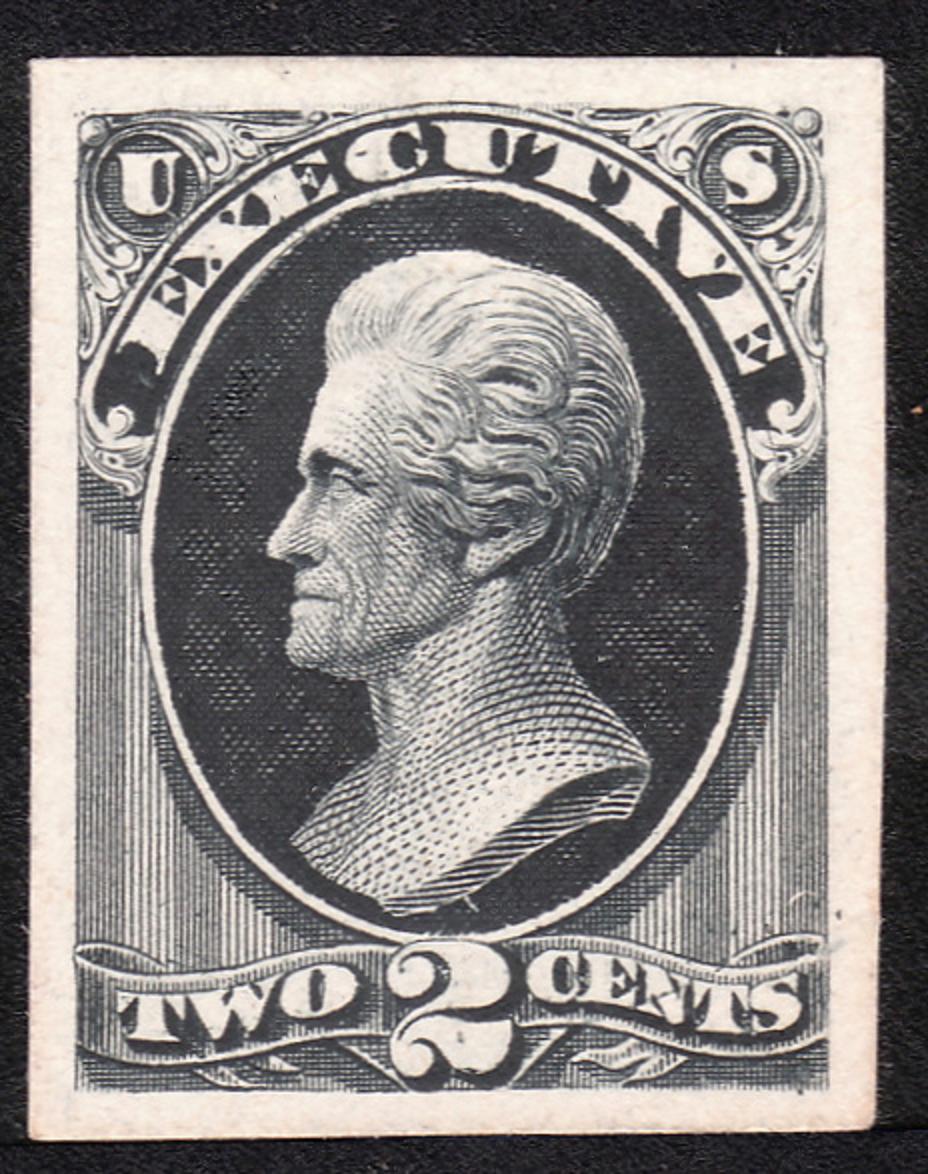 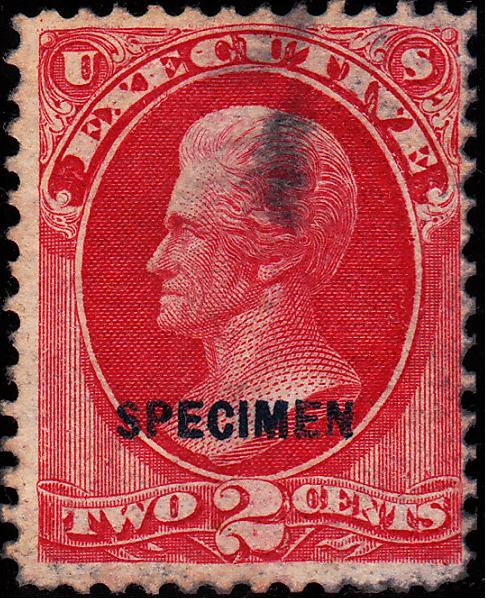 There are two reported foregin entites on the 6c State, Plate # 83. The first discovery of the foregin entry of the 6c Executive (Plate #76) was made by Ralph Ebner on positions 41, 51, 61, 71, 81, and 91. "Although, positions 51, 71 and 81 only show minor dots." http://chronicle.uspcs.org/PDF/Chro...78/11769.pdf The second discovery of a foregin enty of the 1c Ececutive (Plate 82) on position 11 was made by George G. Sayers. http://chronicle.uspcs.org/PDF/Chro...08/12721.pdf |
|
Send note to Staff
|
|
|
Pillar Of The Community
1375 Posts |
|
|
Thank you both, interesting to get this information about revenue and officials foreign entries. So I guess there are no others for the regular issues known? (I don't have any.)
Yes, it's possible that the reasons are in the past when for some plate varieties there were even made names for them. Because, if I look at it today from a logic point of view: if plate varieties are not popular anymore and less collectors collect them, then they should have all lost value, also the named ones. But that's not the case.
So what about the plate varieties before the BEP time, why has there even less been worked on that there even is no book or catalog about them at all? Is the pre-BEP time different in that way that there are just very few varieties and they are mentioned in Scott (in opposite to the BEP time where the most are NOT listed in Scott)? |
|
Send note to Staff
|
|
|
Pillar Of The Community
United States
1946 Posts |
|
|
Quote:
So what about the plate varieties before the BEP time, why has there even less been worked on that there even is no book or catalog about them at all? Studies such as you want to read do exist, but they are not catalogs. This is specialist literature which is found when searched. Article anthologies, such as Sloan's Column (George Sloan) and Pat Paragraphs (Elliott Perry); Periodical runs, such as the Shift Hunter Letters; articles in specialty society periodicals, such as the Bureau/USSS Specialist and the USPCS Chronicle and the NYCC organ Collector's Club Philatelist; single stamp monographs, such as the recent studies of the 2c of 1890 by Richard Morris or the two volume study of the 2c Red Brown of 1883 by Edward Willard, and occasional articles in major publications such as the American Philatelist (esp 1925-1940), Western Stamp Collector, Stamps mag, Linn's, or Stamp Dealer and Collector. All of this is accessible through the APRL who can advise you of what is available digitally and what is not (yet). Since you are not in the US you should join the APRL and look into having articles photocopied/scanned and sent to you rather than try to have books physically sent. The APRL staff routinely assist philatelic judges in researching exhibit topics, and are skilled in tracking down specialist material. Check it out. |
|
Send note to Staff
|
|
|
Pillar Of The Community
1375 Posts |
|
|
thank you. sometimes it's not easy to get the literature here, but your hints are a first step. never thought about the APRL as I thought the most books wouldn't be available digital. I have to check it out.
about my thread here I understood (also after looking at Siegel's database) that there aren't any well-known plate varieties in the time before BEP which are not listed in Scott. for the time of BEP in the opposite, few varieties are listed in Scott but in French's book. I think one has to accept that in US classic stamps there is no consistent market and so cataloging of plate varieties.
if anybody still knows a foreign entry in a regular issue or other plate varieties that are popular and searched for but not listed in Scott, I will of course be happy to read it. |
|
Send note to Staff
|
| Edited by stamperix - 03/07/2018 11:33 am |
|
|
Pillar Of The Community
United States
8956 Posts |
|
|
This may be a little out of your interest, but there are numerous plate varieties in the Transportation Coils and in the Great Americans series. A lot of this has never been catalogued (yet) but is available on line if time permits.
www.pnc3.org has a journal on its website that was issued between 1990 and 1995 approx., "The Plate Number". It has a regular feature in almost every issue of plate faults of the Transportation Coils and in the later issues a lot of ads that advertise varieties of the Great Americans series.
True, it takes a bit of digging but can be rewarding. I know I still find items that I was not aware of!
Peter |
|
Send note to Staff
|
| Edited by Petert4522 - 03/07/2018 6:29 pm |
|
|
Pillar Of The Community
United States
4175 Posts |
|
|
"there are numerous plate varieties in the Transportation Coils"
Some were listed in the Plate Number Coil Catalog published first by Esrati and finally last time by Nazar way back in 1995. Also I think Washburn may have published a book (pamphlet?) on PNC varieties, but I have not seen a copy. |
|
Send note to Staff
|
|
|
Pillar Of The Community
United States
8956 Posts |
|
|
Forgot about that one - Yes, there is a booklet by Robert Washburn but it has been long out of print. The book is "PNC Varieties" by Robert M Washburn. Issued in 1990. With a bit of luck it might be found on ebay? Also, if it helps, the book by Richard Nazar is available as an Ebook. Go to www.usastamps.com/Richard.Nazar.html . It is the 1995 PNC catalog and can be downloaded in its entirety Peter |
|
Send note to Staff
|
| Edited by Petert4522 - 03/07/2018 6:28 pm |
|
|
Pillar Of The Community
1375 Posts |
|
|
thank you both. yes, actually I am more interested in the older stamps. for the BEP time there is French's book, but as I learned now there is none for the time before, or maybe all important varieties are listed in Scott.
one reason why I asked all above is that I have thousands and thousands of US classic stamps to look at in two old stock books, and of course it's always nice to find a variety. And sometimes I wonder if I should keep a stamp because of a dot somewhere, a small double transfer or not keeping. I am the kind of collector to keep very few stamps, I don't want to create a big collection but a really small one with nice items that are not that common (although not "rare" either). All stamps I don't want to keep I am selling directly to invest the money for possible new small purchases. That's why a catalog of plate varieties before BEP, or for all US classic stamps really would help me a lot. For the time before BEP the Scott listings seem to be a good indicator, but for the BEP time there are just so many in French's book that I am a bit lost there ... and in addition I didn't understand the "system" of the plate varieties and its values (see above).
after all I know more now, as said, and will continue searching for the Scott-mentioned varieties and will keep those not mentioned in Scott (only maybe in French) only if they are really visible ones. |
|
Send note to Staff
|
|
|
Moderator

United States
12330 Posts |
|
|
stamprix,
Are you trying to build a collection of stamps that interests you or is of interest to other people?
This is a hard question for many of us. I convince myself that I building a collection for myself but suspect that I am actually also motivated by some level of egotistical showmanship. I also have a bit of a fear that I will trade, sell, or give away some rare variety but I am sure that train left the station a long time ago!
Don |
|
Send note to Staff
|
|
|
Pillar Of The Community
1375 Posts |
|
|
Yes that's just the problem when you sell stamps that you see as duplicates. As said I want to keep my collection really small, why should I keep all those duplicates if they are just common stamps (also with common plate varieties). Looking at the duplicates really lets you learn a lot about stamps but after that I only want to keep the stamps without faults, with good color - and oddities or plate varieties that are nothing you see all day. |
|
Send note to Staff
|
| Edited by stamperix - 03/08/2018 06:07 am |
|
|
Pillar Of The Community
United States
3528 Posts |
|
|
Quote:
I also have a bit of a fear that I will trade, sell, or give away some rare variety...  I've certainly been there, done that ... and I knew quite a bit about what I had. There is a lot to know, and its easy, especially when dealing with covers, to focus on one interesting aspect of a cover, and totally miss another subtlety. stamperix - you ask a good general question, about earlier US stamps. The Scott US Specialized catalog lists most of the major varieties worth real money, although it doesn't necessarily fully explain what they all look like. For that, the information is scattered. My best advice is continue looking at your stamps. If you see something funny, feel free to ask here. If a particular issue or stamp interests you beyond the Catalog-level, then there will no doubt be specialized books and literature for that stamp/issue that people here can direct you to. |
|
Send note to Staff
|
|
|
Pillar Of The Community
United States
3293 Posts |
|
|
Pillar Of The Community
1375 Posts |
|
|
thanks again. yes, I will certainly have a good look at my stamps. I also search at the chronicles archive and found (by looking at the headings) only one article about summarizing some plate varieties: http://chronicle.uspcs.org/PDF/Chro...53/16911.pdfthere are some other, very specialized articles without any images, in that way it is always hard to get how the varieties look. (I also made a search in Siegel's database before and didn't find any plate varieties not mentioned in Scott.) |
|
Send note to Staff
|
|
| |
Replies: 14 / Views: 1,733 |
|



 Posted 03/05/2018 04:17 am


