| Author |
 Replies: 15 / Views: 1,812 Replies: 15 / Views: 1,812 |
|
|
Pillar Of The Community
United States
1170 Posts |
|
|
|
|
Valued Member
United States
30 Posts |
|
|
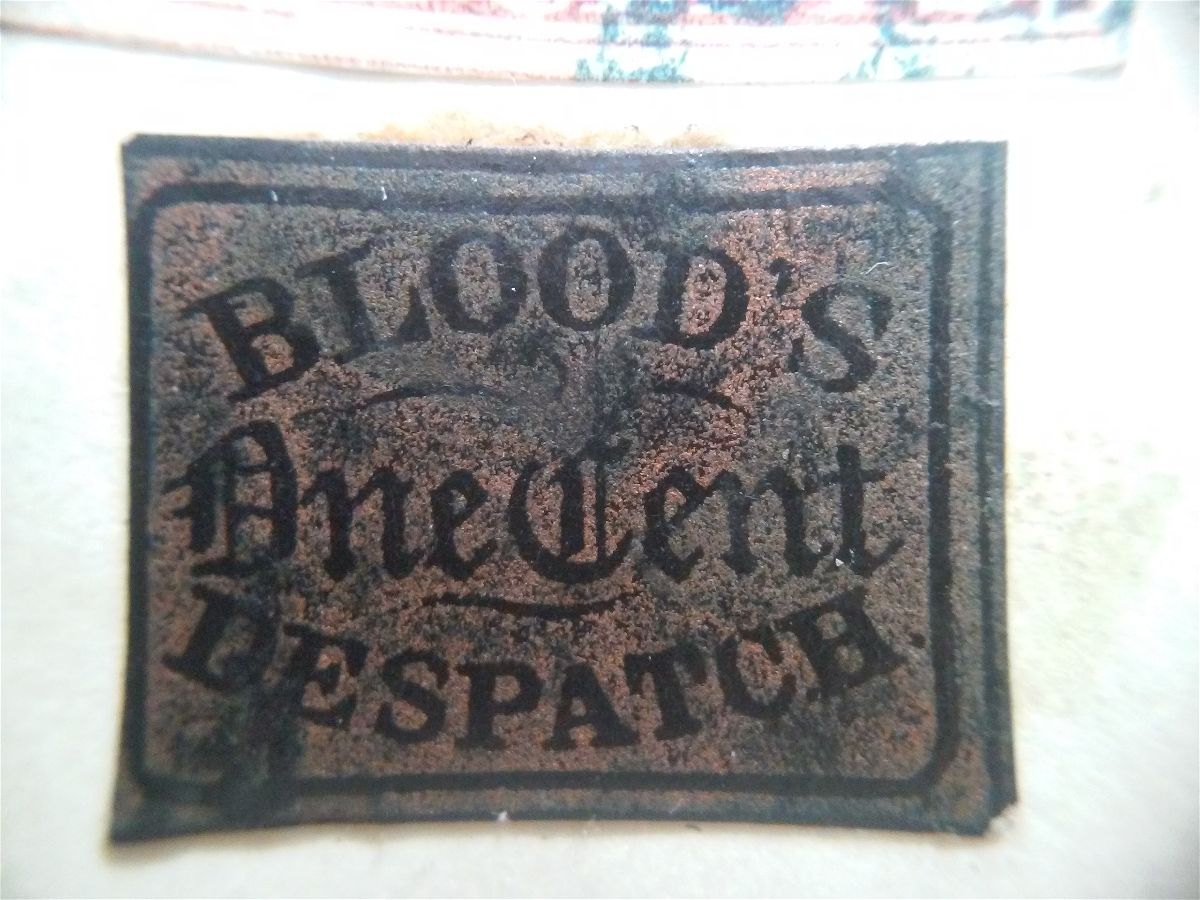
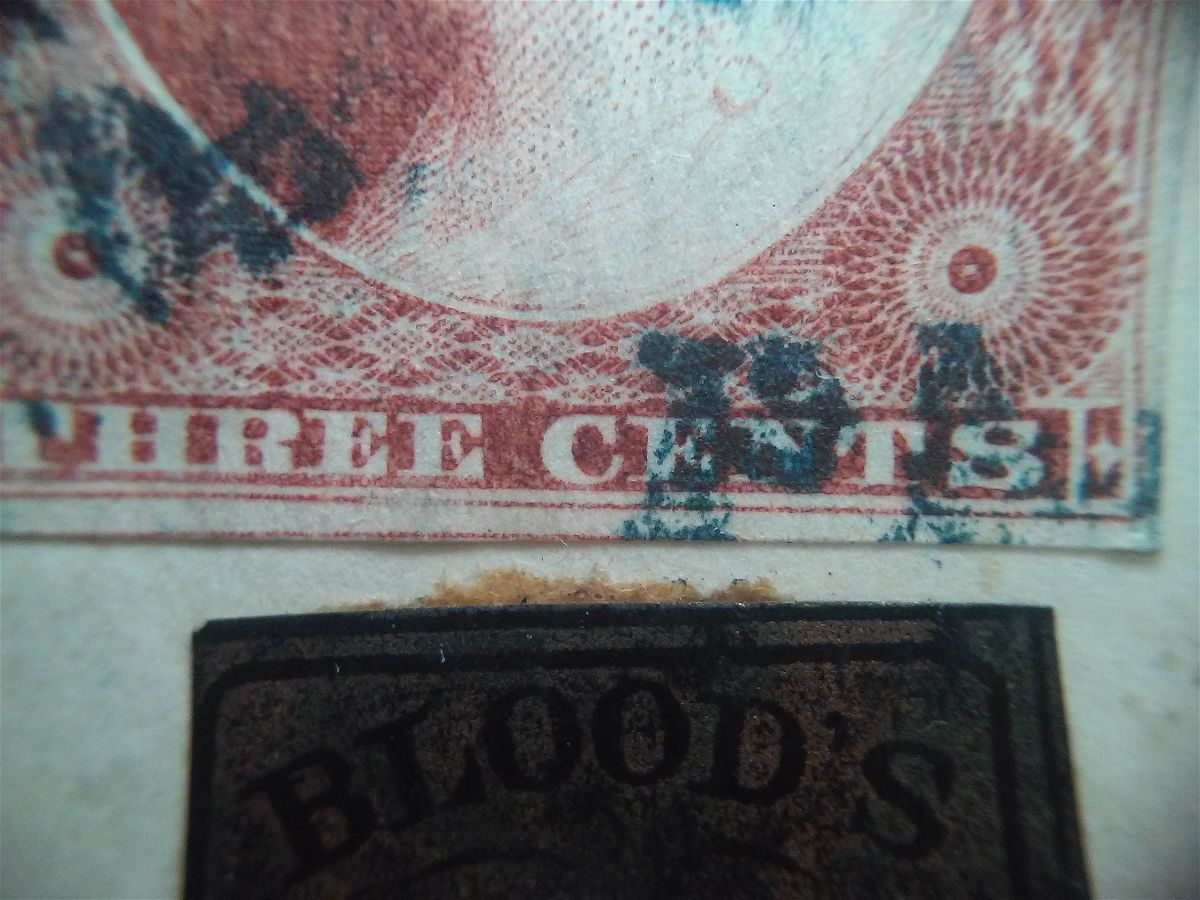
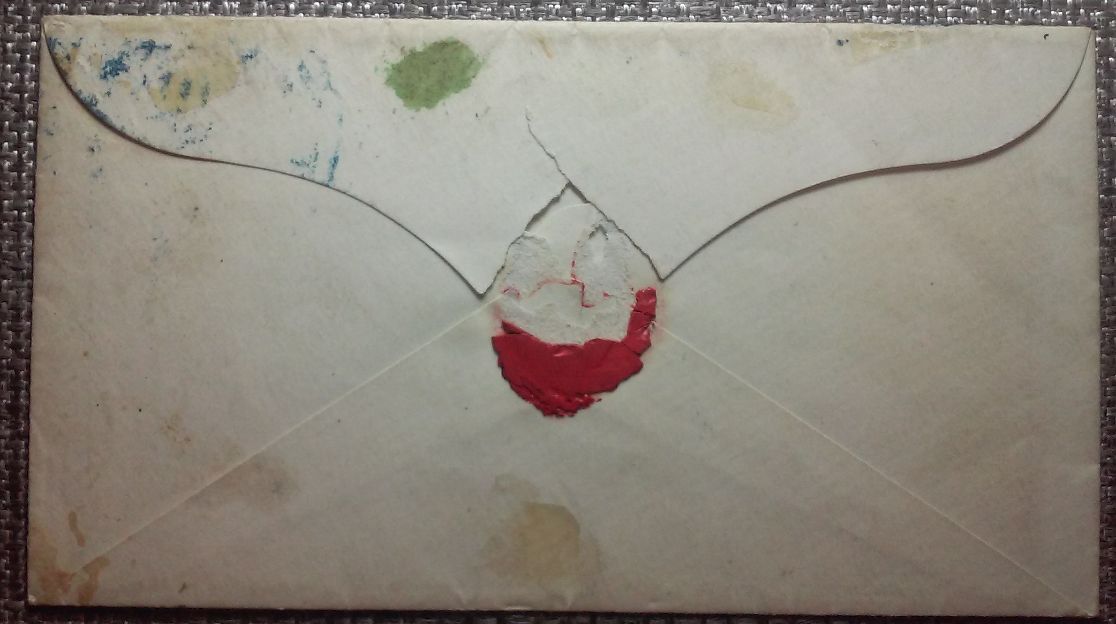
Could the discolored 'paper' actually be added glue that spread out from under the stamp, staining the envelope? |
Send note to Staff 
|
|
|
Pillar Of The Community
6363 Posts |
|
|
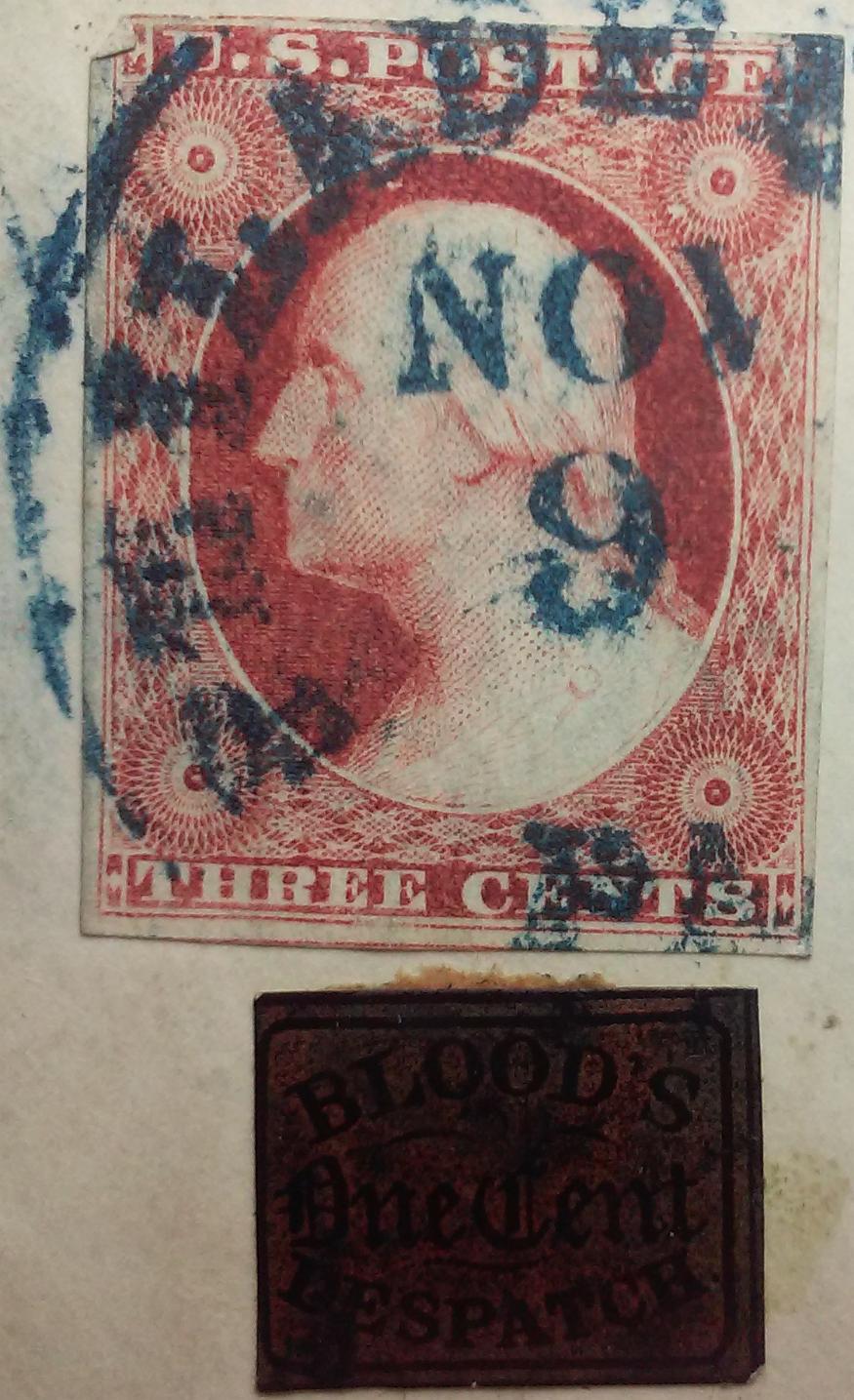
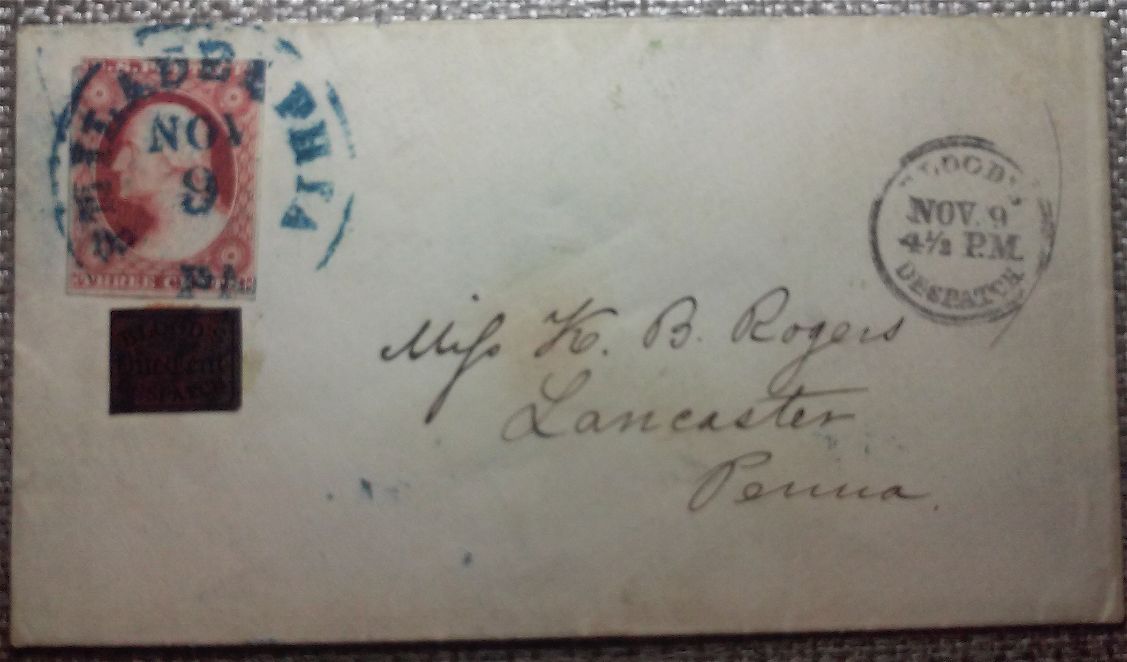
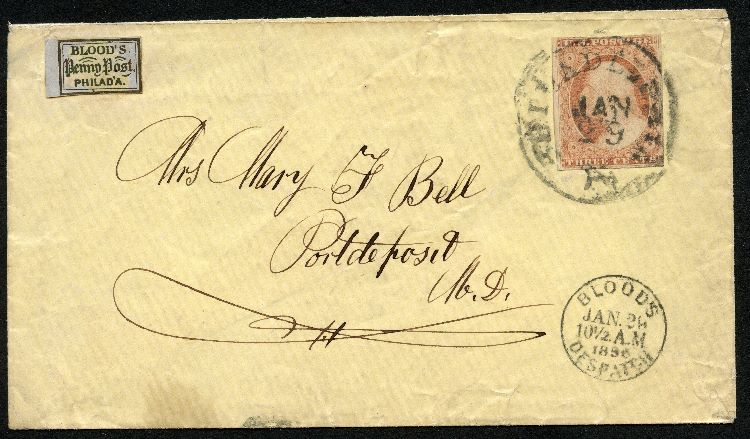
This cover would have been deposited with Bloods who marked it with their circular Bloods Despatch mark, acid tied their local stamp (thus the discoloration to the local stamp) and then delivered it to the Philly PO where the PO only cared about presence of the US postage stamp and canceling it.
Looking at the examples in the Golden Collection (Siegel sale 817), I see no regularity of positioning of either the US stamp or the local stamp.
The truly serious collectors of locals can no doubt expand/correct this post. |
|
Send note to Staff
|
|
|
Pillar Of The Community
United States
1170 Posts |
|
|
It looks like a paper soaked in glue but between the stamp and envelope. If it is glue it looks like it has fibers in it. 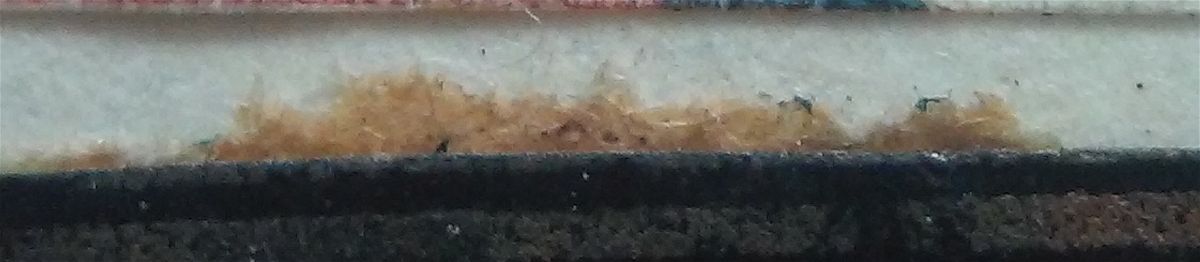 |
|
Send note to Staff
|
Michael Darabaris |
|
|
Valued Member
United States
319 Posts |
|
|
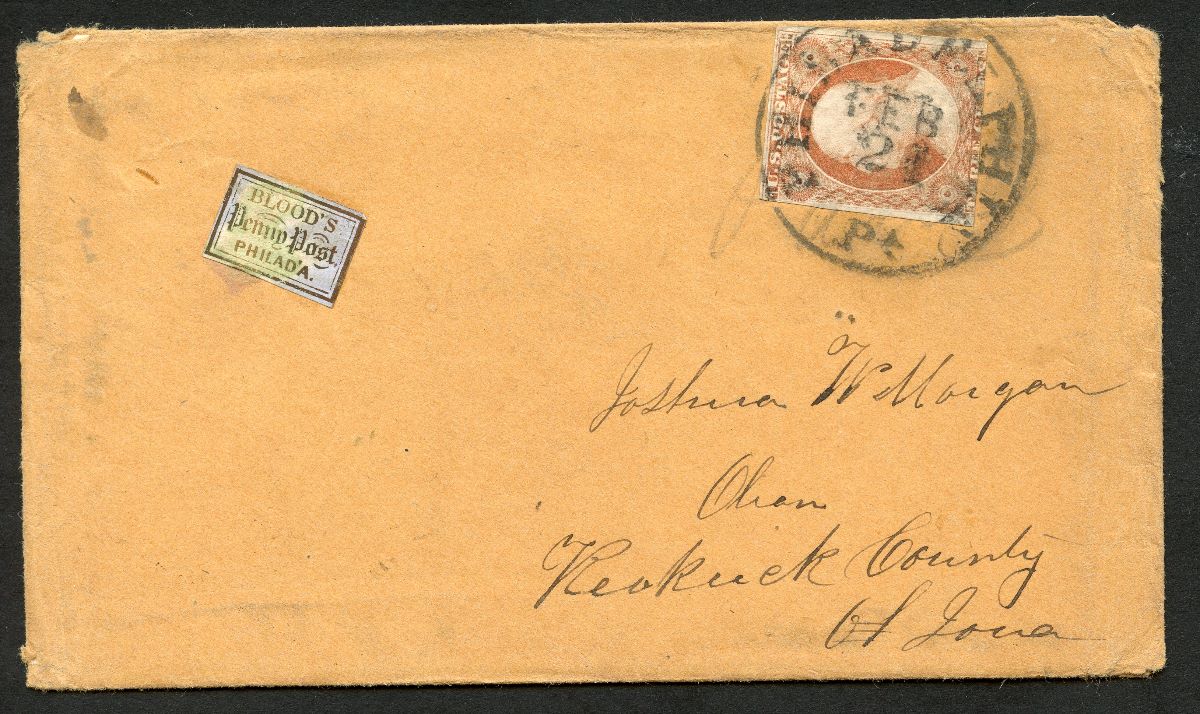
Taking a step back for a second, and observing this cover from a logical standpoint, there are several characteristics that are important in determining whether the stamp originated on the cover. First, there appears to be an obvious adherance on the back of the Blood's local stamp, suggesting it had possibly been on a cover prior to this one. Secondly, I see no continuity between the surface of the stamp and the surface of the cover indicating that it was originally adhered to this cover. Third, I see no visible sign that the stamp is "tied" to the cover in anyway as far as the cancellation originating on the stamp and continuing onto the cover, or any other type of visible evidence. For these reasons, and not knowing the nuances of this particular stamp or issuer in detail, I would conclude that the stamp did not originate on this cover. Again, these are only observations and based more in logic then specific knowledge of this area of collecting. |
|
Send note to Staff
|
|
|
Pillar Of The Community
United States
1170 Posts |
|
|
Hi Reededge!I collect stamps because I enjoy it! So this discussion is to get a better understanding of how this cover came to be. I agree with most of what you say. But now I ask this; so why is the local on this cover? The assumption is that someone was trying to improve a very nice cover and create more value. Correct? Okay so then why did this person do what he did? I would assume he was a some what knowledgeable stamp collector, being the fact that he was collecting locals on cover. So I would also assume he knew a little about acid tied, postmark tied, postal history and the difference between used and unused stamps. So now I would say an above average collector. If he was making a cover that is consider rare and would receive a lot of scrutiny, wouldn't you create it in such a way that most people would assume it is legit? For one I don't know of anyone in the stamp field who I would consider an average collector of classics would use a stamp that has paper from another cover attached to it and apply to another valuable cover where not only is it obvious, but that is the only way the blue postmark attaches the local to the cover! Not a very convincing way to apply another used stamp and have it tied to postmark. Again why make such a crappy cover that would not create that much more value and raise questions when you could in the same amount of time made a much more convincing cover? Maybe he is a very clever collector but I think that we are stretching our imagination creating this scenario. Isn't there a scenario giving a possible explanation how the dispatch could have applied this stamp? Which one is more plausible? Thanks! |
|
Send note to Staff
|
Michael Darabaris |
|
|
Pillar Of The Community
United States
3528 Posts |
|
|
The franking and usage is perfectly normal.
The question, which you guys are of course discussing, is did the local stamp originate...
My only comment(s) here are:
- Philly certainly had carrier service, and the CDS corresponds to the proper town for this local.
- Many many of these bloods local stamps show some sort of bleed of either gum or whatever next to them on their respective covers. It is a pervasive issue, and this one doesn't seem really, much different from at least half of the ones I just looked at. Now, I freely admit that I don't know the logistics of how these stamps were applied (i.e. the so-called acid tying) and the composition of the gum. That is a fair question, and I would be interested to learn the details of it, as these particular locals did seem to have a slightly different method of affixing them than others. |
|
Send note to Staff
|
|
|
Pillar Of The Community
United States
1170 Posts |
|
|
Did these covers get sent without a stamp but with only a cancel? Or if they cancel, they apply a local stamp? |
|
Send note to Staff
|
Michael Darabaris |
|
|
Pillar Of The Community
United States
3528 Posts |
|
|
The sender would have had to prepay the 3c US postage with the 3c stamp. Presumably the cover would be handed to Blood's as such, along with payment of 1c for the carrier to the mails service.
Blood's would then apply their stamp and their postmark. Once they delivered it into the US post office at Philadelphia, the 3c stamp would then be postmarked, to indicate that it had entered the US mails officially.
I'm sure there are variations of the above, for convenience -- some cases are known where Blood's took covers directly to a ship, for example, instead of to the post office first, resulting in the lack of a Philadelphia postmark. |
|
Send note to Staff
|
|
|
Pillar Of The Community
United States
1170 Posts |
|
|
Hi Txstamp, not sure if my question was clear, would Blood's in some cases, put their cancel on cover without affixing their stamp? |
|
Send note to Staff
|
Michael Darabaris |
|
|
Pillar Of The Community
United States
3528 Posts |
|
|
I have seen Blood's postmarks without the adhesive in addition. Maybe what I saw was a different marking, that also had an embedded receipt for payment in the postmark - I don't recall.
That said, I'll defer at this point to someone who has studied Blood's methods of operation, for a clearer explanation. I can only speculate at this point. |
|
Send note to Staff
|
|
|
Valued Member
United States
319 Posts |
|
|
As I said previously, this is an area that I know little about. So, I defer to txstamp's comments above. He is, by all accounts, far more knowledgeable in this area than I am. I was just applying conventional expertizing methods to perhaps an unconventional area of philately. Thank you for both the education and insight. |
|
Send note to Staff
|
|
|
Pillar Of The Community
United States
3528 Posts |
|
|
The carrier and local arena is full of not only fake adhesives, but also many altered covers. It is appropriate to subject any to some degree of scrutiny. |
|
Send note to Staff
|
|
|
Pillar Of The Community

United States
1273 Posts |
|
|
Pillar Of The Community
United States
6668 Posts |
|
|
Love how the bloods CDS shows ½ instead of :30 for time on the half hour. |
|
Send note to Staff
|
|
|
Pillar Of The Community
United States
1170 Posts |
|
|
So again can you have the bloods cancel without the stamp? I see you can have the stamp without the cancel. |
|
Send note to Staff
|
Michael Darabaris |
|
| |
Replies: 15 / Views: 1,812 |
|




 Posted 03/15/2018 1:48 pm