| Author |
 Replies: 56 / Views: 12,850 Replies: 56 / Views: 12,850 |
|
|
|
Valued Member
Belarus
75 Posts |
|
|
Moderator

United States
12330 Posts |
|
|
An image of a Dandy roll to help folks visualize what paper might look like when machine made... 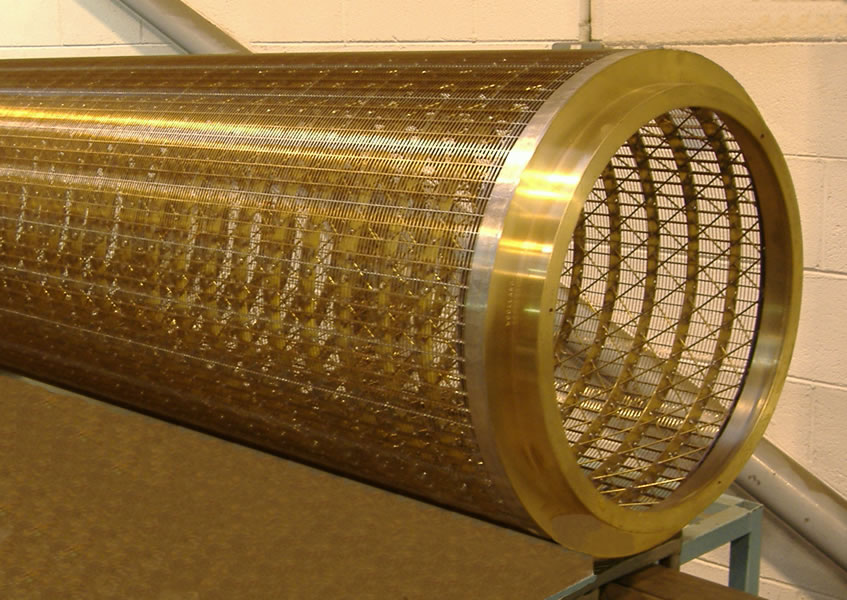 Don |
Send note to Staff 
|
|
|
Pillar Of The Community
1375 Posts |
|
|
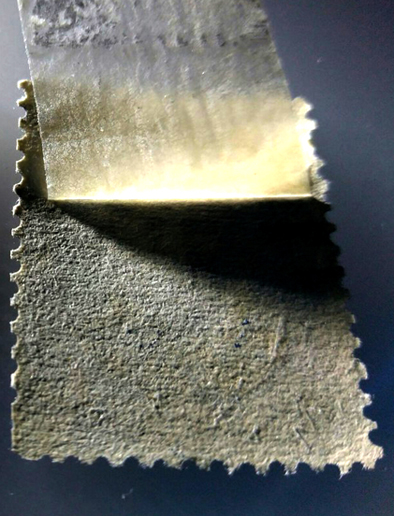
For me Phil's last photo seems to show the ribbed paper, Valera's stamp could be normal paper texture although I see the lines there, too. Maybe essayk has some additional hints for us how to identify it (when there is time). I show here the best photo I can do from my ribbed paper stamps, at the right you can see the lines quite well. By the way I only have 1 stamp horizontally ribbed while several vertically, although Wiley wrote in his 3c-book that the ratio would be 8:1 horizontally:vertically. 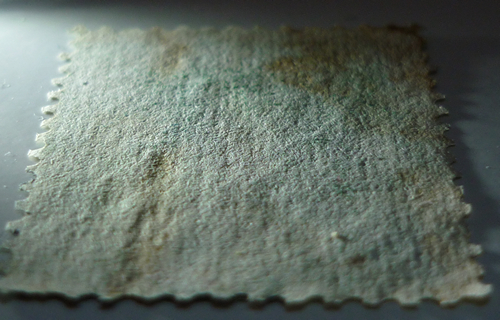 |
|
Send note to Staff
|
|
|
Valued Member
213 Posts |
|
|
I'd appreciate it greatly if posts include both the front and back, makes my job easier. Here's an example (Note, I have this variety on the 1c, 2c(brown) and 3c CBCo. issues): 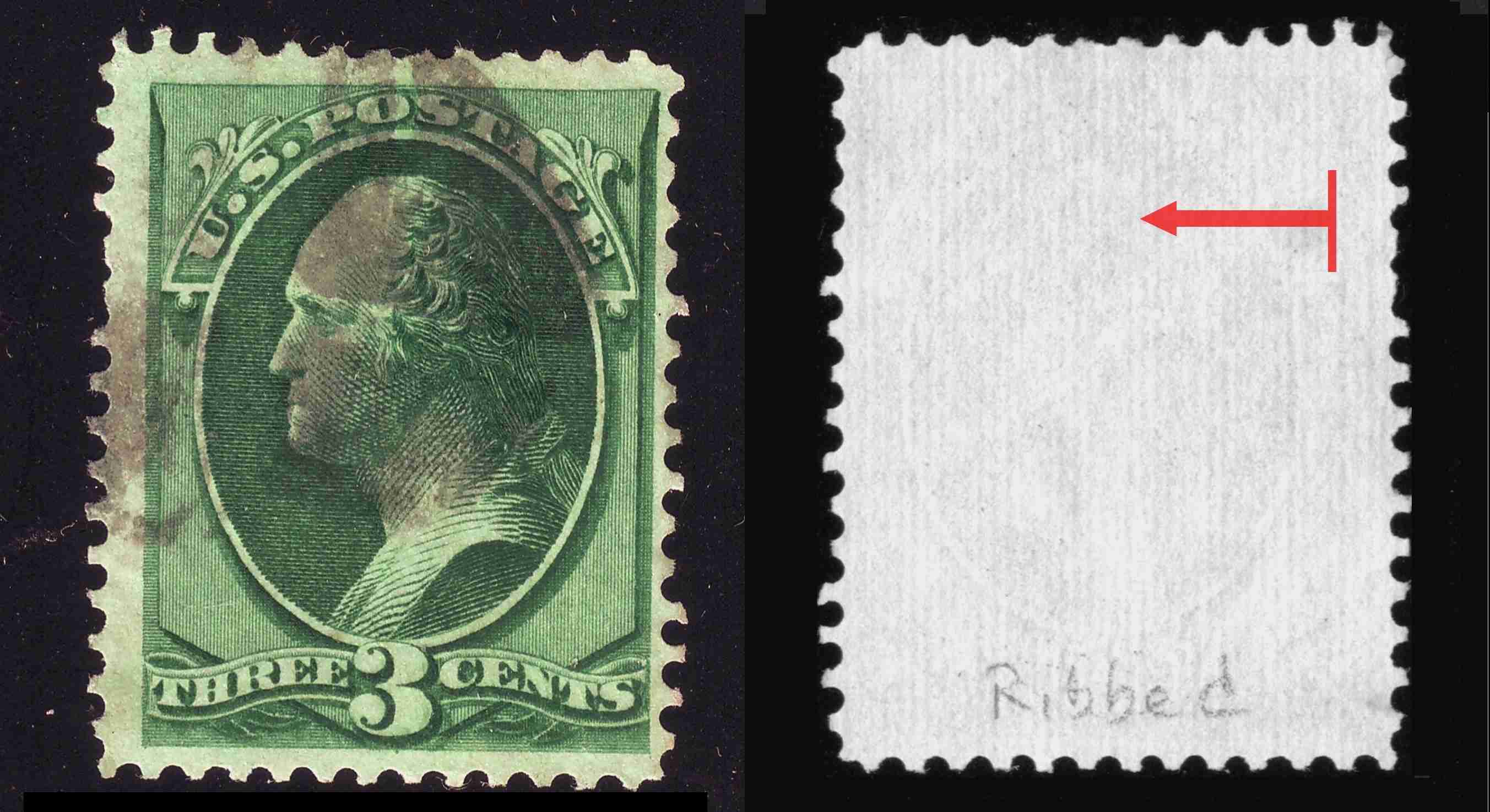 |
|
Send note to Staff
|
|
|
Valued Member
213 Posts |
|
|
Students of paper, I think you're getting a little off track. Quoting books from the mid-20th century, we've long since moved on. May I suggest you read a more recent work such as "Rag Paper Manufacturing in the U.S., 1801-1900" (McFarland & Co. 2010) It is still in print too. I also have a follow-on work too, but not currently in print. Be that as it may, allow me to quote from the bibliography so 'students' can see what the current state of research is:
ALL-OVER WIRE WATERMARK: A watermark left in the paper by the primary wire of the cylinder-wire machine; especially strong in rag paper made with centrifugal pump; somewhat weaker in papers made from alternate fiber papers, or earlier papers made with the old-style force pump
DANDY ROLLER: the suction roller on a paper machine embellished with raised lettering or patterns designed to leave a watermark in the paper.
LAID PAPER: A term used by stationers to describe various writing papers that exhibit laid-line watermarks (white laid, blue laid, etc); laid-line marks originated from laid molds, and later imitated on a paper machine using a dandy roller; prior to introduction of the dandy roller laid-line marks in machine-made paper were imitated by a custom-made primary wire
LAID-LINE WATERMARK: A machine-made watermark designed to imitate the pattern of traditional handmade laid paper
WIRE-WOVE WATERMARK: A watermark created by the primary wire of the paper machine
WOVE PAPER: A term used by stationers to describe various writing papers that exhibit wove watermarks (white wove, blue wove, etc); wove marks originated in wove molds, then later came from the primary wire of the paper machine, or were imitated by a dandy roller
WORN PRESS FELT MARKS: Watermarks left in the paper by the paper machine press felt
|
|
Send note to Staff
|
| Edited by AJ Valente - 03/21/2018 08:38 am |
|
|
Pillar Of The Community
1375 Posts |
|
|
thank you AJ. Sure I can deliver on occasion the front image (it's a 3c bank note 158), but the starting point here in this thread was Valera's stamp, and he has shown many scans, also back & front - so what is your opinion about his stamp?
Yes, I mentioned an old book, but to explain this, it was a rhetorical question, so thought until the end, I am interested why he has written about such a ratio and what we would say today in opposite?
and third question, if you allow: you don't mention the word "ribbed", as it may not appear in the recent research to paper. but as long as Scott uses this word, to which of your paper subtypes would "ribbed" be a match?
|
|
Send note to Staff
|
|
|
Valued Member
213 Posts |
|
|
Sorry, I'm not done yet.
Now, to clarify for everyone, the vertical ribbing alluded to previously are worn press felt marks, and therefore classified as a watermark.
The reason the 'ribbing' appears more as a surface feature is because the marks were created in the wet section of the paper machine. That is, after the primary wire but before the dryer section. In this section of the paper machine the paper is carried by a 'press belt' and there are various rollers used to press the wet paper to remove excessive moisture. The suction roller, incorporating a dandy in some instances, is the last roller before the hand-off to the dryer section. Suction is used at this point to draw-off remaining moisture, but also to firmly handle the wet sheet to prevent any tearing during the hand-off.
Now, the press belt is a 2-ply belt. The upper ply is a fine woven material designed not to leave any marks in the paper. Unfortunately, this material doesn't stand the rigors of time, so there's an under-ply made of a strong textile to keep the belt from stretching and going limp.
Consider this; What happens to the press belt, over time? The upper ply gradually wears out and the belt is replaced. So, think of the ribbing as wear bars on automobile tires. When the marks begin to appear, the belt should be replaced. If it's not replaced soon enough, the characteristic ribbing will get stronger and stronger.
Now, the theory I'm working on is that the ribbing starts off rather shallow, then gets stronger over time. The assumption is that belt wear is even, therefore the marks cover 100% of the surface (e.g. wear bars on tires are even throughout).
Bottom line, what I'm saying is that if your stamp does not look like the example presented above, then it's not a worn press felt mark. Partial marks, partial ribbing, hints of ribbing, etc. simply come from some other aspect of the manufacturing process. If it can't be classified as a worn press felt mark, then at best it's a miscellaneous variety that has nothing to do with the subject at hand.
|
|
Send note to Staff
|
| Edited by AJ Valente - 03/21/2018 09:33 am |
|
|
Valued Member
213 Posts |
|
|
Stamperix,
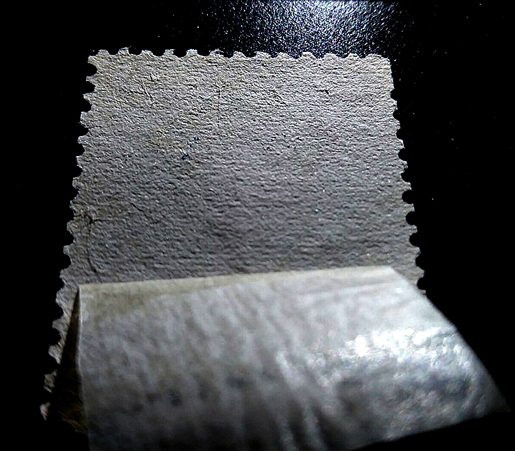
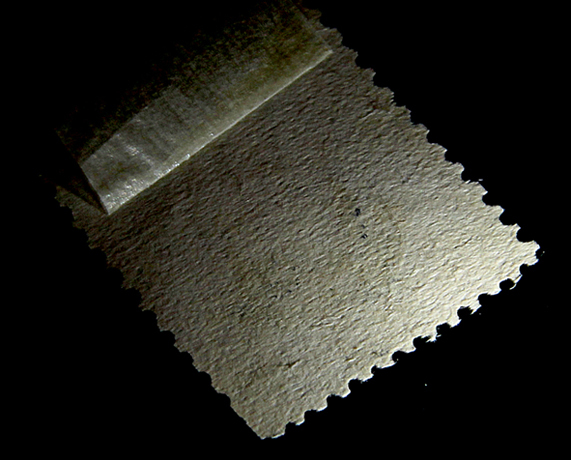
To be clear, Valera's items are miscellaneous marks, some of which are through-hole patterns left by the primary wire.
The only item I would classify as 'ribbed' is the item you posted, and I would very much like to see the front.
-AJ |
|
Send note to Staff
|
|
|
Valued Member
213 Posts |
|
|
Stamperix, I appreciate what your are saying with regard to Scott. And, allow me to apologize to you. It's true, you are expressing the current understanding of 99% of American collectors and dealers.
The thing is, what Scott is reporting is partially correct. There are large numbers of stationery envelopes listed in the catalog. To call these stationery papers laid or wove is perfectly acceptable and correct. The problem arises when the same terms are applied to stamp paper.
Printing paper and stationery paper are two different things like apples and oranges. Round fruit, yes, but not otherwise the same. A printer doesn't go down to the local stationery store to stock-up before producing a book or magazine. And, the public at large doesn't go to a print paper warehouse looking for some attractive stationery.
It's a huge, gigantic misunderstanding on the part of Scott to call otherwise unwatermarked American print papers "laid" or "wove." What the printers do is select a kind of paper to produce an intended result. This is the fundamentals of philately. Collectors should know what kind of paper is being used just as they are informed the kind of printing process.
So, if the lunch lady tells you a 'round' fruit will be served for dessert--what does that tell you? At best it is intellectually lazy, and at worst dishonest.
-AJV |
|
Send note to Staff
|
| Edited by AJ Valente - 03/21/2018 10:47 am |
|
|
Pillar Of The Community
United States
1946 Posts |
|
|
Your image of ribbing is the most like what can be seen in good viewing. Thank you for the pics, A. J., and for the 2010 reference. May we know the name of the author? Presumably this new research will be in critical dialog with the earlier work. Quote:
The reason the 'ribbing' appears more as a surface feature is because the marks were created in the wet section of the paper machine. This reads like an assertion. Do you have a citation for this? |
|
Send note to Staff
|
| Edited by essayk - 03/21/2018 10:56 am |
|
|
Pillar Of The Community
United States
2555 Posts |
|
|
I have felt from the beginning that the stamp that has received so much attention was nothing more than a soft paper stamp, a rather typical appearing soft paper stamp at that.
I have at least one nice example of a ribbed paper 15c Continental. |
|
Send note to Staff
|
|
|
Bedrock Of The Community
12747 Posts |
|
|
Pillar Of The Community
1375 Posts |
|
|
Thank you again, AJ, for all your answers. I have to read some parts again and translate some terms from English, but I started understanding it. As you wanted I show you here the front of my stamp where I showed the back. By the way I always have difficulties to make a scan of the back of a ribbed stamp, as they better show in oblique light. Of course I am interested in anything you want to add about my stamp once you now have seen the front. Also, I would be interested in the "ratio thing", so what do we know today about the ratio of vertical and horizontal ribbed stamps, why could Wiley be so wrong, and why in the Scott sometimes the orientation is mentioned, and sometimes not. One answer leads to 100 questions. 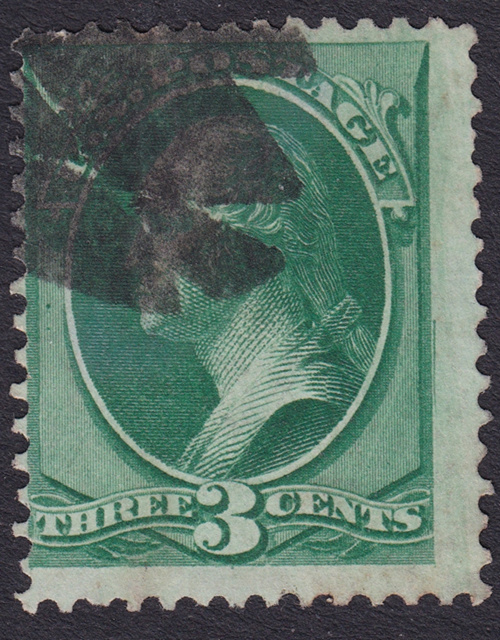 |
|
Send note to Staff
|
|
|
Pillar Of The Community
United States
2555 Posts |
|
|
Here you go Rog, AJ, et al... 15c Continental on vertically ribbed paper. 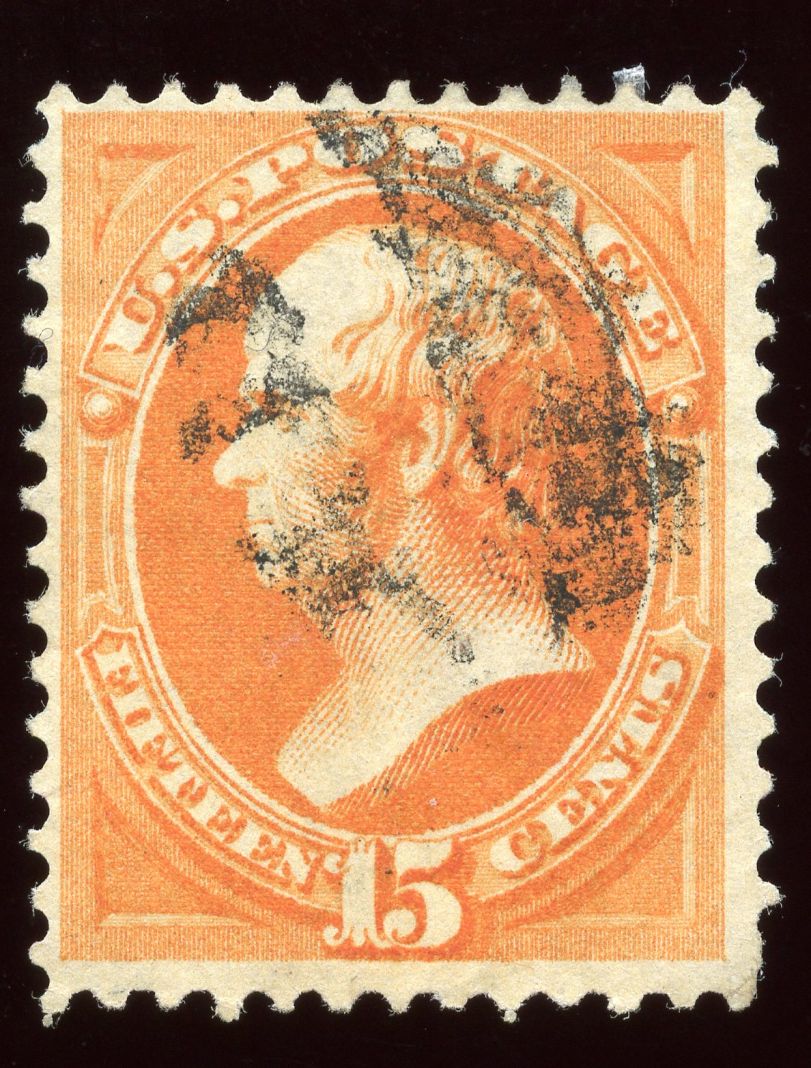 |
|
Send note to Staff
|
|
|
Pillar Of The Community
1375 Posts |
|
|
how does the back of your 15c stamp look? Just to see and learn about the ribbed lines. |
|
Send note to Staff
|
|
|
Replies: 56 / Views: 12,850 |
|



 Posted 03/21/2018 02:24 am