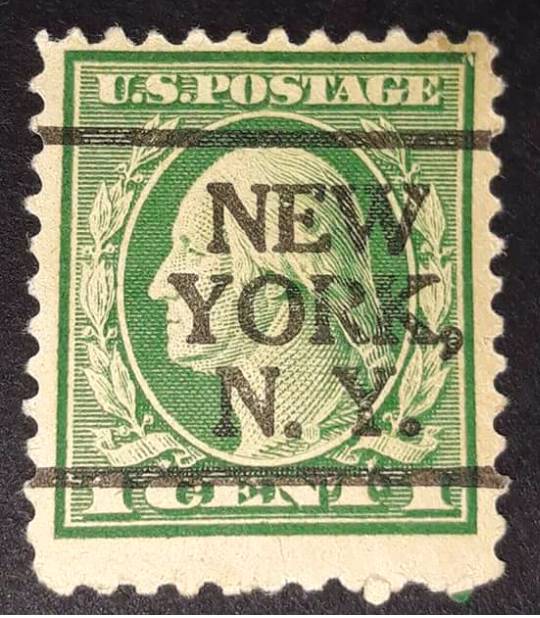
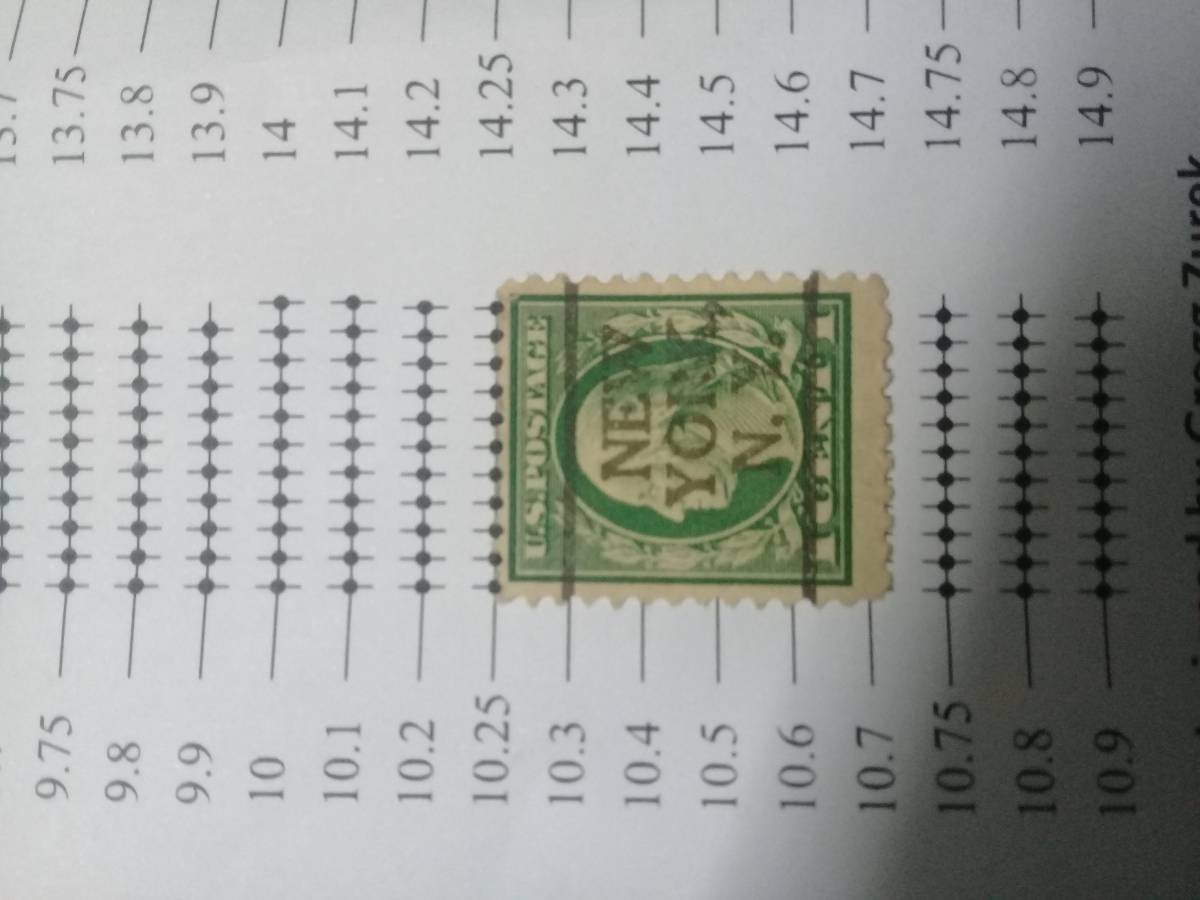
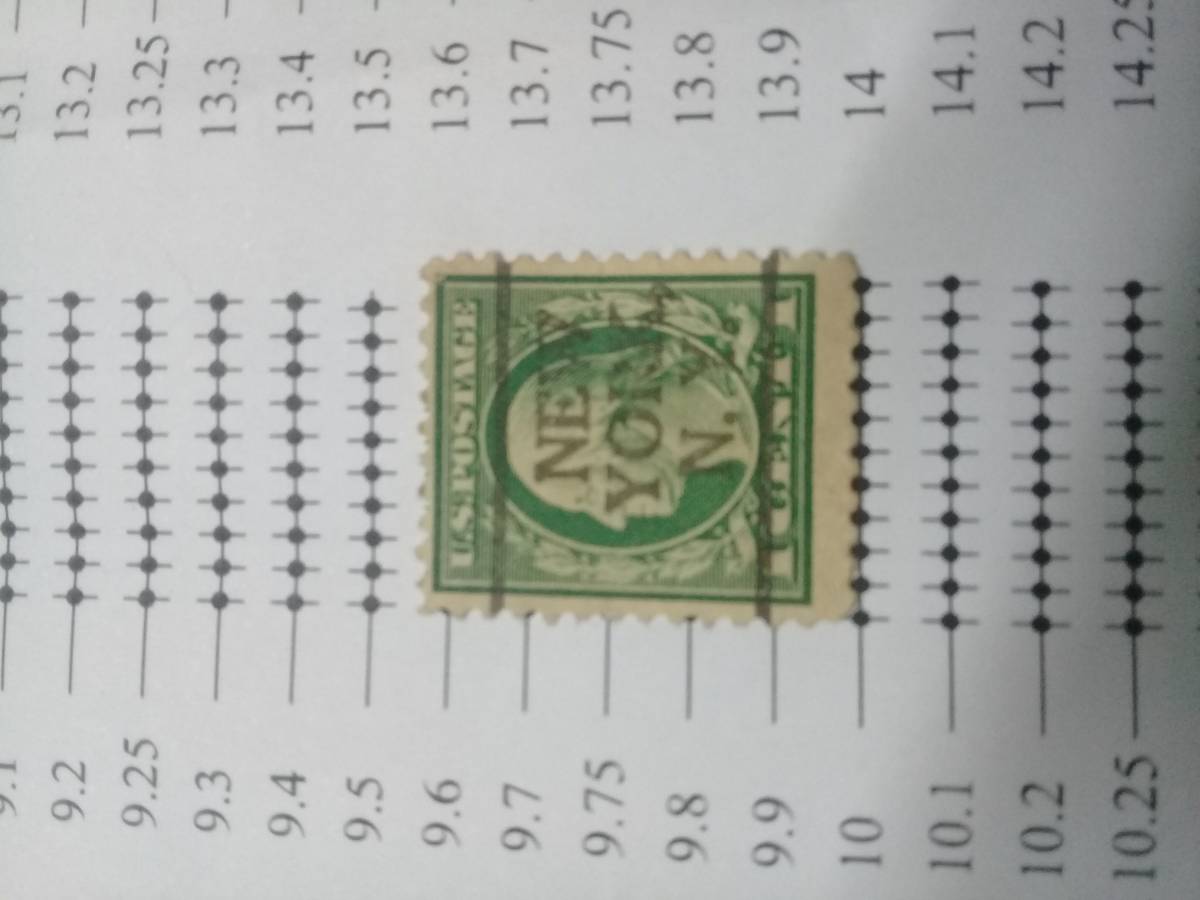
petermegally, this is a very interesting result. I notice that the perforation gauge you are using is not the printed one from StampSmarter. Is your gauge a standard manufactured gauge, or did you print it out from a source?
The reason I ask, is that I am sure that the top/bottom perforations are actually perf. 11, not perf. 10. On the gauge you are using, it appears to be aligned with the perforation gauge scale you reference, but I am suspicious about the gauge you are using. If you copied or printed the perforation gauge, was it a 1:1 scale copy or print?
I have scanned 5 different 1c Washington stamps:
Scott 405 P.12, width: 18.50+mm height: 21.75+mm
Scott 462 P.10, width: 18.50+mm height: 22.00-mm
Scott 498 P.11, width: 18.50+mm height: 22.00mm
Scott 542 P.10, width: 18.00-mm height: 22.50+mm
Scott 543 P.10x11,width: 18.75+mm height: 22.50mm
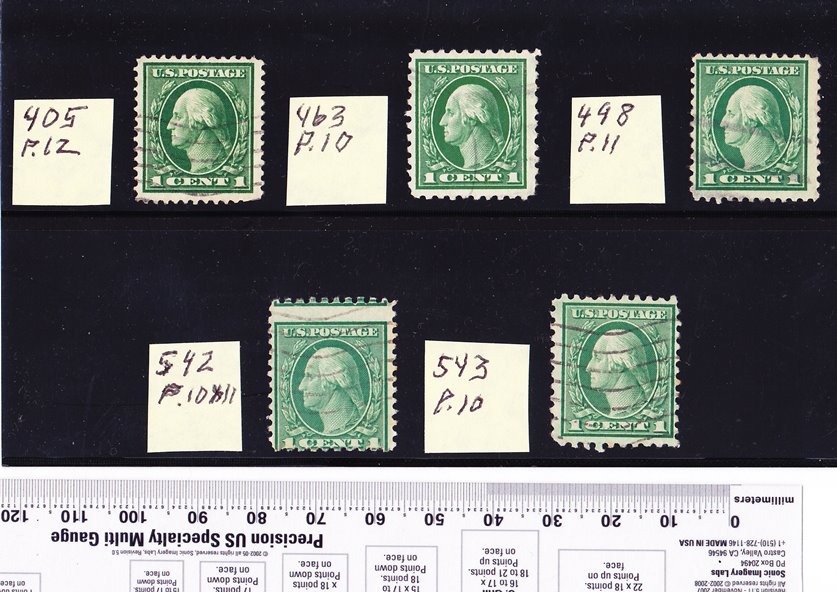
(Note: the "+" and "-" after the measurement indicates that it is close to the measurement, but slightly less or more as indicated)
Note that for each of these stamps, the number of perforation tips along the "edge to edge" length of the top and bottom of the stamps is very close to the perforation gauge for the stamp.
For example, for the Scott 405, there are about 12 perforation tips from the left edge to the right edge, as the tips are nearly aligned with the edges.
I am curious about your stamp gauge, because it shows 11 perforation tips between the left and right edges of the stamp design, not 10. So, I conclude that yours is perforated 11 at the top and bottom, not 10.
I KNOW that the perforation gauge definition is the number of perforations counted for a 20mm length. Each of these are 18.5 to 19mm width designs. So, if I count the perforation tips, and get a number x in the 19mm, I know that the gauge will be an equal or greater number than what I count, so the same gauge or larger.
What do you think?





 Posted 06/22/2018 12:48 pm