| Author |
 Replies: 49 / Views: 4,087 Replies: 49 / Views: 4,087 |
|
Valued Member
282 Posts |
|
|
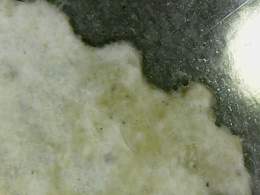
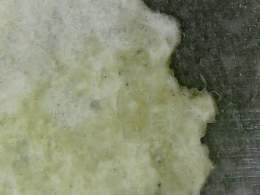
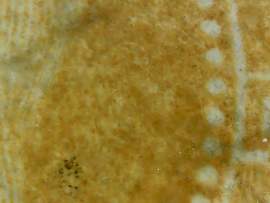
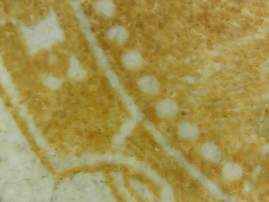
Hi everyone I recently had this stamp certified and it came back saying it was genuine , pressed to remove creases, tiny thin and cleaned. Also it said it was a Scott's 112 and its color was buff. Im not complaining but I just want the truth. I really thought it was a 112b because of no grills so that kinda was what is really funny .I didn't know if you could make grills disappear? The reasoning may be that they disappeared was, the stamp was pressed sounds good right. I really wonder why their is still gum on the back? I would think you might soak a stamp first in order to soften it , but their would not be any gum right if you did that. Maybe it wouldn't necessarily to soak I really don't know. Also I wondered about the crease's I see something like cuts but not really creases I don't know if that matters . I think the only way to be sure if it was pressed is to measure the stamp. It should be the size of the 112 stamp I think, maybe not . This might solve this mystery for good. If you have any idea's let me know,I really don't want try another stamp authentication company, to much money. Thanks Dan 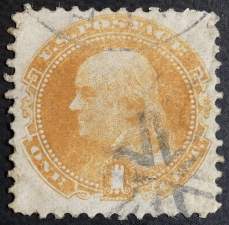 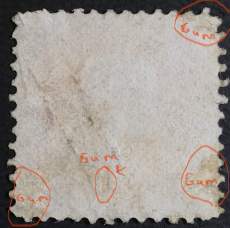 |
|
Send note to Staff
|
| Edited by Dan Townsend - 02/13/2019 3:49 pm |
|
|
|
|
Valued Member
213 Posts |
|
|
The original paper color is a bright white, however the paper also contains a good portion of starch in the form of gluten. The purpose of the starch is to reduce cost, and it's not just US stamp paper but virtually every cotton rag paper made in the country from 1858-and on.
Due to environmental conditions (handling, exposure, etc.) the paper turns a shade of gray (toning). It's the starch that picks up crud (flakes of lamp black, dirt, etc.) and once the paper makes that transition it cannot be reversed.
If ever one sees this condition (gray paper) on stamps of 1859-1878, just remember that the stamp is considered to be damaged. |
Send note to Staff 
|
|
|
Pillar Of The Community
United States
1820 Posts |
|
|
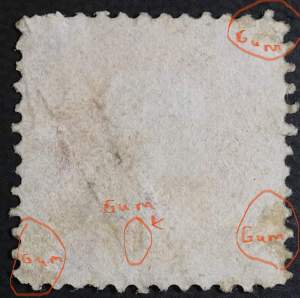
Dan, the Forum would need close-ups to give an opinion on the presence/absence of a grill and/or the spots you have identified as gum. |
|
Send note to Staff
|
|
|
Valued Member
United States
283 Posts |
|
|
It's such a rare stamp to begin with. I think only 9 or 10 copies exist. None used. The variety is classified as "Without grill and with original gum". |
|
Send note to Staff
|
|
|
Bedrock Of The Community
12747 Posts |
|
|
I do not quite understand why this stamp was sent for a cert given it's condition. Wasn't the cost of the cert equal to or more than the stamps retail value? |
|
Send note to Staff
|
|
|
Valued Member
282 Posts |
|
|
Valued Member
282 Posts |
|
|
That's funny you asked before I sent it, I emailed the expert with pictures and he thought I should send it to see if their were grills I wasnt going to but thats the way it hapened.
I guess you take chance's |
|
Send note to Staff
|
|
|
Pillar Of The Community

United States
5471 Posts |
|
|
US Scott 112b catalog $35,000+. No used copies known to exist. |
|
Send note to Staff
|
| Edited by redwoodrandy - 02/14/2019 12:22 pm |
|
|
Valued Member
282 Posts |
|
|
Bedrock Of The Community
12747 Posts |
|
|
Valued Member
216 Posts |
|
|
Can you take a picture of the certificate?
edit: never mind. Doesn't matter. |
|
Send note to Staff
|
| Edited by Magguss - 02/13/2019 8:14 pm |
|
|
Pillar Of The Community
United States
2555 Posts |
|
|
What you think is gum may be Scotch tape residue. That could be the reason for the cleaning. Grills can and do get pressed out. Sometimes intentionally sometimes not. Who recommended you get this stamp certified? and where did you get the stamp certified? Why don't you post an image of the certificate? |
|
Send note to Staff
|
|
|
Valued Member
282 Posts |
|
|
I don't think that matters anymore who made the cert, all I care is what this stamp is, it wouldn't change anything would it, maybe a better authentication company.
You could be absolutely right about all you said I will keep it in mind about the tape. Tape would not leak on or between the perforation and cracks I would think .I also think it has to be water based. Tape I believe isn't water based . The grills being pressed out sounds really realistic but you still might loose the gum if it was soaked in water or the pressure of being pressed dry ,that would crack all the very old gum would fall off and have nothing there maybe .With the grills you would think you would have lines being pressed into this thin stamp ,under the microscope you would think their would be something ,I see nothing. The paper might also be a clue being so thin like my stamp cert says Could their be a certain type that was made just for this 112b I know the 112 is a hard weave paper. Maybe thicker or something for the 112 I did notice it had some sort of blue or black thread in this stamp.
Thanks for listening and for your input |
|
Send note to Staff
|
|
|
Pillar Of The Community
673 Posts |
|
|
Dan,
You seem to be basing your belief about it not having a grill (and that it can't be pressed out) predicated on the need to wet the stamp to press it out.
This isn't the case. And while you may have seen some very prominent grills in the 1869 pictorials, some of them are also VERY faint to start with. Also, the presence of "gum" (which I'm not finding to be authentic in your images) does not mean it's OG... there are techniques for applying gum to a stamp that is EVEN OG gum (transferred from another stamp). So how is it you think this stamp was "soaked" off the original envelop and still leaving traces of gum in such random locations?
So several options here:
1) The pressed out grill (which will still be visible with some advanced examination techniques, using both fluid and dry, lots of light, little light, and variations of UV) was done while the stamp was in fact wet, and softened. Creases in the stamp are often applied to obscure parts of the grill that may still be most visible, and we see that in the back of your stamp as well. To give a more "authentic" feel to the stamp, and as the catalog notes, "Only examples with OG" the fraudster then applied by transfer, some OG from another 1869 (or later) stamp.
2) The pressed out grill was done with a long term pressure technique which may or may not involve steam pressing and then leaving in a very high pressure surface (like a vice). "Repeat" many times over long period of time.
The idea of OG present on the back of your used stamp in the patterns that it does exist in is highly suspect at the very least.
The color is the same as any other 112... so can't differentiate it from that.
Now before all the "naysayers" jump in, yes, some stamps can/are removed from their cover and retain most/large% of their OG. So this is particularly why possibility #2 from my list above is also a possibility, but the result is the same regardless. Whether it is OG or not on a used stamp, doesn't indicate that the stamp can't have been pressed to remove the grill. And because of the massive cost difference between the two (112 CV $150 (For VF, F-VF $110 as this one is), as a 112b the F-VF CV is $55,000, this is why people would attempt to make such an alteration, hoping to catch out the unsuspecting. It works sometimes, but not always.
If you send it to me, I'll be happy to give you an expert opinion on this, free of charge. In doing so, I'll also photograph it in a way that you'll be able to see the grill (which I'm 99.999% certain is there, from what you have described).
-S |
|
Send note to Staff
|
| Edited by ClassicPhilatelist - 02/14/2019 02:57 am |
|
|
Pillar Of The Community
United States
752 Posts |
|
|
Dan Townsend: you would amazed what people on this forum can tell you from documents, like an image of the cert, which to you seems irrelevant. I also am curious as to why you don't post a copy of the very? |
|
Send note to Staff
|
|
|
Pillar Of The Community
United States
5471 Posts |
|
|
Replies: 49 / Views: 4,087 |
|



 Posted 02/13/2019 12:01 pm


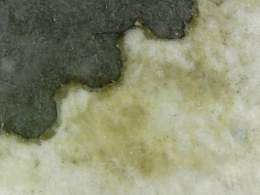


 I dream about seeing one posted.
