| Author |
 Replies: 24 / Views: 5,132 Replies: 24 / Views: 5,132 |
|
Pillar Of The Community
Australia
937 Posts |
|
|
The Stanley Gibbons Australia catalogue indicates that some printers in the Australian colonies paid little attention to the watermark position and that consequently watermark varieties (inverted, reversed etc.) are frequently encountered. As such, they find it impossible to provide adequate prices for them. Many collectors are therefore unsure of the rarity of specimens in their collection. However, careful study of the stamps of the former colonies shows that while many issues are commonly seen with inverted watermarks etc., there are undoubtedly printings for which watermark varieties are rare. The 2004 BW Australian Commonwealth Specialists' Catalogue (ACSC Kangaroos and the Early Federal Period 1901-1912) provided prices for watermark varieties on the state stamps issued during that period. This topic is for philatelists to share information about the frequency of watermark orientations on the colonial Van Diemen's Land / Tasmania stamps in their own collection. The bigger the sample size, the better, but small sample sizes are also welcome. Members might also add relevant information from reliable philatelic sources (other than those mentioned above) regarding frequency of watermark orientation on the issues of Van Diemen's Land / Tasmania. Please use the SG (Stanley Gibbons) catalogue identifier where possible. If you don't know the SG number, provide your catalogue identification and other members might be able to provide the equivalent SG number. Example of format (numbers fabricated for demonstration purpose): Tasmania SG 144 1871-78 Queen Victoria 1d Watermark 15 (TAS with bars) Sample size: 50 Comment: 4 of 50 found to have inverted watermarks.   |
|
Send note to Staff
|
https://www.fairdinkumstamps.com Fair Dinkum Stamps - Specialising in stamps from early Australia and the colonies, Australian philatelic literature, catalogues, stockbooks and accessories. |
|
|
|
|
Valued Member
New Zealand
137 Posts |
|
|
Tasmanian Pictorials First printing was the Recess print, done by De La Rue in London 1899. Watermark is 'TAS'.  The specialised handbook by K Lancaster reports that both inverted and reversed watermarks may be found on these values. My research to date shows the following inverted watermarks, I still have many to check: 229 ½d 0 from 50. 230 1d 0 from 200. 231 2d 5 from 400. 232 2½d 1 from 40. 233 3d 0 from 30. 234 4d 0 from 25. 235 5d 0 from 20. 236 6d 0 from 25. No reversed watermarks found. TASNAKI |
Send note to Staff 
|
|
|
Pillar Of The Community
Australia
937 Posts |
|
|
Thankyou for your research Tasnaki - an interesting start - the inverted watermarks clearly rarer so far. The watermark image shown above is that of the horizontal (landscape) issues from the front. The vertical (portrait) issues have the watermark with TAS reading downwards from left to right from the front! To assist with proper identification, I offer the following scans of the watermark orientation from the back of the stamp (sideways watermarks not included, so if anyone finds one that does not match those below, it is sideways): PORTRAIT (1d, 2.5d, 4d)Upright watermark  Inverted watermark  Reversed watermark  Inverted Reversed watermark 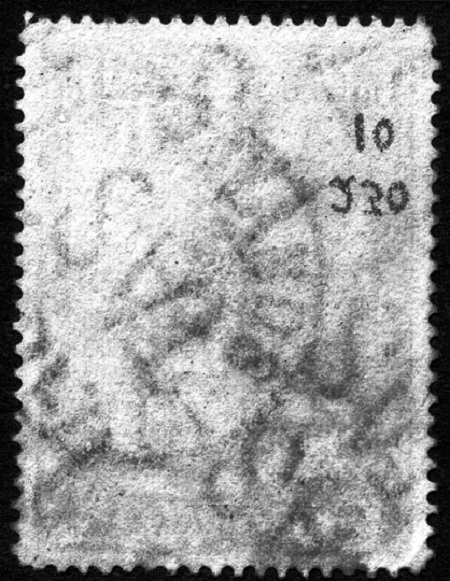 LANDSCAPE (0.5d, 2d, 3d, 5d, 6d) LANDSCAPE (0.5d, 2d, 3d, 5d, 6d)Upright watermark  Inverted watermark  Reversed watermark  Inverted Reversed watermark  |
|
Send note to Staff
|
https://www.fairdinkumstamps.com Fair Dinkum Stamps - Specialising in stamps from early Australia and the colonies, Australian philatelic literature, catalogues, stockbooks and accessories. |
| Edited by fairdinkumstamps - 06/06/2019 04:34 am |
|
|
Valued Member
New Zealand
137 Posts |
|
|
Thank you fairdinkumstamps. Thought I had better show a front picture of the Pictorials as well.  I will add what I have on the later prints over the next few weeks. Tasnaki |
|
Send note to Staff
|
|
|
Valued Member
New Zealand
137 Posts |
|
|
½d Lithograph printing 1902 SG237 These were printed in Melbourne using paper watermarked for the smaller Victorian stamps. Watermark is V over Crown. The watermark is horizontal and approximately half run left to right and half right to left. 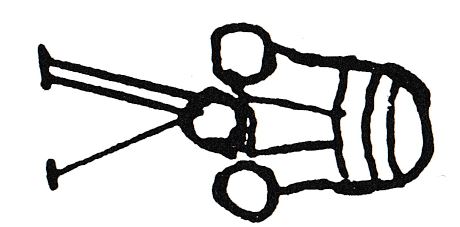  SG note a small printing with the watermark vertical, I have only seen one copy, it has an inverted watermark. ½d Electrotype printing 1905 SG249These were printed in Melbourne. Watermark is Crown over A.  The watermark is horizontal and approximately half run left to right and half right to left. A small 1909 printing was done with the watermark both vertical and inverted. From approximately 500 I have seen 2 blocks of 6 and 3 singles. |
|
Send note to Staff
|
|
|
Valued Member
New Zealand
137 Posts |
|
|
1d Lithograph printing 1902 SG238 This printing was soon replaced by the Electrotype printing due to the numbers required. The difference between the two types of print are shown below: 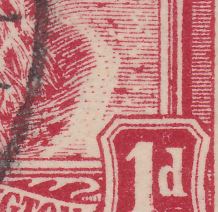  The left image is Lithograph, note the pathway, the right image is electrotype and the path has larger colour spots. All the lithograph 1d stamps have the V over Crown watermark and they are vertical/inverted approximately 50/50. Tasnaki |
|
Send note to Staff
|
|
|
Pillar Of The Community
Australia
937 Posts |
|
|
Upright watermarks exist for both the lithographed and electrotyped halfpenny issues and are rarer than the sideways watermarks.
The 2004 Australian Commonwealth Specialists' Catalogue lists the upright V over crown watermark as 20 X (sideways catalogue value) for the lithographed single line perf 12.4.
Upright crown over double lined A is 10 X (sideways catalogue value) for the electrotyped single line perf 12.4.
The crown over double lined A watermark sideways inverted on the electrotyped single line perf 11 is listed as 100 X (normal sideways left or right). Sideways inverted will show the 'A' flipped about the horizontal axis.
It will be interesting to see the quantities of each type that collectors find over the years.
|
|
Send note to Staff
|
https://www.fairdinkumstamps.com Fair Dinkum Stamps - Specialising in stamps from early Australia and the colonies, Australian philatelic literature, catalogues, stockbooks and accessories. |
|
|
Valued Member
New Zealand
137 Posts |
|
|
The 1d Electrotype printings. 6 plates were used between 1902 and 1912. The early printings (to 1905) used the V over Crown watermark and this was changed to the crown over A watermark in 1905. V over Crown are SG 240 Crown over A are SG 250 A small printing of Crown over A on thin paper in1912 are SG 260. Early V over Crown printings from plates 1 & 2 had a horizontal watermark, left to right and right to left approximately 50/50. They comprise around 5% of the V over Crown printings. In early 1903 the watermark position was changed to vertical, approximately 50/50 vertical/inverted. From 1905 the Crown over A watermark was used. A small printing in 1908 was done with the watermark horizontal. I have reviewed several thousand and the figures below are approximate: Vertical/inverted are 50/50 and comprise about 98% of the stamps seen. Horizontal, left to right or right to left about 2% so not uncommon. I have one copy, appears to be a later printing from plate 3 or 4 with the watermark reversed. The thin paper printing was done on Crown over A paper with vertical/inverted watermark 50/50. Tasnaki |
|
Send note to Staff
|
|
|
Valued Member
New Zealand
137 Posts |
|
|
2d Lithograph printing 1902 to 1907. The scans below show the key difference between the Lithograph printing and later Electrotype printings. 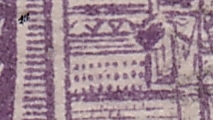  There are three rows of windows on the Lithograph print on the left and only two on the Electrotype on the right. Over the six years of the lithograph printing a total of 28 different plates were used. Plates 1 to 22 on V over Crown watermark are SG 239. Plates 23 to 28 on Crown over A watermark are SG 245. V over Crown: Watermarks are horizontal, left to right or right to left 50/50. A small printing from plates 11 & 12 in 1904 had a vertical/inverted watermark. From approximately 5,000 copies checked 50 have the vertical watermark. Crown over A: Watermarks are horizontal, left to right or right to left 50/50. Tasnaki |
|
Send note to Staff
|
| Edited by Tasnaki - 06/12/2019 01:51 am |
|
|
Pillar Of The Community
Australia
937 Posts |
|
|
Excellent research Tasnaki - that's a lot of Tassie pictorials you have! Are you able to provide approximate numbers for the 50/50 research results? |
|
Send note to Staff
|
https://www.fairdinkumstamps.com Fair Dinkum Stamps - Specialising in stamps from early Australia and the colonies, Australian philatelic literature, catalogues, stockbooks and accessories. |
|
|
Valued Member
New Zealand
137 Posts |
|
|
fairdinkumstamps
Yes. I have many, many thousands of the values to 2d, I have been researching and writing plating guides for the Litho and Typo prints over the past two years. Published work is available at no cost through the Tasmanian Philatelic Society website.
Re numbers, I am not going to count how many of each value I have, it would take weeks! The 50/50 figure is based on personal observation plus previous work by Messrs Purvis and Lancaster.
Once I start on the 3d upwads I will be able to give numbers as I have done no work on these values so have limited stock.
Tasnaki |
|
Send note to Staff
|
|
|
Valued Member
New Zealand
137 Posts |
|
|
2d Electrotype printing 1907.SG251 Watermark Crown over A horizontal left to right or right to left 50/50.  In 1908/09 printings with watermark vertical/inverted were made. Approximately , 300 from 2000 so not uncommon. 2d Stereotype printing 1910.SG259 The main difference to the Electrotype printing is the width of the stamps, the stereotype are wider at 33 to 33.75mm wide compared to the Electrotype printing at 32mm.  A high percentage of this printing was over printed 'ONE PENNY'. SG260  Both have the Crown over A watermark horizontal left to right or right to left 50/50. Approximately 5% were printed with vertical/inverted watermark. A further 5% were printed with the watermark reversed. Tasnaki |
|
Send note to Staff
|
| Edited by Tasnaki - 06/12/2019 5:40 pm |
|
|
Valued Member
New Zealand
137 Posts |
|
|
3d Lithograph printing 1905.SG246 The scans below show the key difference between the Lithographed prints and Electrotype. 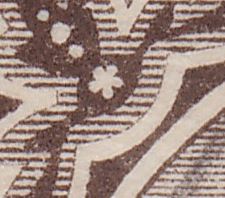  On the lithograph (left) the corner stars are more pronounced and on the Electrotype (right) the points are much shorter. Watermark is Crown over A horizontal: Left to right 5 from 9 Right to left 4 from 9. 3d Electrotype printing 1905.SG253 Watermark is Crown over A horizontal: Left to right 6 from 12 Right to left 6 from 12 SG show a listing for an upright watermark with no value attached. I have not seen any other reference to this watermark variety existing. Tasnaki |
|
Send note to Staff
|
|
|
Valued Member
New Zealand
137 Posts |
|
|
4d Lithograph printing 1907.SG247  Six plates were used between March 1907 and 1912. Each plate had a distinctive shade. For plates 1 to 4 and 6 the watermark used is the Crown over A vertical and inverted. Plate 5 used the Crown over A watermark horizontal, both left to right and right to left. Watermarks seen: Vertical 15/40 Inverted 20/40. Horizontal left to right 3/40 Horizontal right to left 2/40 Tasnaki |
|
Send note to Staff
|
|
|
Valued Member
New Zealand
137 Posts |
|
|
6d Lithograph printing 1908.SG248  The scans below show the difference between the Lithographed prints and Electrotype.   The key difference is the water on and below the waterfall, the Lithograph on the left and the Electrotype on the right. Watermark is Crown over A horizontal: Left to right 4 from 10 Right to left 6 from 10. 6d Electrotype printing 1910.SG254 Watermark is Crown over A horizontal: Left to right 6 from 10 Right to left 4 from 10 A small printing was done with the watermark vertical/inverted but is rare. Tasnaki |
|
Send note to Staff
|
|
|
Pillar Of The Community
Australia
937 Posts |
|
|
I need to redefine my earlier posts for the portrait orientation of TAS watermarks before posting some statistics. The usual TAS watermark for the portrait stamps is the sideways version of watermark SG 16 as noted above. In the tables to follow, the following notation is used to describe the watermark as seen from the back of the stamp: Sideways, top to left from back of stamp  Sideways, top to right from back of stamp  Reversed  Inverted Reversed  |
|
Send note to Staff
|
https://www.fairdinkumstamps.com Fair Dinkum Stamps - Specialising in stamps from early Australia and the colonies, Australian philatelic literature, catalogues, stockbooks and accessories. |
|
|
Replies: 24 / Views: 5,132 |
|




 Posted 05/31/2019 08:58 am


