| Author |
 Replies: 15 / Views: 1,676 Replies: 15 / Views: 1,676 |
|
|
Pillar Of The Community

United States
1835 Posts |
|
|
Is that a recut at the bottom or not - I'm not confident. Any help appreciated. Thanks. 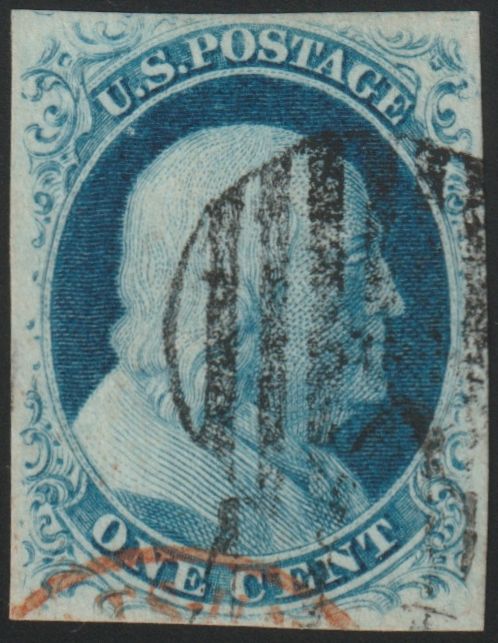 |
|
Send note to Staff
|
|
|
|
|
Pillar Of The Community
United States
2555 Posts |
|
|
Nope. Good chance that it is 17R1E, a Type IIIa. The one position that produced Scott #5 was just above it (if it is 17R1E).... |
Send note to Staff 
|
|
|
Pillar Of The Community
United States
1835 Posts |
|
|
Pillar Of The Community
United States
1820 Posts |
|
|
Possibly 18R1E if the mark in the O of POSTAGE visible in the photo is actually a plating mark. In either case, though, the traces of the stamp above show completeness or near completeness of the left plume and ball, consistent with Type I or Type Ib.
The stamp shown cannot be recut at bottom.. It is clearly not recut at top, but the only positions that are recut at bottom but not at top come from the top row of Plate 1 Late, and are Relief T. The stamp shown is clearly Relief A. |
|
Send note to Staff
|
|
|
Pillar Of The Community
United States
1835 Posts |
|
|
Interesting - should I repost on the plate 1 thread? (I can rescan with higher res if someone wants) |
|
Send note to Staff
|
| Edited by rlsny - 08/03/2019 11:38 pm |
|
|
Pillar Of The Community
United States
1835 Posts |
|
|
OK, so no repost - here's the higher res image anyway in case someone wants it. 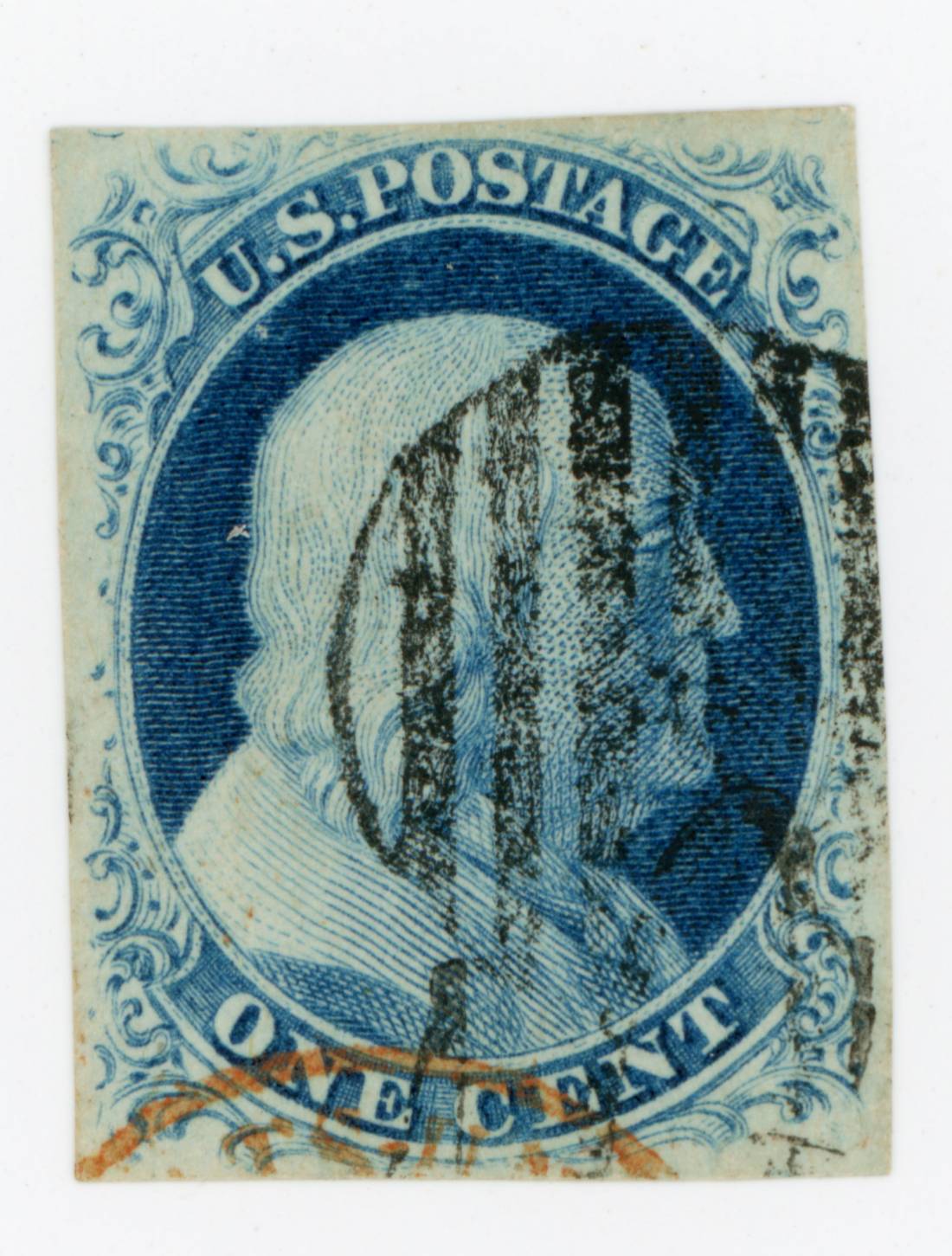 |
|
Send note to Staff
|
|
|
Pillar Of The Community
United States
2555 Posts |
|
|
Pillar Of The Community
United States
3528 Posts |
|
|
Its funny, it seems like this one should be easy, but its not 100% straightforward.
The presence of the bottoms of the L&R plumes from the stamp above, certainly hint strongly at 17R1E. Pos 4R, 5R, 8R and 9R (some of the Ib's) don't tend to show the very bottom of the right plume. I have seen the slightest hint of the bottom of the right plume on 3R, 6R and of course 7R.
On this particular stamp, I am bothered by several things, in order to make it 17R1E -
1) the dot in Neinken at upper left is not obviously present. Clearly its a small dot, but in other 17R1E's it seems pretty visible.
2) The lower right plume is very short on the stamp in question, seemingly shorter than a standard 17R1E. Possibly ok, again.
3) The bottom of the plume at top right of the subject stamp only shows 1 line. 7R1E has two lines. That almost leads me more to 3R or 6R, or somewhere else.
That said, I don't yet have a better answer yet, than 17R1E, which it certainly could be. |
|
Send note to Staff
|
|
|
Pillar Of The Community
United States
3528 Posts |
|
|
Pillar Of The Community
United States
3528 Posts |
|
|
One thing I neglected to mention but meant to - this has a French transit marking on it.
The grid cancel looks a lot like the black 7-bar New Orleans grid, that I know was in use in 1852, and probably much longer.
So, this originated on a foreign mail cover probably from NO to France circa mid 1851 to mid 1852 (plate 1E lifecycle). Its too bad its not still on the cover, as stamped overseas mail from 1851 or 1852 can be tough to find. The earlier the harder. |
|
Send note to Staff
|
|
|
Pillar Of The Community
United States
1835 Posts |
|
|
Pillar Of The Community
United States
1835 Posts |
|
|
I want to ask a question about the plating mark called out on 18R1E in the O of Postage. A tiny dot right there appears on my stamp and also on stamps in the stamp smarter database both for 17R1E and for 18R1E. Am I seeing that right? Does that help at all and how does that fit with 13R1E? (The DB only has the Nienken image.) |
|
Send note to Staff
|
|
|
Pillar Of The Community
United States
3528 Posts |
|
|
The tiny dot is definitely of interest, and may help tie this to 17R1E.
Here is where I am -
From the LR bottom plume of the stamp above, at top right - I consider the following columns eliminated: 1,2,4,5,8,9,10. I don't think a top row stamp from those positions would exhibit such a plume. Feel free to prove me wrong, but that's what I think.
That leaves 3,6,7.
The top line of 16R1E does not resemble the patient stamp, and I don't think has a chance of being correct.
So that leaves me with two possibilities: 13R, 17R.
I already pointed out 3 things I didn't like about 17R, however, the dot in O might point us back there.
The problem I have right now, is I need to see a couple good scans of 13R1E to include or exclude it. The 1c plating archive has one good scan of a really late appearing impression. Siegel has two scans of 13R1Es on cover, so the scans are poor.
Plate 1E, not being hardened, the impressions changed over time. Not quite as bad as Plate 4, but for a detailed exercise such as this, its bad enough. |
|
Send note to Staff
|
|
|
Pillar Of The Community
United States
3528 Posts |
|
|
So, since I didn't see enough reference material for 13R1E, I decided to use a lifeline and I phoned a friend. This stamp is definitely 13R1E, Ty IIIA, Scott #8A. He had the same observation that I did about the plume at upper right: Quote:
You would see the 7R1E right plume if the scf stamp was 17R. |
|
Send note to Staff
|
|
|
Pillar Of The Community
United States
1835 Posts |
|
|
This sounds like wisdom. I love all the info that came out here - especially from tx. The back of the stamp is clean - so I'm quite pleased with this find. It's a keeper. |
|
Send note to Staff
|
|
|
Pillar Of The Community
United States
3528 Posts |
|
|
For what its worth, since 13R1E reference images are lacking - here is one. Note the faint 3R1E LR plume at upper right of this scan. 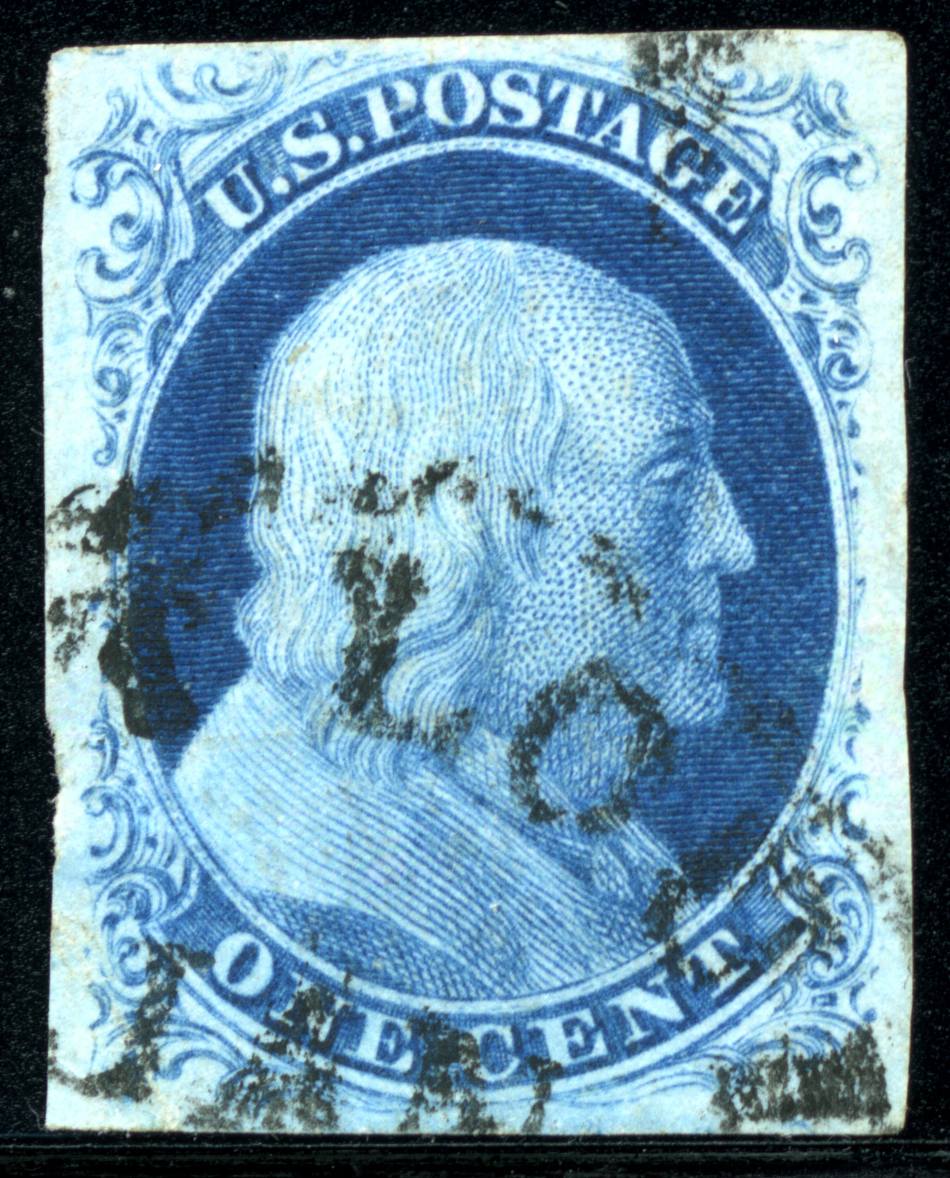 |
|
Send note to Staff
|
|
| |
Replies: 15 / Views: 1,676 |
|




 Posted 08/03/2019 3:07 pm


