... and I wonder if they deliberately describe the lots scantily with minimal images rather than being more thorough. We've been discussing why some of the lots received over-the-moon bids when there has been virtually no lot viewing (although in all fairness, we've been saying the same thing about ALL auctions over the last 4 months; it's not just Rasdale).
I read back through some previous discussions about Rasdale auctions, including some of my own observations, and this really isn't a new thing. I speculate that they may have cultivated a reputation for the lots being better than described, thus prompting increased activity.
...or it could just be carelessness or being rushed... although were that the case, I doubt they would have remained in business as long as they have.
Anyhoo, sorry for the tangent.
The lot I won was #710:
Quote:
Mexico unusual selection of revenues and revenues on documents in one carton. Dozens and dozens of documents starting in the 1820s to the 1890s and appearing to continue into the early 20th Century. Also includes individual revenues on pages having beneficial backup. A gambler's lot worth a roll of the dice to come up with a number. S.B. $350.00
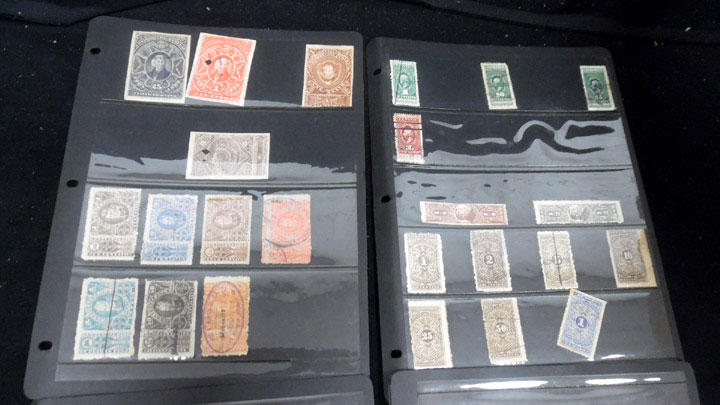
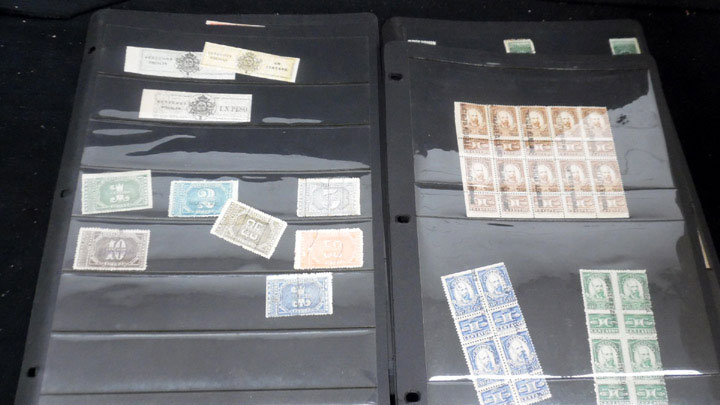
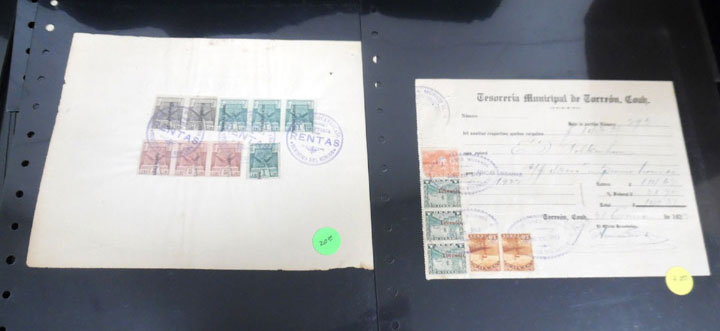
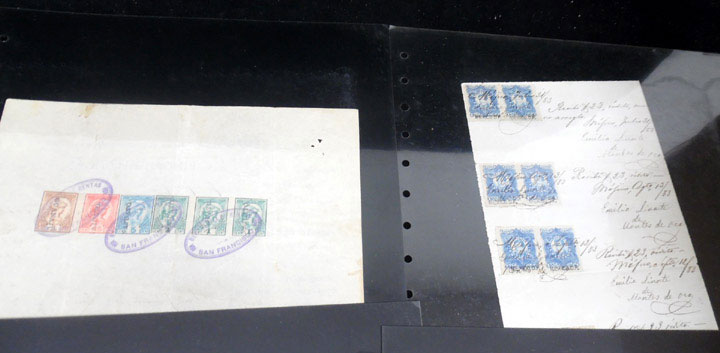
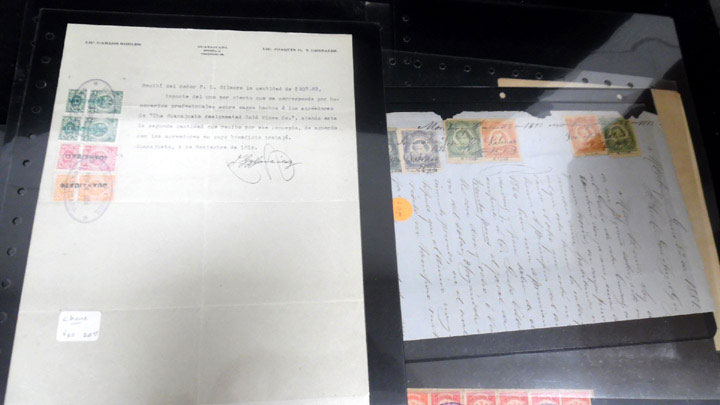
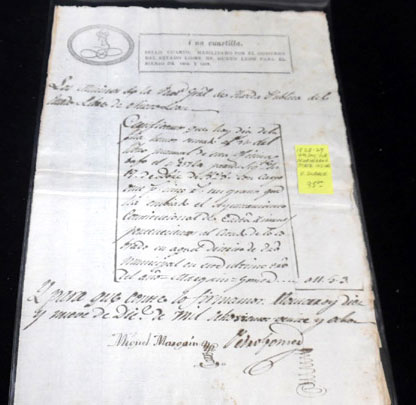
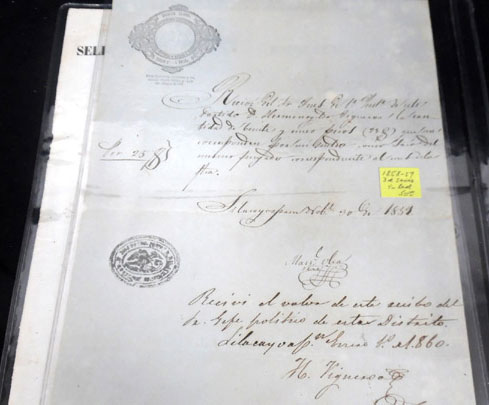
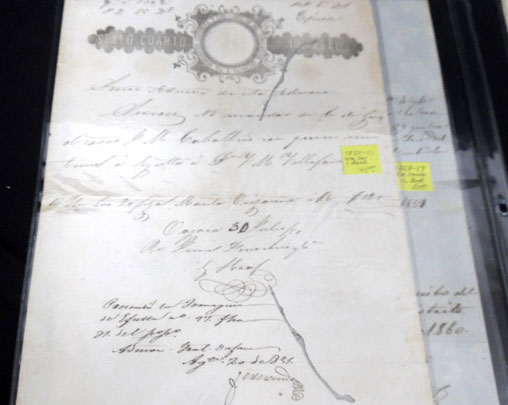
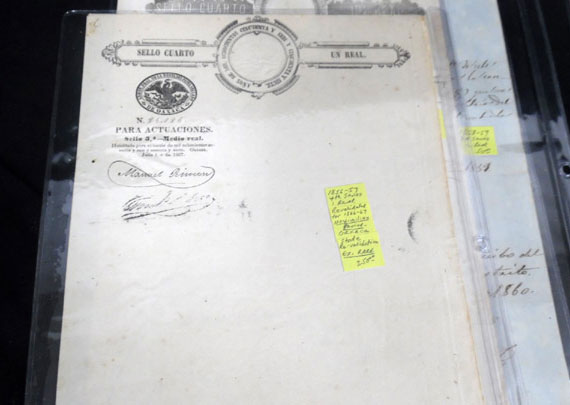
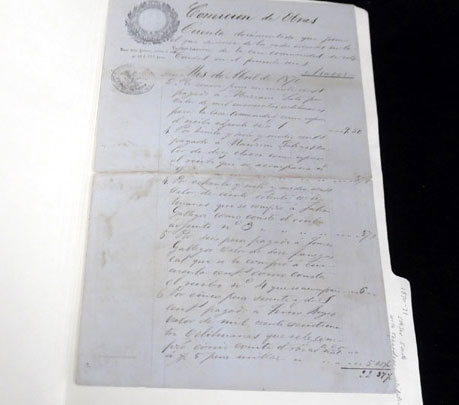
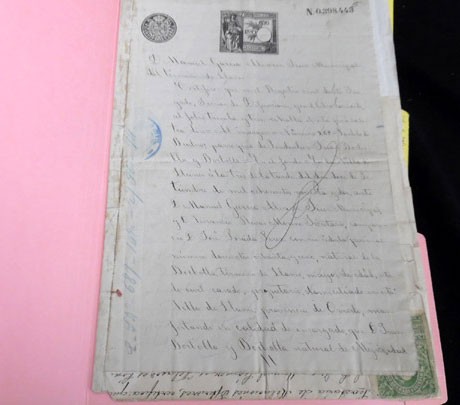
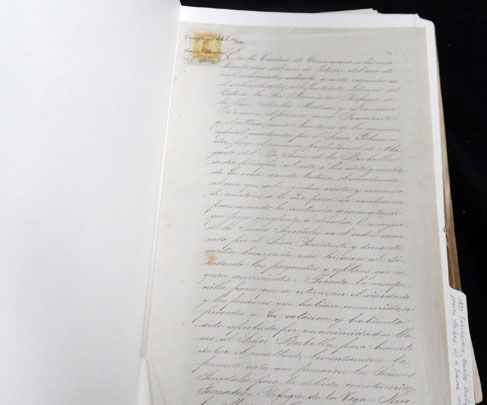
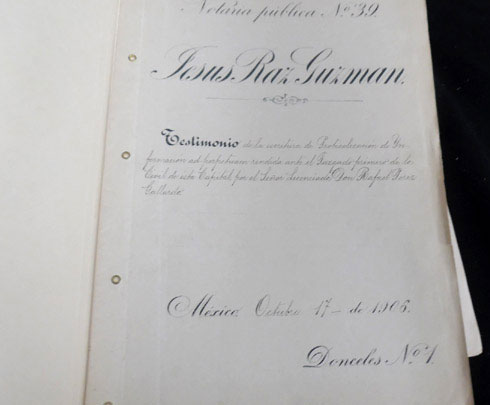
As with all Rasdale lots, the images are too few, and more importantly too damned tiny. You can make out that most of the individual items are labeled and priced, and at least one appears to be priced in 3 figures.
Mexico revenues have been one of my side interests for a number of years, more at the hoarding stage as opposed to meticulously collecting, as the plan is for this to be a retirement project. I didn't have any Mexican revenue stamped paper (pre-adhesive period, referred to as Papel Sellado) amongst the material I've already acquired, so I figured I'd take a stab at the lot as a gamble if it didn't go too high. Given how the bidding was going, I wasn't optimistic.
There was little bidding and I got the lot for $300, which after BP, shipping, and usury sales tax, turned into $400... so I was hoping I didn't buy a pig in a poke. The descriptions are so sparse you can't really get a feel for the overall magnitude of the lot.
Well I needn't have worried. The lot is excellent and much more material than implied. Yes there are "dozens and dozens of documents"... of just the early revenue stamped paper... plus several hundred documents from the adhesive era... and several collection lots of Mexican revenue stamps.
What's great is that all of the documents are identified (no idea as to the accuracy). Also, everything is retail priced, although I'm not sure by whom or from what era. It looks to be a dealer's retail inventory.
Now normally when an auction house lots a dealer stock or a collection where the previous owner calculated values, the estimate would be included in the lot listing, e.g., "Owner's catalogue $XXX" or "Marked retail $XXX" as that gives prospective bidders some idea of the potential value of the lot... especially since that work has already been done.
I'm guessing that had Rasdale done that, the activity would have been higher, as the total marked prices, with all of the stamps part of bulk lots, not individually priced, is $5,662.
Some of the documents are really attractive. It appears that unlike U.S. adhesive revenue-stamped documents of the late 19th century, documents with multiple pages had to have a stamp on every page (to prevent nefarious page substitution perhaps?) so you'll have first and/or last pages with large numbers of revenue stamps presumably paying the lion's share of the tax, and then intervening pages with a single revenue stamp.
It makes for difficult display if you want to keep the documents intact as most large transaction documents are multiple sheets of paper sewn together. I can see why many are deconstructed and pages displayed or sold individually.
So upon first perusal I'm definitely satisfied with the results.





 Posted 08/27/2020 11:07 pm





